Chef Juliette
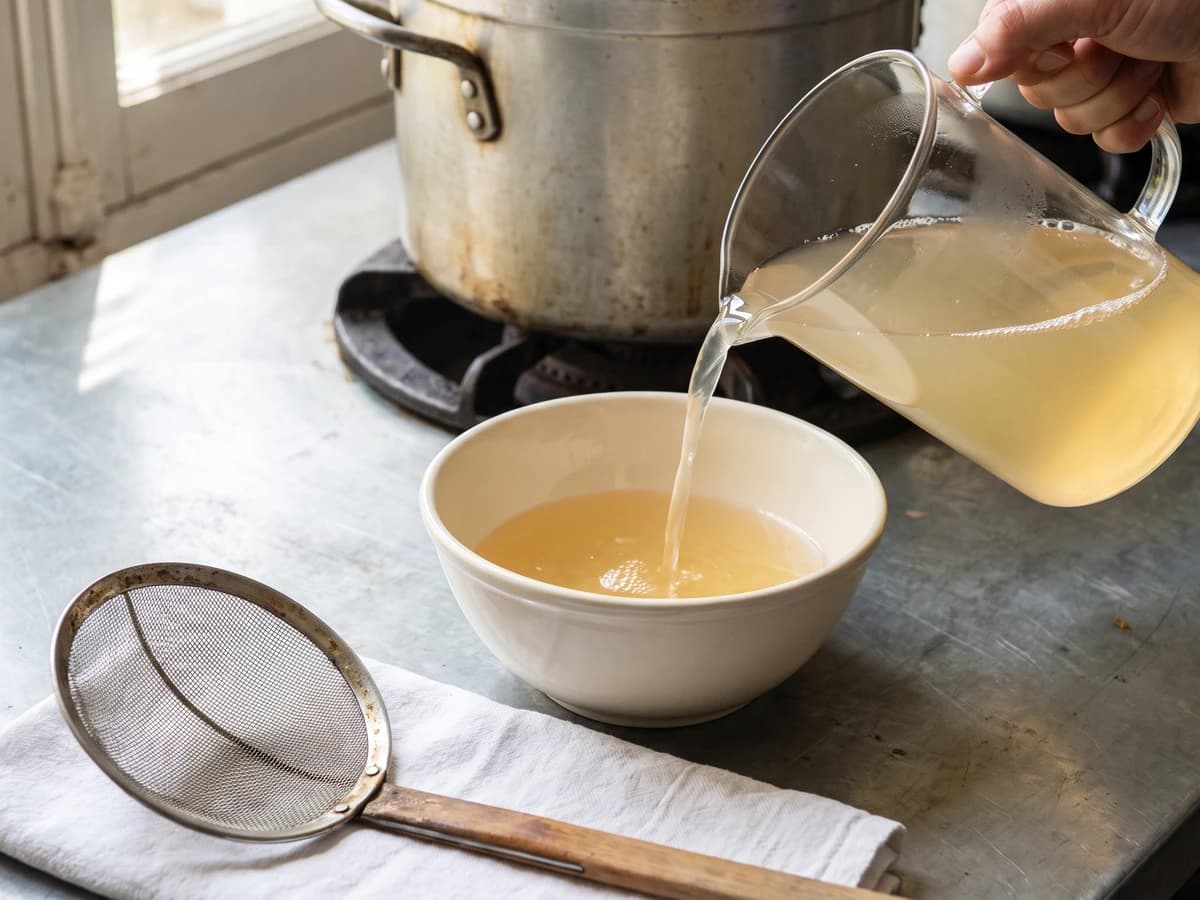
Ordinary or White Consommé
Beef shin, lean beef, and fowl begin in cold water and rise slowly toward a tremble. Skim before the boil, and you learn the quiet discipline that gives every clear French broth its backbone.
A cooking platform built around craft, culture, and the stories behind what we eat.
Created by Chef Juliette
Based on No. 119, Horse-radish or Albert Sauce, from Le Guide Culinaire (1907) by Auguste Escoffier
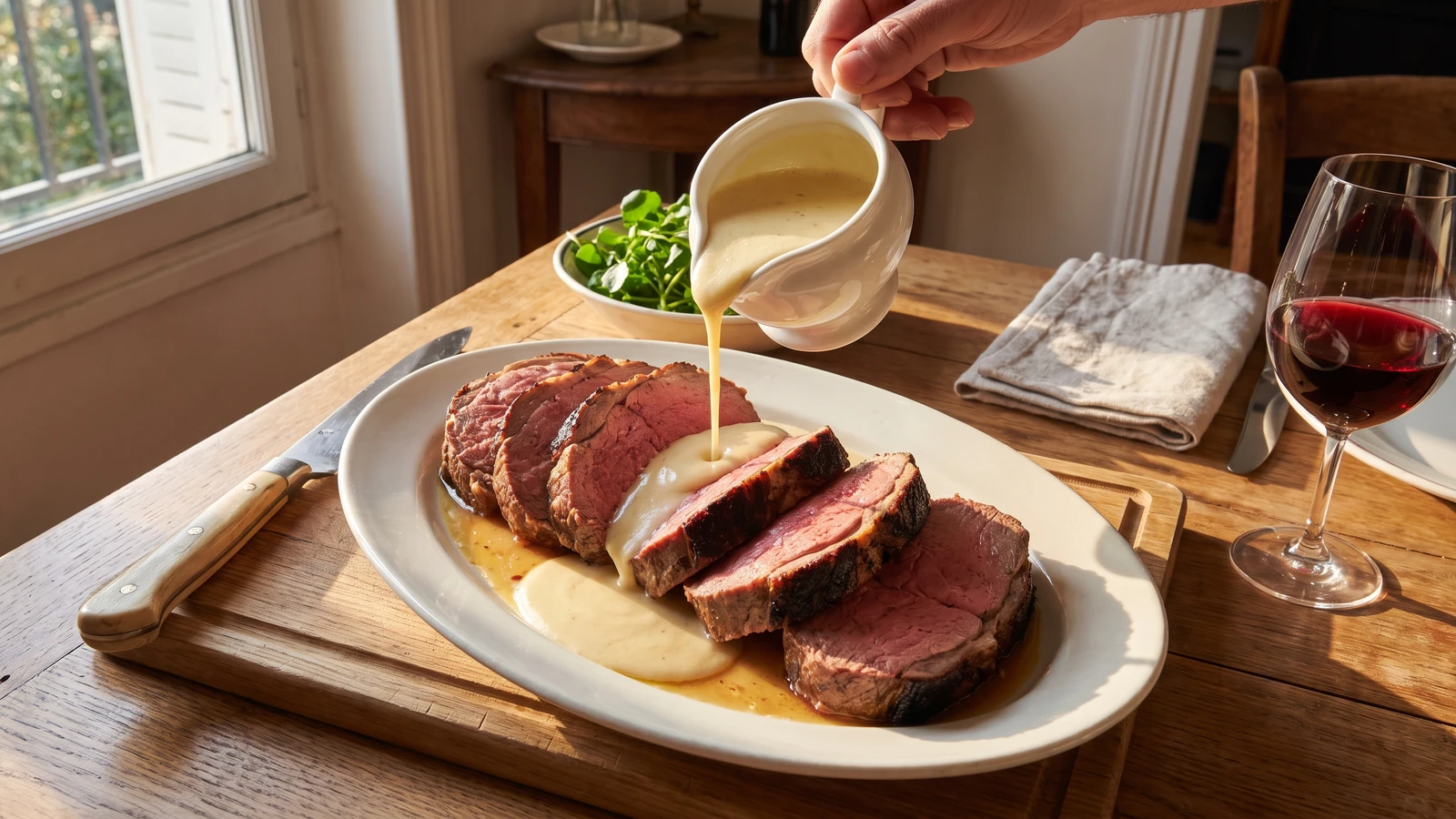
Sauce Albert turns the bite of fresh horseradish into a pale, glossy companion for roast beef, using consommé, butter sauce, cream, and a careful yolk liaison before mustard brings back the fire.
Sauce Albert (warm horseradish sauce for roast beef) teaches that sharpness must be managed, not merely added. The grated root simmers long enough to lose its raw aggression, then mustard and vinegar restore a clean, deliberate bite at the finish. Cook the mustard and that brightness disappears.
The original formula assumed a saucier on staff, white consommé never off the fire, prepared butter sauce at hand, and a tammy waiting for the final pass. At home, good finished consommé and prepared butter sauce provide the same foundation, while a fine-mesh sieve replaces the tammy honestly. That equipment is brigade scaffolding and can go. The twenty-minute horseradish simmer, brisk reduction, sieving, and liaison (egg-yolk binding) are the dish and must stay. The source proportions are halved into a dinner-party batch because one roast needs a sauceboat, not a service pot.
Finished properly, Sauce Albert falls from the spoon in a smooth ivory ribbon, rich with butter and cream but still unmistakably alive with horseradish. The liaison is the step that decides it: warm the yolk gently, never let the sauce boil, and add the mustard only after the pan leaves the heat.
Sauce Albert belongs to the Anglo-French exchange of the classical table, joining the English roast-beef custom of horseradish with the French sauce kitchen's consommé, reduction, butter sauce, and liaison. It traveled as a warm, composed accompaniment for fillets and braised beef rather than the familiar cold bowl of horseradish cream. Its defining practice is easily missed: the root is cooked to round its fury, then mustard and vinegar restore sharpness at the last moment.
Quantity
3/4 cup loosely packed (180 ml / 70 g)
peeled and finely grated
Quantity
1/4 cup plus 2 teaspoons (70 ml / 70 g)
Quantity
1/2 cup plus 1 tablespoon (135 ml / 135 g)
Quantity
1/2 cup plus 1 tablespoon (135 ml / 135 g)
Quantity
1 tablespoon (15 ml / 7 g)
Quantity
1
Quantity
1/8 teaspoon (0.6 ml / 0.75 g)
Quantity
1/16 teaspoon (0.3 ml / 0.15 g)
Quantity
1/2 teaspoon (2.5 ml / 3 g)
Quantity
1 1/2 teaspoons (7.5 ml / 7.5 g)
| Ingredient | Quantity |
|---|---|
| fresh horseradish rootpeeled and finely grated | 3/4 cup loosely packed (180 ml / 70 g) |
| prepared white consommé | 1/4 cup plus 2 teaspoons (70 ml / 70 g) |
| prepared butter sauce | 1/2 cup plus 1 tablespoon (135 ml / 135 g) |
| heavy cream | 1/2 cup plus 1 tablespoon (135 ml / 135 g) |
| fine fresh white breadcrumbs | 1 tablespoon (15 ml / 7 g) |
| large egg yolk | 1 |
| fine salt | 1/8 teaspoon (0.6 ml / 0.75 g) |
| ground white pepper | 1/16 teaspoon (0.3 ml / 0.15 g) |
| Dijon mustard | 1/2 teaspoon (2.5 ml / 3 g) |
| white wine vinegar | 1 1/2 teaspoons (7.5 ml / 7.5 g) |
Peel the horseradish and grate it finely just before cooking, using a rasp grater rather than chopping it into coarse chips. Work beside an open window and keep your face back from the root; its vapours are fierce. Measure the remaining ingredients before the pan goes on, because the finished sauce moves quickly once the yolk enters.
Put the grated horseradish and white consommé into a small heavy saucepan. Bring them to a gentle boil, lower the heat, and simmer for 20 minutes with the lid slightly ajar, stirring every few minutes. The horseradish should soften into a moist pulp while its raw fury becomes rounder. If the pan threatens to dry before the time is up, add 1 tablespoon of hot water and lower the heat. Ça se rattrape.
Whisk in the prepared butter sauce, heavy cream, and breadcrumbs. Bring the mixture to a lively simmer and reduce for 7 to 10 minutes, whisking often and scraping the corners of the pan, until it coats the back of a spoon but still pours freely. This brisk reduction is faithful to the source's brisk fire, only controlled in a small home saucepan. If an oily rim appears, pull the pan off the heat and whisk firmly until the sauce closes again; a teaspoon of cold water will help if it resists.
Set a fine-mesh sieve over a clean saucepan and press the warm sauce through with the back of a spoon, working firmly until only dry horseradish fibres remain. The source's tammy was a broad cloth sieve used by a saucier; the fine-mesh sieve is its honest home equivalent. Do not omit this pass. It gives Sauce Albert its smooth body while leaving the horseradish flavour behind.
Whisk the egg yolk in a small bowl, then whisk in 2 tablespoons of the warm sauce, followed by another 2 tablespoons. Pour this tempered liaison back into the saucepan and stir constantly over very low heat until the sauce thickens slightly and reaches 160°F (71°C). Never let it simmer. If the first grains appear, transfer the sauce immediately to a cool bowl and whisk in 1 teaspoon of cold water, then pass it through the sieve once more. Ça se rattrape.
Dissolve the Dijon mustard in the white wine vinegar. Take the sauce off the heat, stir in the mustard mixture, then season with the salt and white pepper. Taste for balance: butter and cream should arrive first, followed by a clean horseradish bite. Serve at once with roast or braised beef, especially a fillet, allowing 3 to 4 tablespoons per person. À table!
1 serving (about 60g)
Culinary guides, cultural storytelling, and the editorial depth that makes cooking meaningful.
Discover Culinary ExplorerChef Juliette
Beef shin, lean beef, and fowl begin in cold water and rise slowly toward a tremble. Skim before the boil, and you learn the quiet discipline that gives every clear French broth its backbone.
Chef Juliette
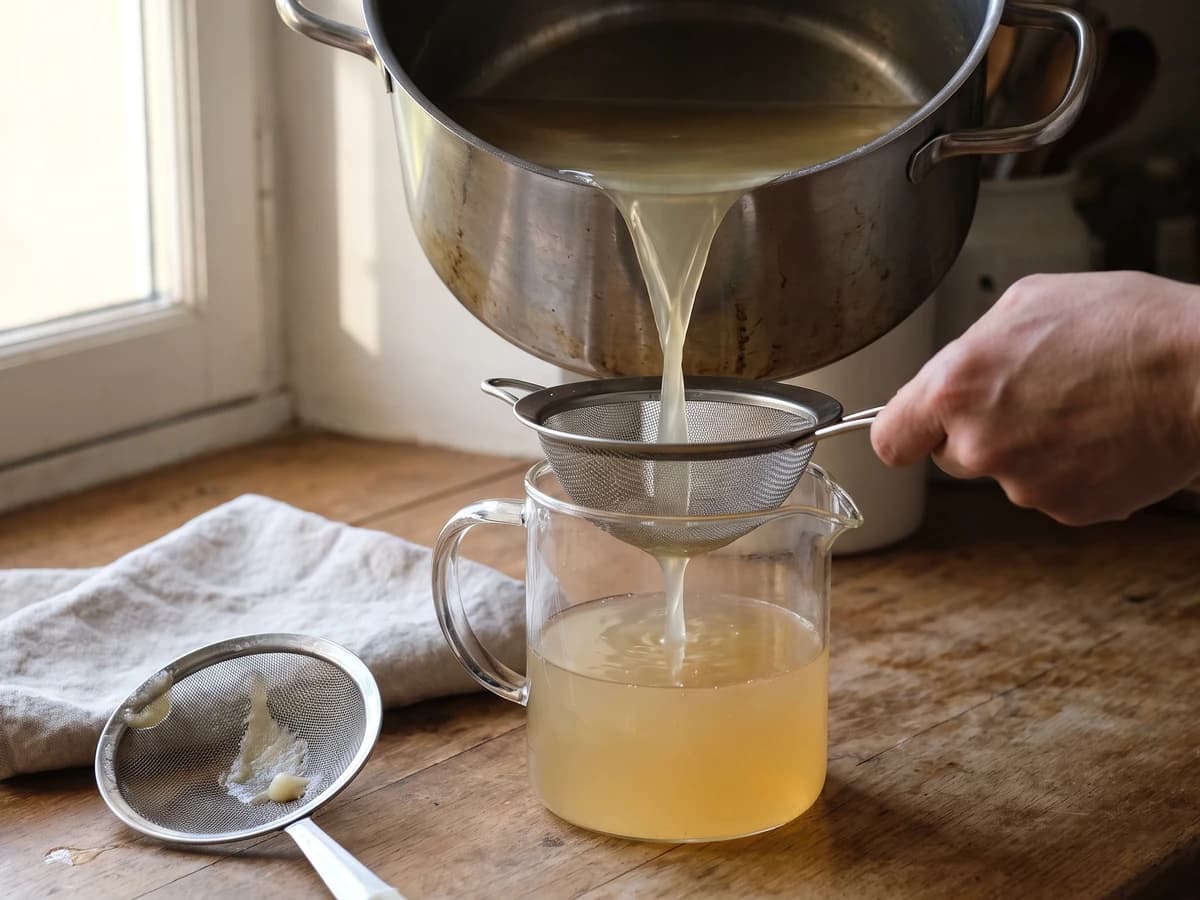
Break the veal bones small, then give them eight hours at a bare tremble. This pale, gelatinous fond becomes the quiet foundation beneath velouté, blanquette, and every sauce that must stay light.
Chef Juliette
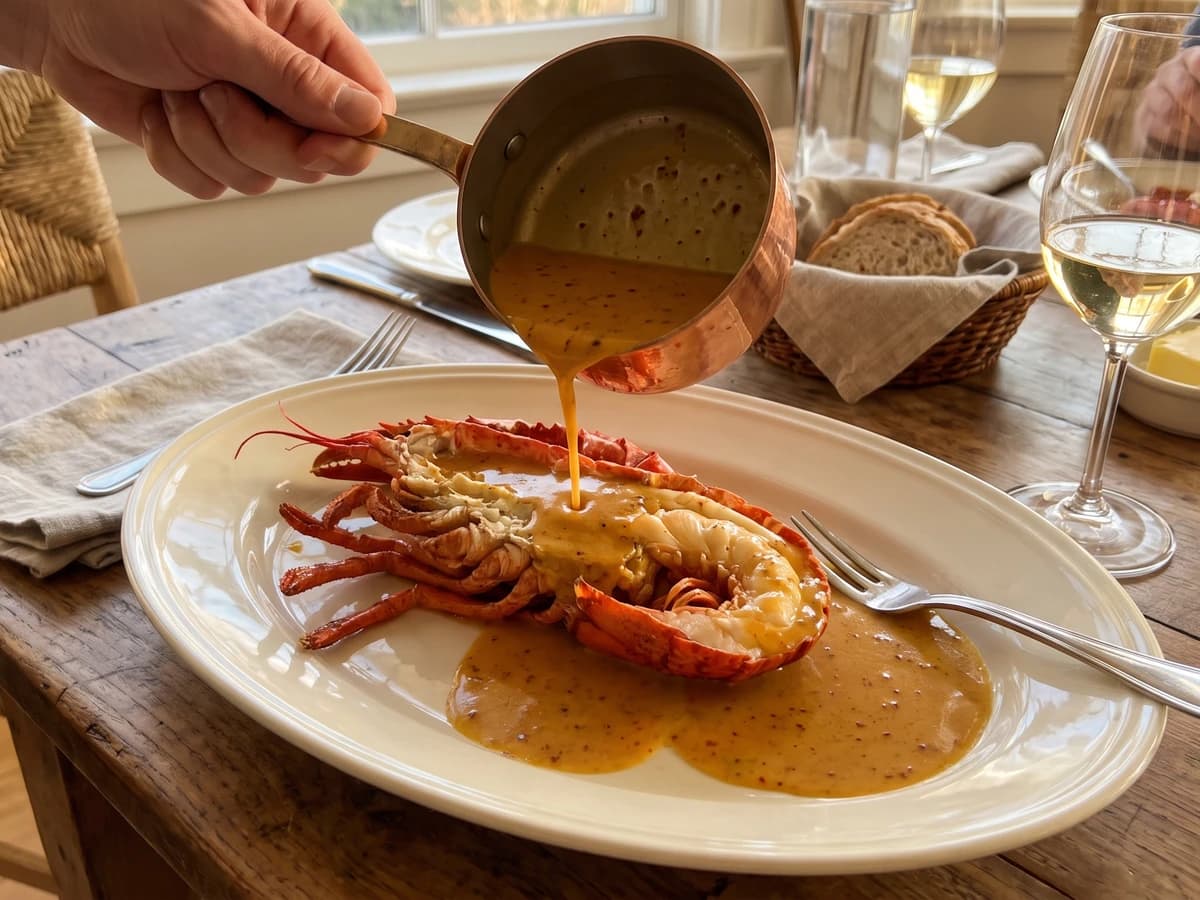
Sauce Orientale concentrates lobster-rich American Sauce with curry, then folds in cream away from the fire: a glossy, gently spiced derivative made for lobster, crayfish, and firm fish.
Chef Juliette
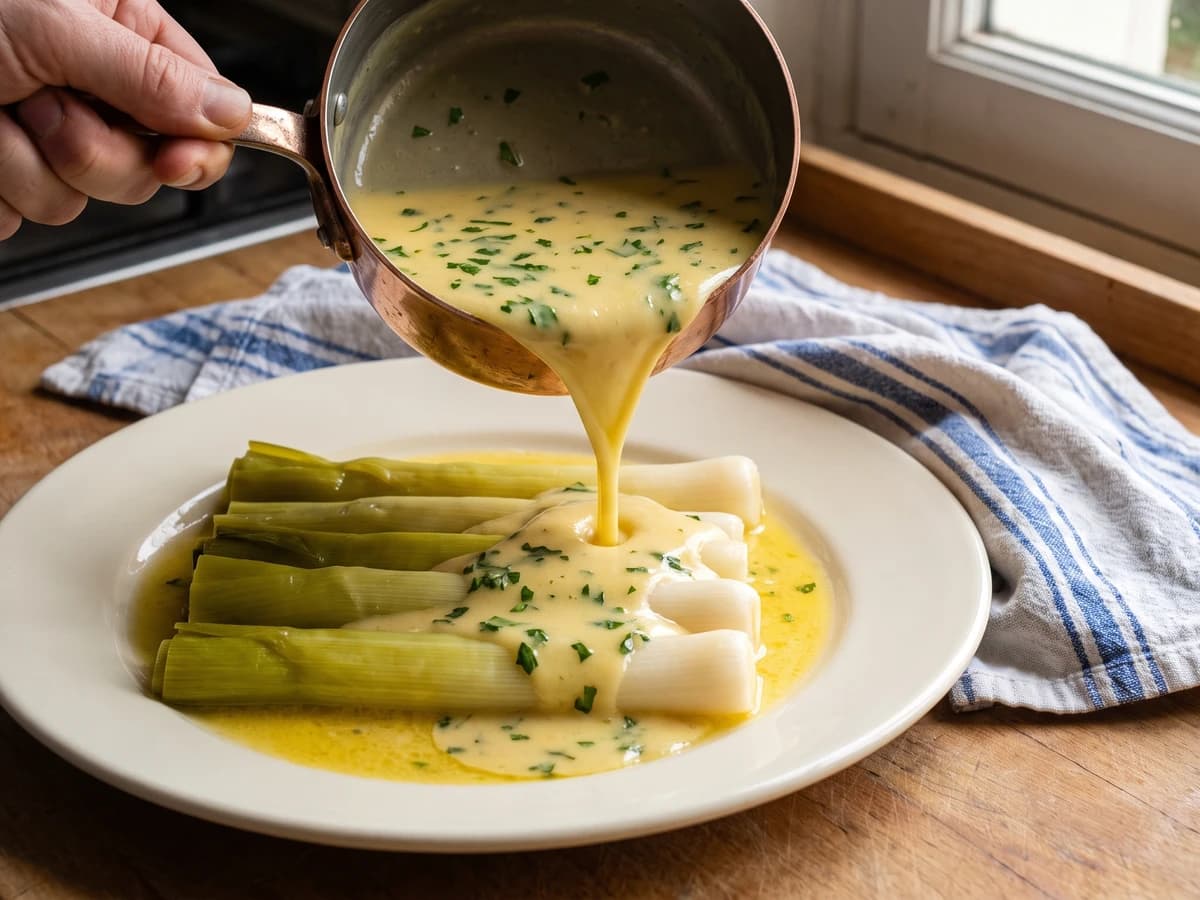
An old lesson in sauce families: Sauce Allemande takes mushroom liquor, then butter, lemon, and parsley, becoming a glossy Poulette for sheep's trotters, leeks, cauliflower, and anything needing gentle richness with a bright edge.