Chef Juliette
Ordinary or White Consommé
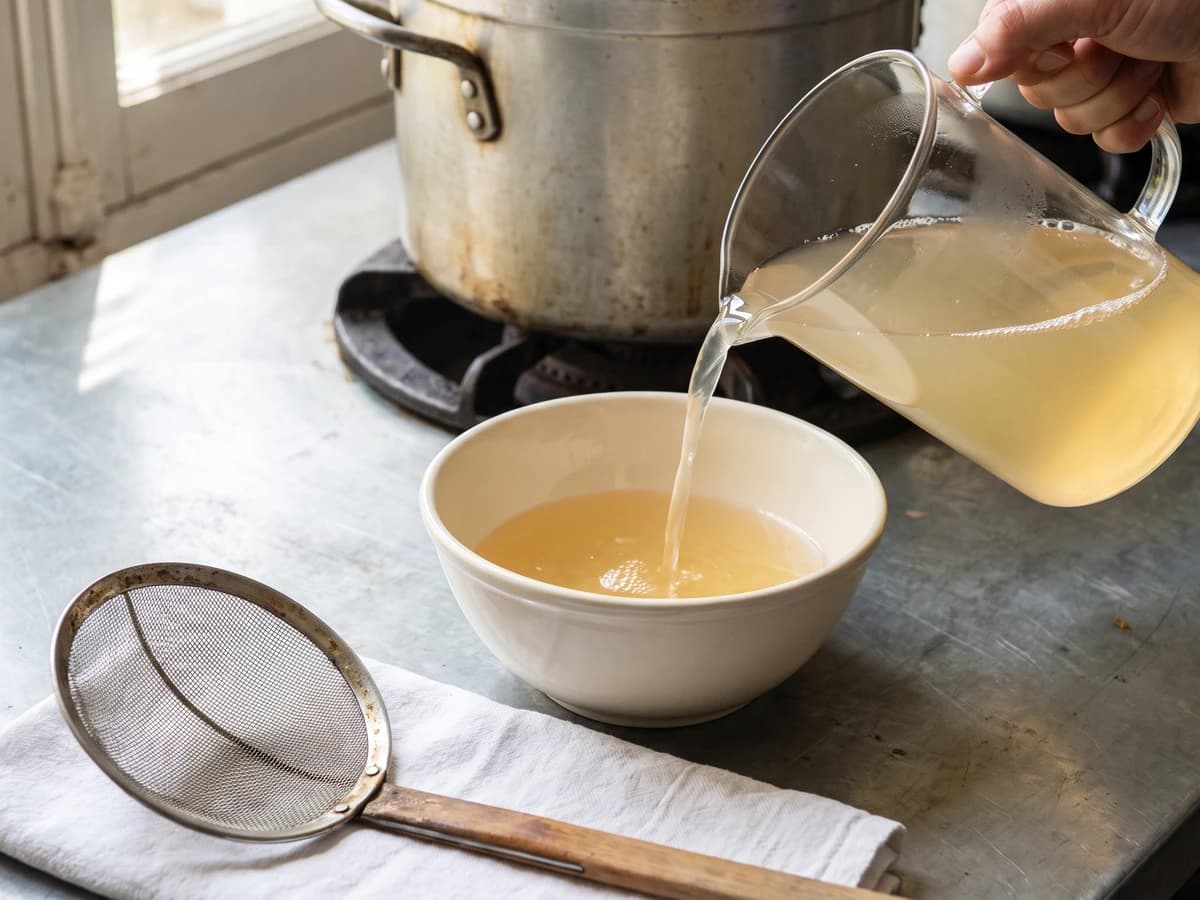
Beef shin, lean beef, and fowl begin in cold water and rise slowly toward a tremble. Skim before the boil, and you learn the quiet discipline that gives every clear French broth its backbone.
A cooking platform built around craft, culture, and the stories behind what we eat.
Created by Chef Juliette
Based on No. 118, Scotch Egg Sauce, from Le Guide Culinaire (1907) by Auguste Escoffier
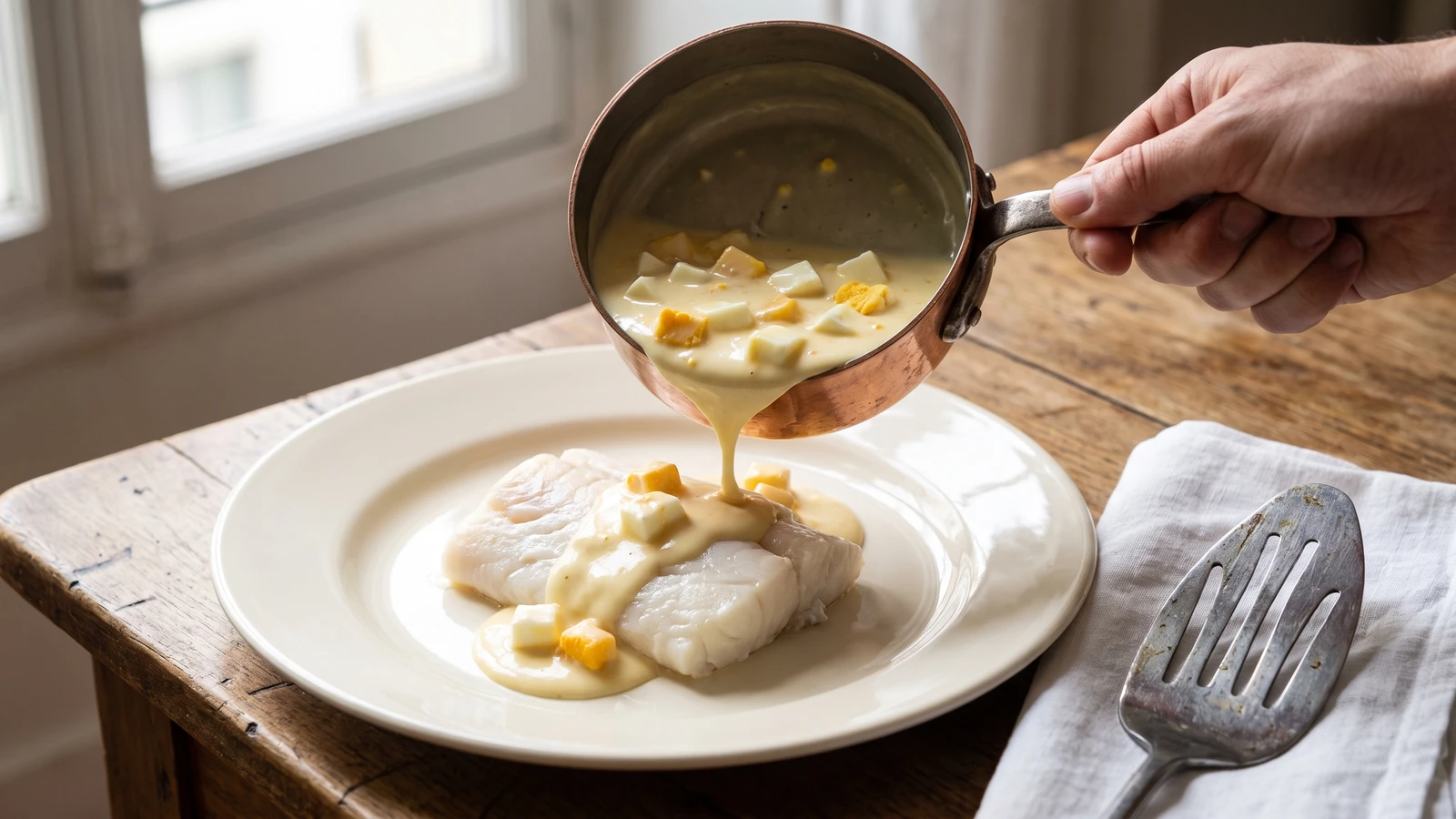
Sauce aux Œufs à l’Écossaise turns a properly cooked white roux, hot milk, nutmeg, and warm diced egg into the quiet classical partner for boiled haddock, cod, and salt cod.
Sauce aux Œufs à l’Écossaise (Scotch egg sauce) teaches the white roux in its plainest, most useful form. The one true thing to know before you touch the pan is this: cook the flour in the butter before the milk arrives. Pale does not mean raw. Give the roux its few quiet minutes and the finished sauce will taste of milk, butter, nutmeg, and egg, never flour paste.
The source formula assumed a saucier beside a second pan of boiling milk, with enough boiled haddock or cod moving through service to justify the quantity. Your honest equivalent is one heavy saucepan, a smaller pan for the milk, and a whisk. No stockpot or salamander belongs here. This version is expanded only to meet the requested two-quart yield, with the butter-flour-milk ratio and three-eggs-per-pint proportion intact. The separate sauce station is scaffolding, but the white roux and its full ten-minute simmer are the dish. One cook, one stove, one evening.
When it is right, the Sauce aux Œufs à l’Écossaise is ivory and softly spoon-coating, with warm cubes of white and yolk held throughout rather than mashed into it. The moment that matters is the milk meeting the roux: add it in measured pours and whisk into the corners. If it lumps, don't panic. Ça se rattrape, and the method tells you exactly how.
Sauce aux Œufs à l’Écossaise belongs to the Anglo-French fish table, where French white-roux technique met the British practice of serving boiled haddock and cod with a mild milk-and-egg sauce. Its Scotch name points toward that fish service, especially haddock, not toward the sausage-wrapped fried egg that shares the name in English. The classical repertoire kept the sauce deliberately quiet so it could soften salt cod and enrich fresh fish without concealing either.
Quantity
12
hard-boiled, peeled, kept warm, and cut into 1 cm cubes
Quantity
¾ cup (180 ml / 170 g)
Quantity
¾ cup plus 3 tablespoons (225 ml / 115 g)
Quantity
8 cups (1.9 L / 1.95 kg)
brought just to the boil
Quantity
1 to 2 teaspoons (5 to 10 ml / 6 to 12 g)
adjusted according to the fish
Quantity
½ teaspoon (2.5 ml / 1 g)
Quantity
½ teaspoon (2.5 ml / 1 g)
| Ingredient | Quantity |
|---|---|
| large eggshard-boiled, peeled, kept warm, and cut into 1 cm cubes | 12 |
| unsalted butter | ¾ cup (180 ml / 170 g) |
| plain flour | ¾ cup plus 3 tablespoons (225 ml / 115 g) |
| whole milkbrought just to the boil | 8 cups (1.9 L / 1.95 kg) |
| fine saltadjusted according to the fish | 1 to 2 teaspoons (5 to 10 ml / 6 to 12 g) |
| ground white pepper | ½ teaspoon (2.5 ml / 1 g) |
| freshly grated nutmeg | ½ teaspoon (2.5 ml / 1 g) |
Cover the eggs with cold water by 2.5 cm, bring the water just to the boil, then cover the pan and remove it from the heat. Leave the eggs for 11 minutes. Drain and cool them under running water only until they can be handled, then peel and cut both whites and yolks into neat 1 cm cubes. Keep them covered and warm. They must be fully set, but a grey ring around the yolk means they were boiled too fiercely.
While the eggs stand, bring the milk just to the boil in a separate saucepan, stirring across the bottom occasionally so it doesn't catch. Lower the heat and keep the milk hot. If it scorches, don't scrape the pan floor; pour the clean milk carefully into another pan and leave the caught layer behind.
Melt the butter in the heavy saucepan over medium-low heat. Add the flour all at once and stir continuously for 3 minutes, reaching into every corner. This is a roux blanc, a white roux: it should foam softly and lose the smell of raw flour without taking any brown colour. The cooking cannot be shortened, because this is the step that separates a smooth milk sauce from flour paste.
Take the roux off the heat and whisk in about 1 cup of the hot milk. It will seize into a thick paste at first. Whisk until completely smooth, then add the remaining milk in several larger pours, smoothing each addition before the next. Return the pan to medium heat. If lumps appear, stop pouring and whisk vigorously over gentle heat; if stubborn ones remain, pass the sauce through a fine-mesh sieve before seasoning. Ça se rattrape.
Season with the white pepper, nutmeg, and 1 teaspoon of the salt. Bring the sauce to a gentle boil, then lower the heat and simmer for the full 10 minutes, whisking often along the bottom and sides. The sauce is ready when it tastes rounded rather than floury and leaves a light ivory coat on the back of a spoon. Taste before adding more salt, especially if the sauce will accompany salt cod.
Remove the sauce from the heat and fold in the warm diced eggs, whites and yolks together, using a broad spoon so the cubes remain distinct. Do not boil the sauce after the eggs go in, and don't stir it into submission; broken yolks make the sauce muddy and heavy. Spoon it generously over boiled or gently poached haddock, fresh cod, or properly soaked salt cod. À table!
1 serving (about 170g)
Culinary guides, cultural storytelling, and the editorial depth that makes cooking meaningful.
Discover Culinary ExplorerChef Juliette
Beef shin, lean beef, and fowl begin in cold water and rise slowly toward a tremble. Skim before the boil, and you learn the quiet discipline that gives every clear French broth its backbone.
Chef Juliette
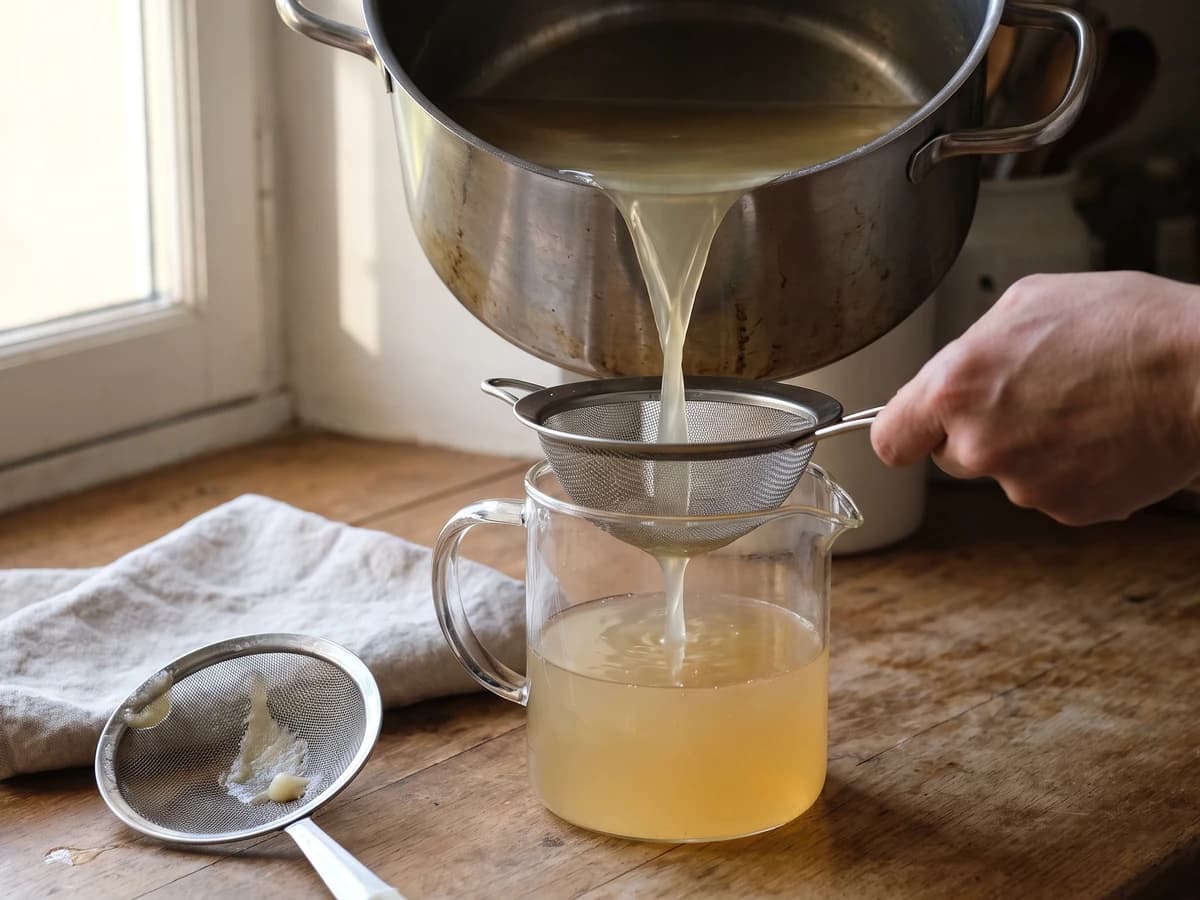
Break the veal bones small, then give them eight hours at a bare tremble. This pale, gelatinous fond becomes the quiet foundation beneath velouté, blanquette, and every sauce that must stay light.
Chef Juliette
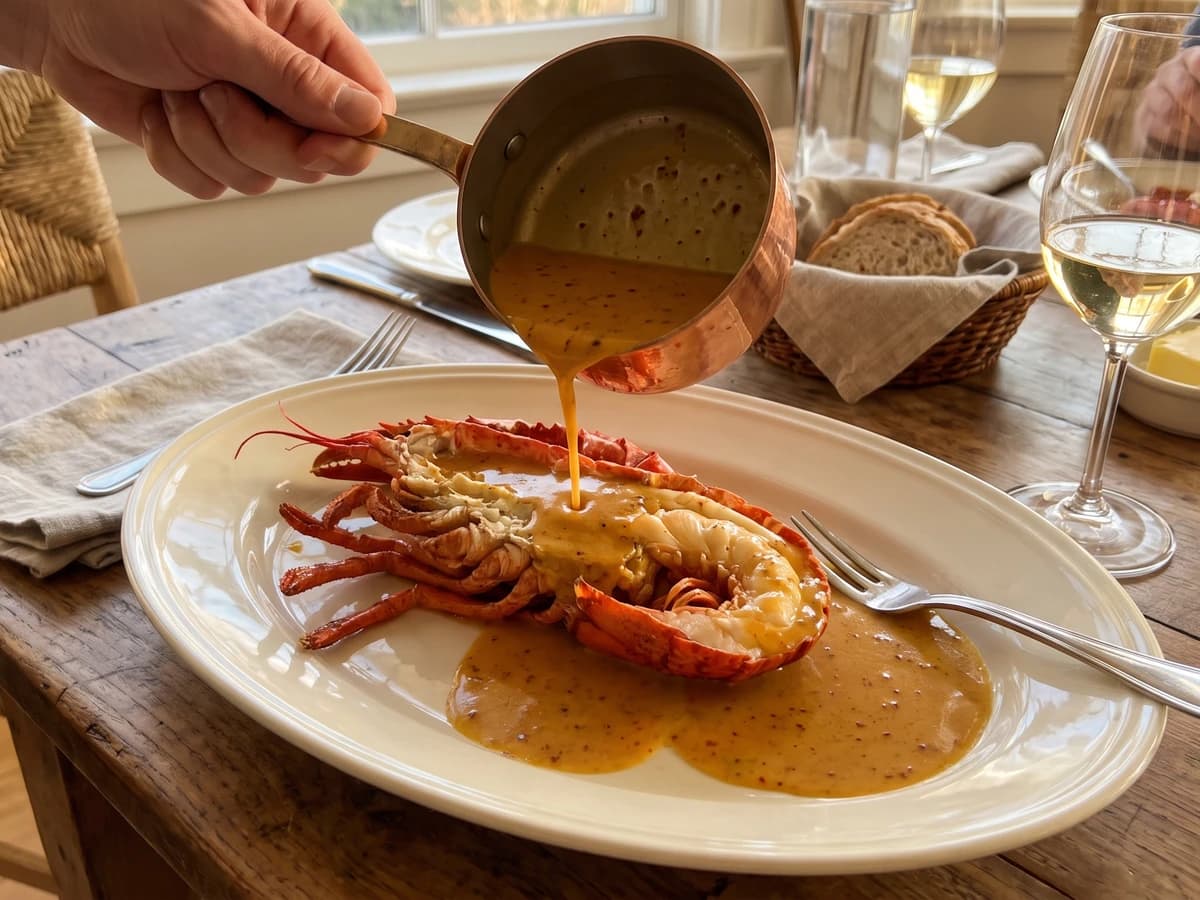
Sauce Orientale concentrates lobster-rich American Sauce with curry, then folds in cream away from the fire: a glossy, gently spiced derivative made for lobster, crayfish, and firm fish.
Chef Juliette
An old lesson in sauce families: Sauce Allemande takes mushroom liquor, then butter, lemon, and parsley, becoming a glossy Poulette for sheep's trotters, leeks, cauliflower, and anything needing gentle richness with a bright edge.