Culinary Explorer
A cooking platform built around craft, culture, and the stories behind what we eat.
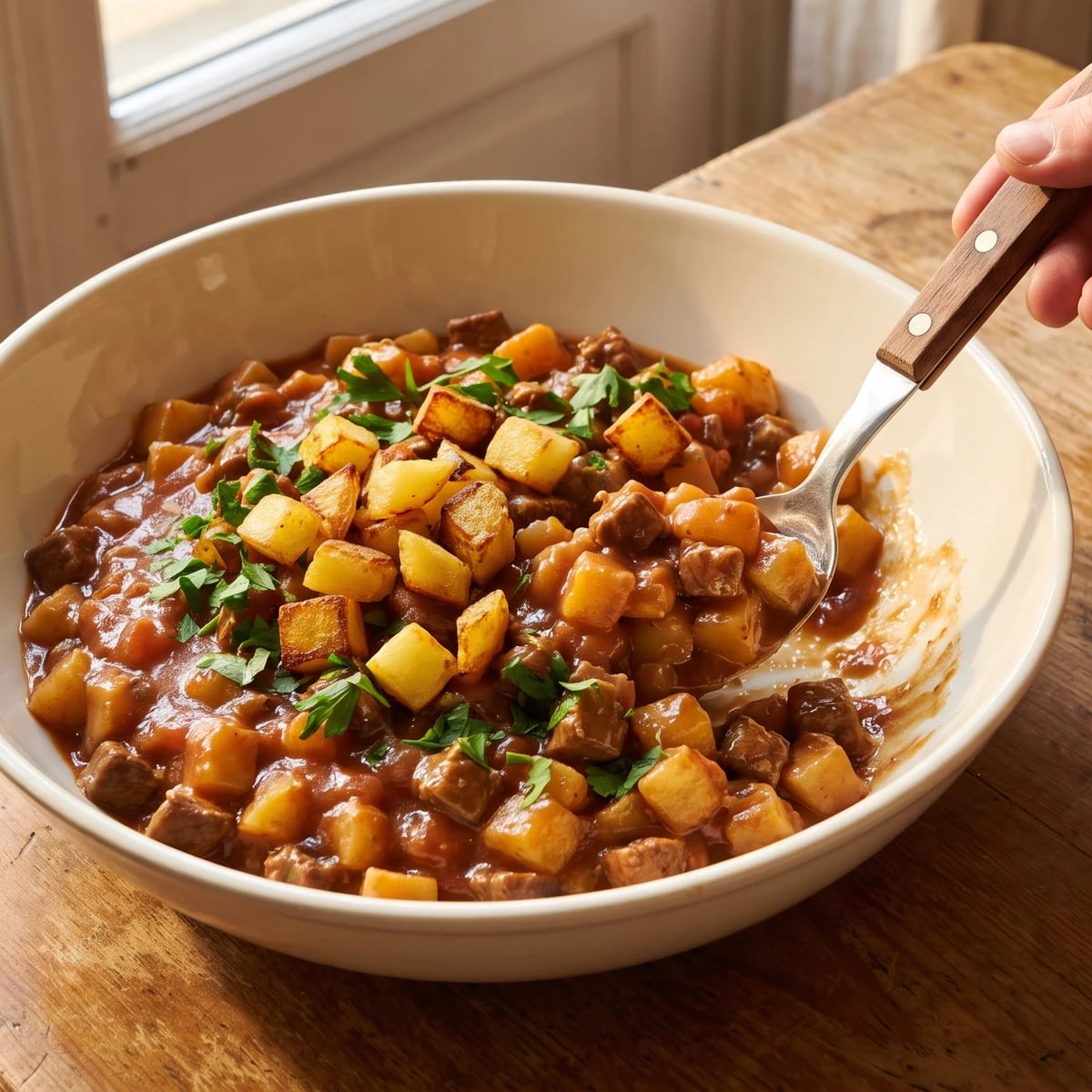
Hachis de Bœuf à l’Américaine
Created by Chef Juliette
Hachis de Bœuf à l’Américaine turns yesterday’s roast into tonight’s supper, binding tender beef and potatoes with tomato and veal gravy, then crowning the bowl with crisp butter-fried dice.
Hachis de Bœuf à l’Américaine (beef hash with tomato gravy and crisp potatoes) teaches one of the canon’s most useful disciplines: leftovers are not reheated carelessly, they are rebuilt. The one true thing to know before touching the pan is this: warm the cooked beef gently and never let its sauce boil. A boil tightens meat that has already given all the tenderness it has to give.
The original assumed a saucier on staff, a stockpot never off the fire, and a fry station ready to send out potatoes on command. Your honest equivalents are prepared reduced veal gravy, plain tomato sauce, one skillet, and one saucepan. A salamander has no work here because the crown is fried, not gratinéed. The separate stations and formal timbale are brigade scaffolding, so this version uses a warmed serving bowl and scales the equal-weight beef-and-potato ratio to four servings. The ratio, the division of the potatoes into tender binding and crisp garnish, and the gentle warming are the dish itself, so they stay.
The finished hachis should be loosely coherent, not wet, with distinct cubes of beef and tender potato held by a glossy rust-brown sauce. Crisp potatoes land only at the last moment, followed by parsley and nothing fussy. Keep that saucepan below a simmer, and the hachis stays tender, generous, and entirely itself. One cook, one stove, one evening.
Ingredients
cooked roast beef
Quantity
about 4 cups (600 g)
chilled and cut into 1/3-inch dice
waxy potatoes
Quantity
about 4 cups (600 g)
peeled and cut into 1/3-inch dice
unsalted butter
Quantity
5 tablespoons (75 ml / 70 g)
divided
| Ingredient | Quantity |
|---|---|
| cooked roast beefchilled and cut into 1/3-inch dice | about 4 cups (600 g) |
| waxy potatoespeeled and cut into 1/3-inch dice | about 4 cups (600 g) |
| unsalted butterdivided | 5 tablespoons (75 ml / 70 g) |
Where cooking meets culture.
Culinary guides, cultural storytelling, and the editorial depth that makes cooking meaningful.
Discover Culinary Explorer