Chef Juliette
Ordinary or White Consommé
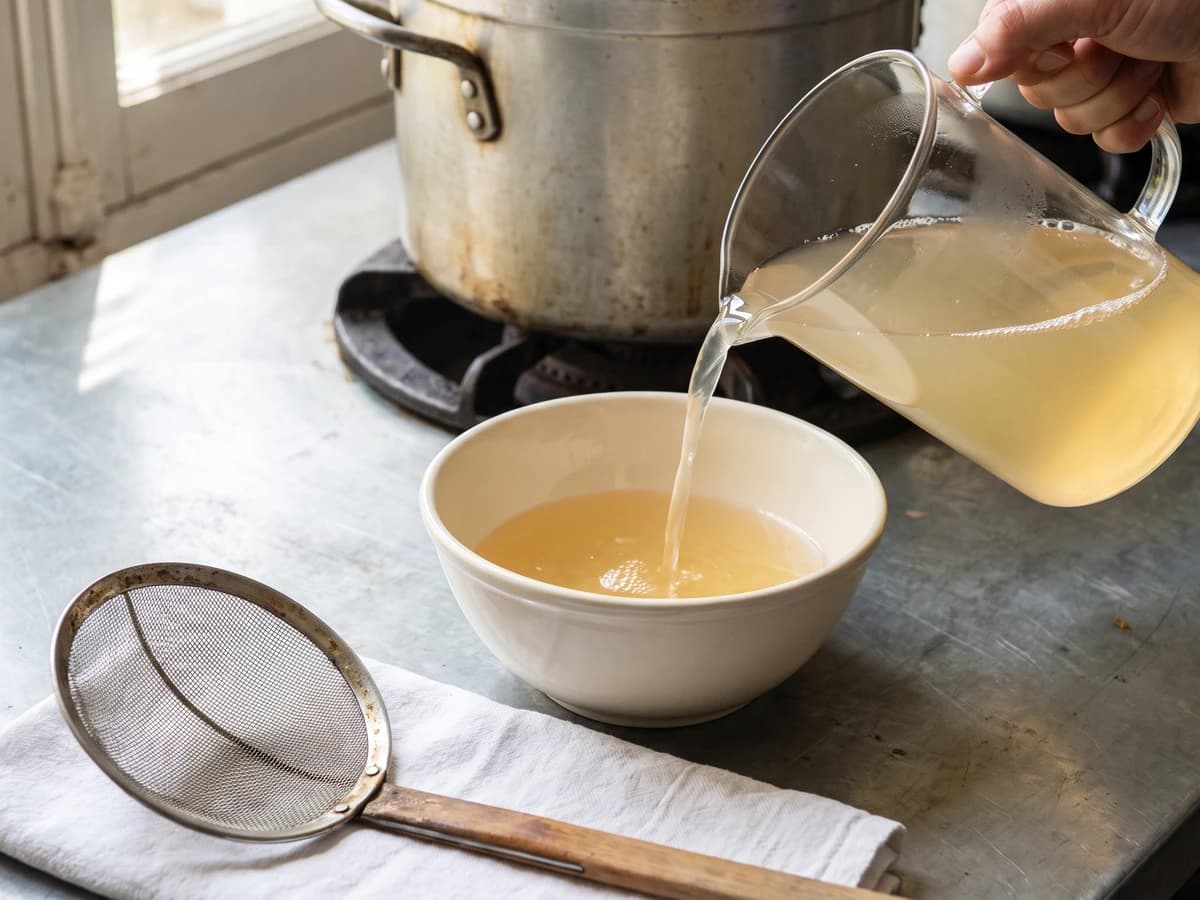
Beef shin, lean beef, and fowl begin in cold water and rise slowly toward a tremble. Skim before the boil, and you learn the quiet discipline that gives every clear French broth its backbone.
A cooking platform built around craft, culture, and the stories behind what we eat.
Created by Chef Juliette
Based on No. 117, Egg Sauce with Melted Butter, from Le Guide Culinaire (1907) by Auguste Escoffier
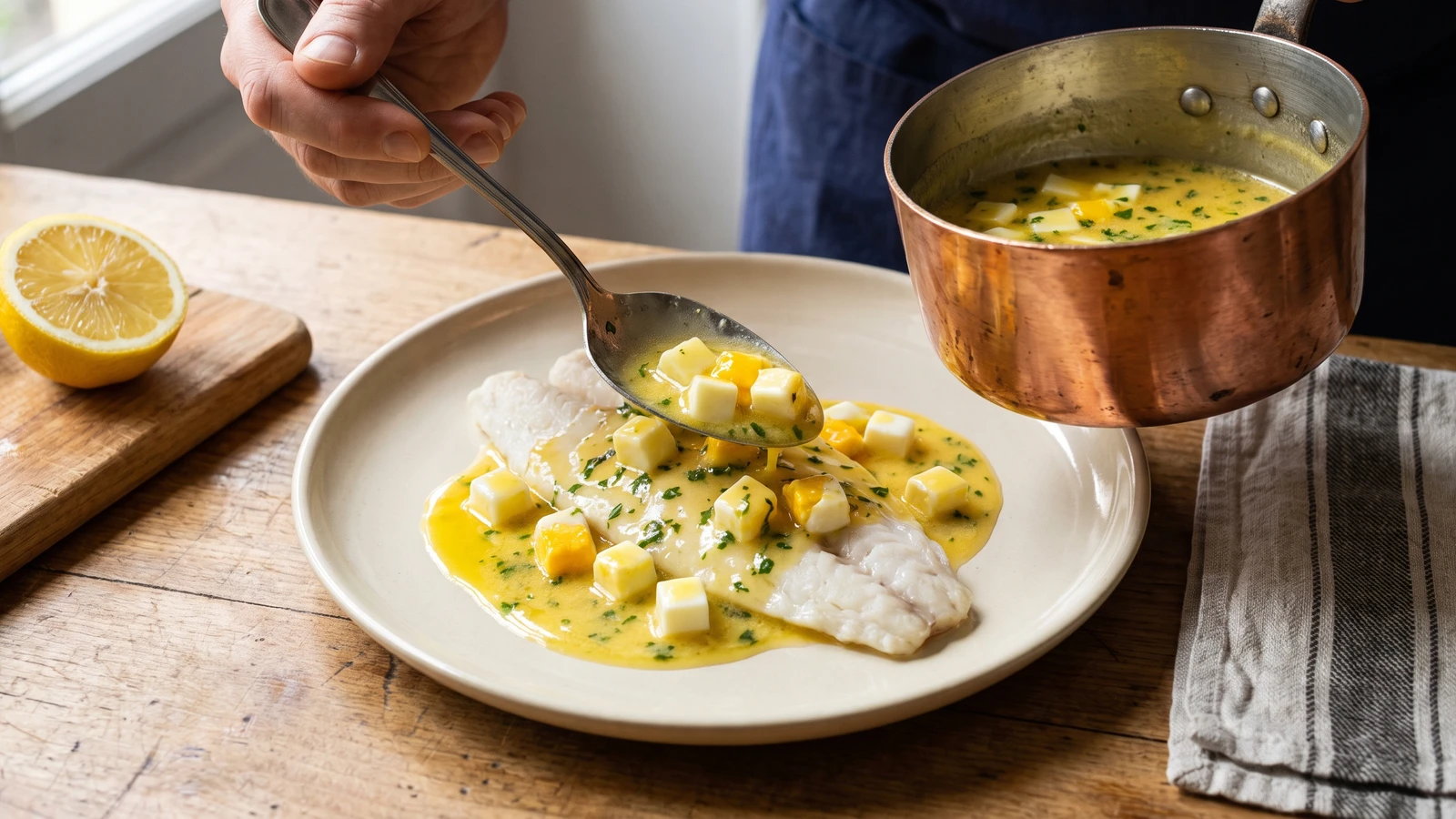
A warm classical sauce of lemon-bright butter, bold cubes of hot hard-boiled egg, and scalded parsley, made in one pan and ready to spoon generously over poached fish or vegetables.
Sauce aux œufs au beurre fondu teaches a small but useful truth: a sauce need not be thickened to feel complete. Here the butter stays fluid, lemon gives it a clean edge, and hot egg provides the substance. Know this before you touch a pan: the eggs must stay in bold cubes. Stir them into crumbs and the sauce loses its generous character.
The old service assumed a saucier at the stove, œufs durs, hard-boiled eggs, held hot, and chopped parsley already scalded before the order arrived. A stockpot never off the fire and a salamander served many classical sauces, but this entry calls on neither. At home, one saucepan does the work, and the egg water scalds the parsley before becoming a gentle water bath. The source's quarter-pound of butter and three eggs already make a sensible quantity for four, so its ratio and sequence remain intact; only the measurements and timing have been clarified. One cook, one stove, one evening.
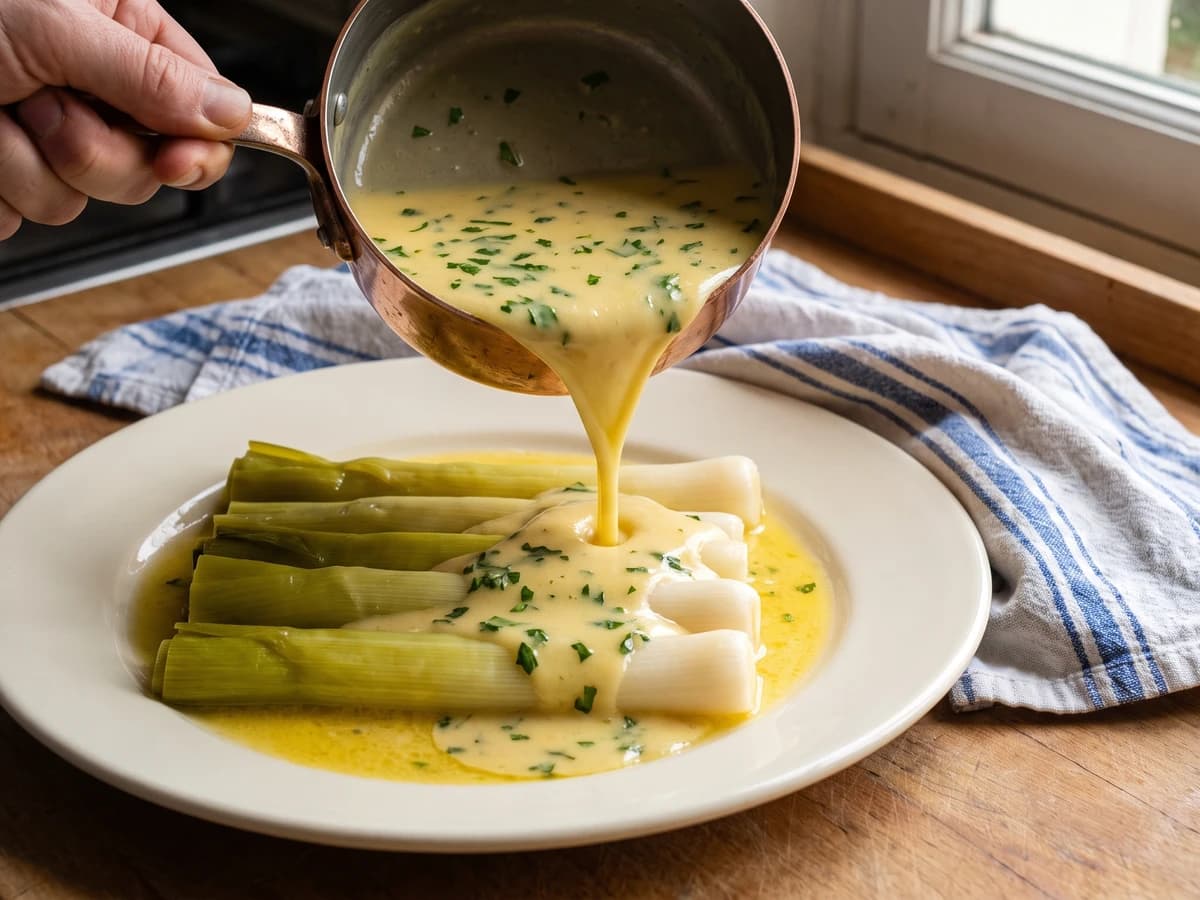
When it is right, the butter gleams around distinct pieces of ivory white and yellow yolk, with green parsley scattered through and lemon cutting the richness cleanly. The fold is the step that matters most: roll the pan gently, keep the heat low, and never beat the eggs into the sauce.
Sauce aux œufs au beurre fondu belongs to the cuisine bourgeoise table and the national classical sauce repertory, not to one French province; it was served warm with poached fish, boiled vegetables, and potatoes. Its place beside the emulsified butter sauces can mislead: it is deliberately not a hollandaise, because the butter remains simply melted and the œufs durs supply texture rather than thickening. The grand kitchen gave this economical household combination a formal place in service without disguising its simplicity.
Quantity
½ cup (120 ml / 113 g)
Quantity
¼ teaspoon (1.25 ml / 1.5 g), plus more if needed
Quantity
⅛ teaspoon (0.6 ml / 0.3 g)
freshly ground
Quantity
½, yielding 1½ tablespoons (22 ml / 22 g)
juiced
Quantity
3
hard-boiled, kept warm, and cut into ¾-inch (2 cm) cubes
Quantity
1 teaspoon (5 ml / 1 g)
finely chopped and scalded
| Ingredient | Quantity |
|---|---|
| unsalted butter | ½ cup (120 ml / 113 g) |
| fine salt | ¼ teaspoon (1.25 ml / 1.5 g), plus more if needed |
| black pepperfreshly ground | ⅛ teaspoon (0.6 ml / 0.3 g) |
| medium lemonjuiced | ½, yielding 1½ tablespoons (22 ml / 22 g) |
| large eggshard-boiled, kept warm, and cut into ¾-inch (2 cm) cubes | 3 |
| flat-leaf parsleyfinely chopped and scalded | 1 teaspoon (5 ml / 1 g) |
Put the eggs in a small saucepan and cover them with cold water by 1 inch (2.5 cm). Bring just to the boil, lower the heat to a gentle simmer, and cook for 10 minutes. Cool them under running water only until they can be handled, then peel while still warm. Cut each egg into bold ¾-inch (2 cm) cubes and keep them covered in a warm bowl. Small dice will crumble when folded, so resist the little knife work; the large pieces are the dish.
Return the egg water to the boil. Put the chopped parsley in a fine-mesh sieve, lower it into the water for 10 seconds, then lift it out and press it thoroughly dry with the back of a spoon. Scalding softens the parsley's raw edge without turning it to paste. Reserve a bowlful of the hot water for the finishing water bath, then empty and dry the saucepan completely.
Melt the butter in the dry saucepan over the lowest heat. When only a few small pieces remain, lift the pan from the heat and swirl until they disappear; the butter must be fluid and golden, never toasted. Stir in the salt, pepper, and lemon juice in that order. The lemon may gather in tiny beads because this is melted butter, not an emulsion. That loose appearance is correct. If tan milk solids begin to catch, pour the clear butter immediately into a clean bowl, leaving the specks behind, wipe the pan, and return the butter. Ça se rattrape. If the whole pan has taken on a nutty aroma, begin again because the sauce's character has changed.
Add the warm egg cubes and scalded parsley to the seasoned butter. Roll the pan gently from the wrist to coat them, using a spoon for one careful fold only if a few pieces remain bare. Warm over the lowest heat for 30 to 60 seconds without simmering. If cool eggs make the butter cloudy or cause it to begin setting, place the saucepan in the reserved hot water and roll it gently until the butter becomes fluid and glossy again. Ça se rattrape. Do not whisk, mash, or chase the cubes around the pan.
Taste and correct the salt, then transfer the sauce to a warmed sauceboat. Spoon it generously over poached white fish, boiled leeks, asparagus, cauliflower, or new potatoes while the butter is fluid and the eggs are hot. Serve within 10 minutes. Cooking well is not cooking fancy. À table!
1 serving (about 72g)
Culinary guides, cultural storytelling, and the editorial depth that makes cooking meaningful.
Discover Culinary ExplorerChef Juliette
Beef shin, lean beef, and fowl begin in cold water and rise slowly toward a tremble. Skim before the boil, and you learn the quiet discipline that gives every clear French broth its backbone.
Chef Juliette
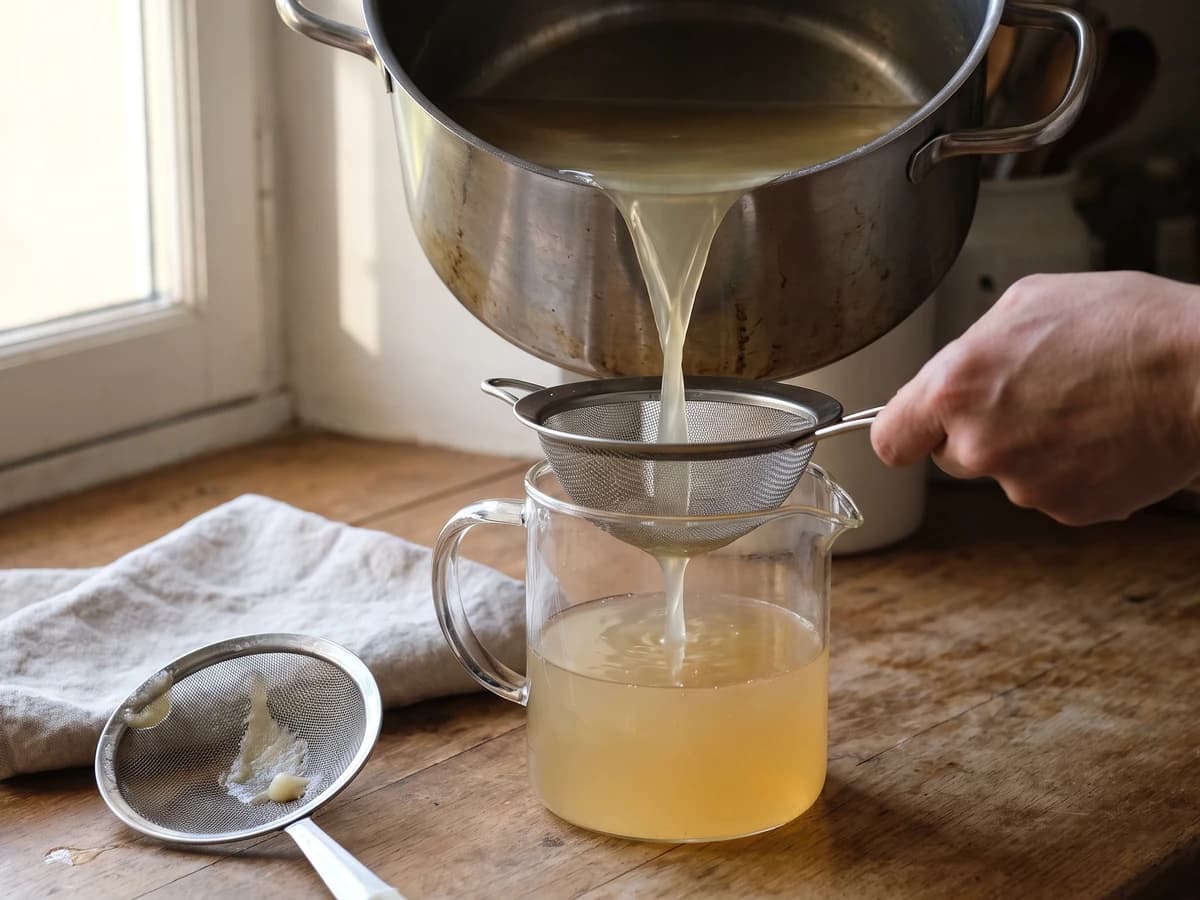
Break the veal bones small, then give them eight hours at a bare tremble. This pale, gelatinous fond becomes the quiet foundation beneath velouté, blanquette, and every sauce that must stay light.
Chef Juliette
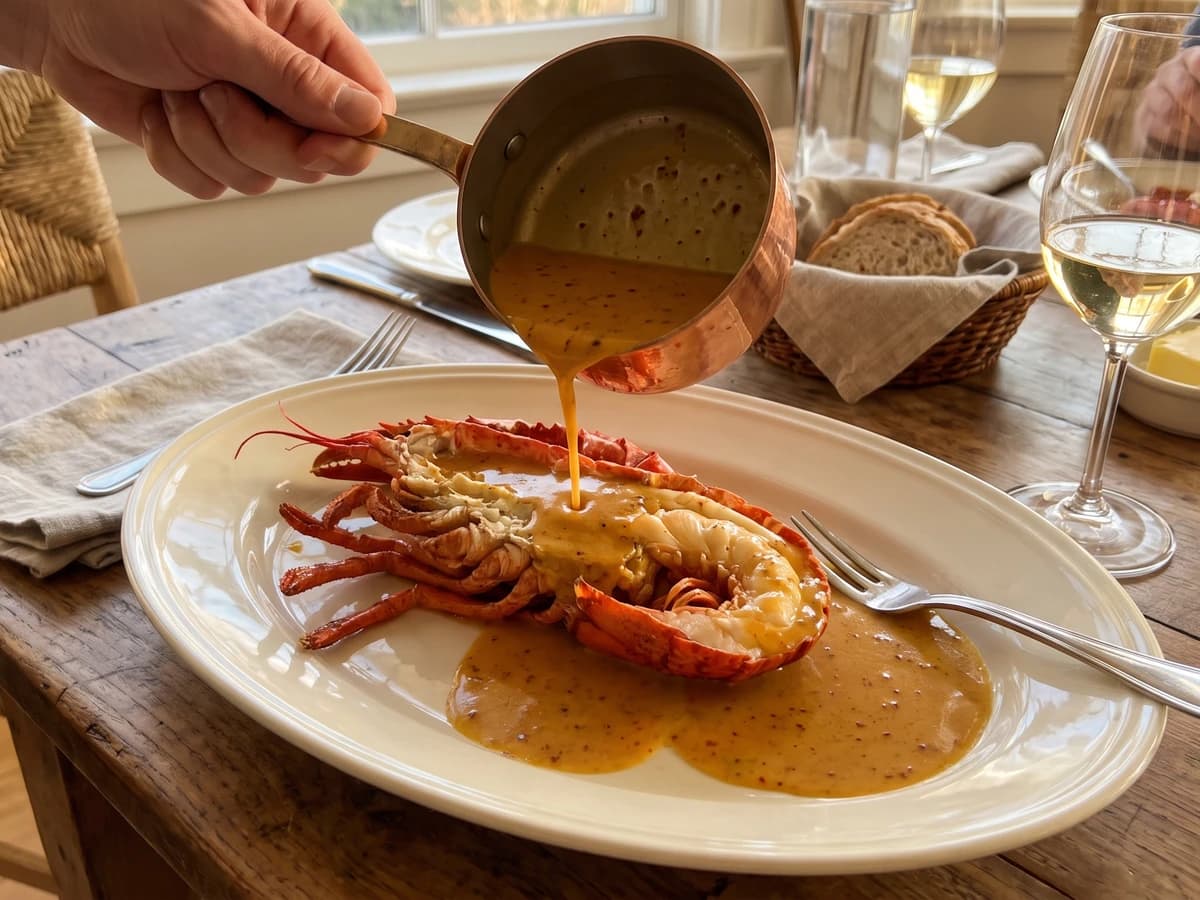
Sauce Orientale concentrates lobster-rich American Sauce with curry, then folds in cream away from the fire: a glossy, gently spiced derivative made for lobster, crayfish, and firm fish.
Chef Juliette
An old lesson in sauce families: Sauce Allemande takes mushroom liquor, then butter, lemon, and parsley, becoming a glossy Poulette for sheep's trotters, leeks, cauliflower, and anything needing gentle richness with a bright edge.