
Chef Juliette
John Dory (St. Pierre)
John Dory has the delicacy of sole and the firmness of turbot. A light flouring, a quick butter sauté, and nut-brown beurre noisette show exactly why looks never mattered.
A cooking platform built around craft, culture, and the stories behind what we eat.
Created by Chef Juliette
Based on No. 1165, Salt Beef, from Le Guide Culinaire (1907) by Auguste Escoffier
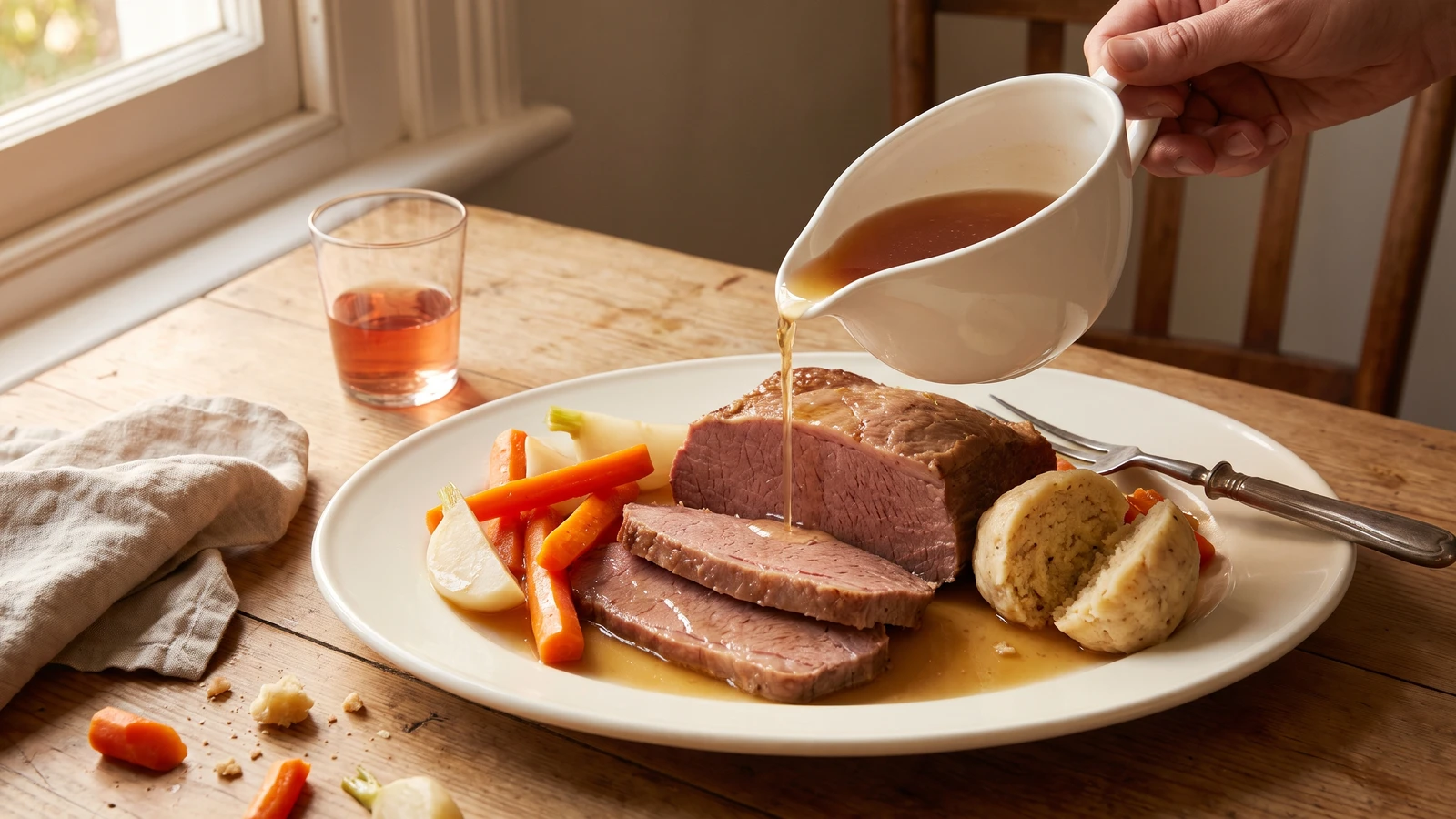
Bœuf salé teaches the quiet discipline of the simmer: cured brisket, carrots, turnips, and one cloth-bound suet dumpling, all brought to tenderness in the same savory liquor.
Bœuf salé à l’anglaise (English-style salt beef) teaches the discipline of a barely moving pot. Salt-cured beef is firm by design; only time and gentle water relax its connective tissue without squeezing it dry. The cooking liquor is not an afterthought. It is the sauceboat, carrying the beef’s savor into a copious garnish of carrots and turnips.
The source entry assumed a joint and suet dumpling sized for professional service, a boiler roomy enough to hold both, and spare hands to watch the roots. This entry needs neither a saucier nor a salamander, and stock kept on the fire would only obscure its plain logic. A 3¼-pound cut and one modest cloth-bound dumpling share an eight-quart pot. What changed is the scale and the timing, not the method: one cook, one stove, one evening.
The large boiler and extra hands were brigade scaffolding, so they go. The long cooking, generous roots, clear liquor, and suet dumpling are the dish, so they stay. Before the beef meets the water, remember the one thing that decides everything: the pot must barely tremble, never gallop.
Bœuf salé à l’anglaise belongs to the English domestic table and London’s boiled-beef cookshops, where cured brisket or silverside was simmered with roots and served with its own liquor. French classical manuals received it as an English preparation, keeping the suet dumpling and plain vegetable garnish instead of fitting it with a French sauce. Its name says boiled, but generations of careful cooks have held the pot below a boil, because a tremble gives tender meat and a clear, useful broth.
Quantity
1 piece, 3¼ lb (1.5 kg)
rinsed
Quantity
about 4 qt (3.8 L / 3.8 kg), or enough to cover by 2 in (5 cm)
Quantity
5 medium, about 4 cups (1¼ lb / 570 g)
peeled and cut into 3 in (7.5 cm) batons
Quantity
4 small, about 4 cups (1¼ lb / 570 g)
peeled and cut into equal wedges
Quantity
1½ cups (360 ml / 180 g)
Quantity
¾ cup (180 ml / 90 g)
finely shredded
Quantity
¾ teaspoon (4 g)
Quantity
7 to 8 tablespoons (105 to 120 ml / 105 to 120 g)
Quantity
1 tablespoon (15 ml / 8 g)
| Ingredient | Quantity |
|---|---|
| uncooked plain salt-cured beef brisket, silverside, or roundrinsed | 1 piece, 3¼ lb (1.5 kg) |
| cold water | about 4 qt (3.8 L / 3.8 kg), or enough to cover by 2 in (5 cm) |
| carrotspeeled and cut into 3 in (7.5 cm) batons | 5 medium, about 4 cups (1¼ lb / 570 g) |
| turnipspeeled and cut into equal wedges | 4 small, about 4 cups (1¼ lb / 570 g) |
| all-purpose flour | 1½ cups (360 ml / 180 g) |
| fresh beef suetfinely shredded | ¾ cup (180 ml / 90 g) |
| fine salt | ¾ teaspoon (4 g) |
| cold water for the dumpling | 7 to 8 tablespoons (105 to 120 ml / 105 to 120 g) |
| all-purpose flour for the pudding cloth | 1 tablespoon (15 ml / 8 g) |
Put the rinsed beef in an 8-quart heavy pot and add enough cold water to cover it by 2 inches. Bring it up slowly over medium heat, skimming away the gray foam as it gathers. When the first lazy bubbles reach the surface, lower the heat at once. The liquor should move only at the edges, with no rolling boil.
Cover the pot with the lid slightly ajar and maintain the barest simmer, about 185 to 195°F (85 to 90°C), for 2 hours. Turn the beef after the first hour and top up with boiling water if any part rises above the surface. Taste the liquor after 45 minutes. If it tastes sharply briny rather than savory, remove half and replace it with the same amount of boiling water. Do this early, before the roots and dumpling have absorbed the excess salt.
Mix the 1½ cups flour with the suet and fine salt, separating the suet shreds so each is coated. Stir in 7 tablespoons cold water, adding the final tablespoon only if the dough will not hold together. Bring it into one soft ball without kneading. If the edges crumble, add water a teaspoon at a time; if it clings heavily to your fingers, dust it with a little flour. Ça se rattrape. Wet a clean 24-inch square of muslin or doubled cheesecloth, wring it out, and dust its center with the remaining tablespoon of flour. Set the dumpling in the center, gather the cloth loosely above it to leave about an inch for expansion, and tie securely with kitchen string. Lower it beside the beef after the beef has simmered for 2 hours, then cover and cook it at the same gentle tremble for 1½ hours.
When the dumpling has cooked for 45 minutes, add the carrots and turnips around the beef. Keep them in generous pieces so they can cook for another 45 minutes without collapsing. Add a little boiling water only if needed to keep the beef and dumpling covered. The roots are ready when a knife passes through without force but their edges remain intact.
After about 3½ hours of simmering, pierce the thickest part of the beef with a fine skewer. It should enter with little resistance, and a fork should begin to separate the grain. Lift out the dumpling and roots as soon as each is ready. If the beef still grips the skewer, keep it at the tremble for another 20 to 30 minutes while the vegetables and wrapped dumpling wait under a ladleful of liquor. If the dumpling shows a wet line of raw dough when tested at its center, retie the cloth and return it for 15 minutes.
Lift the beef to a board, cover it loosely, and let it rest for 15 minutes. Unwrap the dumpling and cut it into four thick wedges. Skim the cooking liquor, then taste it before filling a warm sauceboat; dilute it with a little boiling water if it remains too salty, but never reduce it, because reduction would concentrate the cure. Slice the beef across the grain about ¼ inch (6 mm) thick and arrange it on a broad platter with the carrots, turnips, and dumpling. Spoon over just enough liquor to give everything a gloss and carry the rest separately. À table!
1 serving (about 620g)
Culinary guides, cultural storytelling, and the editorial depth that makes cooking meaningful.
Discover Culinary ExplorerChef Juliette
John Dory has the delicacy of sole and the firmness of turbot. A light flouring, a quick butter sauté, and nut-brown beurre noisette show exactly why looks never mattered.

Chef Juliette
Fresh haddock proves its delicacy in the meunière pan: a fine flour crust, moist pearly flakes, and beurre noisette sharpened with lemon and parsley, ready from one skillet in half an hour.

Chef Juliette
Éperlans à l’Anglaise turns small fish into a lesson in disciplined coating: boned smelts under a close, crisp crumb, pan-fried in clarified butter and finished with bright, half-melted maître d’hôtel butter.

Chef Juliette
Tiny smelts, shallot, mushrooms, white wine, gratin sauce, and fine bread raspings meet a fierce oven, where the fish must turn tender in the same breath the buttered crust bronzes.