Culinary Explorer
A cooking platform built around craft, culture, and the stories behind what we eat.
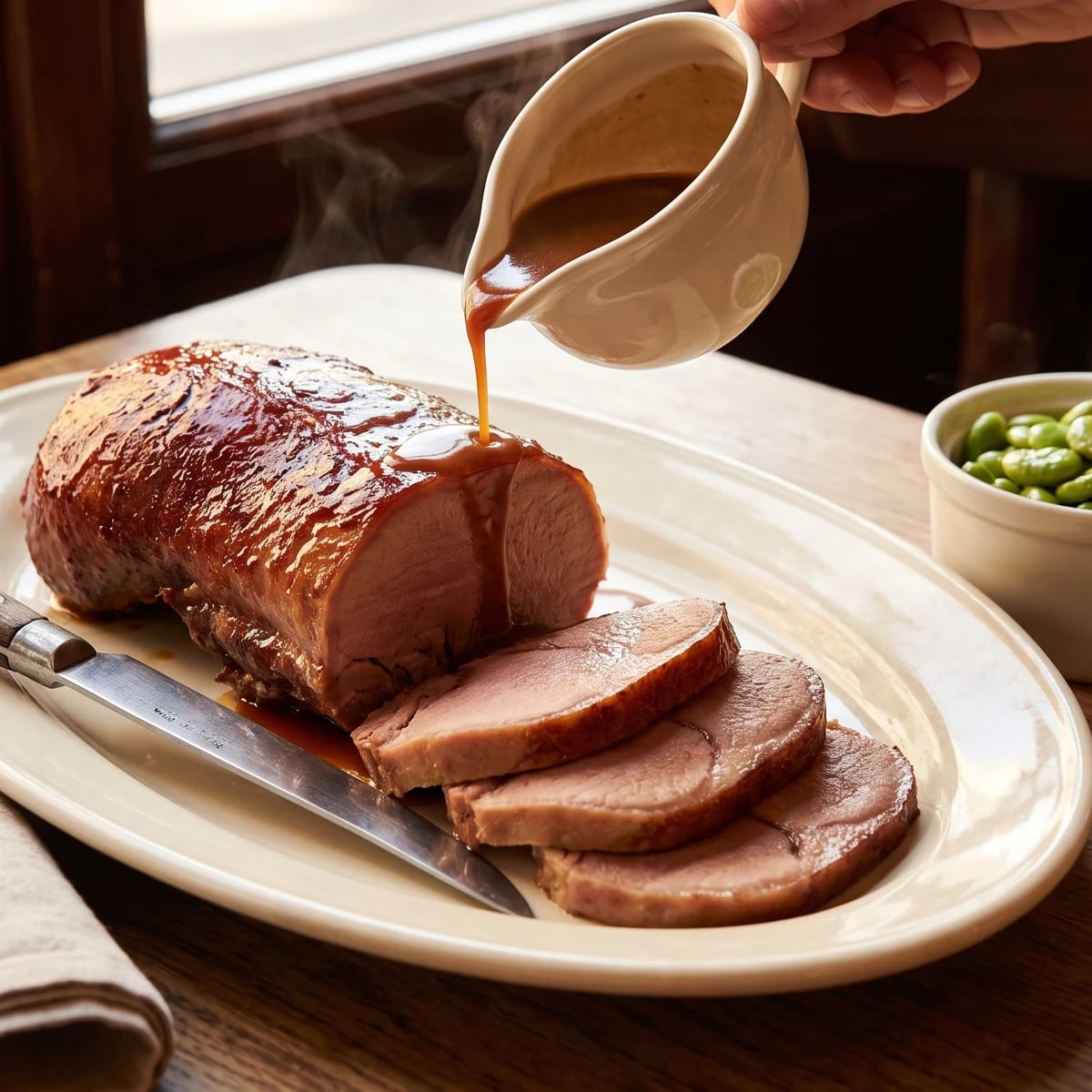
Langue de Bœuf aux Fèves
Created by Chef Juliette
Salted ox tongue poached at the gentlest tremble, peeled warm and glazed to a bronze sheen, with tender broad beans bound in butter and savory, and Madeira sauce passed separately.
Langue de Bœuf aux Fèves (salted ox tongue with broad beans) teaches one stern, useful thing: a tongue must poach at a tremble, never a boil. Its dense muscle softens through long, quiet heat. A rolling pot tightens the outside and muddies the liquor before the center becomes tender.
The original kitchen assumed a salted tongue ready from the larder, a stock never off the fire, a saucier on staff for the Madeira sauce, and a salamander to set the glaze. Your honest equivalents are a three-day refrigerator salting, good unsalted beef stock, a small saucepan, and the broiler. The tongue is sized for four, the Madeira sauce fills one sauce boat, and the glaze comes from one cup of reduced stock rather than a vat of meat glaze. One cook, one stove, one evening, once the unattended curing is done.
The separate brigade hands are scaffolding and can go. The salting, gentle poach, warm peeling, glossy glaze, skinned beans cooked with savory and bound in real butter, and Madeira sauce offered apart are the dish and must stay. Before you set the pot on the stove, remember this: the poaching liquor should barely move. That quiet pot decides everything.
Ingredients
fresh ox tongue
Quantity
1, about 3 pounds (1.3 kg)
fine sea salt
Quantity
1½ tablespoons (22 ml / 26 g)
for curing
cold water
Quantity
14 cups (3.3 L / 3.3 kg), or enough to cover the tongue
| Ingredient | Quantity |
|---|---|
| fresh ox tongue | 1, about 3 pounds (1.3 kg) |
| fine sea saltfor curing | 1½ tablespoons (22 ml / 26 g) |
| cold water | 14 cups (3.3 L / 3.3 kg), or enough to cover the tongue |
Where cooking meets culture.
Culinary guides, cultural storytelling, and the editorial depth that makes cooking meaningful.
Discover Culinary Explorer