
Chef Juliette
John Dory (St. Pierre)
John Dory has the delicacy of sole and the firmness of turbot. A light flouring, a quick butter sauté, and nut-brown beurre noisette show exactly why looks never mattered.
A cooking platform built around craft, culture, and the stories behind what we eat.
Created by Chef Juliette
Based on No. 1141, Sirloin of Beef (Relevé), from Le Guide Culinaire (1907) by Auguste Escoffier
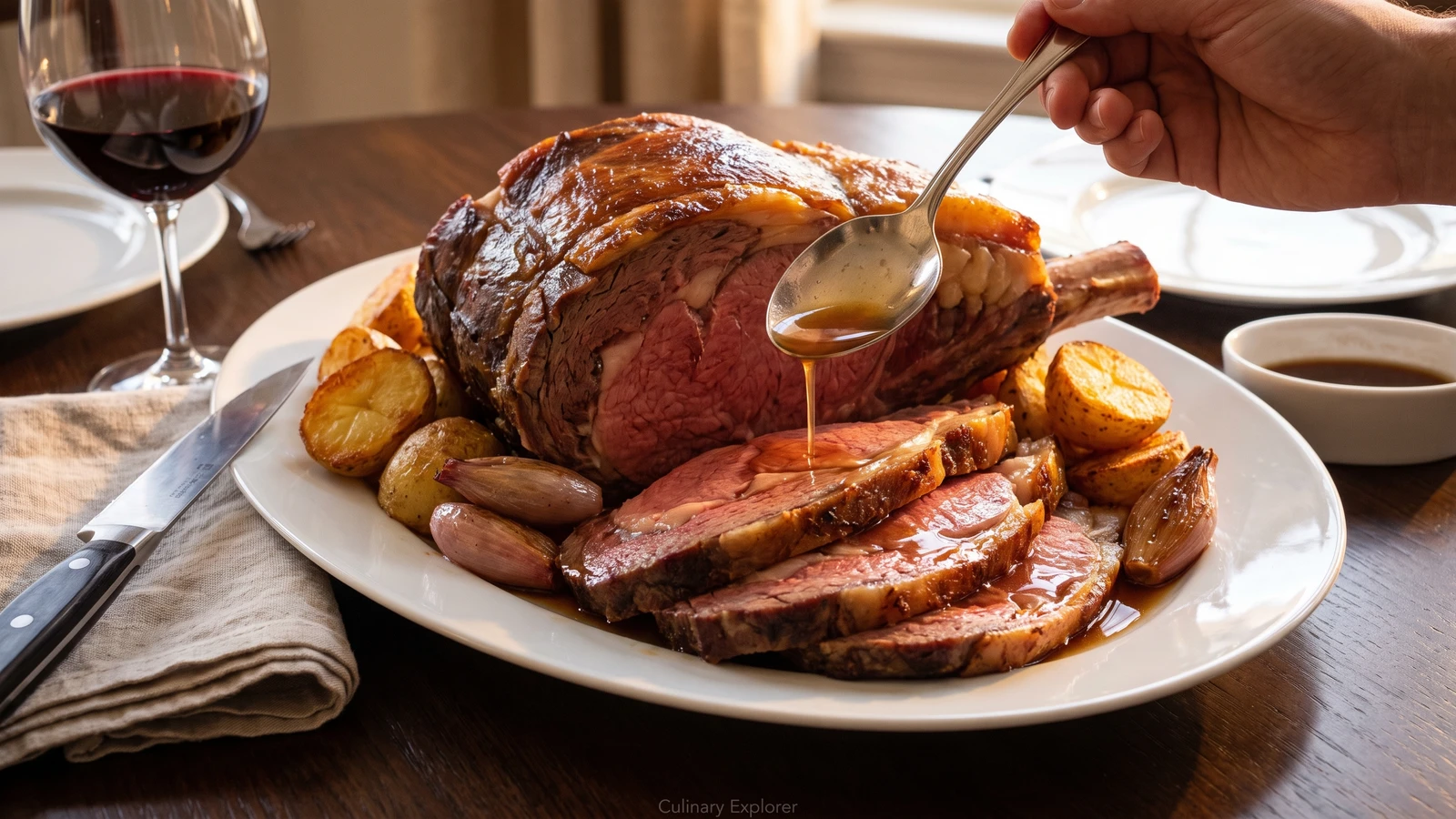
Whole aloyau roasted on the bone, kept rosy through fillet and contrefilet, then carved onto a generous platter with buttered potatoes, glazed shallots, and natural jus drawn from the pan.
Aloyau de Bœuf en Relevé (whole sirloin served as the substantial meat course) teaches the hardest lesson in roasting: the more valuable the joint, the less you should meddle with it. This cut carries the fillet beneath the bone and the contrefilet above it. Roast it whole, stop while the center is still rosy, and let the rest finish what fierce heat began. Braise a lean sirloin and it pays your patience back with dryness.
The original joint fed a dining room and arrived from the butcher already shortened at the flank, with the ligament beside the chine sectioned for clean carving and the upper fat left intact. Behind it stood the brigade: a saucier with stock never off the fire, separate hands for a great Richelieu, Provençale, or Godard garniture, and a salamander ready to give the garnish its last color. For four, ask for a small bone-in short-loin section with both muscles attached, strengthen good unsalted stock with gelatin only if it lacks body, roast potatoes in the beef drippings, and glaze shallots while the meat cooks. Those elaborate garniture stations are brigade scaffolding; the whole roast, its underdone center, and the jus built from its fond are the dish. One cook, one stove, one evening.
At the table, the fat cap should be Maillard bronze, the fillet tender and rosy, the contrefilet deeply flavored, and the jus clear enough to run but glossy enough to cling. The one step that decides everything is the temperature reading: place the thermometer in the deepest part of the contrefilet, away from bone, and pull the joint before it looks fully done.
French butchers call aloyau the stretch of the back corresponding to the saddle in veal and mutton, and strictly speaking it is whole only when it carries both filet, the undercut, and contrefilet above it. At the grand French table, relevé described the joint's substantial place in service, not a particular seasoning or sauce, which is why the aloyau could appear with several imposing garnitures. The governing practice remained simple: roast a good specimen whole and keep it underdone, since braising a lean or modest sirloin tends to leave it dry.
Quantity
1 roast, 3½ lb (1.6 kg)
fillet and contrefilet attached, flank trimmed, chine loosened, and fat cap intact
Quantity
1 tablespoon plus 2 teaspoons (25 ml / 25 g)
divided
Quantity
1½ teaspoons (7.5 ml / 3 g)
divided
Quantity
4½ cups (1.1 L / 750 g)
peeled and kept whole
Quantity
6 tablespoons (90 ml / 85 g)
divided
Quantity
12 shallots, about 2 cups (475 ml / 300 g)
peeled
Quantity
2½ cups (600 ml / 600 g)
divided
Quantity
1 teaspoon (5 ml / 3 g)
use only if the stock lacks body
Quantity
1 teaspoon (5 ml / 4 g)
Quantity
1
| Ingredient | Quantity |
|---|---|
| bone-in short-loin roastfillet and contrefilet attached, flank trimmed, chine loosened, and fat cap intact | 1 roast, 3½ lb (1.6 kg) |
| fine sea saltdivided | 1 tablespoon plus 2 teaspoons (25 ml / 25 g) |
| freshly ground black pepperdivided | 1½ teaspoons (7.5 ml / 3 g) |
| small waxy potatoespeeled and kept whole | 4½ cups (1.1 L / 750 g) |
| unsalted butterdivided | 6 tablespoons (90 ml / 85 g) |
| small shallotspeeled | 12 shallots, about 2 cups (475 ml / 300 g) |
| unsalted beef stockdivided | 2½ cups (600 ml / 600 g) |
| powdered unflavored gelatin (optional)use only if the stock lacks body | 1 teaspoon (5 ml / 3 g) |
| superfine sugar | 1 teaspoon (5 ml / 4 g) |
| bouquet garni of parsley stems, thyme, and bay | 1 |
Ask the butcher to shorten the flank, leave the fat on the contrefilet, loosen the chine for carving, and make several small cuts through the tough ligament running beside it. Do not strip or closely trim the upper fat; it protects the lean meat and bastes it as it roasts. Dry the joint thoroughly, score only the fat cap in a shallow crosshatch, and season every surface with 1 tablespoon (15 ml / 15 g) of the salt and 1 teaspoon (5 ml / 2 g) of the pepper. Refrigerate uncovered for 12 to 24 hours if time allows. For same-evening cooking, season it at least 45 minutes before roasting.
Heat the oven to 230°C / 450°F with a rack in the lower third. Put the potatoes in a saucepan, cover them with cold water, and add 1½ teaspoons (7.5 ml / 8 g) of the remaining salt. Bring to a boil, then simmer for 8 minutes, just until their outer layer begins to soften. Drain well and shake them gently in the pan to roughen their surfaces. Toss with 2 tablespoons (30 ml / 28 g) of the butter and half the remaining pepper. They should still be firm inside; the roast will finish them.
Pat the beef dry once more and set it bone-side down, fat-side up, in a heavy roasting pan. The bone is its roasting rack. Roast for 15 minutes, until the fat begins to bronze, then lower the oven to 180°C / 350°F. Arrange the potatoes around the joint in one uncrowded layer and turn them through the rendered beef fat. The fierce opening heat establishes the crust; the gentler heat cooks the two loin muscles without tightening them.
Continue roasting for 35 to 50 minutes, turning the potatoes once, until a thermometer inserted from the side into the deepest part of the contrefilet, clear of bone and fat, reads 50°C / 122°F. It should finish near 54°C / 129°F after resting, rosy and underdone as the entry intends. Check the smaller fillet as well; if it is running several degrees ahead, shield that side loosely with foil. If the fat cap darkens too quickly, cover only the browned surface. If you overshoot, move the joint immediately to a cool rack and leave it uncovered for the first 10 minutes of resting, then carve thicker slices and serve the jus generously. Ça se rattrape, though no sauce can return moisture once it is gone.
While the beef roasts, melt 2 tablespoons (30 ml / 28 g) of the butter in a wide saucepan over medium heat. Add the shallots, sugar, the remaining salt, and the remaining pepper. Roll them in the butter for 4 to 5 minutes, until lightly colored, then add ½ cup (120 ml / 120 g) of the stock. Cover and simmer gently for 15 minutes. Uncover and reduce the liquid until it forms a thin glaze around the tender shallots. If the sugar catches or the butter separates, add a tablespoon of stock and swirl over low heat until the glaze comes together again.
Transfer the beef to a rack set over a board and rest it for 25 minutes. Leave it uncovered for the first 10 minutes, then drape it loosely with foil; wrapping it tightly softens the crust and traps too much carryover heat. Raise the oven to 220°C / 425°F and return the potatoes for 10 to 15 minutes if they need more color. They are ready when their rough edges are crisp and butter-gold. Never hold the beef in the warm oven while you finish the garnish.
Pour excess fat from the roasting pan, leaving the brown fond in place. If using gelatin, sprinkle it over the remaining 2 cups (480 ml / 480 g) cold stock and let it stand for 5 minutes. Set the roasting pan over medium heat, add the stock and bouquet garni, and scrape up every brown deposit, leaving any truly black patch untouched. Simmer until reduced to about 1 cup (240 ml / 240 g), then strain into a small saucepan and add the juices released by the resting meat. Off the heat, whisk in the final 2 tablespoons (30 ml / 28 g) cold butter, a little at a time. This is a light jus de rôti, a roasting jus, not thick gravy. If the butter floats out in oily beads, whisk in a teaspoon of cold stock off the heat until the emulsion returns. Ça se rattrape.
Run a sharp knife along the bone and lift away the fillet and contrefilet separately. Slice the fillet into thick medallions and the contrefilet across its grain into slices about 1 cm thick. Arrange both cuts on a warmed oval platter so each guest receives some of each, with the crisp potatoes and glazed shallots banked generously around them. Spoon over only enough jus to make the cut surfaces gleam and bring the rest in a warm sauceboat. À table!
1 serving (about 520g)
Culinary guides, cultural storytelling, and the editorial depth that makes cooking meaningful.
Discover Culinary ExplorerChef Juliette
John Dory has the delicacy of sole and the firmness of turbot. A light flouring, a quick butter sauté, and nut-brown beurre noisette show exactly why looks never mattered.

Chef Juliette
Fresh haddock proves its delicacy in the meunière pan: a fine flour crust, moist pearly flakes, and beurre noisette sharpened with lemon and parsley, ready from one skillet in half an hour.

Chef Juliette
Éperlans à l’Anglaise turns small fish into a lesson in disciplined coating: boned smelts under a close, crisp crumb, pan-fried in clarified butter and finished with bright, half-melted maître d’hôtel butter.

Chef Juliette
Tiny smelts, shallot, mushrooms, white wine, gratin sauce, and fine bread raspings meet a fierce oven, where the fish must turn tender in the same breath the buttered crust bronzes.