
Chef Juliette
John Dory (St. Pierre)
John Dory has the delicacy of sole and the firmness of turbot. A light flouring, a quick butter sauté, and nut-brown beurre noisette show exactly why looks never mattered.
A cooking platform built around craft, culture, and the stories behind what we eat.
Created by Chef Juliette
Based on No. 1130, Tournedos Soubise, from Le Guide Culinaire (1907) by Auguste Escoffier
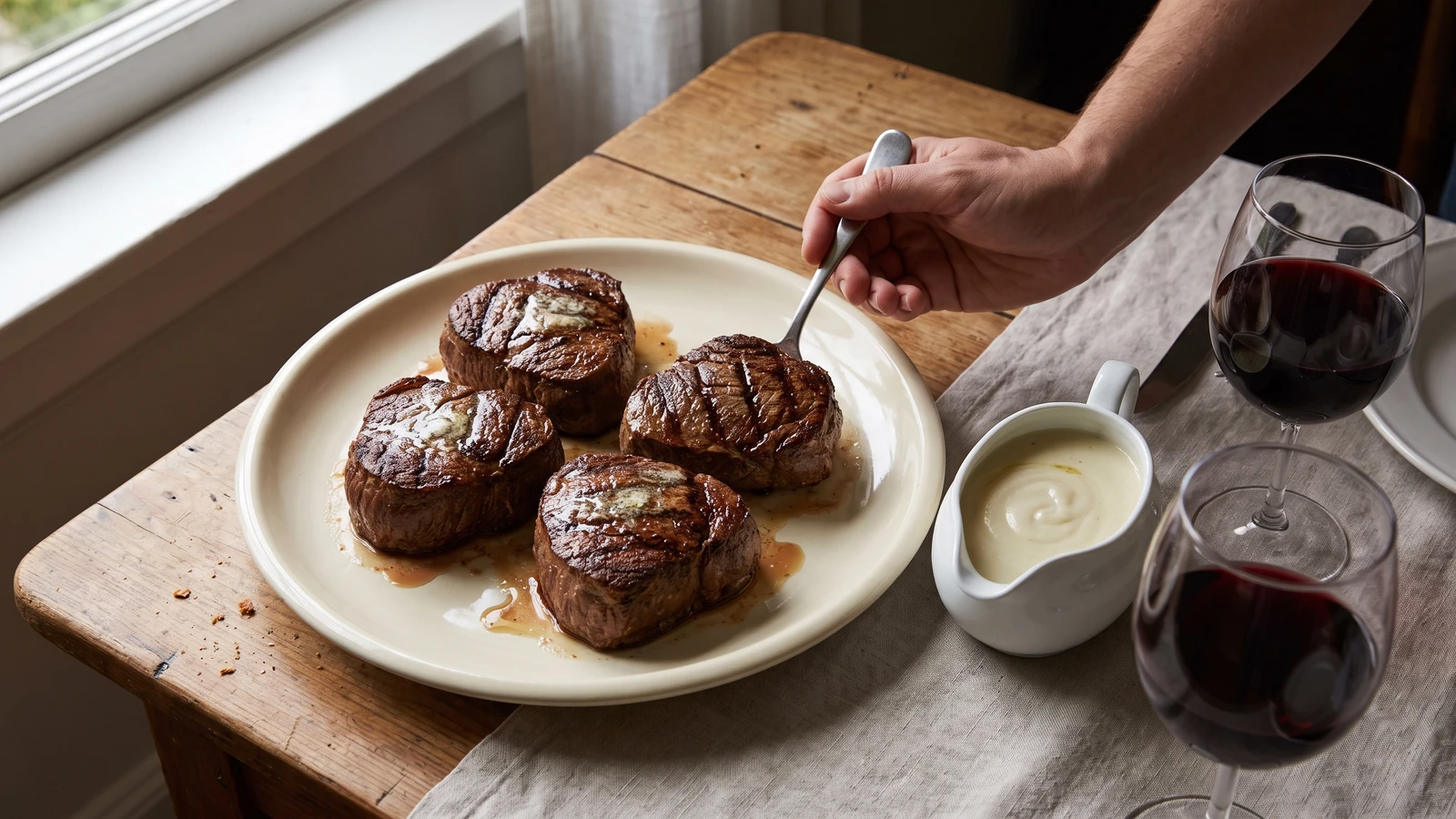
Tournedos Soubise teaches restraint: grill the lean fillets fiercely, keep the onion purée pale and silken, then arrange the beef in a crown and serve the Soubise apart.
Tournedos Soubise (grilled beef fillets with onion purée) teaches one true thing: tenderloin has tenderness but almost no margin. Grill it hot and quick, and the outside bronzes while the centre stays rosy; hesitate over weak heat, and this lean cut dries before it colours.
The original entry is brigade shorthand. It assumes butcher-cut tournedos, a grill kept fiercely hot, a saucier tending a pale Soubise, and stock never off the fire. Your honest equivalents are four evenly cut fillets, a large cast-iron grill pan, measured unsalted stock, a small saucepan, and a blender followed by a fine sieve. A dedicated saucier and a vast batch of purée are scaffolding, so they go. The crown arrangement, the pale onion flavour, and the separate service must stay. No salamander belongs here because nothing is gratinéed. One cook, one stove, one evening.
Dry the tournedos thoroughly and heat the grill pan until contact produces an immediate, determined hiss. That first meeting between meat and iron decides the dish, so have the Soubise finished and the platter warm before you begin.
Tournedos Soubise belongs to the Parisian classical table, where small, thick rounds from the centre of the beef fillet were matched with named garnishes and arranged formally on a shared dish. Soubise takes its name from the Rohan-Soubise household and became the canonical preparation of onions cooked pale, softened with rice, and worked into a fine purée. Serving it apart is not empty ceremony: the separation preserves both the tournedos' browned crust and the Soubise's delicate colour.
Quantity
4 tournedos, 6 ounces (170 g) each and 1½ inches (4 cm) thick
Quantity
2 medium, about 12 ounces (340 g)
thinly sliced
Quantity
2 tablespoons (30 ml / 25 g)
Quantity
1¼ cups (300 ml / 300 g)
divided
Quantity
⅓ cup (80 ml / 80 g)
Quantity
3 tablespoons (45 ml / 42 g)
divided
Quantity
1 tablespoon (15 ml / 14 g)
Quantity
1¼ teaspoons (6 ml / 7 g)
divided
Quantity
½ teaspoon (2.5 ml / 1 g)
| Ingredient | Quantity |
|---|---|
| centre-cut beef tenderloin tournedos | 4 tournedos, 6 ounces (170 g) each and 1½ inches (4 cm) thick |
| yellow onionsthinly sliced | 2 medium, about 12 ounces (340 g) |
| uncooked white rice | 2 tablespoons (30 ml / 25 g) |
| unsalted chicken stockdivided | 1¼ cups (300 ml / 300 g) |
| heavy cream | ⅓ cup (80 ml / 80 g) |
| unsalted butterdivided | 3 tablespoons (45 ml / 42 g) |
| clarified butter | 1 tablespoon (15 ml / 14 g) |
| fine sea saltdivided | 1¼ teaspoons (6 ml / 7 g) |
| freshly ground black pepper | ½ teaspoon (2.5 ml / 1 g) |
Tie each tournedos once around its equator so it holds a neat, thick round. Pat every surface thoroughly dry, then season the beef with ¾ teaspoon of the salt and all the pepper. Leave it at cool room temperature while you make the Soubise, about 30 minutes. The salt begins seasoning the centre, and the dry surface gives the grill something it can brown.
Bring a saucepan of water to a boil, add the sliced onions, and blanch them for 3 minutes. Drain thoroughly without pressing them into a paste. Blanching softens the onions' sharp edge so the finished Soubise tastes sweet and composed, not raw or sulfurous.
Melt 2 tablespoons of the butter in a medium saucepan over low heat. Add the drained onions and the remaining ½ teaspoon salt, cover, and cook for 10 to 12 minutes, stirring occasionally, until supple and translucent but still pale. Colour is the danger here. If the pan begins browning, transfer the pale onions to a clean saucepan, leaving the coloured butter and caught bits behind, then add a spoonful of stock. Ça se rattrape.
Stir the rice into the onions, then add 1 cup of the stock. Cover and hold at the barest simmer for 20 to 25 minutes, stirring near the end, until the rice crushes easily between two fingers and the onions have nearly collapsed. If the liquid disappears before the rice softens, add the reserved stock a tablespoon at a time. The rice is not a shortcut or a substitute for cream; it is the classical binder that gives Soubise its quiet body.
Transfer the onion mixture to a blender, vent the lid safely, and blend until completely smooth. Add all but 1 tablespoon of the cream and the remaining tablespoon of butter, then blend again. Pass the purée through a fine sieve into the clean saucepan. It should fall softly from a spoon, not stand like mashed potatoes. Loosen it with reserved stock if it is heavy; if it is thin, simmer it gently for a minute or two. If the butter separates, take the pan off the heat and whisk in the reserved cold cream. Keep the Soubise covered over the lowest possible heat.
Heat a large cast-iron grill pan or outdoor grill until fiercely hot. Brush the tournedos lightly with clarified butter and set them down with space between them. They should hiss at once. Grill without shifting for 3 to 4 minutes, turn once, and cook the second side for 3 to 4 minutes, briefly holding the rounded edges against the heat with tongs. Pull them at 125°F (52°C) for a centre that rests to medium-rare, or 135°F (57°C) for medium. If the meat releases liquid without browning, lift it out, dry it again, and let the grill become properly hot before continuing. Weak heat can be corrected; lost moisture cannot.
Rest the tournedos for 5 to 7 minutes, then remove the strings. Arrange them on a warm round platter in a close circle, edges nearly touching and centres open, to form the source entry's crown. Spoon any resting juices back over the beef. Pour the light Soubise into a warm sauceboat and serve it separately, never underneath the meat where it would soften the crust. À table!
1 serving (about 290g)
Culinary guides, cultural storytelling, and the editorial depth that makes cooking meaningful.
Discover Culinary ExplorerChef Juliette
John Dory has the delicacy of sole and the firmness of turbot. A light flouring, a quick butter sauté, and nut-brown beurre noisette show exactly why looks never mattered.

Chef Juliette
Fresh haddock proves its delicacy in the meunière pan: a fine flour crust, moist pearly flakes, and beurre noisette sharpened with lemon and parsley, ready from one skillet in half an hour.

Chef Juliette
Éperlans à l’Anglaise turns small fish into a lesson in disciplined coating: boned smelts under a close, crisp crumb, pan-fried in clarified butter and finished with bright, half-melted maître d’hôtel butter.

Chef Juliette
Tiny smelts, shallot, mushrooms, white wine, gratin sauce, and fine bread raspings meet a fierce oven, where the fish must turn tender in the same breath the buttered crust bronzes.