
Chef Juliette
John Dory (St. Pierre)
John Dory has the delicacy of sole and the firmness of turbot. A light flouring, a quick butter sauté, and nut-brown beurre noisette show exactly why looks never mattered.
A cooking platform built around craft, culture, and the stories behind what we eat.
Created by Chef Juliette
Based on No. 1127, Tournedos Roumanille, from Le Guide Culinaire (1907) by Auguste Escoffier
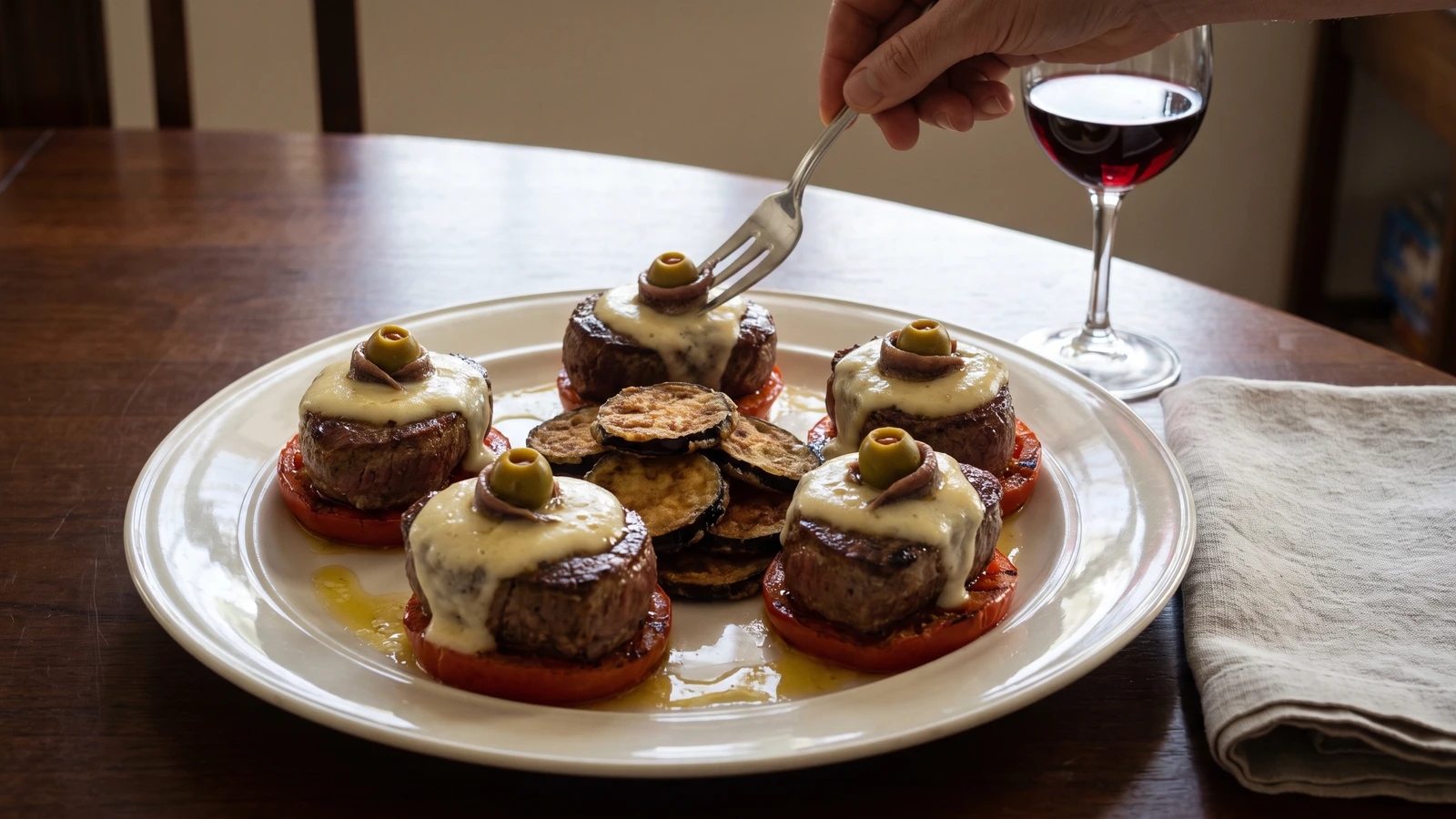
Small tournedos seared fast in butter, set on grilled tomato, glazed with Mornay, and crowned with olive and anchovy beside crisp aubergine: a composed dish won by timing, not fuss.
Tournedos Roumanille (small beef medallions with Mornay, tomato, olive, anchovy, and crisp aubergine) teaches orchestration. The beef is in the pan for barely minutes, so know this before touching it: every tomato must be grilled, every olive poached, every anchovy shaped, every aubergine round crisp, and the Mornay warm before the butter foams. Sear first and organize afterward, and the tournedos waits while its tenderness walks out the door.
The source entry assumed a saucier on staff, a stockpot never off the fire, finished Mornay ready for service, and a salamander fierce enough to glaze the platter in seconds. At home, you need a small saucepan of prepared Mornay, a hot broiler, and a thermometer. Separate sauce and garnish stations are brigade scaffolding and can go; the grilled tomato base, quick butter sear, Mornay glaze, olive and anchovy crown, and crisp aubergine are the dish and must stay. One cook, one stove, one evening.
The entry leaves the olive stuffing to the kitchen. A large pimiento-stuffed queen olive is the honest household equivalent to making four thimblefuls of a separate farce, and it preserves the specified stuffed, poached garnish without turning supper into an exercise in pomp. Have the platter assembled and the broiler fully hot before seasoning the beef. The timing is the dish.
Tournedos Roumanille belongs to the named-garnish vocabulary of the French grand kitchen, not to the farmhouse repertoire of Provence. Its tomato, aubergine, olive, and anchovy point precisely toward the Provençal larder, while the Mornay glaze and circular presentation show the dish's passage into formal service. The name salutes Joseph Roumanille, the Saint-Rémy-de-Provence poet who helped found the Félibrige in defense of Provençal language, so the garnish is a culinary portrait rather than an old village beef custom.
Quantity
4 (about 14 oz / 400 g total; 3 1/2 oz / 100 g each)
cut about 1 inch (2.5 cm) thick
Quantity
2 medium (about 12 oz / 340 g total)
halved crosswise
Quantity
3/4 cup (180 ml / 190 g)
Quantity
4 large (about 1 1/2 oz / 40 g total)
Quantity
4 fillets (about 1/2 oz / 16 g total)
drained
Quantity
1 medium (about 12 oz / 340 g)
sliced into 1/4-inch (6 mm) roundels
Quantity
1/2 cup (120 ml / 60 g)
for dredging
Quantity
1 1/4 cups (300 ml / 275 g)
for shallow-frying
Quantity
3 tablespoons (45 ml / 42 g)
divided
Quantity
1 1/2 teaspoons (7.5 ml / 9 g)
divided
Quantity
3/4 teaspoon (3.75 ml / 1.5 g)
divided
Quantity
2 cups (480 ml / 480 g)
for poaching the olives and adjusting the sauce
| Ingredient | Quantity |
|---|---|
| center-cut beef tenderloin tournedoscut about 1 inch (2.5 cm) thick | 4 (about 14 oz / 400 g total; 3 1/2 oz / 100 g each) |
| ripe but firm tomatoeshalved crosswise | 2 medium (about 12 oz / 340 g total) |
| prepared Mornay sauce | 3/4 cup (180 ml / 190 g) |
| pimiento-stuffed green queen olives | 4 large (about 1 1/2 oz / 40 g total) |
| oil-packed anchovy filletsdrained | 4 fillets (about 1/2 oz / 16 g total) |
| auberginesliced into 1/4-inch (6 mm) roundels | 1 medium (about 12 oz / 340 g) |
| plain flourfor dredging | 1/2 cup (120 ml / 60 g) |
| refined olive oilfor shallow-frying | 1 1/4 cups (300 ml / 275 g) |
| unsalted butterdivided | 3 tablespoons (45 ml / 42 g) |
| fine sea saltdivided | 1 1/2 teaspoons (7.5 ml / 9 g) |
| freshly ground black pepperdivided | 3/4 teaspoon (3.75 ml / 1.5 g) |
| waterfor poaching the olives and adjusting the sauce | 2 cups (480 ml / 480 g) |
Position a rack about 6 inches (15 cm) beneath the broiler and set a broiler-safe round platter nearby. Put a wire rack over a sheet pan for the aubergine. Warm the prepared Mornay sauce over the lowest heat until it reaches nappe, a coating consistency: it should fall from the spoon in a broad ribbon and cling without running clear at the edges. If it is too thick, whisk in hot water a teaspoon at a time; if it is loose, let it barely bubble while stirring until it tightens. Ça se rattrape. Cover and hold it warm off direct heat.
Bring the water to a bare simmer in a small saucepan. Lower in the stuffed olives and poach them gently for 2 minutes, just long enough to warm and soften their surface without loosening the filling. Drain them well. Curve each anchovy fillet into a loose ring and keep both garnishes ready beside the platter.
Heat a ridged grill pan or heavy skillet over medium-high heat. Wipe it with a thin film of the measured frying oil, then season the tomato halves lightly with salt and pepper. Grill them cut-side down for 2 to 3 minutes, until marked and softened at the surface but still firm enough to carry the beef. Turn them for 30 seconds, then arrange the four halves cut-side up in a circle on the broiler-safe platter. If they release much juice, blot the cut surfaces gently; a wet tomato lets the tournedos slide.
Season the aubergine roundels on both sides with part of the remaining salt and pepper, then dredge them lightly in the flour and shake off every excess. Heat the refined olive oil in a wide skillet to 350°F (180°C). Fry in uncrowded batches until deep gold and crisp at the edges, about 90 seconds to 2 minutes per side, then drain on the wire rack and leave uncovered. If the first batch bends limply, the oil was too cool. Raise the heat and return those pieces for another 20 to 30 seconds; ça se rattrape. Hold the roundels on the rack while you cook the beef.
Pat the tournedos thoroughly dry and season them with the remaining salt and pepper only now. Heat a heavy skillet over high heat until very hot, then add 2 tablespoons of the butter. As soon as the foam subsides, lay in the beef with room between each piece. Sear without moving for about 90 seconds, turn, add the remaining butter, and cook the second side for 60 to 90 seconds while spooning the foaming butter over the tops. Brown the narrow edges briefly. Aim for 115 to 118°F (46 to 48°C) at the centre, since the broiler will finish the cooking. If the butter turns black or smells bitter before the beef colours, lift out the tournedos, wipe the pan carefully, add the reserved butter, and continue. Never apologize at your own table. Fix the fat and keep cooking.
Set one tournedos on the cut face of each grilled tomato. Spoon the warm Mornay over the beef, coating each crown and allowing only a narrow curtain down the sides. Slide the platter beneath the fully heated broiler and glaze for 45 to 90 seconds, until the sauce swells slightly and takes small golden-brown freckles. Do not walk away. Pull the platter as soon as the colour appears; the finished beef should register about 125 to 130°F (52 to 54°C) for medium-rare.
Stand one poached stuffed olive in the centre of each glazed tournedos and encircle its base with an anchovy fillet. Arrange the crisp aubergine roundels in a generous heap at the centre of the platter, keeping them clear of the sauce. The short transfer and glazing were all the rest these small medallions require. Carry the whole composition to the table immediately. À table!
1 serving (about 300g)
Culinary guides, cultural storytelling, and the editorial depth that makes cooking meaningful.
Discover Culinary ExplorerChef Juliette
John Dory has the delicacy of sole and the firmness of turbot. A light flouring, a quick butter sauté, and nut-brown beurre noisette show exactly why looks never mattered.

Chef Juliette
Fresh haddock proves its delicacy in the meunière pan: a fine flour crust, moist pearly flakes, and beurre noisette sharpened with lemon and parsley, ready from one skillet in half an hour.

Chef Juliette
Éperlans à l’Anglaise turns small fish into a lesson in disciplined coating: boned smelts under a close, crisp crumb, pan-fried in clarified butter and finished with bright, half-melted maître d’hôtel butter.

Chef Juliette
Tiny smelts, shallot, mushrooms, white wine, gratin sauce, and fine bread raspings meet a fierce oven, where the fish must turn tender in the same breath the buttered crust bronzes.