
Chef Juliette
John Dory (St. Pierre)
John Dory has the delicacy of sole and the firmness of turbot. A light flouring, a quick butter sauté, and nut-brown beurre noisette show exactly why looks never mattered.
A cooking platform built around craft, culture, and the stories behind what we eat.
Created by Chef Juliette
Based on No. 1126, Tournedos Rossini, from Le Guide Culinaire (1907) by Auguste Escoffier
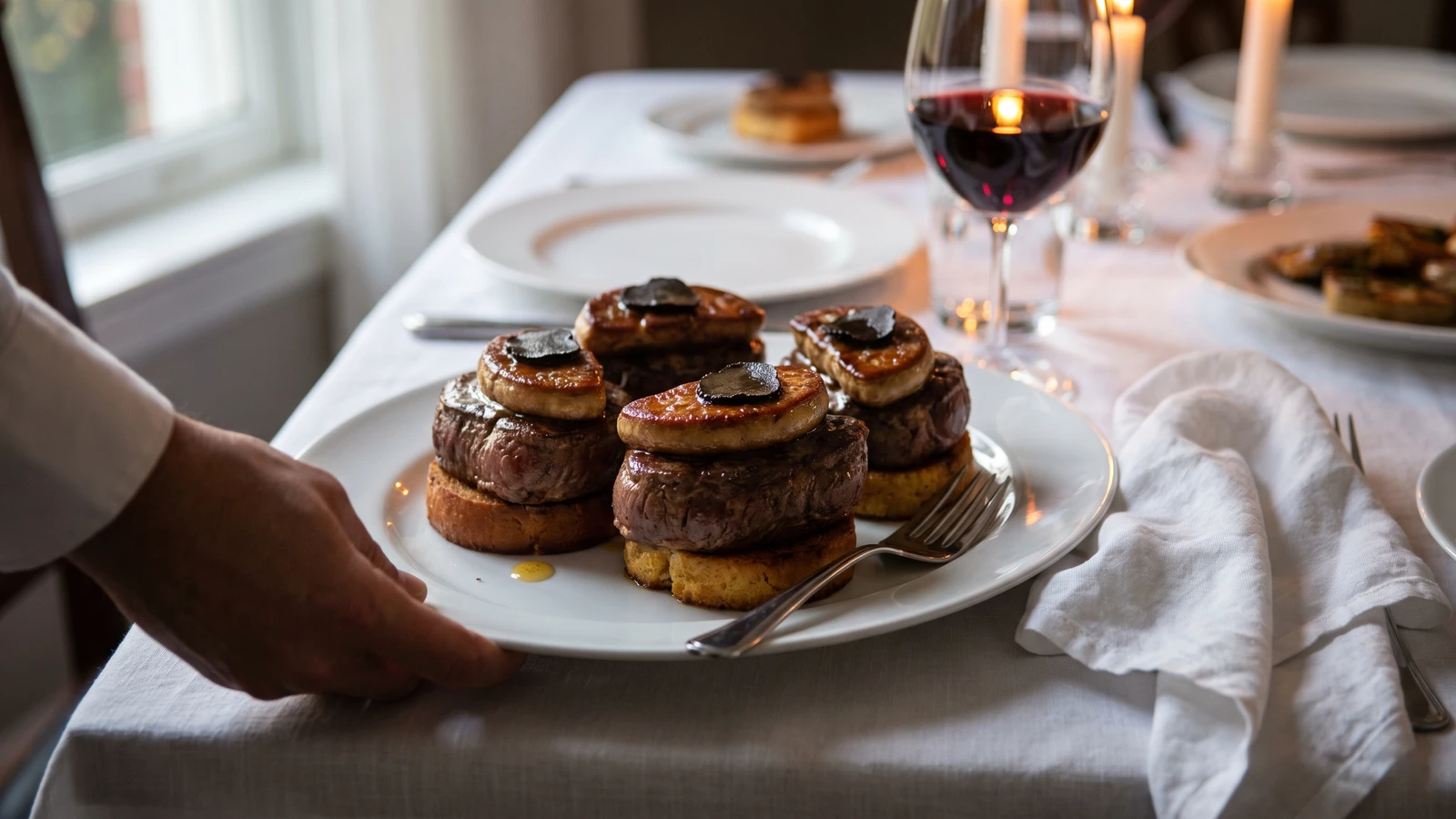
Butter-seared beef fillet, a crisp croûton, foie gras, and one dark slice of truffle: Tournedos Rossini teaches exact timing and the nerve to stop cooking the instant the fillet is ready.
Tournedos Rossini (butter-seared beef fillet crowned with foie gras and truffle) teaches the discipline of exact timing. The one true thing to know before touching a pan is that fillet forgives nothing: the meat must leave the heat while its center is still shy of done, because its own warmth will finish it as it rests.
The book's kitchen could fry croûtons, tournedos, and foie gras at once, then arrange a many-portion crown before anything cooled. This entry asks for no saucier, stock never off the fire, sauce, or salamander, so I won't smuggle them in. The honest home equivalent is one heavy pan, an instant-read thermometer, a low oven for holding the croûtons, and a strict order of work. One cook, one stove, one evening.
The large crown was brigade scaffolding; four stacks arranged in a loose ring preserve its intent at a home table. What cannot go is the architecture of the dish: butter-fried croûton, tournedos, a slightly smaller round of seasoned and dredged foie gras, then the fine truffle slice. Have everything cut and measured before the butter meets the pan. The decisive step is the beef sear, so watch its temperature, not the clock alone.
Tournedos Rossini belongs to the Parisian grand table, where beef fillet, foie gras, and truffle were stacked into an edible tribute to the opera composer and celebrated gourmand Rossini. Stories disagree over the first hand to assemble it, but the canon agrees on its architecture: a fried bread round beneath the tournedos, foie gras above, and truffle last. Sauce-laden descendants are common, but this source formula is more severe in method and no less generous, relying on butter frying and the four-part crown.
Quantity
4 pieces, 6 oz each (680 g total)
cut about 1½ inches (4 cm) thick and tied around the circumference
Quantity
4 slices, about 6 oz (170 g) total
cut ½ inch (1.25 cm) thick, crusts removed, then cut into rounds the width of the tournedos
Quantity
4 round slices, 2 oz each (225 g total)
cut about ½ inch (1.25 cm) thick and trimmed slightly smaller than the tournedos
Quantity
¼ cup (60 ml / 30 g)
for dredging
Quantity
8 tablespoons (120 ml / 113 g)
divided
Quantity
2 teaspoons (10 ml / 12 g)
divided
Quantity
1 teaspoon (5 ml / 2 g)
divided
Quantity
4 fine slices (about ⅓ oz / 10 g total)
| Ingredient | Quantity |
|---|---|
| center-cut beef fillet tournedoscut about 1½ inches (4 cm) thick and tied around the circumference | 4 pieces, 6 oz each (680 g total) |
| pain de miecut ½ inch (1.25 cm) thick, crusts removed, then cut into rounds the width of the tournedos | 4 slices, about 6 oz (170 g) total |
| raw duck foie grascut about ½ inch (1.25 cm) thick and trimmed slightly smaller than the tournedos | 4 round slices, 2 oz each (225 g total) |
| all-purpose flourfor dredging | ¼ cup (60 ml / 30 g) |
| unsalted butterdivided | 8 tablespoons (120 ml / 113 g) |
| fine sea saltdivided | 2 teaspoons (10 ml / 12 g) |
| freshly ground black pepperdivided | 1 teaspoon (5 ml / 2 g) |
| black truffle | 4 fine slices (about ⅓ oz / 10 g total) |
Heat the oven to 200°F (95°C), its lowest useful setting, and put a wire rack over a small sheet pan inside. Pat the tournedos thoroughly dry and check that each is tied into an even round. Keep the foie gras cold until its turn; flour it only at the last moment, or the coating turns gummy. Set the flour in a shallow dish, seasonings beside the stove, and truffle slices within reach. Once the frying begins, there is no useful pause.
Melt 3 tablespoons (45 ml / 43 g) of the butter in a heavy skillet over medium heat. When it foams, add the bread rounds and fry for 2 to 3 minutes per side, turning once, until crisp and evenly deep gold. Season lightly with a pinch of the measured salt, then transfer the croûtons to the warm rack. Keep them in a single layer so their undersides remain crisp.
Raise the heat to medium-high and add 3 tablespoons (45 ml / 43 g) of the butter. Season the tournedos on both faces with most of the remaining salt and pepper. When the butter's foam subsides, lay in the meat with space between the pieces and leave it undisturbed until a dark bronze crust forms, about 3 minutes. Turn once, baste with the foaming butter, and cook the second face for another 2 to 4 minutes. Remove the tournedos at 122°F (50°C) for rare or 126°F (52°C) for medium-rare; they will rise several degrees while resting. If the butter turns black before the centers are ready, lift out the meat immediately. Ça se rattrape: wipe the pan clean, add fresh butter from the measured amount, lower the heat slightly, and finish the sear.
Transfer the tournedos to a warm plate and rest them for 5 to 7 minutes, loosely covered rather than tightly wrapped. Tight foil traps moisture and softens the crust. Remove the kitchen twine after the rest, when the medallions will hold their round shape.
Wipe the skillet clean and return it to medium-high heat. Season the cold foie gras rounds with the remaining salt and pepper, dredge both faces lightly in the flour, and shake off every loose speck. Add the final 2 tablespoons (30 ml / 28 g) of butter. As soon as it foams, fry the foie gras for 45 to 60 seconds per side, just until the flour makes a delicate brown crust and the centers feel supple. Work quickly with a thin spatula. If the foie gras begins shedding a flood of fat before it browns, the pan is too cool; lift it out, chill it for 5 minutes, wipe and reheat the pan, then try again. Ça se rattrape. If a round tears, gather the pieces together on the spatula and crown the beef with them; the truffle will finish the presentation.
Arrange the four warm croûtons in a loose crown on the heated platter. Set one tournedos squarely on each croûton, one foie gras round on each tournedos, and one fine truffle slice on each piece of foie gras. The layers should sit proudly but naturally, with the foie gras visibly smaller than the beef as the source directs. Carry the platter straight to the table while the butter still gleams. À table!
1 serving (about 240g)
Culinary guides, cultural storytelling, and the editorial depth that makes cooking meaningful.
Discover Culinary ExplorerChef Juliette
John Dory has the delicacy of sole and the firmness of turbot. A light flouring, a quick butter sauté, and nut-brown beurre noisette show exactly why looks never mattered.

Chef Juliette
Fresh haddock proves its delicacy in the meunière pan: a fine flour crust, moist pearly flakes, and beurre noisette sharpened with lemon and parsley, ready from one skillet in half an hour.

Chef Juliette
Éperlans à l’Anglaise turns small fish into a lesson in disciplined coating: boned smelts under a close, crisp crumb, pan-fried in clarified butter and finished with bright, half-melted maître d’hôtel butter.

Chef Juliette
Tiny smelts, shallot, mushrooms, white wine, gratin sauce, and fine bread raspings meet a fierce oven, where the fish must turn tender in the same breath the buttered crust bronzes.