
Chef Juliette
Châteaubriand, Fillet Steak, Tournedos
One tenderloin heart, three classical portions: roast Châteaubriand for carving, bifteck de filet for one, tournedos two to a plate, all with braised endives and a red-wine pan jus.
A cooking platform built around craft, culture, and the stories behind what we eat.
Created by Chef Juliette
Based on No. 1125, Tournedos Rachel, from Le Guide Culinaire (1907) by Auguste Escoffier
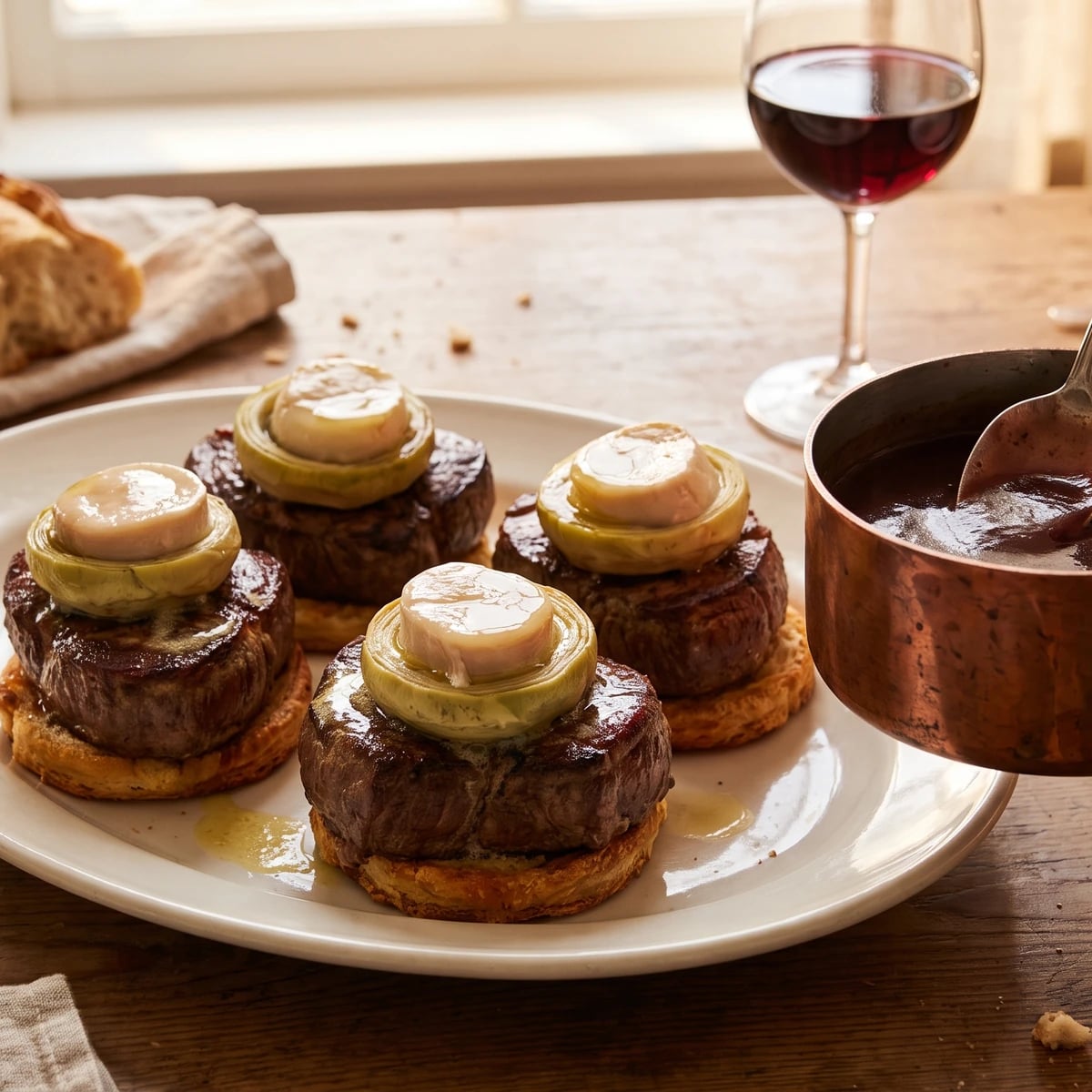
Tournedos Rachel puts the classical garnish in perfect order: crisp butter-fried bread, bronzed fillet, tender artichoke, soft poached marrow, and Bordelaise sauce offered apart so every layer keeps its character.
Tournedos Rachel (butter-seared beef fillet on a fried crust, crowned with artichoke and poached marrow) teaches timing. The one true thing to know before touching a pan is this: the pan must be fully hot before the beef meets the butter. A slow pan steams the fillet gray, and no sauce can give back the crust you failed to make.
The classical instruction is terse because its kitchen already had a saucier, a stockpot never off the fire, turned artichoke bottoms, and trimmed marrow waiting for service. A salamander stood nearby for many grand-kitchen finishes, but this entry doesn't call for one, so neither do you: a low oven keeps the fried croutes crisp while finished Bordelaise sauce warms gently in a saucepan. Good unseasoned cooked artichoke bottoms and marrow cut by the butcher remove brigade scaffolding; butter-frying the croutes, searing the tournedos, building the artichoke-and-marrow crown, and sending the sauce apart are the dish and must stay. One cook, one stove, one evening.
At the table, each bite moves from crisp buttered bread to bronzed beef, tender artichoke, and marrow soft enough to yield under the fork, with wine-dark sauce added at the diner's hand. Have the croutes, artichokes, sauce, and poaching water ready before the tournedos enter the pan. Then sear hot and without crowding. That is the step that decides everything.
Tournedos Rachel belongs to the Parisian grand-kitchen repertoire, where a tournedos was a small, thick round cut from the heart of the beef fillet and its named garnish fixed the dish's identity. The construction passed readily into bourgeois special-occasion cooking because the croutes, artichoke bottoms, marrow, and sauce could be readied before the beef met the pan. Bordelaise is deliberately sent separately: Rachel is defined by its layered crown, not by burying the crisp crust beneath sauce.
Quantity
4, about 22 oz / 620 g total
each 1 1/4 inches (3 cm) thick and tied
Quantity
4 slices, about 4 oz / 115 g total
each 1/3 inch (8 mm) thick and cut into rounds matching the tournedos
Quantity
1/2 cup (120 ml / 113 g)
divided
Quantity
4 small, about 8 oz / 225 g drained weight
thawed or drained and patted dry
Quantity
4 large, about 2 oz / 60 g total
cut 1/2 inch (1.25 cm) thick and kept well chilled
Quantity
6 cups (1.4 L / 1.4 kg)
divided, for soaking and poaching the marrow
Quantity
2 teaspoons (10 ml / 12 g)
divided
Quantity
1/2 teaspoon (2.5 ml / 1 g)
Quantity
1 cup (240 ml / 250 g)
for serving separately
| Ingredient | Quantity |
|---|---|
| center-cut beef tenderloin tournedoseach 1 1/4 inches (3 cm) thick and tied | 4, about 22 oz / 620 g total |
| firm white sandwich breadeach 1/3 inch (8 mm) thick and cut into rounds matching the tournedos | 4 slices, about 4 oz / 115 g total |
| unsalted butterdivided | 1/2 cup (120 ml / 113 g) |
| unseasoned cooked artichoke bottomsthawed or drained and patted dry | 4 small, about 8 oz / 225 g drained weight |
| beef marrow medallionscut 1/2 inch (1.25 cm) thick and kept well chilled | 4 large, about 2 oz / 60 g total |
| cold waterdivided, for soaking and poaching the marrow | 6 cups (1.4 L / 1.4 kg) |
| fine sea saltdivided | 2 teaspoons (10 ml / 12 g) |
| freshly ground black pepper | 1/2 teaspoon (2.5 ml / 1 g) |
| finished Bordelaise saucefor serving separately | 1 cup (240 ml / 250 g) |
Put the chilled marrow medallions in 2 cups (475 ml / 475 g) of the cold water and soak them in the refrigerator for 1 hour, changing the water once; this draws out loose blood and leaves the marrow pale. During the final 20 minutes, take the tournedos from the refrigerator, tie them into neat rounds if the butcher hasn't done it, and dry every surface thoroughly. Cut the bread into rounds the same diameter as the beef. Heat the oven to 200°F (95°C), set a wire rack over a small tray, and warm the serving platter and sauceboat.
Melt 4 tablespoons (60 ml / 57 g) of the butter in a heavy skillet over medium-high heat. When the foam begins to subside, add the bread rounds and fry them until deep butter-gold and crisp, about 2 minutes per side. Move them to the wire rack and hold them in the low oven. If the bread drinks the butter yet remains pale, the pan was too cool. Ça se rattrape: put the croutes on the rack and crisp them in the oven for 5 to 7 minutes; don't add more butter to soggy bread.
Wipe the skillet, melt 1 tablespoon (15 ml / 14 g) of the butter over gentle heat, and warm the artichoke bottoms for 3 to 4 minutes without browning them. Season lightly, place them hollow-side up beside the croutes in the low oven, and cover loosely. Warm the finished Bordelaise sauce in a small saucepan only until it reaches a bare simmer, then cover it and take it off the heat. If it tightens or forms a skin, whisk in a spoonful of water; don't boil a finished sauce into heaviness. Put the remaining 4 cups (950 ml / 950 g) water in another saucepan with half the remaining salt and hold it just below a simmer for the marrow.
Season the dry tournedos on every side with the remaining salt and the pepper. Heat a clean 12-inch (30 cm) heavy skillet over high heat, add 2 tablespoons (30 ml / 28 g) of the butter, and lay in the beef as soon as the butter foams strongly and begins to quiet. Leave space between the rounds. Sear without moving for 3 to 4 minutes, until the first face carries a dark Maillard bronze, then turn and cook the second face for 2 to 3 minutes, spooning the foaming butter over the beef. Brown the edges briefly with tongs. For medium-rare, remove the tournedos at 125 to 128°F (52 to 53°C); for beef cooked to 145°F (63°C), continue gently and rest it for at least 3 minutes. If the butter blackens before the crust forms, lift the beef, wipe the pan, add the reserved tablespoon (15 ml / 14 g) of fresh butter, and continue. Burnt butter is bitter, but the tournedos are not lost.
Rest the tournedos on a warm rack for 5 minutes. While they rest, drain the chilled marrow and slide the medallions into the salted water, which should tremble gently but never boil. Poach for 2 to 3 minutes, until the marrow is warmed through, glossy, and just soft at the edges, then lift each piece with a slotted spoon and drain briefly. If a medallion begins to slump, take it out at once; if one breaks, keep the pieces together and spoon them into the hollow of the artichoke bottom. The crown will hold them neatly.
Arrange the four fried croutes in a loose crown on the warmed platter. Set one tournedos squarely on each croute, place an artichoke bottom hollow-side up on every tournedos, and settle a large poached marrow medallion inside each artichoke. Rewarm the Bordelaise sauce only until glossy, pour it into the warm sauceboat, and send it separately exactly as the dish requires. Sauce added at the table preserves the crisp bread and lets every layer keep its character. Serve at once. À table!
1 serving (about 295g)
Culinary guides, cultural storytelling, and the editorial depth that makes cooking meaningful.
Discover Culinary Explorer
Chef Juliette
One tenderloin heart, three classical portions: roast Châteaubriand for carving, bifteck de filet for one, tournedos two to a plate, all with braised endives and a red-wine pan jus.

Chef Juliette
Tournedos Algérienne teaches timing: crisp sweet-potato croquettes and tender oil-stewed tomatoes must be ready before lean fillet meets clarified butter, sears fast, and goes straight to the table.

Chef Juliette
Tournedos crowned over crisp tartlets of wine-braised choucroute and lean ham: a hot, quick grill for the fillet, a dry, buttery foundation below, and Alsace carried through the whole plate.

Chef Juliette
Tender tournedos meet a Provençal ring of golden aubergine and sautéed tomato, each steak crowned with fried onion. The lesson is timing: prepare the garnish, then give lean fillet one hot, quick pan.