
Chef Juliette
John Dory (St. Pierre)
John Dory has the delicacy of sole and the firmness of turbot. A light flouring, a quick butter sauté, and nut-brown beurre noisette show exactly why looks never mattered.
A cooking platform built around craft, culture, and the stories behind what we eat.
Created by Chef Juliette
Based on No. 1124, Tournedos Provençale, from Le Guide Culinaire (1907) by Auguste Escoffier
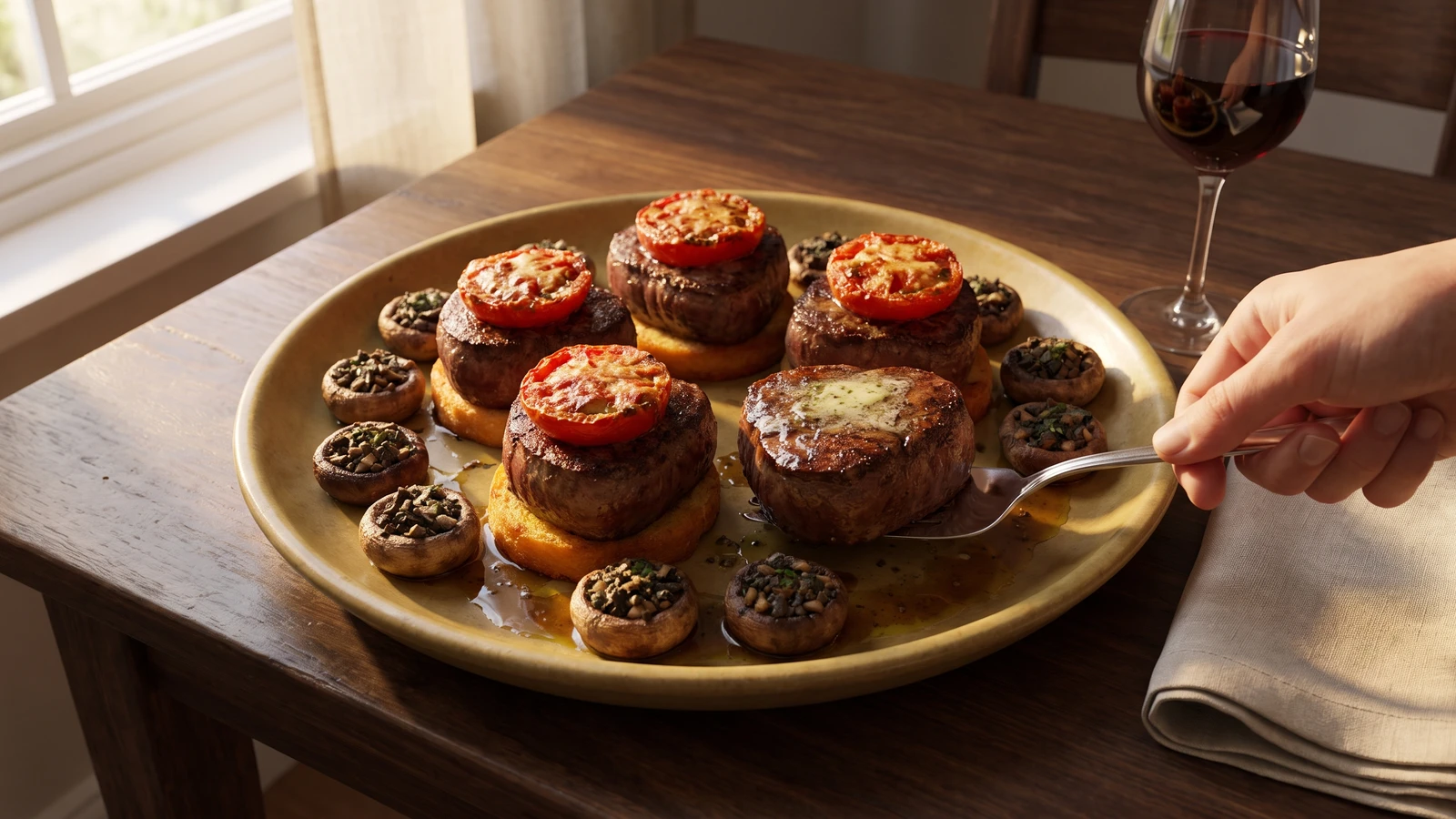
Hot, quick searing is the whole art: tender tournedos on crisp fried crusts, crowned with Provençal tomato and ringed by garlic-scented stuffed mushrooms, generous enough for a dinner table.
Tournedos Provençale (Provençal beef fillet) teaches the discipline of a composed pan dish: the garnish waits for the beef, never the beef for the garnish. Each tournedos sits on a crisp fried bread crust, carries a gratinéed tomato half, browned under fierce top heat, and meets a mushroom cap filled with garlic-scented duxelles, finely chopped mushrooms cooked until dry. The plate is generous, bright, and built around a hot, quick sear.
The original worked at ten portions and assumed a saucier with stock and braised-beef gravy never off the fire, another cook filling mushrooms, and a salamander waiting to renew the tomato gratin. Here the Tomates Farcies à la Provençale (No. 2266) comes to this recipe as the finished component the book intended, your broiler stands in for the salamander, and one skillet handles the duxelles, crusts, and beef in sequence. Only the brigade quantity and parallel labor disappear. The fried crusts, stuffed mushrooms, completed tomato garnish, and equal butter-and-oil sear stay because they are the dish. One cook, one stove, one evening.
Finish the mushrooms and tomatoes before the beef touches the pan. Once the tournedos begin to sear, they must move straight from pan to rest to platter; make them wait for a garnish and their fine crust softens while their tender centers overcook.
Tournedos belongs to the classical Parisian dining-room repertoire, where compact slices from the heart of the beef fillet were paired with named garnishes and set on fried bread crusts. Provençale names the garnish rather than the beef's birthplace: tomato, garlic, olive oil, and a gratinéed surface carry the language of Provence. The stuffed mushrooms show how the grand kitchen assembled a composed plate from preparations already underway, while the home cook now coordinates the same elements with one oven and one pan.
Quantity
4, each 5 ounces (140 g) and about 1½ inches (4 cm) thick
trimmed and tied around the circumference if needed
Quantity
4
stems removed
Quantity
1½ cups (360 ml / 115 g)
very finely chopped
Quantity
1
finely chopped
Quantity
½
finely grated
Quantity
1 tablespoon (15 ml / 4 g)
finely chopped
Quantity
2 tablespoons (30 ml / 28 g)
divided between the duxelles and mushroom caps
Quantity
4 halves, Tomates Farcies à la Provençale (No. 2266)
completed according to their own recipe and ready to reheat
Quantity
4 slices
cut ½ inch (1.25 cm) thick into rounds matching the tournedos
Quantity
2 tablespoons (30 ml / 28 g)
divided equally between the crusts and tournedos
Quantity
2 tablespoons (30 ml / 27 g)
divided equally between the crusts and tournedos
Quantity
1½ teaspoons (7.5 ml / 9 g)
divided
Quantity
½ teaspoon (2.5 ml / 1 g)
divided
| Ingredient | Quantity |
|---|---|
| center-cut beef fillet tournedostrimmed and tied around the circumference if needed | 4, each 5 ounces (140 g) and about 1½ inches (4 cm) thick |
| medium cremini mushroom capsstems removed | 4 |
| cremini mushroomsvery finely chopped | 1½ cups (360 ml / 115 g) |
| small shallotfinely chopped | 1 |
| small garlic clovefinely grated | ½ |
| flat-leaf parsleyfinely chopped | 1 tablespoon (15 ml / 4 g) |
| unsalted butter for the mushroomsdivided between the duxelles and mushroom caps | 2 tablespoons (30 ml / 28 g) |
| prepared Provençal half-tomatoescompleted according to their own recipe and ready to reheat | 4 halves, Tomates Farcies à la Provençale (No. 2266) |
| firm white breadcut ½ inch (1.25 cm) thick into rounds matching the tournedos | 4 slices |
| unsalted butter for fryingdivided equally between the crusts and tournedos | 2 tablespoons (30 ml / 28 g) |
| olive oildivided equally between the crusts and tournedos | 2 tablespoons (30 ml / 27 g) |
| fine sea saltdivided | 1½ teaspoons (7.5 ml / 9 g) |
| freshly ground black pepperdivided | ½ teaspoon (2.5 ml / 1 g) |
Take the tournedos from the cold 30 minutes before cooking, pat them completely dry, and leave them loosely covered. Heat the oven to 400°F (200°C), with a rack about 6 inches (15 cm) below the broiler, and set a wire rack over a sheet pan. Cut the bread into four rounds matching the diameter of the beef. Have the completed tomato halves ready, because every garnish must be hot before the tournedos meet the pan.
Melt 1 tablespoon of the mushroom butter in the skillet over medium heat. Add the shallot and cook without coloring for 2 minutes, then add the finely chopped mushrooms with a small pinch of the salt. Raise the heat to medium-high and stir until the mushrooms release their liquid, the liquid evaporates completely, and the mixture begins to sizzle again, 6 to 8 minutes. Add the garlic for the final 30 seconds, then take the pan from the heat and stir in the parsley and a little pepper. The duxelles must be dry enough to mound on a spoon. If it remains wet, don't stuff the caps yet. Ça se rattrape: return it to stronger heat and keep stirring until the pan floor is dry.
Melt the remaining tablespoon of mushroom butter and brush it over the mushroom caps. Season them lightly, set them hollow-side up on the prepared rack, and divide the duxelles among them. Bake for 15 to 18 minutes, until the caps are tender and the filling has browned at its ridges. After the mushrooms have baked for 6 minutes, place the prepared Tomates Farcies à la Provençale (No. 2266) beside them, filled-side up, and warm them through. If their gratin needs fresh color, switch to the broiler for 30 to 90 seconds and watch without blinking. Once both garnishes are ready, lower the oven to 200°F (95°C) and hold them there while you fry the crusts and beef.
Wipe the skillet clean and set it over medium-high heat. Add 1 tablespoon each of the frying butter and olive oil. When the butter foams, lay in the bread rounds and fry until deep gold and crisp, about 1 to 2 minutes per side. Move them to the wire rack in the low oven. If a crust feels greasy rather than crisp, blot it and leave it directly on the rack for 2 minutes; the dry oven heat will restore it.
Season the dry tournedos with the remaining salt and pepper. Return the skillet to medium-high heat, add the remaining tablespoon of olive oil, then the remaining tablespoon of butter. When the foam subsides and the fat smells nutty but not acrid, add the beef with space between the pieces. Sear without moving for about 3 minutes, until the undersides are deeply bronzed, then turn and cook for another 2 to 3 minutes. Brown the edges briefly with tongs. For medium-rare, remove the tournedos at 125 to 130°F (52 to 54°C); for medium, take them to 135 to 140°F (57 to 60°C). If the pan fills with liquid and the beef refuses to color, lift the pieces out, blot them again, let the pan recover its heat, and finish in two batches. Rest the beef on a clean rack for 5 minutes, never on the fried bread, which would surrender its crispness.
Remove any strings from the tournedos. Arrange the four fried crusts as a loose crown on a warm oval platter and set a tournedos squarely on each. Tip the resting juices over the beef while keeping the crust edges dry, then crown every tournedos with one hot tomato half. Set the duxelles-stuffed mushrooms around the crown and serve immediately. Cooking well is not cooking fancy. À table!
1 serving (about 260g)
Culinary guides, cultural storytelling, and the editorial depth that makes cooking meaningful.
Discover Culinary ExplorerChef Juliette
John Dory has the delicacy of sole and the firmness of turbot. A light flouring, a quick butter sauté, and nut-brown beurre noisette show exactly why looks never mattered.

Chef Juliette
Fresh haddock proves its delicacy in the meunière pan: a fine flour crust, moist pearly flakes, and beurre noisette sharpened with lemon and parsley, ready from one skillet in half an hour.

Chef Juliette
Éperlans à l’Anglaise turns small fish into a lesson in disciplined coating: boned smelts under a close, crisp crumb, pan-fried in clarified butter and finished with bright, half-melted maître d’hôtel butter.

Chef Juliette
Tiny smelts, shallot, mushrooms, white wine, gratin sauce, and fine bread raspings meet a fierce oven, where the fish must turn tender in the same breath the buttered crust bronzes.