
Chef Juliette
John Dory (St. Pierre)
John Dory has the delicacy of sole and the firmness of turbot. A light flouring, a quick butter sauté, and nut-brown beurre noisette show exactly why looks never mattered.
A cooking platform built around craft, culture, and the stories behind what we eat.
Created by Chef Juliette
Based on No. 1120, Tournedos Parmentier, from Le Guide Culinaire (1907) by Auguste Escoffier
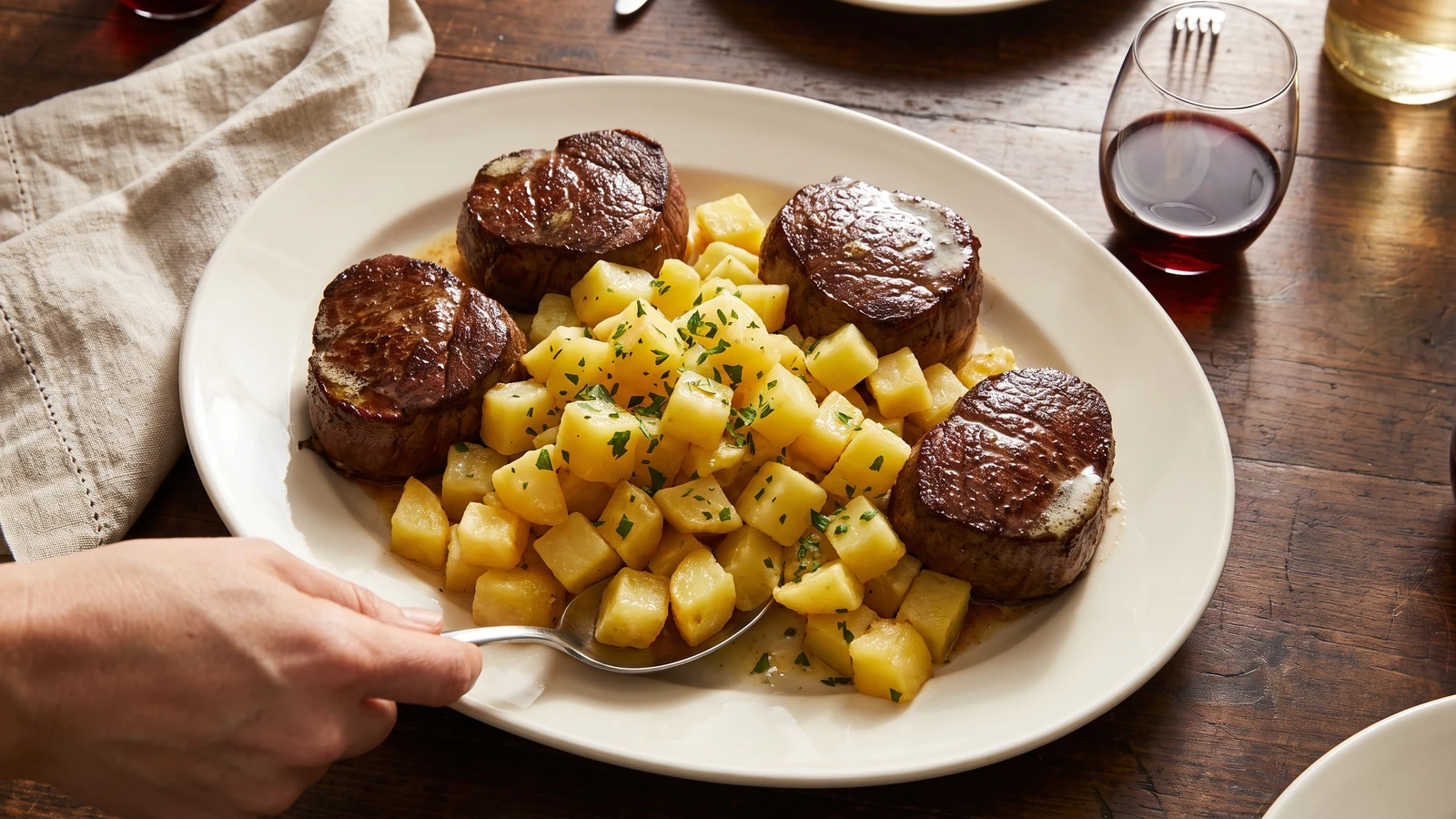
Four tournedos form a crown around parsley-flecked potatoes, each cube soft with butter, each fillet deeply bronzed. The lesson is timing: make the garnish wait, never the beef.
Tournedos Parmentier (butter-seared beef fillets with soft butter-cooked potato cubes) teaches coordination in its clearest form: the potato may wait, the fillet may not. If you remember one thing before touching a pan, finish the potatoes first and fry the tournedos only when the platter and your guests are ready.
The grand kitchen around the original entry had a saucier, stock never off the fire, and a salamander, but this dish calls on none of them. Its actual brigade assumptions were matching tournedos prepared by a butcher or commis, ornamental potatoes shaped with a grooved spoon-cutter, and several hands bringing the crown together at once. For one cook, one stove, one evening, a knife makes regular two-thirds-inch cubes and a warmed platter buys the necessary minute. The special cutter and brigade choreography are scaffolding and can go. Butter-frying, evenly cut potatoes kept soft, a light fall of parsley, and the crown arrangement stay. They are the dish.
Cook the potatoes gently under a lid so they absorb the butter without turning into a crisp hash, then hold them covered while the tournedos meet fresh foaming butter. Cooking well is not cooking fancy. The decisive step is the sear: dry fillets, an uncrowded pan, and butter watched closely until the beef is bronzed but the milk solids remain sweet and nutty.
Tournedos Parmentier belongs to the Parisian language of classical platter service: small, thick center-cut fillets cooked à la minute (to order) and arranged as a crown. Parmentier is not a regional claim but the canonical signal for a potato garnish, named for Antoine-Augustin Parmentier, whose advocacy helped secure the tuber's place at French tables. The soft butter-cooked cubes are essential to this particular version; replacing them with crisp fried potatoes changes the character the entry specifies.
Quantity
4, 6 ounces (170 g) each and 1½ inches (4 cm) thick
Quantity
2 pounds (900 g), yielding about 5 cups (1.2 L / 750 g) after peeling
cut into regular ⅔-inch (1.7 cm) cubes
Quantity
10 tablespoons (150 ml / 142 g), divided: 6 tablespoons for the potatoes and 4 tablespoons for the beef
Quantity
1½ tablespoons (22 ml / 6 g)
finely chopped
Quantity
2¼ teaspoons (11 ml / 13 g), divided
Quantity
¾ teaspoon (4 ml / 2 g)
Quantity
Up to 2 tablespoons (30 ml / 30 g)
for rescuing potatoes that color before becoming tender
| Ingredient | Quantity |
|---|---|
| center-cut beef tenderloin tournedos | 4, 6 ounces (170 g) each and 1½ inches (4 cm) thick |
| yellow-fleshed all-purpose potatoescut into regular ⅔-inch (1.7 cm) cubes | 2 pounds (900 g), yielding about 5 cups (1.2 L / 750 g) after peeling |
| unsalted butter | 10 tablespoons (150 ml / 142 g), divided: 6 tablespoons for the potatoes and 4 tablespoons for the beef |
| flat-leaf parsleyfinely chopped | 1½ tablespoons (22 ml / 6 g) |
| fine sea salt | 2¼ teaspoons (11 ml / 13 g), divided |
| freshly ground black pepper | ¾ teaspoon (4 ml / 2 g) |
| water (optional)for rescuing potatoes that color before becoming tender | Up to 2 tablespoons (30 ml / 30 g) |
Take the tournedos from the refrigerator twenty minutes before cooking. Tie a loop of kitchen twine around each circumference so the medallions stay tall and round, then blot every surface thoroughly dry. Cut the peeled potatoes first into even slabs, then batons, then regular ⅔-inch (1.7 cm) cubes; equal size matters because the cubes must become tender together. Fill the serving platter with very hot water to warm it, then empty and dry it just before plating.
Melt 6 tablespoons (90 ml / 85 g) of the butter in a wide lidded sauté pan over medium-low heat. When it foams but remains blond, add the potato cubes and 1 teaspoon (5 ml / 6 g) of the salt. Turn gently until every cube shines with butter, spread them as close to one layer as the pan permits, and cover. Cook for 20 to 25 minutes, turning carefully every five minutes, until a skewer passes through without resistance. The cubes may take a few pale-gold freckles, but they should remain soft and whole rather than developing a crisp shell.
When the potatoes are completely tender, uncover them for thirty seconds so any added water can evaporate. Remove the pan from the heat and cover it again, leaving the cubes in their butter. Do not keep browning them while the beef cooks. The potato garnish can wait quietly for ten minutes; the tournedos cannot.
Heat a 12-inch (30 cm) heavy frying pan over medium-high heat. Season the tournedos on every side with the remaining 1¼ teaspoons (6 ml / 7 g) salt and the pepper. Add 3 tablespoons (45 ml / 43 g) of the beef butter, reserving the final tablespoon. As soon as the butter foams vigorously, lay in the tournedos with space between them and fry without moving for about 3 minutes, until the first faces are deeply bronzed. Turn once, lower the heat to medium, add the reserved butter, and baste continuously for another 2 to 3 minutes. For medium-rare, remove them at 125 to 128°F (52 to 53°C); for medium, remove them at 133 to 135°F (56 to 57°C).
Transfer the tournedos to the warmed platter and rest them uncovered for 5 minutes. While they rest, return the covered potatoes to the lowest heat for 1 to 2 minutes, turning them once through the melted butter. Taste one and adjust the salt if needed. Keep the parsley aside until the platter is assembled, exactly as the source directs.
Remove the twine and arrange the four tournedos in a ring, browned faces upward and their edges nearly touching. Heap the soft potato cubes loosely in the center without packing them down. Spoon a little clean golden butter from the pans over the beef, leaving any blackened solids behind, then sprinkle the chopped parsley lightly over the potatoes alone. Carry the platter straight to the table. À table!
1 serving (about 340g)
Culinary guides, cultural storytelling, and the editorial depth that makes cooking meaningful.
Discover Culinary ExplorerChef Juliette
John Dory has the delicacy of sole and the firmness of turbot. A light flouring, a quick butter sauté, and nut-brown beurre noisette show exactly why looks never mattered.

Chef Juliette
Fresh haddock proves its delicacy in the meunière pan: a fine flour crust, moist pearly flakes, and beurre noisette sharpened with lemon and parsley, ready from one skillet in half an hour.

Chef Juliette
Éperlans à l’Anglaise turns small fish into a lesson in disciplined coating: boned smelts under a close, crisp crumb, pan-fried in clarified butter and finished with bright, half-melted maître d’hôtel butter.

Chef Juliette
Tiny smelts, shallot, mushrooms, white wine, gratin sauce, and fine bread raspings meet a fierce oven, where the fish must turn tender in the same breath the buttered crust bronzes.