
Chef Juliette
John Dory (St. Pierre)
John Dory has the delicacy of sole and the firmness of turbot. A light flouring, a quick butter sauté, and nut-brown beurre noisette show exactly why looks never mattered.
A cooking platform built around craft, culture, and the stories behind what we eat.
Created by Chef Juliette
Based on No. 1116, Tournedos Montpensier, from Le Guide Culinaire (1907) by Auguste Escoffier
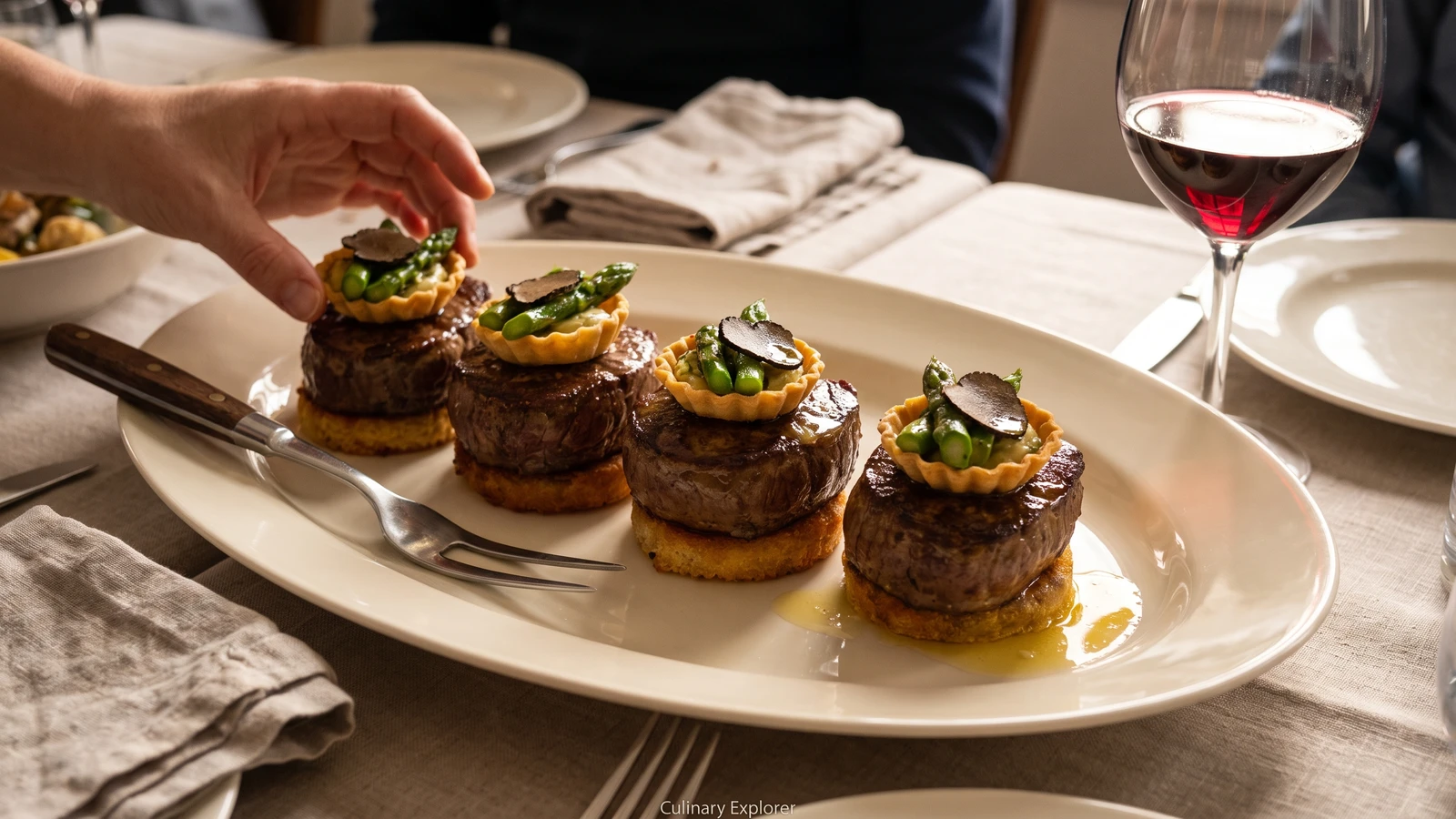
Butter-seared tournedos sit on crisp fried crusts beneath tiny asparagus tartlets and black truffle. The lesson is timing: lean fillet must brown fast and reach the table before tenderness becomes dryness.
Tournedos Montpensier (butter-seared beef fillets on fried bread crusts, crowned with asparagus tartlets and truffle) teaches coordination through one uncompromising truth: tenderloin carries little fat, so it must brown quickly and leave the pan before tenderness turns to dryness. The crisp bread, tender beef, buttery asparagus, delicate pastry, and earthy truffle should arrive together, each distinct and properly hot.
The original formula assumes several hands: a pastry station preparing tartlet crusts, a vegetable cook tending asparagus, and a sauté cook ready with butter. It calls for no saucier’s reduction, standing stock, or salamander, so we won’t invent any of them. At home, blind-bake the tartlets and blanch the asparagus first, fry the bread before the final sear, then bring all four portions together in one deliberate assembly. One cook, one stove, one evening.
Blind-baking early and arranging the mise en place are brigade scaffolding moved to your schedule. The butter-fried crust, the tournedos fried in butter, one heaped tablespoon of asparagus in each tartlet, and the central truffle slice are the dish itself, and every one stays. Before the beef touches the pan, dry it completely and lay out every component. The sear comes last because it is the step that decides everything.
Tournedos Montpensier belongs to the vocabulary of Parisian classical service, where a tender cut of beef was distinguished by a precisely named garnish and arrangement rather than by size alone. Montpensier denotes this composition of fried bread crust, tournedos, asparagus tartlet, and central truffle slice, each layer visible at the table. The title follows the courtly naming habits of the grand kitchen; despite its geographic sound, this is not an Auvergnat farmhouse preparation.
Quantity
¾ cup (180 ml / 95 g)
Quantity
3½ tablespoons (52 ml / 50 g)
cubed
Quantity
⅛ teaspoon (0.6 ml / 0.8 g)
Quantity
1½ to 2 tablespoons (22 to 30 ml / 22 to 30 g)
Quantity
4 slices
about ⅜ inch (1 cm) thick and cut into 3-inch (7.5 cm) rounds
Quantity
4 tablespoons (60 ml / 57 g)
Quantity
4 heaped tablespoons (about 75 ml / 70 g)
trimmed to fit the tartlets
Quantity
1½ tablespoons (22 ml / 21 g)
Quantity
4, about 5 ounces (140 g) each
cut 1½ inches (4 cm) thick and tied around the middle
Quantity
1 tablespoon plus 1 teaspoon (20 ml / 24 g)
divided between blanching water and beef
Quantity
½ teaspoon (2.5 ml / 1 g)
Quantity
3 tablespoons (45 ml / 43 g)
Quantity
4 thin slices, about ⅓ ounce (10 g) total
| Ingredient | Quantity |
|---|---|
| all-purpose flour | ¾ cup (180 ml / 95 g) |
| cold unsalted buttercubed | 3½ tablespoons (52 ml / 50 g) |
| fine sea salt for the pastry | ⅛ teaspoon (0.6 ml / 0.8 g) |
| ice water | 1½ to 2 tablespoons (22 to 30 ml / 22 to 30 g) |
| firm white sandwich breadabout ⅜ inch (1 cm) thick and cut into 3-inch (7.5 cm) rounds | 4 slices |
| clarified unsalted butter for frying the bread | 4 tablespoons (60 ml / 57 g) |
| asparagus tipstrimmed to fit the tartlets | 4 heaped tablespoons (about 75 ml / 70 g) |
| unsalted butter for the asparagus | 1½ tablespoons (22 ml / 21 g) |
| center-cut beef tournedoscut 1½ inches (4 cm) thick and tied around the middle | 4, about 5 ounces (140 g) each |
| fine sea saltdivided between blanching water and beef | 1 tablespoon plus 1 teaspoon (20 ml / 24 g) |
| freshly ground black pepper | ½ teaspoon (2.5 ml / 1 g) |
| clarified unsalted butter for searing the tournedos | 3 tablespoons (45 ml / 43 g) |
| fresh black truffle or drained whole preserved black truffle | 4 thin slices, about ⅓ ounce (10 g) total |
Combine the flour and pastry salt, then rub in the cold butter until the mixture resembles coarse crumbs with a few small flakes remaining. Add 1½ tablespoons of ice water and press the dough together; if dry flour remains, add the final water a teaspoon at a time. Stop as soon as it holds. Flatten into a disc, wrap, and chill for 30 minutes so the gluten relaxes and the butter firms.
Heat the oven to 375°F (190°C). Roll the chilled dough about ⅛ inch (3 mm) thick and line four shallow 2¼-inch (5.5 cm) tartlet molds. Press the dough into the corners without stretching it, trim the rims, prick the bases, and chill for 10 minutes. Line each shell with a small piece of foil and pie weights, then bake for 10 minutes. Remove the weights and bake for another 6 to 8 minutes, until the bases are dry and evenly golden. Cool briefly, unmold, and reserve.
Bring a small saucepan of water to a boil and season it with 1 tablespoon of the salt. Add the asparagus tips and blanch until bright green and just tender, about 1½ to 2 minutes. Transfer them immediately to cold water, then drain and dry them thoroughly. Water left on the tips will dilute the finishing butter, so spread them on a clean towel while you prepare the remaining components.
Lower the oven to 200°F (95°C) and place four serving plates inside to warm. Heat the 4 tablespoons of clarified butter in a heavy skillet over medium-high heat. Fry the bread rounds until crisp and deep gold, about 1 to 2 minutes per side, adding them only when the butter moves freely across the pan. Transfer the crusts to a rack and hold them in the low oven with the tartlet shells. If the bread drinks the butter without coloring, the pan is too cool; raise the heat before adding more butter.
Pat the tournedos completely dry and season them with the remaining 1 teaspoon salt and the pepper. Heat a clean heavy skillet over medium-high heat until properly hot, then add the 3 tablespoons of clarified butter. Set in the beef with room between each piece and sear without moving for 2½ to 3 minutes, until the first face carries a dark Maillard crust. Turn once and cook the second side for 2 to 3 minutes, then briefly roll the edges through the butter. Pull the tournedos at 122°F to 125°F (50°C to 52°C) for a warm red center; they will rise as they rest for 5 minutes. If the butter burns black before the beef colors, lift out the meat, wipe the pan carefully, add fresh clarified butter, and resume. Ça se rattrape. Overcooked fillet does not, so trust the thermometer before the clock.
While the beef rests, melt the whole butter in a small skillet over low heat. Add the thoroughly dried asparagus tips and toss gently until warmed through and coated in a fine butter gloss, without browning them. The source calls for the tips to be cohered with butter: the butter should cling, not collect as water beneath them. If liquid beads in the pan, lift out the asparagus, wipe the pan dry, and return the tips with a little of the reserved butter. Spoon one heaped tablespoon into each warm tartlet and set one thin truffle slice in the center.
Remove the kitchen twine from the tournedos. Set one fried bread crust on each warm plate, place a tournedos squarely on top, then crown the beef with its filled asparagus tartlet. Let the heat of the asparagus wake the truffle rather than cooking it in the pan. Serve at once, while the bread remains crisp and the fillet is still tender. À table!
1 serving (about 205g)
Culinary guides, cultural storytelling, and the editorial depth that makes cooking meaningful.
Discover Culinary ExplorerChef Juliette
John Dory has the delicacy of sole and the firmness of turbot. A light flouring, a quick butter sauté, and nut-brown beurre noisette show exactly why looks never mattered.

Chef Juliette
Fresh haddock proves its delicacy in the meunière pan: a fine flour crust, moist pearly flakes, and beurre noisette sharpened with lemon and parsley, ready from one skillet in half an hour.

Chef Juliette
Éperlans à l’Anglaise turns small fish into a lesson in disciplined coating: boned smelts under a close, crisp crumb, pan-fried in clarified butter and finished with bright, half-melted maître d’hôtel butter.

Chef Juliette
Tiny smelts, shallot, mushrooms, white wine, gratin sauce, and fine bread raspings meet a fierce oven, where the fish must turn tender in the same breath the buttered crust bronzes.