
Chef Juliette
John Dory (St. Pierre)
John Dory has the delicacy of sole and the firmness of turbot. A light flouring, a quick butter sauté, and nut-brown beurre noisette show exactly why looks never mattered.
A cooking platform built around craft, culture, and the stories behind what we eat.
Created by Chef Juliette
Based on No. 1099, Tournedos Lakmé, from Le Guide Culinaire (1907) by Auguste Escoffier
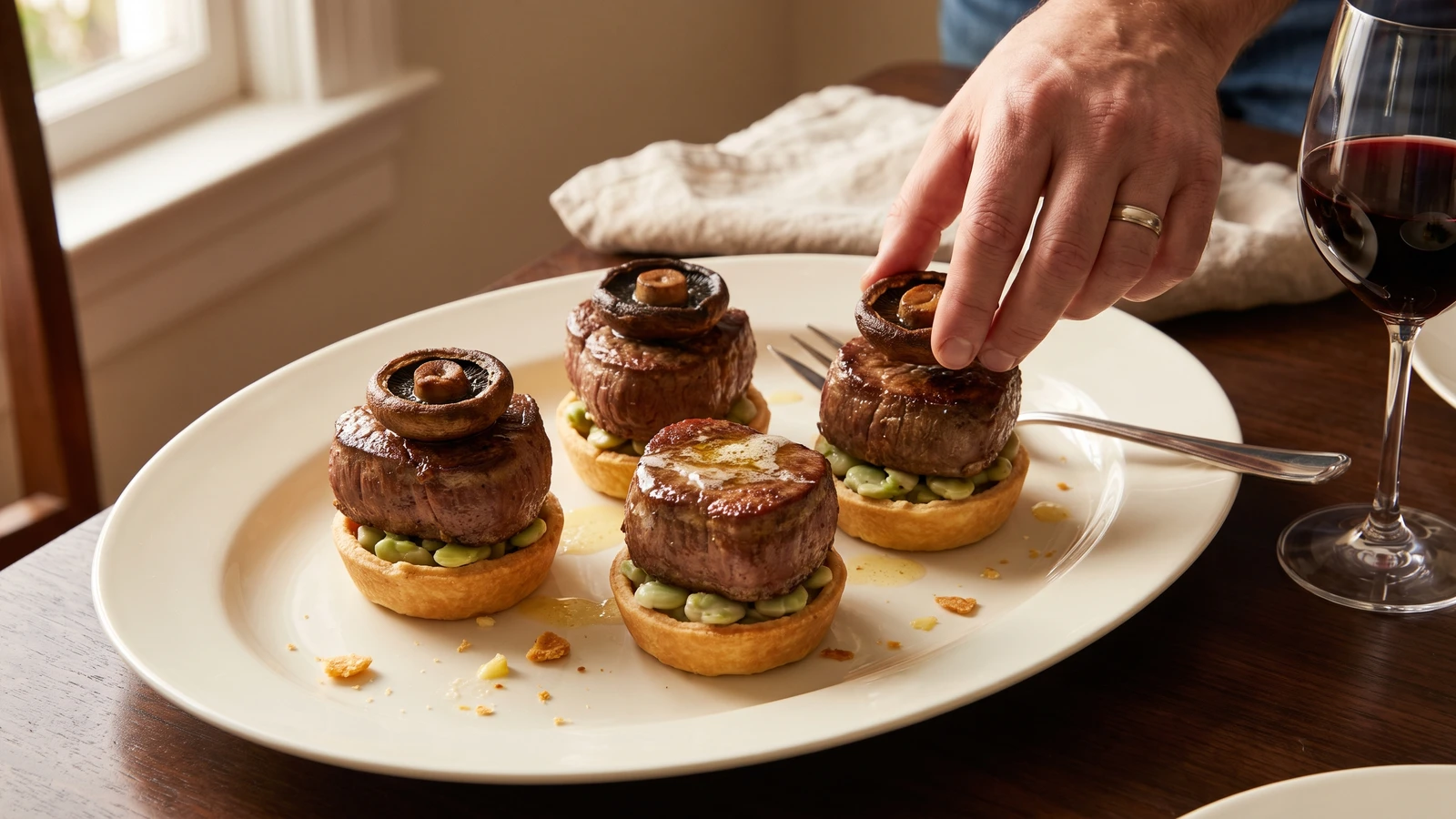
Crisp tartlets, silken broad beans, and lean tournedos meet in one precise composition. Sear the beef fiercely and briefly, then crown each piece with its grilled mushroom.
Tournedos Lakmé (beef fillet on creamed broad-bean tartlets) teaches synchronization, not complication. The one true thing is this: lean fillet must meet a fiercely hot pan only after every other component is cooked, warm, and waiting. Let the beef linger while you fuss with pastry or mushrooms and it dries before the plate reaches the table.
The original formula assumed separate hands for the tartlet shells, broad beans, grill, and sauté pan, with a salamander ready to brown the mushrooms at once. Your oven broiler is the honest equivalent, and careful sequencing replaces those extra hands. A saucier and stockpot never enter this formula, so no demi-glace is smuggled in. Separate stations are brigade scaffolding and can go; the crisp tartlet, one spoonful of broad beans with cream, clarified-butter sear, grilled mushroom, and crown arrangement are the dish and must stay. One cook, one stove, one evening.
Bake the shells first, keep the beans gently warm, and grill the mushrooms just before the meat. Then sear the tournedos hot and fast. Have the platter ready before the beef touches the pan, because that final timing decides everything.
Tournedos Lakmé belongs to the Parisian grand-kitchen repertoire of named garnished tournedos, in which a small fillet steak was identified as much by its base and crown as by its cooking. Its title follows the Parisian habit of borrowing names from opera and the stage; Lakmé supplies the theatrical name, not an Indian seasoning profile. The surviving formula is unusually spare: broad beans with cream in a tartlet, clarified-butter seared beef, and a grilled mushroom, with no stock sauce to blur the composition.
Quantity
1 cup (240 ml / 125 g), plus 1 tablespoon (15 ml / 8 g) for rolling
Quantity
1/2 teaspoon (2.5 ml / 3 g)
Quantity
6 tablespoons (90 ml / 85 g)
diced
Quantity
1
Quantity
2 to 3 tablespoons (30 to 45 ml / 30 to 45 g)
Quantity
1/4 cup (60 ml / 40 g)
fresh or frozen
Quantity
1 teaspoon (5 ml / 5 g)
Quantity
2 tablespoons (30 ml / 30 g)
divided
Quantity
4, about 2 1/2 inches (6 cm) wide and 4 to 5 ounces (115 to 140 g) total
stems removed
Quantity
4 tablespoons (60 ml / 55 g)
divided between the mushrooms and beef
Quantity
4 tournedos, 5 to 6 ounces (140 to 170 g) each
cut about 1 1/2 inches (4 cm) thick and tied around the circumference
Quantity
to taste
Quantity
to taste
| Ingredient | Quantity |
|---|---|
| all-purpose flour | 1 cup (240 ml / 125 g), plus 1 tablespoon (15 ml / 8 g) for rolling |
| fine sea salt for the pastry | 1/2 teaspoon (2.5 ml / 3 g) |
| cold unsalted butterdiced | 6 tablespoons (90 ml / 85 g) |
| large egg yolk | 1 |
| ice water | 2 to 3 tablespoons (30 to 45 ml / 30 to 45 g) |
| shelled baby broad beansfresh or frozen | 1/4 cup (60 ml / 40 g) |
| unsalted butter for the broad beans | 1 teaspoon (5 ml / 5 g) |
| heavy creamdivided | 2 tablespoons (30 ml / 30 g) |
| medium flat mushroom capsstems removed | 4, about 2 1/2 inches (6 cm) wide and 4 to 5 ounces (115 to 140 g) total |
| clarified butterdivided between the mushrooms and beef | 4 tablespoons (60 ml / 55 g) |
| center-cut beef tenderloin tournedoscut about 1 1/2 inches (4 cm) thick and tied around the circumference | 4 tournedos, 5 to 6 ounces (140 to 170 g) each |
| fine sea salt | to taste |
| freshly ground black pepper | to taste |
Combine the flour and pastry salt, then rub in the cold diced butter until the mixture resembles coarse crumbs with a few pea-sized pieces remaining. Stir in the yolk and 2 tablespoons (30 ml / 30 g) ice water. Press the dough together without kneading; if dry flour remains, add the last water a teaspoon at a time. Flatten into a disc, wrap, and chill for 30 minutes. This pâte brisée, a short butter pastry, needs the rest so it rolls without shrinking.
Heat the oven to 400°F (200°C). Roll the dough about 1/8 inch (3 mm) thick on the measured rolling flour and line four 3-inch (7.5 cm) tartlet tins, pressing the pastry firmly into the corners. Trim the rims, prick the bases, and chill for 10 minutes. Line with parchment, fill with pie weights, and bake for 12 minutes. Remove the weights and parchment, then bake for 5 to 7 minutes more, until crisp and evenly golden. Cool in the tins for 5 minutes before turning out. If a shell cracks, press a scrap of raw dough over the opening while the shell is hot and return it to the oven for 2 minutes. Ça se rattrape.
Blanch the broad beans in salted boiling water until just tender, about 2 minutes for fresh beans or 1 minute for frozen. Drain, cool briefly, and slip off any tough outer skins. Melt the butter in a small saucepan over gentle heat, add the beans and 1 1/2 tablespoons (22 ml / 22 g) of the cream, then simmer barely until the cream reduces to a close ivory glaze around the beans, about 3 minutes. Season lightly. Keep the remaining cream in reserve. If the glaze separates into oil and milk solids, take the pan off the heat and stir in that cold reserved cream until it comes together. Cover and hold warm over the lowest heat.
Rewarm the empty tartlet shells for 3 minutes at 350°F (180°C), then remove them and change the oven to its hottest broiler setting. Set a rack about 6 inches (15 cm) below the heat. Brush the mushroom caps with 1 tablespoon (15 ml / 14 g) clarified butter and season them. Broil gill-side up for about 3 minutes, turn cap-side up, and broil for another 2 to 4 minutes, until deeply browned but still juicy. Transfer them to a warm plate and cover loosely. A tight cover traps moisture and softens their browned surfaces.
Warm an oval serving platter with hot water, then dry it thoroughly. Pat the tournedos completely dry and season them on both sides only when the skillet is ready. Heat a heavy 12-inch (30 cm) skillet over high heat until properly hot, add the remaining clarified butter, and wait until it shimmers. Set in the tournedos with space between them and sear without moving for 2 1/2 to 3 minutes. Turn and cook for about 2 minutes more, spooning the hot butter over their sides. Pull them at 122 to 125°F (50 to 52°C) for a medium-rare finish after resting. If the meat remains grey after 90 seconds, the pan is too cool: lift it out, return the butter to a shimmer, and resume. Leaving lean fillet in a lukewarm pan to chase a crust only dries it.
Transfer the tournedos to a warm plate and rest them for 5 minutes, loosely covered. Do not leave them in the skillet, where the retained heat will carry them past tenderness. There is no honest rescue for badly overcooked fillet, so the thermometer and this short rest do the guarding.
While the meat rests, arrange the four warm tartlet shells in a loose crown on the warmed platter. If the broad-bean glaze has tightened, loosen it over gentle heat with a teaspoon of hot water. Spoon exactly 1 tablespoon of the creamed beans into each tartlet, set a tournedos squarely above, remove its string, and crown it with a grilled mushroom cap. Serve immediately, with no added stock sauce. The cream around the beans is the intended softness, and the crisp tartlet is its contrast. À table!
1 serving (about 225g)
Culinary guides, cultural storytelling, and the editorial depth that makes cooking meaningful.
Discover Culinary ExplorerChef Juliette
John Dory has the delicacy of sole and the firmness of turbot. A light flouring, a quick butter sauté, and nut-brown beurre noisette show exactly why looks never mattered.

Chef Juliette
Fresh haddock proves its delicacy in the meunière pan: a fine flour crust, moist pearly flakes, and beurre noisette sharpened with lemon and parsley, ready from one skillet in half an hour.

Chef Juliette
Éperlans à l’Anglaise turns small fish into a lesson in disciplined coating: boned smelts under a close, crisp crumb, pan-fried in clarified butter and finished with bright, half-melted maître d’hôtel butter.

Chef Juliette
Tiny smelts, shallot, mushrooms, white wine, gratin sauce, and fine bread raspings meet a fierce oven, where the fish must turn tender in the same breath the buttered crust bronzes.