
Chef Juliette
John Dory (St. Pierre)
John Dory has the delicacy of sole and the firmness of turbot. A light flouring, a quick butter sauté, and nut-brown beurre noisette show exactly why looks never mattered.
A cooking platform built around craft, culture, and the stories behind what we eat.
Created by Chef Juliette
Based on No. 1095, Tournedos Forestière, from Le Guide Culinaire (1907) by Auguste Escoffier
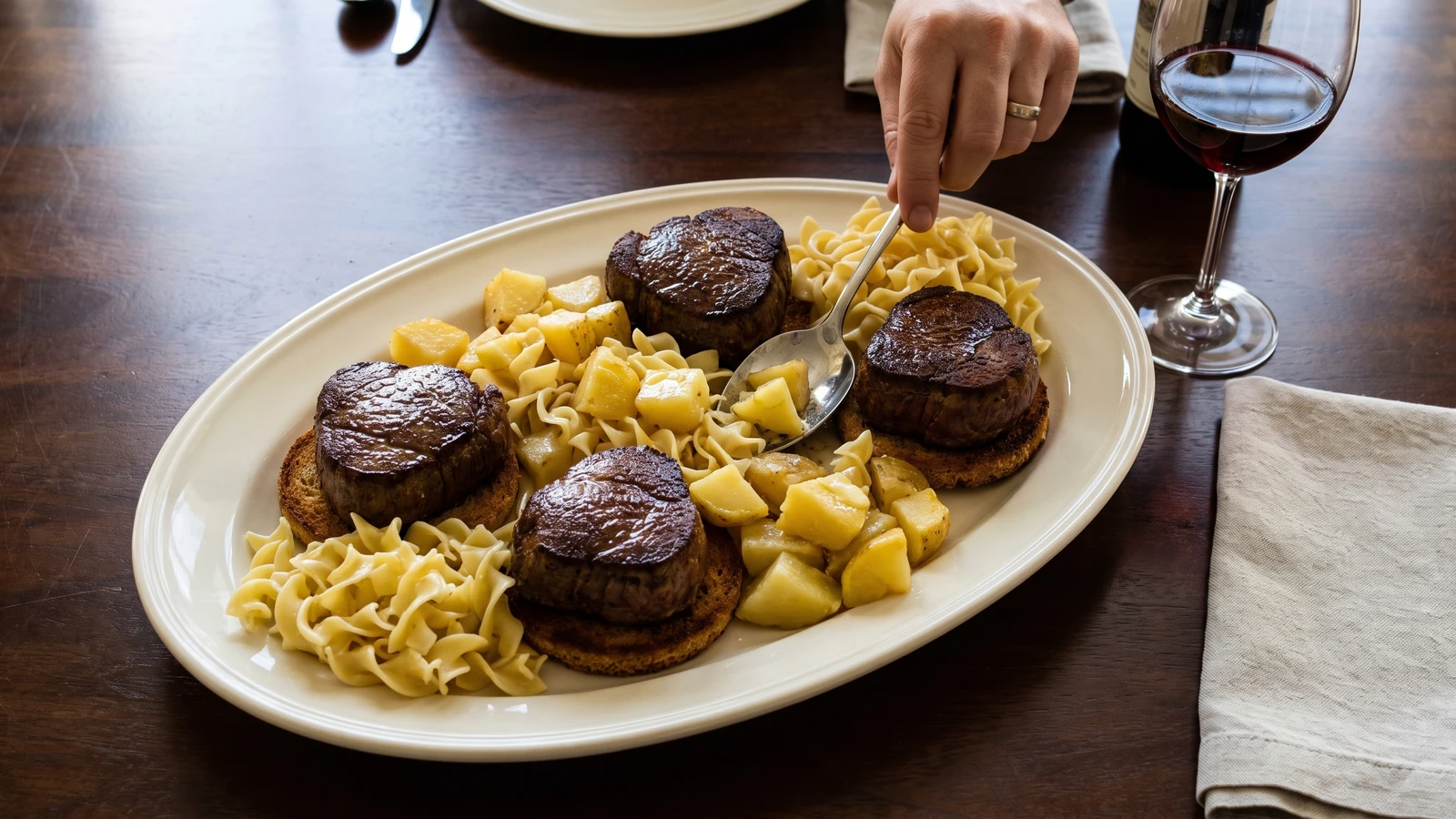
Hot-pan discipline in its purest form: tournedos browned in butter, set on crisp croûtes, then ringed with egg noodles and golden potatoes. The pan must be fierce, because a slow one turns fillet gray.
Tournedos Forestière (forest-style fillet steaks) teaches the clean discipline of sauté, quick cooking in hot, shallow fat. A thick, dry piece of beef enters a properly heated pan, takes a bronze crust before its interior overcooks, and leaves no excuse for grayness. The one true thing to know before touching the pan is simple: heat first, beef second. A slow pan steams the fillet gray.
The terse brigade entry assumed enough hands to fry the croûtes, toss large-diced potatoes in butter, boil noodles, sauté four tournedos, and land everything hot at once. Unlike many named tournedos, this formula calls for neither a saucier nor stock from a pot kept on the fire, and no salamander finishes it, so we won't invent them. At home, one low oven replaces the hot cupboard, one skillet works in sequence, and the noodles cook while the beef rests. I added only a brief potato parboil because a home pan cannot cook a large dice through before the butter burns. That parboil is scaffolding; the butter-tossed finish, fried croûtes, and fierce sauté are the dish and must stay. One cook, one stove, one evening.
The finished platter is generous and direct: bronzed beef on bread crisp with butter, pale ribbons of egg noodle, and golden potatoes arranged in honest heaps. There is no sauce to hide behind and no mushroom garnish in this particular formula. Dry the tournedos thoroughly and wait until the skillet is truly hot before they meet it. That is the step that decides the dish.
Tournedos belong to the Parisian classical table, where small, thick rounds cut from the tenderloin moved easily from grand dining rooms to bourgeois entertaining because they cooked quickly and accepted an entire vocabulary of named garnishes. Elsewhere in the classical canon, forestière commonly signals mushrooms, yet this particular formula contains neither mushrooms nor sauce; it defines its garnish as butter-fried croûtes, egg noodles, and large-diced potatoes tossed in butter. The discrepancy shows how garnish names traveled between professional kitchens without always carrying one fixed composition.
Quantity
4, about 6 ounces / 170 g each and 1½ pounds / 680 g total
cut 1½ inches / 4 cm thick and tied around the middle
Quantity
1 tablespoon plus 1 teaspoon (20 ml / 24 g)
divided
Quantity
½ teaspoon (2.5 ml / 1 g)
Quantity
about 3 cups (710 ml / 450 g)
peeled and cut into ¾-inch / 2-cm dice
Quantity
about 4 loosely packed cups (950 ml / 225 g)
Quantity
4 thick slices, about 4 ounces / 120 g total
cut into rounds matching the tournedos
Quantity
10 tablespoons (150 ml / 142 g), plus up to 2 tablespoons (30 ml / 28 g) if needed
divided
| Ingredient | Quantity |
|---|---|
| center-cut beef tenderloin tournedoscut 1½ inches / 4 cm thick and tied around the middle | 4, about 6 ounces / 170 g each and 1½ pounds / 680 g total |
| fine sea saltdivided | 1 tablespoon plus 1 teaspoon (20 ml / 24 g) |
| freshly ground black pepper | ½ teaspoon (2.5 ml / 1 g) |
| Yukon Gold potatoespeeled and cut into ¾-inch / 2-cm dice | about 3 cups (710 ml / 450 g) |
| wide fresh egg noodles | about 4 loosely packed cups (950 ml / 225 g) |
| firm white bread or pain de miecut into rounds matching the tournedos | 4 thick slices, about 4 ounces / 120 g total |
| unsalted butterdivided | 10 tablespoons (150 ml / 142 g), plus up to 2 tablespoons (30 ml / 28 g) if needed |
Thirty minutes before cooking, pat the tournedos thoroughly dry and tie each one around its middle so it holds a compact round shape. Season both faces with ¾ teaspoon of the salt, then leave the beef at cool room temperature. Save the pepper until the skillet is ready so it spends less time against fierce heat. Heat the oven to 200°F / 95°C and place a wire rack over a rimmed baking sheet inside. Bring a large pot of water to a boil and season it with the full tablespoon of salt.
Lower the diced potatoes into the boiling water and cook for 5 to 6 minutes. Their corners should yield when pressed, but the centers must still offer resistance. Lift them out with a spider or slotted spoon, preserving the water for the noodles, then spread them on a clean towel until their surfaces look dry and slightly chalky. This brief parboil replaces the prepared potato garnish a brigade kept ready; it lets the large dice become tender before their butter can scorch. Cover the pot and set it aside.
Melt 3 tablespoons of the butter in the heavy skillet over medium heat. When it foams, lay in the bread rounds and fry them until crisp and deep gold on both faces, about 2 minutes per side. Add a little more butter only if the pan becomes dry. If the butter blackens before the bread colors, lift out the croûtes, wipe the skillet clean, and continue with some of the reserved butter. Ça se rattrape. Transfer the croûtes to the rack in the low oven, where air can circulate underneath and keep them crisp.
Brush loose crumbs from the skillet, add 3 tablespoons of butter, and raise the heat to medium-high. Add the dried potatoes in one layer. Leave them undisturbed for 2 minutes so the first face bronzes, then toss them at short intervals until several sides are golden and the centers are completely tender, 8 to 10 minutes. Season with the remaining ¼ teaspoon salt. Hold them in a shallow dish in the low oven for no more than 15 minutes; crowd them deeply and their crisp edges soften.
Wipe the skillet clean and heat it empty over medium-high heat until properly hot, about 2 minutes. Pepper the tournedos. Add 2 tablespoons of butter, and as soon as its foam begins to subside, lay in the beef with at least 1 inch / 2.5 cm between the pieces. Leave them alone for 2½ to 3 minutes, until the undersides carry a dark bronze crust, then turn them. Add the final 2 tablespoons of butter and spoon the foaming butter over the beef as the second sides cook, another 2½ to 3 minutes. Pull the tournedos at 120 to 125°F / 49 to 52°C for rare to medium-rare after resting, or at 130°F / 54°C for medium. If gray liquid collects around the beef, the pan has lost its heat. Lift out the tournedos, pour off the liquid, reheat the skillet, and return them. If the butter has blackened, wipe the pan and use the reserved butter. Ça se rattrape. Rest the beef on a warm plate for 6 minutes.
While the beef rests, return the potato water to a full boil. Add the fresh egg noodles, stir once to separate them, and cook until tender but still resilient under the teeth, usually 2 to 3 minutes. Drain them thoroughly without rinsing. They need no invented sauce; the salted cooking water seasons them, and they must go directly to the platter while still supple.
Warm an oval serving platter, then arrange the four croûtes across its center and set one tournedos on each. Surround them with alternating generous heaps of egg noodles and butter-tossed potatoes. Do not mold the garnish into little towers; the source asks for heaps, and heaps are what feed people. The book also permits the potatoes among the tournedos with the noodles all around, or the reverse. Bring the platter straight to the table while the croûtes remain crisp and the beef is rosy within. À table!
1 serving (about 395g)
Culinary guides, cultural storytelling, and the editorial depth that makes cooking meaningful.
Discover Culinary ExplorerChef Juliette
John Dory has the delicacy of sole and the firmness of turbot. A light flouring, a quick butter sauté, and nut-brown beurre noisette show exactly why looks never mattered.

Chef Juliette
Fresh haddock proves its delicacy in the meunière pan: a fine flour crust, moist pearly flakes, and beurre noisette sharpened with lemon and parsley, ready from one skillet in half an hour.

Chef Juliette
Éperlans à l’Anglaise turns small fish into a lesson in disciplined coating: boned smelts under a close, crisp crumb, pan-fried in clarified butter and finished with bright, half-melted maître d’hôtel butter.

Chef Juliette
Tiny smelts, shallot, mushrooms, white wine, gratin sauce, and fine bread raspings meet a fierce oven, where the fish must turn tender in the same breath the buttered crust bronzes.