
Chef Juliette
Châteaubriand, Fillet Steak, Tournedos
One tenderloin heart, three classical portions: roast Châteaubriand for carving, bifteck de filet for one, tournedos two to a plate, all with braised endives and a red-wine pan jus.
A cooking platform built around craft, culture, and the stories behind what we eat.
Created by Chef Juliette
Based on No. 1086, Tournedos Castillane, from Le Guide Culinaire (1907) by Auguste Escoffier
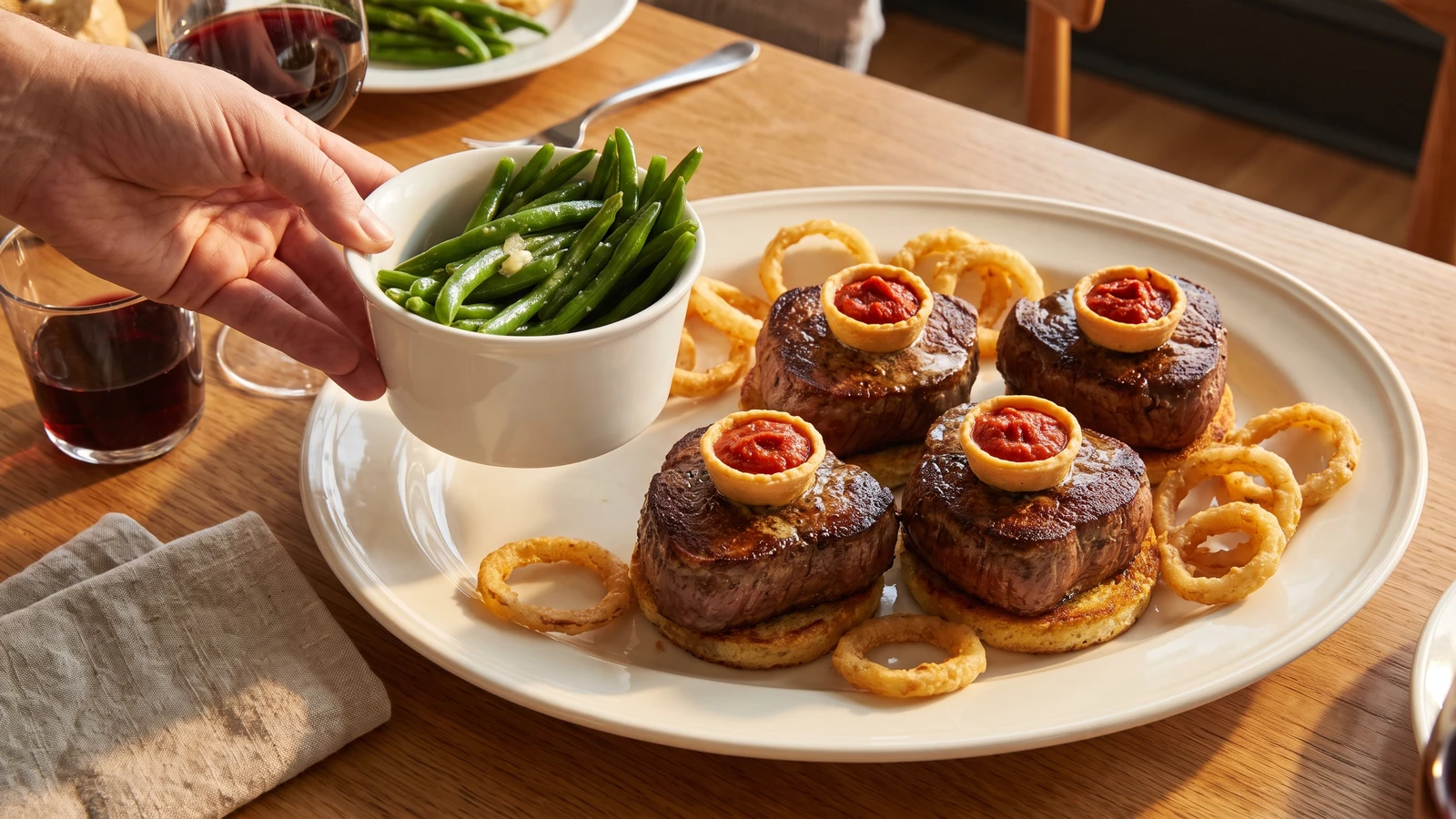
Butter-seared tournedos stand on crisp fried crusts, each crowned with a tomato-fondue tartlet, while onion rings and glossy haricots verts turn one lean cut into a generous classical supper.
Tournedos Castillane (butter-seared beef tenderloin on fried bread, crowned with a tomato tartlet) teaches one true thing: the garnish waits for the meat, never the reverse. Tenderloin is lean and quick, so every tartlet, onion ring, croûte, and bean must be ready before the beef touches butter.
The brigade formula assumed a pastry section turning out tiny shells, a fry station for onion roundels, and a hot pass beside the salamander. It called on neither a saucier nor a stockpot never off the fire, and adding a sauce would smother the clean taste of the fillet. For one cook, one stove, one evening, ready-rolled all-butter pâte brisée replaces the pastry station, a small saucepan replaces the fryer, and a low oven replaces the hot pass. Making the dough from scratch is brigade scaffolding; the crisp tartlet, fried croûte, tomato fondue, onions, and buttered beans are the dish and stay.
The finished platter is formal in shape but generous in appetite: bronze beef, butter-gold bread, scarlet tomato, crisp onion, and green beans shining in butter. Cooking well is not cooking fancy. Before you touch the steak pan, finish every garnish and warm the platter; that single act decides the dish.
Tournedos belong to the Parisian grand-kitchen table, where center-cut fillet was portioned into compact medallions and set on fried croûtes so the butter and meat juices stayed with each serving. Castillane is a French menu name, not evidence of a household dish from Castile: tomato fondue and fried onion supplied the Spanish cue, while the tartlet and separate timbale of haricots verts kept the service resolutely French. The composed garnish traveled readily to the bourgeois dinner table because every accompaniment could wait while the tenderloin received its brief final cooking.
Quantity
1 sheet (9 oz / 255 g)
chilled
Quantity
⅓ cup (80 ml / 40 g)
divided, for pastry dusting and onion coating
Quantity
½ cup (120 ml / 125 g)
from ripe plum tomatoes or good canned whole tomatoes
Quantity
7 tablespoons (105 ml / 100 g)
divided
Quantity
⅔ cup loosely packed (160 ml / 70 g)
trimmed
Quantity
1 (7 oz / 200 g)
cut crosswise into ¼-inch (6 mm) rings
Quantity
1½ cups (360 ml / 330 g)
Quantity
4 slices (4 oz / 115 g total)
crusts removed
Quantity
4, 5½ oz / 160 g each (1 lb 7 oz / 640 g total)
about 1½ inches (4 cm) thick and tied
Quantity
1 tablespoon (15 ml / 18 g)
divided, most for the blanching water
Quantity
½ teaspoon (2.5 ml / 1 g)
divided
| Ingredient | Quantity |
|---|---|
| all-butter pâte briséechilled | 1 sheet (9 oz / 255 g) |
| all-purpose flourdivided, for pastry dusting and onion coating | ⅓ cup (80 ml / 40 g) |
| peeled, seeded, and pressed tomato fleshfrom ripe plum tomatoes or good canned whole tomatoes | ½ cup (120 ml / 125 g) |
| unsalted butterdivided | 7 tablespoons (105 ml / 100 g) |
| extra-fine haricots vertstrimmed | ⅔ cup loosely packed (160 ml / 70 g) |
| large yellow onioncut crosswise into ¼-inch (6 mm) rings | 1 (7 oz / 200 g) |
| neutral frying oil | 1½ cups (360 ml / 330 g) |
| firm white sandwich breadcrusts removed | 4 slices (4 oz / 115 g total) |
| center-cut beef tenderloin tournedosabout 1½ inches (4 cm) thick and tied | 4, 5½ oz / 160 g each (1 lb 7 oz / 640 g total) |
| fine sea saltdivided, most for the blanching water | 1 tablespoon (15 ml / 18 g) |
| freshly ground black pepperdivided | ½ teaspoon (2.5 ml / 1 g) |
Heat the oven to 375°F (190°C). Set four 3-inch (7.5 cm) tartlet molds on a tray, place a wire rack over a second tray for the fried garnishes, and tie the tournedos into neat rounds if the butcher has not done it. Keep the beef chilled while the garnishes are prepared. Do not sear it until the tartlets, fondue, beans, onion rings, and croûtes are ready; the garnish waits for the meat, never the reverse.
Dust the work surface with about 1 tablespoon of the flour. Cut four 4-inch (10 cm) rounds from the pâte brisée and ease them into the tartlet molds without stretching. Trim the rims, prick the bases, and chill for 10 minutes. Line each shell with parchment and baking weights, then bake for 12 minutes. Remove the weights and bake for another 5 to 7 minutes, until dry and biscuit-gold. If a base puffs, press it gently with the back of a teaspoon while it is still hot; if a small crack appears, patch it with a scrap of raw pastry before the final bake. Let the shells cool on a rack.
Melt 1 tablespoon of the butter in a small sauté pan over medium-low heat. Add the pressed tomato flesh, ¼ teaspoon of salt, and a pinch of pepper. Cook for 10 to 15 minutes, stirring often, until the tomatoes reach fondue, the soft, pulpy state named by the source, and reduce to four rounded tablespoons. A spoon drawn across the pan should leave a clean trail. If the tomato catches, do not scrape the dark patch into the fondue. Transfer the clean portion to another pan, add a teaspoon of water and a small piece of the measured butter, then finish gently. Ça se rattrape. Keep it warm, but leave the shells empty so they stay crisp.
Bring a small pot of water to a strong boil and season it with about 2 teaspoons of the salt. Blanch the haricots verts for 3 to 4 minutes, until tender but still bright and firm under the teeth. Drain, cool briefly in cold water, and dry them thoroughly. Near serving time, toss them over medium heat with 1 tablespoon of butter until the butter coheres, clinging in a fine gloss rather than pooling in the pan. Measure four tablespoonfuls in total, the source's proportion of one per serving, and hold them in a small warmed timbale. If the butter pools, the beans are still wet; return them to the pan for another 30 seconds.
Heat the oil in a small, deep saucepan to 350°F (175°C). Separate the onion into intact rings, pat them very dry, and toss them with the remaining flour just before frying. Shake off every loose trace. Fry in small batches for 1 to 2 minutes, turning once, until crisp and evenly golden. Drain on the wire rack and season lightly. If the first rings emerge pale and greasy, the oil was too cool; bring it to 365°F (185°C) and refry them for 15 to 20 seconds. Keep the rings on the rack, never piled, so their crust survives.
Cut the bread into four rounds slightly wider than the tournedos. Melt 2 tablespoons of butter in a wide skillet over medium heat. When the foam subsides, fry the croûtes, the bread rounds that carry the beef and catch its juices, until deep gold and crisp on both sides, about 1½ minutes per side. Transfer them to the rack. Lower the oven to 200°F (95°C), warm the serving platter, and rewarm the empty tartlet shells and croûtes for no more than 10 minutes.
Pat the tournedos completely dry and season them with the remaining salt and pepper. Wipe the skillet clean, set it over medium-high heat, and melt 2 tablespoons of butter, keeping the final tablespoon in reserve. Once the foam recedes and the butter smells nutty, add the beef without crowding. Sear without moving for 2½ to 3 minutes, turn, and cook the second side for about 2 minutes. Roll the edges against the pan for 20 to 30 seconds, then use the reserved butter to baste the meat. Pull the tournedos at 125 to 128°F (52 to 53°C) for medium-rare; they will rise as they rest. If the butter blackens before the centers are ready, lift out the beef, wipe away the bitter solids, add the reserved butter, and continue. Rest the tournedos for 4 minutes.
Arrange the four hot croûtes as a loose crown on the warmed platter and set a tournedos on each one. Fill every tartlet shell with exactly 1 tablespoon of tomato fondue, then place one shell on each tournedos. Form a generous border with the fried onion rings. Serve the glossy haricots verts apart in their warmed timbale, as the source permits. Bring the platter straight to the table while the pastry and onions are crisp and the butter still shines. À table!
1 serving (about 300g)
Culinary guides, cultural storytelling, and the editorial depth that makes cooking meaningful.
Discover Culinary ExplorerChef Juliette
One tenderloin heart, three classical portions: roast Châteaubriand for carving, bifteck de filet for one, tournedos two to a plate, all with braised endives and a red-wine pan jus.

Chef Juliette
Tournedos Algérienne teaches timing: crisp sweet-potato croquettes and tender oil-stewed tomatoes must be ready before lean fillet meets clarified butter, sears fast, and goes straight to the table.
Chef Juliette
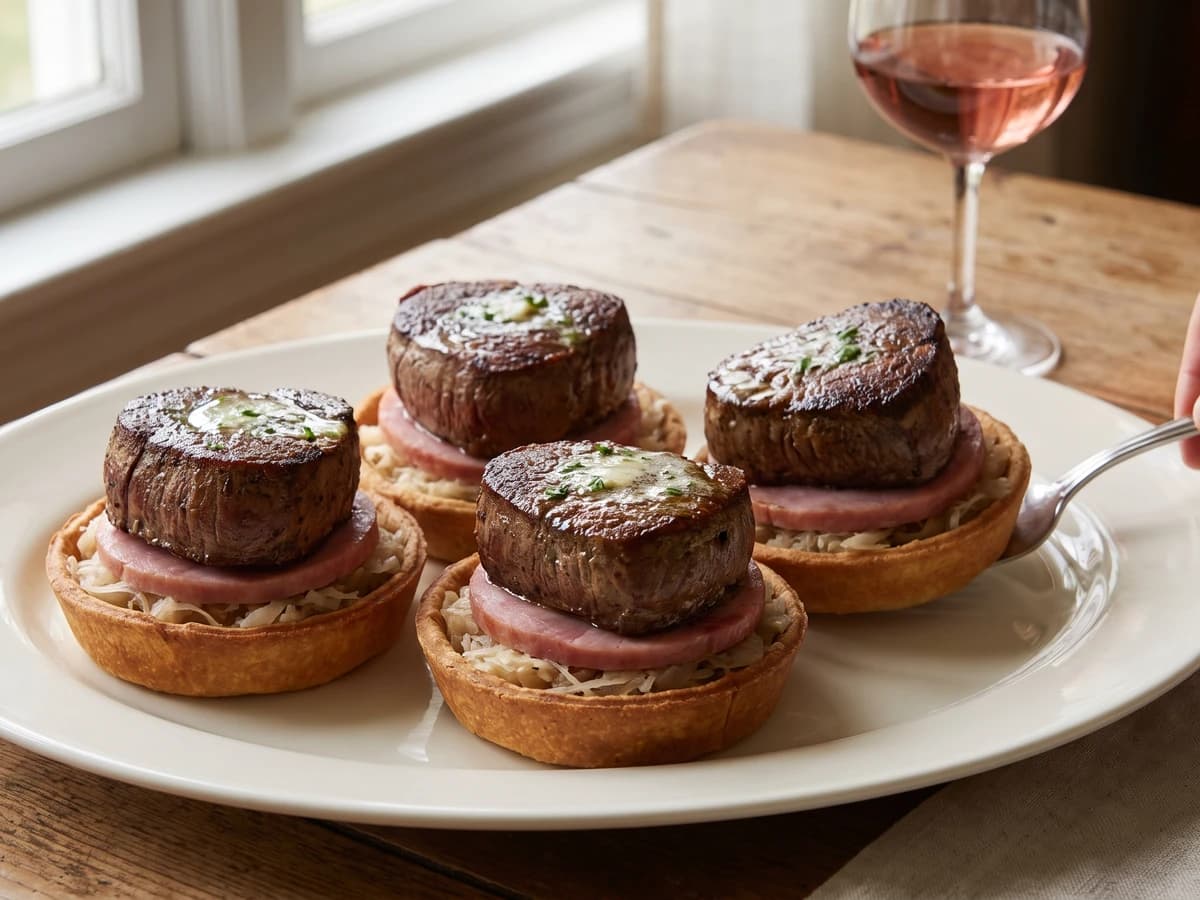
Tournedos crowned over crisp tartlets of wine-braised choucroute and lean ham: a hot, quick grill for the fillet, a dry, buttery foundation below, and Alsace carried through the whole plate.

Chef Juliette
Tender tournedos meet a Provençal ring of golden aubergine and sautéed tomato, each steak crowned with fried onion. The lesson is timing: prepare the garnish, then give lean fillet one hot, quick pan.