Chef Juliette
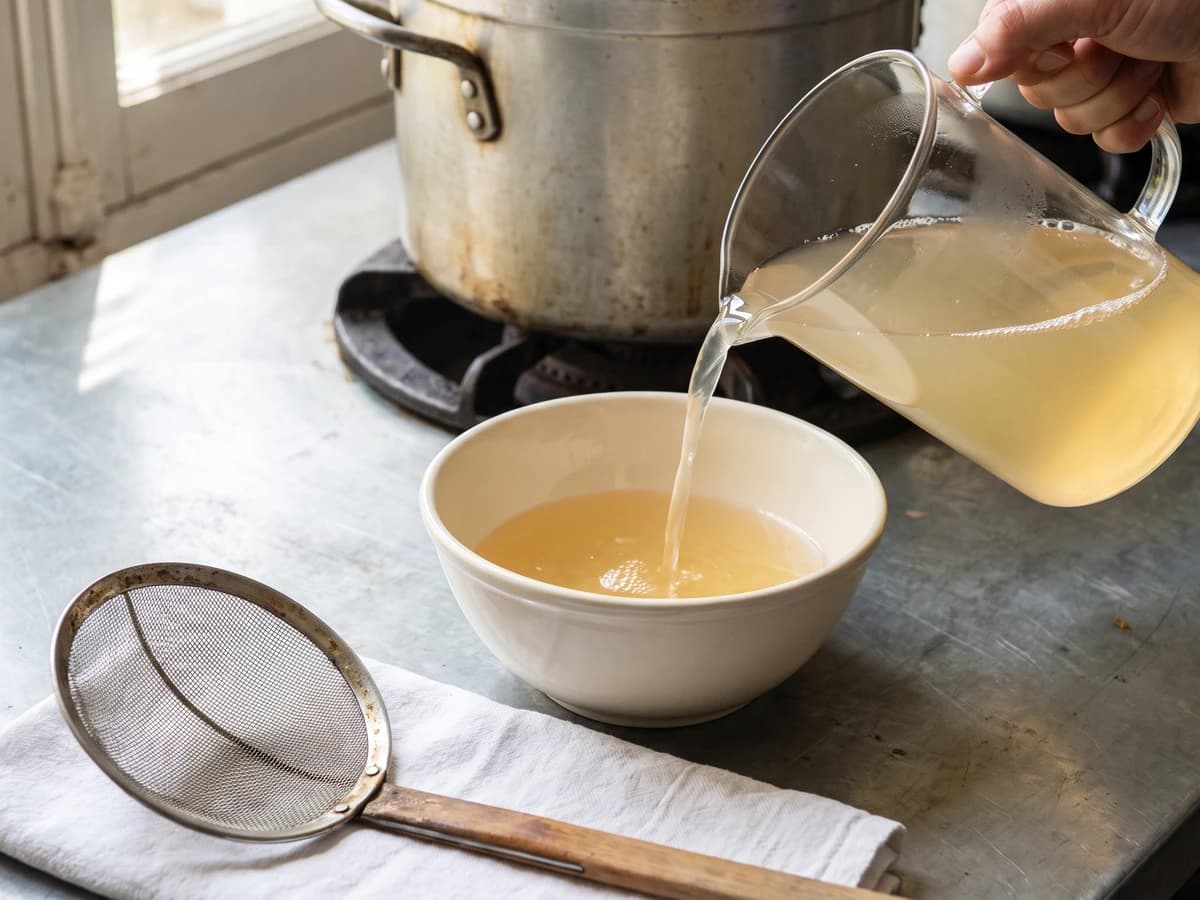
Ordinary or White Consommé
Beef shin, lean beef, and fowl begin in cold water and rise slowly toward a tremble. Skim before the boil, and you learn the quiet discipline that gives every clear French broth its backbone.
A cooking platform built around craft, culture, and the stories behind what we eat.
Created by Chef Juliette
Based on No. 106, Soubise Sauce Tomatée, from Le Guide Culinaire (1907) by Auguste Escoffier
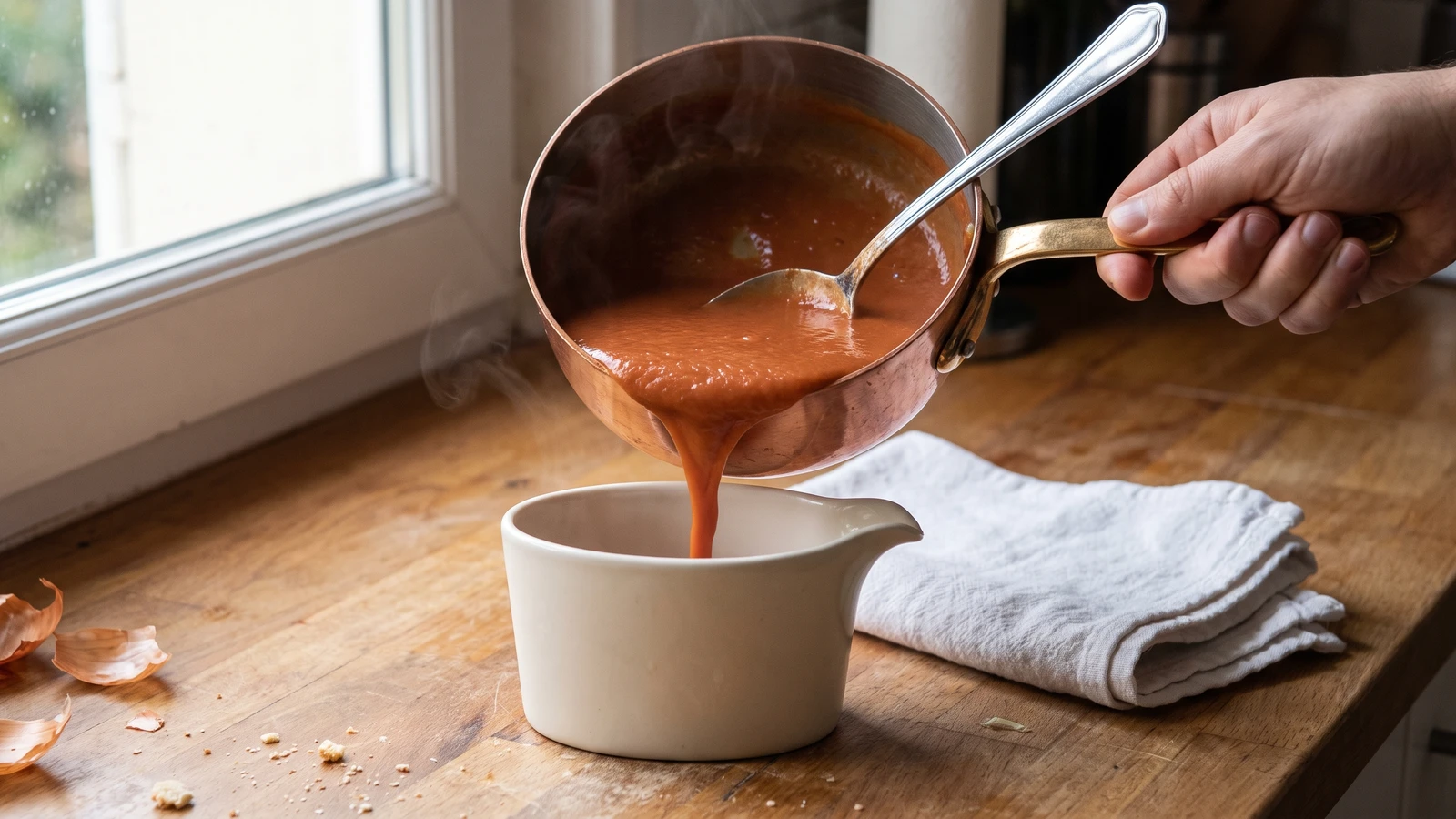
Soubise Sauce Tomatée teaches the derivative-sauce system in one stroke: three parts silky onion soubise, one part deeply red tomato purée, joined gently so sweetness, acidity, and colour remain in balance.
Soubise Sauce Tomatée (tomato-enriched onion sauce) teaches the family logic of classical sauces. The one true thing to know before touching the pan is the proportion: the tomato purée equals exactly one-third the volume of the soubise, giving you three parts soubise to one part tomato. More tomato buries the onion; less leaves its sweetness unchecked.
The original entry assumed a saucier had already prepared the first formula of Soubise Sauce in brigade quantity, with a very red tomato purée waiting beside it. At home, you begin with six cups of that finished soubise and two cups of concentrated purée. The separate station and holding pots are scaffolding and can go; the finished soubise, the deep colour of the tomato, and the three-to-one proportion are the dish and must stay. One cook, one stove, one evening.
When it is right, the sauce is smooth and glossy, warm brick-rose rather than dull orange, with onion first and tomato arriving as a clean, gently acidic finish. Judge the purée before it meets the soubise. That colour cannot be negotiated afterward.
Soubise belongs to the Parisian classical sauce repertoire, where a smooth onion preparation enriched with béchamel became a named sauce rather than merely a garnish. Its name is tied to the house of Soubise, while the tomatée derivative demonstrates the canon's family logic: a finished sauce changes character through one carefully measured addition. Tomato does not replace the onion base here; it cuts the sweetness and reddens the sauce without erasing its identity.
Quantity
6 cups (1.42 L / about 1.5 kg)
hot and completely smooth
Quantity
2 cups (475 ml / 500 g)
measured after any needed reduction
| Ingredient | Quantity |
|---|---|
| prepared Soubise Sauce from the first formulahot and completely smooth | 6 cups (1.42 L / about 1.5 kg) |
| very red tomato puréemeasured after any needed reduction | 2 cups (475 ml / 500 g) |
Measure the finished Soubise Sauce and tomato purée separately. Volume governs the book's proportion, so use six level cups of soubise and two level cups of purée; the weights are practical guidance, not permission to alter that three-to-one relationship. Warm the soubise over low heat in a heavy saucepan, stirring along the bottom until it relaxes into a smooth ribbon.
Examine the tomato purée before combining anything. It should be thick, intensely red, and able to hold a trail for a moment when a spoon crosses the pan. If it is watery or orange, don't add it yet. Ça se rattrape: reduce it gently in a separate wide pan, stirring often, until excess water is gone and the colour deepens to brick red, then measure the full two cups from the reduced purée. The listed quantity is the post-reduction measure.
Keep the soubise below a simmer and add the very red tomato purée in three additions, whisking each one completely through before adding the next. Gentle heat preserves the smooth body of the soubise while the gradual addition distributes the tomato evenly. The finished colour should be a warm brick-rose, with no pale streaks and no red pockets.
Stir over low heat for three to five minutes, only long enough for the two sauces to become one. Do not boil. If the sauce looks grainy or begins to separate at the edge, take it off the heat immediately. Ça se rattrape: whisk steadily as it cools for a minute, then blend briefly with an immersion blender until the gloss returns. A second passage through a fine sieve is unnecessary when both starting components were properly smooth.
Use the sauce at once, or cover it and hold it for no more than thirty minutes in a bain-marie (hot-water bath) kept below a simmer. Stir occasionally so no skin forms; if one does, whisk it back in rather than scraping it away. Spoon the Soubise Sauce Tomatée generously beside roast lamb, veal, poultry, or baked eggs, letting its onion sweetness and measured tomato acidity do their work. À table!
1 serving (about 63g)
Culinary guides, cultural storytelling, and the editorial depth that makes cooking meaningful.
Discover Culinary ExplorerChef Juliette
Beef shin, lean beef, and fowl begin in cold water and rise slowly toward a tremble. Skim before the boil, and you learn the quiet discipline that gives every clear French broth its backbone.
Chef Juliette
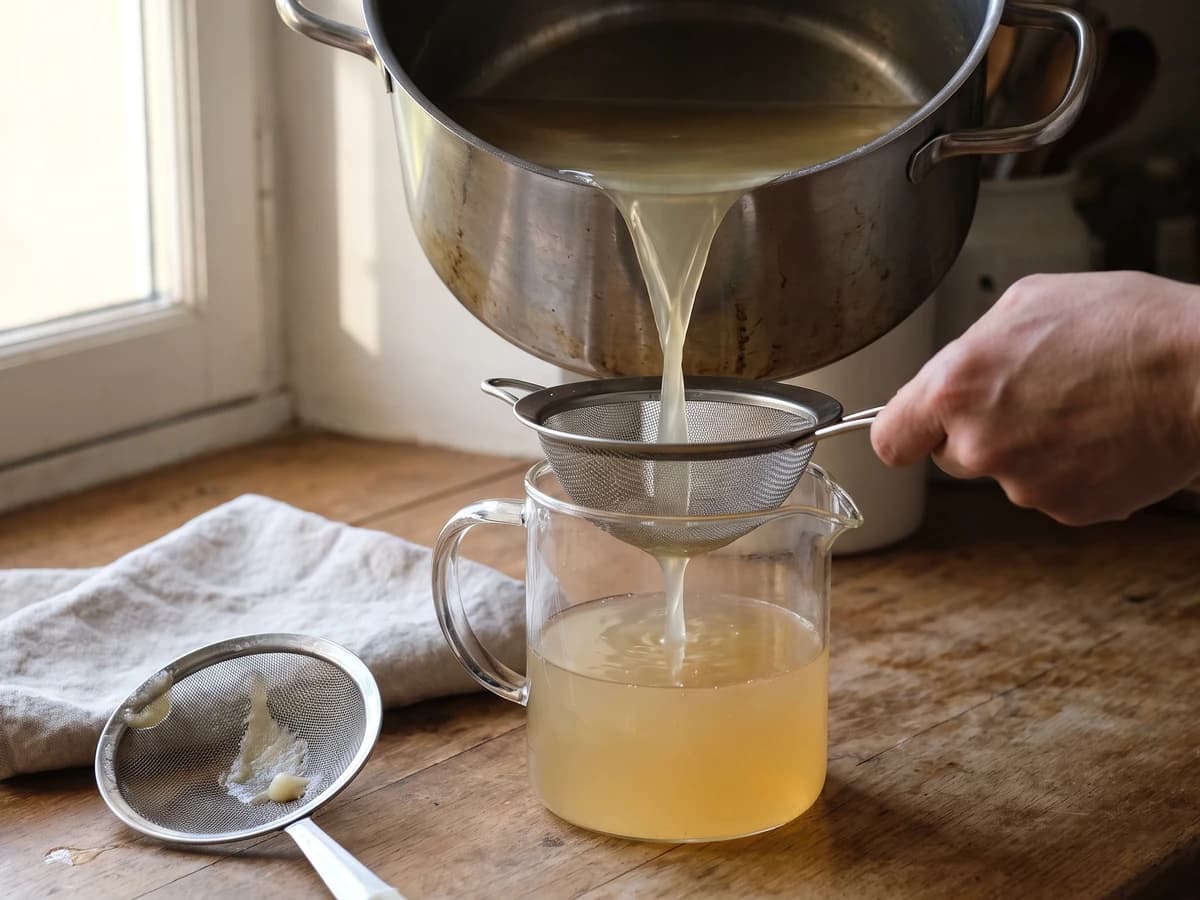
Break the veal bones small, then give them eight hours at a bare tremble. This pale, gelatinous fond becomes the quiet foundation beneath velouté, blanquette, and every sauce that must stay light.
Chef Juliette
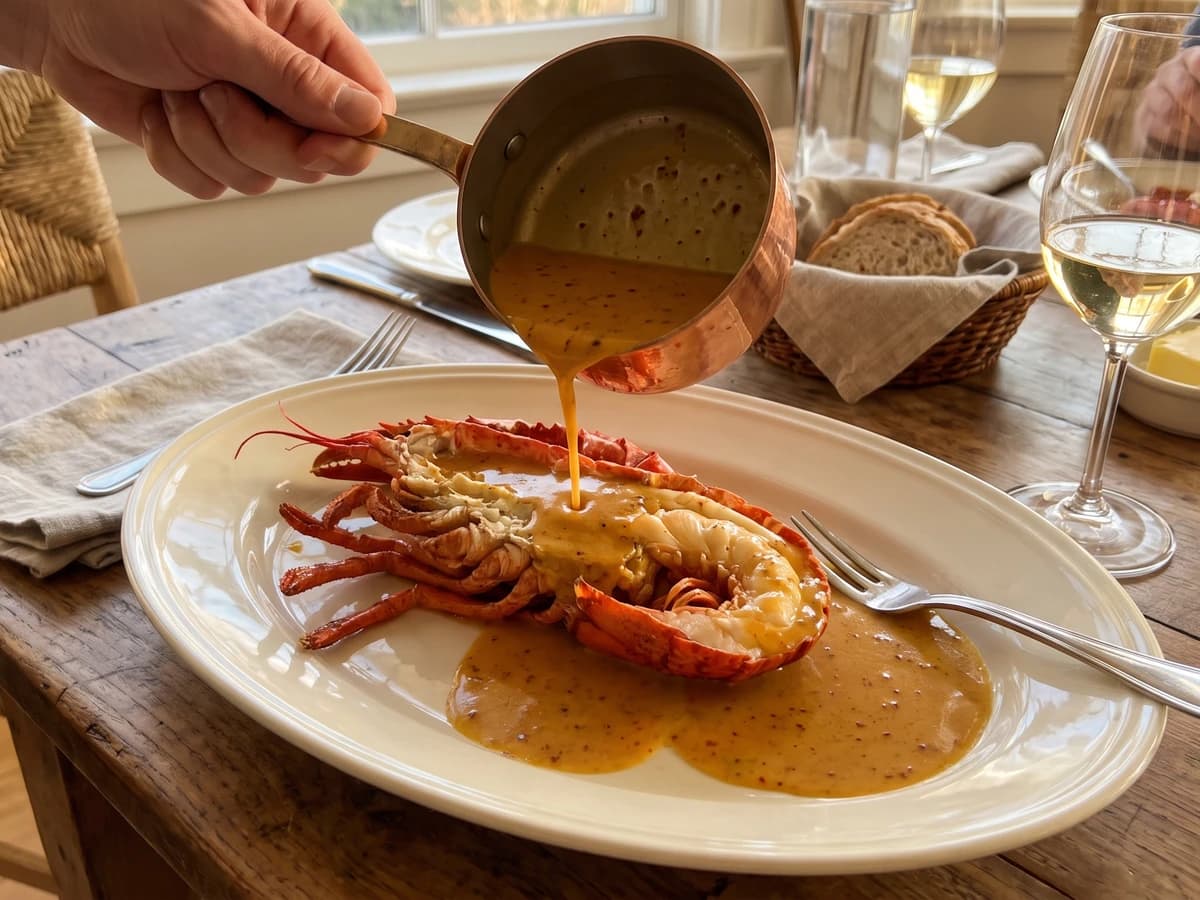
Sauce Orientale concentrates lobster-rich American Sauce with curry, then folds in cream away from the fire: a glossy, gently spiced derivative made for lobster, crayfish, and firm fish.
Chef Juliette
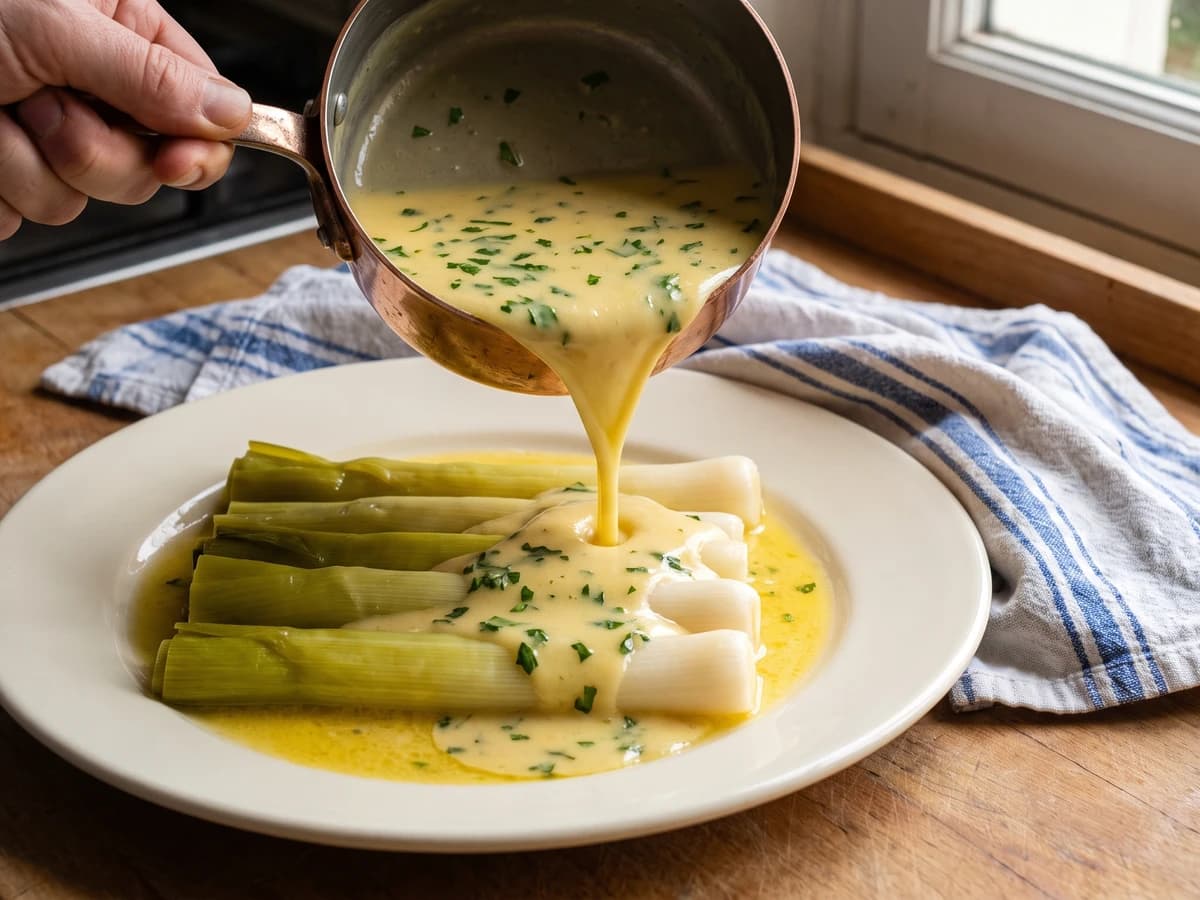
An old lesson in sauce families: Sauce Allemande takes mushroom liquor, then butter, lemon, and parsley, becoming a glossy Poulette for sheep's trotters, leeks, cauliflower, and anything needing gentle richness with a bright edge.