Culinary Explorer

A cooking platform built around craft, culture, and the stories behind what we eat.
Discover Culinary Explorer
Morue and Salted Cod (Morue et Cabillaud Salé)

Morue and Salted Cod (Morue et Cabillaud Salé)

Created by Chef Juliette

Based on No. 1024, Morue and Salted Cod (Morue et Cabillaud Salé), from Le Guide Culinaire (1907) by Auguste Escoffier

Morue et cabillaud salé begins with water, time, and attention: soak the fish for at least twelve hours, change the water often, then trim and portion it for the French preparation that follows.

Main Dishes
French
Make Ahead
Budget Friendly
20 min
Active Time
2 min cook12 hr 22 min total
Yield4 servings

Morue et cabillaud salé (salted cod) teaches dessalage, desalting by soaking. The one true thing to understand is that soaking does not merely soften the fish; it seasons it in reverse. Each fresh change of water draws out more salt while the flesh recovers its suppleness, so time and attention decide the result before heat ever enters the matter.

The classical entry needs no saucier, no stockpot kept on the fire, and no salamander. It assumes something quieter: a larder hand tending the soaking fish and changing its water through the day. At home, a covered nonreactive bowl in the refrigerator and four scheduled water changes replace that constant attention. The formula allows four ounces gross per diner, so one pound serves four. The larder hand is scaffolding and can go. The twelve-hour minimum and repeated changes are the dish and must stay.

Newfoundland or Icelandic morue gives the fullest cured flavor and the widest choice of preparations. This is a master preparation, so it properly stops before the final sauce or cooking method; after soaking, you remove the fins and cut the fish to suit the formula that follows. Before you touch a pan, give the thickest piece at least twelve cold hours and test a cooked flake. That is the step that decides everything.

In French usage, cabillaud is cod in its fresh state and morue is cod transformed by salting, a distinction that carries the method in the name. Newfoundland and Icelandic morue entered through Atlantic ports such as Saint-Malo and Bordeaux, prized for a cured flavor and range of uses that recently salted fish from the English coast did not share, then traveled inland into brandade at Nîmes and the salt-cod service of the grand aïoli in Provence. Repeated soaking was never a nuisance but the cook’s first act of seasoning, what made one preserved fish supple enough for many distinct regional preparations.

The technique, the tradition, and the story behind every dish.

Discover Culinary Explorer

Ingredients

Newfoundland or Icelandic morue

Quantity

1 pound (16 ounces / 454 g)

weighed gross before soaking

cold water

Quantity

About 8 quarts total (32 cups / 7.6 L / 7.6 kg)

divided among at least four changes

Equipment Needed

  • 4-quart (3.8 L) glass, glazed ceramic, or stainless-steel bowl
  • Kitchen shears
  • Small saucepan for the test flake

Instructions

  1. 1

    Choose and rinse

    Weigh 1 pound (454 g) of morue before soaking, including any skin, fins, or bones still attached; this preserves the source allowance of 4 ounces (113 g) gross per person. Choose pieces of similar thickness so they desalinate at roughly the same rate. Rinse away loose surface salt under cold running water, but do not trim or make the final portions yet. The softened fish will cut more cleanly after its soak.

  2. 2

    Begin the dessalage

    Place the morue in a glass, glazed ceramic, or stainless-steel bowl and cover it by at least 2 inches (5 cm) with cold water. Keep the bowl refrigerated at 40°F (4°C) or below. Change the water after 2 hours, then every 3 to 4 hours while awake and once immediately on waking, using at least four fresh waters over a minimum of 12 hours. Thick, heavily cured pieces may require 24 to 36 hours. If a water change slips, replace it and extend the soak by the missed interval, provided the fish remained safely chilled.

    Keep every piece submerged. If the fish floats, place a small clean plate over it so all surfaces remain beneath the water.
  3. 3

    Test the seasoning

    After 12 hours, cut a thumbnail-size flake from the thickest part. Simmer it in 1 cup (240 ml / 240 g) of unsalted water for 2 minutes, let it cool, and taste it. The flesh should remain distinctly savory without a sharp salt bite. If it is still harsh, return the fish to fresh cold water for another 3 to 4 hours and test again. Ça se rattrape. If the sample tastes mild, stop soaking immediately; the final preparation can supply any seasoning it needs.

    Test a cooked flake, never the raw fish. Thickness and strength of cure matter more than the clock, so tasting is the honest measure.
  4. 4

    Trim and portion

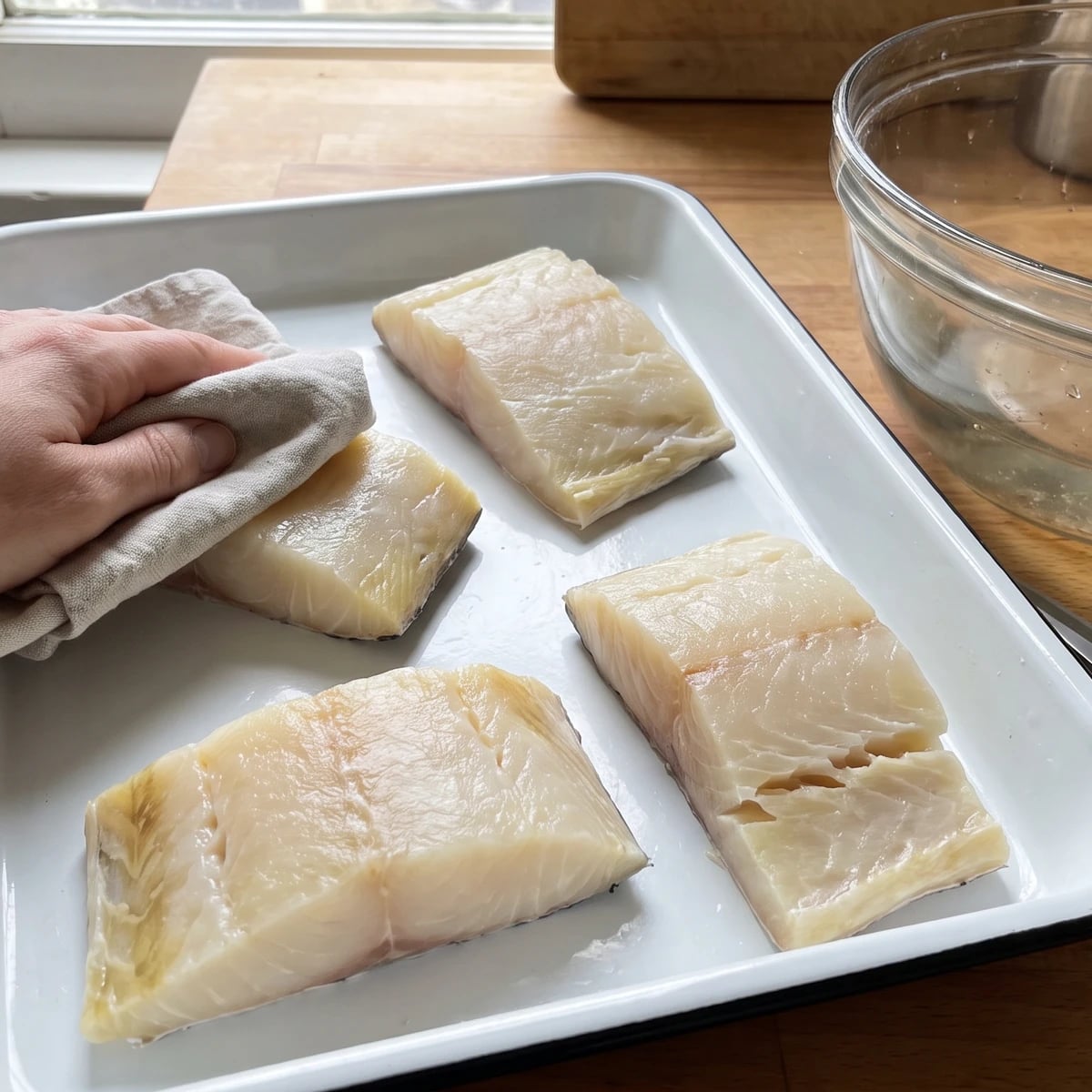
    Drain the morue and blot it thoroughly. Supprimer les nageoires, remove the fins, with kitchen shears, then pull any obvious pin bones without tearing the flesh. Leave the skin in place unless the selected preparation directs otherwise, since it helps hold the softened fish together. Cut the morue in the form required by that preparation, or into four equal portions if it will be cooked as individual pieces.

  5. 5

    Hold for cooking

    Use the prepared morue immediately or cover and refrigerate it for no more than 24 hours. It is desalted but still raw, so it must now proceed to the selected cooked preparation. Pat it dry once more before poaching, baking, frying, or working it into a forcemeat, and add no salt until the finished dish has been tasted.

Chef Tips

  • Morue in this entry means Newfoundland or Icelandic salt cod. Look for thick, evenly cured pieces with firm ivory flesh and a clean marine smell; yellowed fat, brittle edges, or a sour odor belong nowhere near the pot.
  • Recently salted cod from the English coast is milder and may not carry the same cured character or suit as many preparations. Use it if that is what your market offers, but begin testing earlier because a newer, thinner cure can desalinate quickly.
  • The allowance is 4 ounces (113 g) gross per person, weighed before soaking and trimming. For four diners that is exactly 1 pound (454 g); the fish gains water during dessalage, so weighing it afterward changes the source proportion.
  • Use glass, glazed ceramic, or stainless steel for soaking. Reactive metal can mark the flavor, and a cramped vessel leaves the fish sitting in concentrated brine instead of drawing the salt away.
  • Do not season the soaking water or the prepared fish. Let the final recipe decide the salt after its sauce, garnish, and other cured ingredients are present.

Advance Preparation

  • Begin the dessalage at least 12 hours before cooking. For thick Newfoundland or Icelandic pieces, allow 24 to 36 hours and continue changing the water until a cooked sample tastes savory rather than aggressively salty.
  • Once tested, trimmed, and portioned, the morue may be dried, covered, and refrigerated for up to 24 hours. Blot it again just before it enters the selected preparation.

Frequently Asked Questions

Nutrition Information

1 serving (about 150g)

Calories
270 calories
Total Fat
3 g
Saturated Fat
1 g
Trans Fat
0 g
Unsaturated Fat
2 g
Cholesterol
145 mg
Sodium
480 mg
Total Carbohydrates
0 g
Dietary Fiber
0 g
Sugars
0 g
Protein
61 g

Note: Chef personas and recipes are created with AI assistance. Cook with care: follow safe food-handling practices, check doneness with a thermometer when needed, and adapt for allergies and your kitchen.

Where cooking meets culture.

Culinary guides, cultural storytelling, and the editorial depth that makes cooking meaningful.

Discover Culinary Explorer

More from Fish - Cod (Cabillaud)

Browse the full collection