
Chef Juliette
John Dory (St. Pierre)
John Dory has the delicacy of sole and the firmness of turbot. A light flouring, a quick butter sauté, and nut-brown beurre noisette show exactly why looks never mattered.
A cooking platform built around craft, culture, and the stories behind what we eat.
Created by Chef Juliette
Based on No. 1010, Maquereau Grillé, from Le Guide Culinaire (1907) by Auguste Escoffier
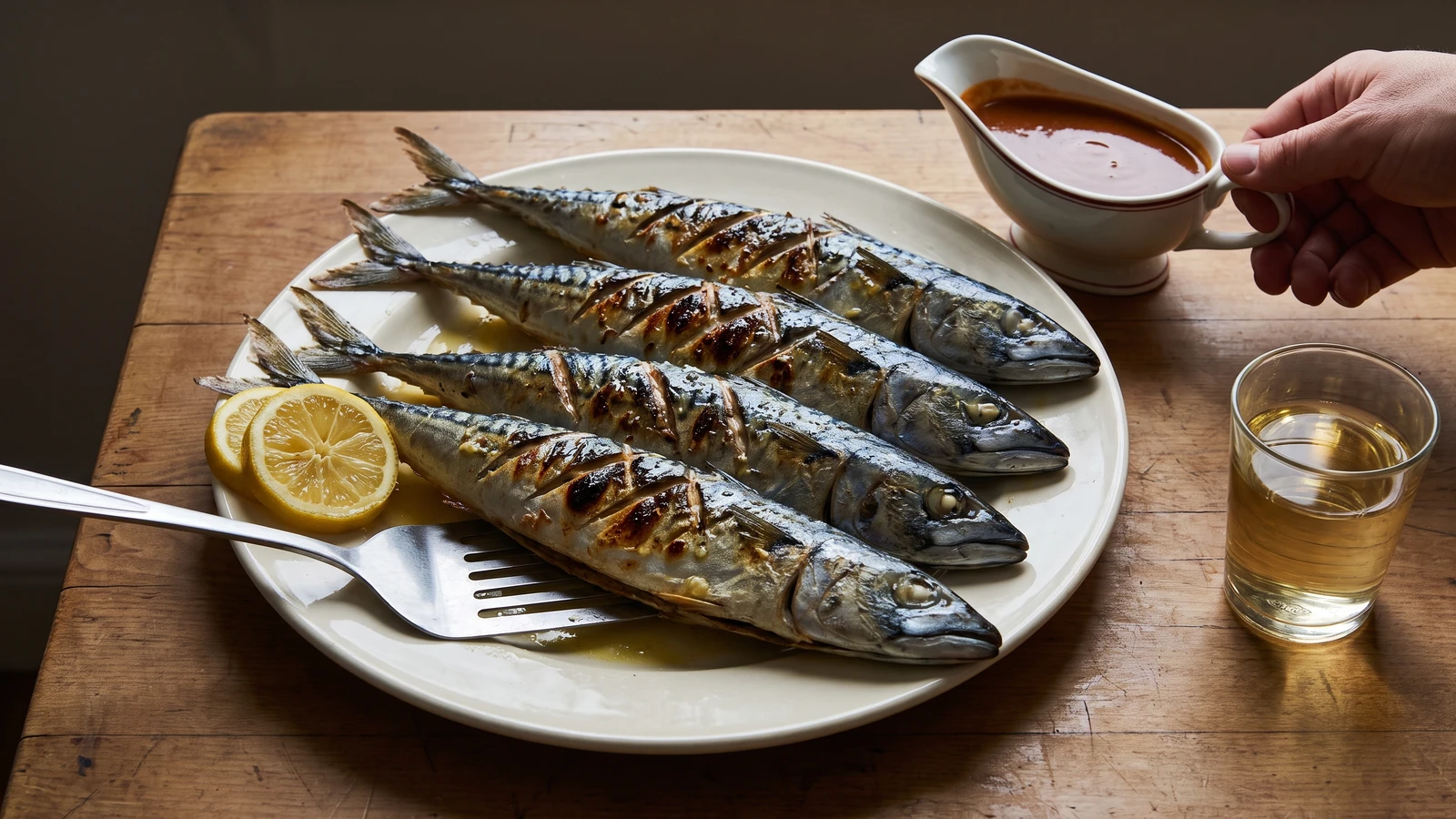
Whole mackerel, opened neatly down the back, butter-basted over gentle heat, then drawn together on a hot platter with Sauce Diable Escoffier: rich fish, sharp sauce, exact restraint.
Maquereau Grillé (back-opened grilled mackerel) teaches control over direct heat. The one true thing to know before the pan warms is this: mackerel must grill gently. Its rich flesh cooks quickly, and fierce heat burns the brushed butter and tightens the outside before the center is ready. A steady fire gives bronzed skin, moist flakes, and the clean butter sheen the dish promises.
The original kitchen had a grill cook tending the fish and a saucier ready with Sauce Diable Escoffier. Those separate stations are brigade scaffolding. At home, a ridged cast-iron pan replaces the charcoal grill because its heat is close and controllable, while the finished sauce warms gently in a small saucepan rather than being rebuilt inside this recipe. What stays is the dish itself: open each fish down the back without separating the halves, baste repeatedly with real butter, then draw the halves together on a hot round platter so the fish appears whole. One cook, one stove, one evening.
The butter is your gauge. If it darkens at once, the pan is too hot; lift the fish, lower the flame, clear away any bitter specks, and continue. Ça se rattrape. The step that matters most is patient basting over measured heat, not a theatrical blaze.
Maquereau grillé belongs to Atlantic and Channel tables, especially those of Brittany and Normandy, where abundant oily fish met the grill and was sharpened with mustard, vinegar, lemon, or a piquant sauce. Classical kitchens carried that direct coastal method into the national repertoire, opening the fish along the back so it cooked evenly while retaining the recognizable form of a whole fish for service. Sauce Diable Escoffier is a classical adjunct rather than a regional claim: its peppery acidity answers mackerel's richness, which is why a mild cream sauce would miss the point.
Quantity
4 fish, 10 to 12 ounces each (about 2 3/4 pounds / 1.2 kg total)
very fresh, with heads and tails attached
Quantity
1/2 cup (120 ml / 113 g)
Quantity
1 1/2 teaspoons (7.5 ml / 9 g)
Quantity
1 teaspoon (5 ml / 2 g)
Quantity
2 lemons (about 8 ounces / 225 g total)
grooved lengthwise and sliced into rounds
Quantity
3/4 cup (180 ml / about 190 g)
| Ingredient | Quantity |
|---|---|
| small whole mackerelvery fresh, with heads and tails attached | 4 fish, 10 to 12 ounces each (about 2 3/4 pounds / 1.2 kg total) |
| unsalted butter | 1/2 cup (120 ml / 113 g) |
| fine sea salt | 1 1/2 teaspoons (7.5 ml / 9 g) |
| freshly ground black pepper | 1 teaspoon (5 ml / 2 g) |
| unwaxed lemonsgrooved lengthwise and sliced into rounds | 2 lemons (about 8 ounces / 225 g total) |
| prepared Sauce Diable Escoffier | 3/4 cup (180 ml / about 190 g) |
With kitchen shears, trim only the pointed extremity from each mackerel's mouth, leaving the head intact. Set the fish belly-down and make an ouverture par le dos, an opening through the back: cut alongside both sides of the backbone from head to tail, snip the bone behind the head and above the tail, then lift it out with the rib bones. Remove the innards and gills through this opening, pull any remaining pin bones, and wipe the cavity clean with a lightly dampened towel. Keep the belly skin intact so the two halves remain joined. Dry the fish thoroughly, inside and out.
Run a channel knife lengthwise around each lemon, spacing the grooves evenly, then cut the lemons into thin rounds and remove the seeds. Warm the prepared Sauce Diable Escoffier in a small covered saucepan over the lowest heat. Do not reduce it here; the source treats it as a finished component, and so do we. Once it is glossy and loose enough to pour, take it off the heat and keep it covered. If an edge begins bubbling, pull the pan off immediately and whisk gently before covering it again.
Melt the butter over gentle heat until fluid but still butter-gold, never browned. Open the fish flat, season the flesh and skin evenly with the salt and pepper, then brush both sides generously with melted butter. Season immediately before grilling, because salt left sitting on mackerel draws moisture to the surface, and a wet surface sticks before it browns.
Heat a 12-inch ridged cast-iron grill pan over medium-low heat for about 5 minutes. Brush the ridges lightly with butter and lay in two fish at a time, opened flat with the skin against the pan. You want a quiet, steady sizzle. Grill without shifting them for 4 to 5 minutes, brushing the exposed flesh with more butter every minute. When the skin has bronzed and releases cleanly from the ridges, it is ready to turn. If it clings, give it another 30 seconds rather than tearing it loose.
Support each fish with two wide spatulas and turn it carefully onto the flesh side. Brush the skin with butter and cook for another 2 to 3 minutes, basting once more, until the flesh is opaque beside the backbone and reaches 145°F (63°C) at its thickest point. If the butter smokes or leaves black specks, transfer the fish to a tray, take the pan off the heat, and let the sputtering subside. Wipe away the scorched butter with paper towel held in long tongs, lower the flame, re-butter the ridges, and continue. Ça se rattrape.
Transfer the fish to a hot round platter while still opened. Using the spatulas, draw the two halves of each mackerel gently back together along the cut so it regains its natural whole shape, with head and tail aligned. Arrange the grooved lemon rounds around the platter and give the skin one final light brush of melted butter. Bring the Sauce Diable Escoffier to the table separately in a warm sauce boat. This service chooses the source's lemon-and-Diable finish, so no Maître-d'Hôtel butter is added. À table!
1 serving (about 215g)
Culinary guides, cultural storytelling, and the editorial depth that makes cooking meaningful.
Discover Culinary ExplorerChef Juliette
John Dory has the delicacy of sole and the firmness of turbot. A light flouring, a quick butter sauté, and nut-brown beurre noisette show exactly why looks never mattered.

Chef Juliette
Fresh haddock proves its delicacy in the meunière pan: a fine flour crust, moist pearly flakes, and beurre noisette sharpened with lemon and parsley, ready from one skillet in half an hour.

Chef Juliette
Éperlans à l’Anglaise turns small fish into a lesson in disciplined coating: boned smelts under a close, crisp crumb, pan-fried in clarified butter and finished with bright, half-melted maître d’hôtel butter.

Chef Juliette
Tiny smelts, shallot, mushrooms, white wine, gratin sauce, and fine bread raspings meet a fierce oven, where the fish must turn tender in the same breath the buttered crust bronzes.