
Chef Graziella
Acquacotta Maremmana
The humblest soup in Tuscany, born from the wild Maremma where shepherds and charcoal burners transformed water, onions, stale bread, and an egg into sustenance. Proof that poverty teaches better than plenty.
A cooking platform built around craft, culture, and the stories behind what we eat.
Created by
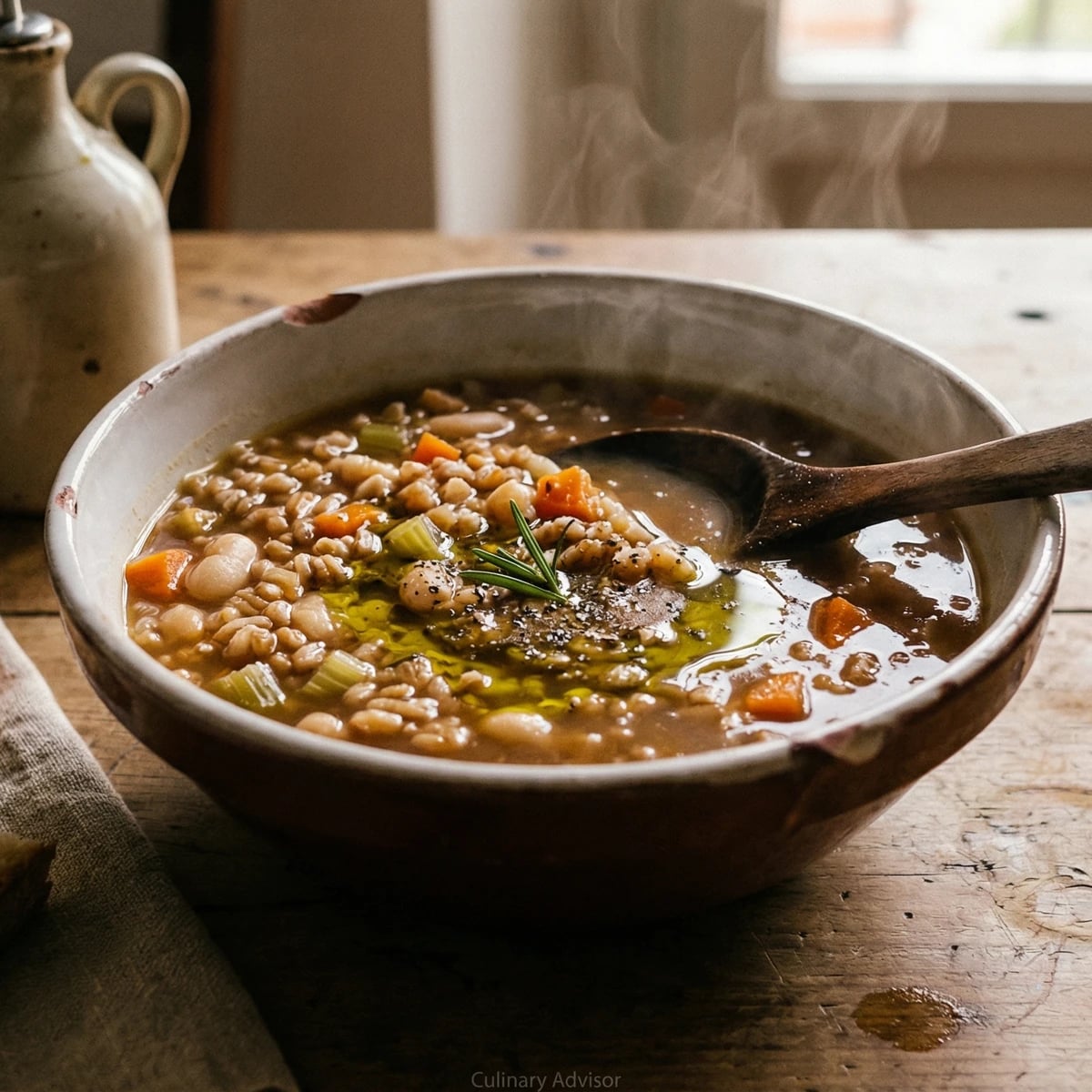
The ancient grain soup of Lucca, where chewy farro from the Garfagnana mountains meets creamy beans and a patient soffritto. Peasant cooking that requires nothing but time and honest ingredients.
The Garfagnana is a rugged valley in the mountains above Lucca, where farmers have grown farro since Roman times. This grain, which Americans call spelt, nearly disappeared from Italian tables in the twentieth century. Wheat was easier, faster, more modern. But the people of Lucca never forgot their farro. They kept growing it in small plots, kept simmering it into this soup, kept the tradition alive when the rest of Italy moved on.
Zuppa di farro is not elegant. It is the food of people who worked the land and needed something that would sustain them through cold evenings. The farro provides substance and a nutty, wheaty flavor that no other grain can match. The beans add creaminess when pureed and texture when left whole. The soffritto and pancetta build the foundation.
What you keep out is as significant as what you put in. There is no excess here. No competing flavors fighting for attention. Each ingredient earns its place. The soup asks only for time, good broth, and the discipline to let simple things become extraordinary.
Farro sustained Roman legions as they marched across the ancient world, and the Garfagnana valley above Lucca has cultivated this grain without interruption for over two thousand years. When Italy industrialized and modern wheat displaced traditional grains, Garfagnana farmers continued their quiet cultivation. The region received IGP (Protected Geographical Indication) status in 1996, finally recognizing what Lucchesi had known all along: their farro was worth protecting.
Quantity
1 cup
rinsed
Quantity
1 cup
soaked overnight
Quantity
1/4 cup, plus more for drizzling
Quantity
1 medium
diced fine
Quantity
1 medium
peeled and diced fine
Quantity
2
diced fine
Quantity
2 ounces
diced fine
Quantity
2
peeled and lightly crushed
Quantity
1 sprig
Quantity
4
Quantity
1 can (14 ounces)
crushed by hand
Quantity
8 cups
Quantity
3 inches
Quantity
to taste
Quantity
to taste
freshly ground
Quantity
for serving
freshly grated
| Ingredient | Quantity |
|---|---|
| farro (semi-pearled)rinsed | 1 cup |
| dried cannellini beanssoaked overnight | 1 cup |
| extra virgin olive oil | 1/4 cup, plus more for drizzling |
| yellow oniondiced fine | 1 medium |
| carrotpeeled and diced fine | 1 medium |
| celery stalksdiced fine | 2 |
| pancettadiced fine | 2 ounces |
| garlic clovespeeled and lightly crushed | 2 |
| fresh rosemary | 1 sprig |
| fresh sage leaves | 4 |
| whole peeled tomatoescrushed by hand | 1 can (14 ounces) |
| chicken broth | 8 cups |
| Parmigiano-Reggiano rind | 3 inches |
| kosher salt | to taste |
| black pepperfreshly ground | to taste |
| Parmigiano-Reggianofreshly grated | for serving |
Drain the soaked beans and place them in a pot with fresh cold water to cover by three inches. Bring to a gentle simmer and cook until tender but not falling apart, about 45 minutes to one hour. The beans should hold their shape when pressed. Drain, reserving two cups of the cooking liquid. Set aside half the beans. Pass the remaining half through a food mill or mash with a fork until you have a rough puree. This will thicken the soup.
In a heavy pot, warm the olive oil over medium heat. Add the pancetta and cook, stirring occasionally, until it renders its fat and begins to crisp at the edges, about 5 minutes. Add the onion, carrot, and celery. Cook slowly, stirring occasionally, until the vegetables are completely soft and the onion turns pale gold, about 15 minutes. FLAVOR, IN ITALIAN DISHES, builds up from the bottom. Do not rush this step.
Add the crushed garlic, rosemary sprig, and sage leaves. Stir for one minute until fragrant. Add the crushed tomatoes and cook, stirring occasionally, until the tomatoes lose their raw edge and the liquid reduces slightly, about 10 minutes. Remove and discard the garlic cloves. They have given what they have to give.
Add the rinsed farro to the pot and stir to coat with the soffritto. Pour in the chicken broth and add the Parmigiano rind. Bring to a simmer. Reduce heat to maintain a gentle bubble and cook, partially covered, stirring occasionally, until the farro is tender but retains a pleasant chew, about 35 to 40 minutes.
Stir in the pureed beans and the reserved bean cooking liquid. The soup should thicken noticeably. Add the whole beans. Simmer for another 10 minutes to marry the flavors. The consistency should be thick, more stew than broth. If too thick, add a splash of broth. Season with salt and pepper. Remove the rosemary sprig, sage leaves, and cheese rind before serving.
Ladle into warm bowls. Drizzle each serving generously with your finest olive oil. The oil is not decoration. It completes the dish. Pass grated Parmigiano-Reggiano at the table for those who want it. Like most Tuscan soups, this improves overnight. Reheat gently, adding water as needed.
1 serving (about 380g)
Culinary guides, cultural storytelling, and the editorial depth that makes cooking meaningful.
Discover Culinary Explorer
Chef Graziella
The humblest soup in Tuscany, born from the wild Maremma where shepherds and charcoal burners transformed water, onions, stale bread, and an egg into sustenance. Proof that poverty teaches better than plenty.

Chef Graziella
A whole piece of beef, surrendered to Barolo wine and patience, until the tannins transform into velvet and the meat falls apart at the suggestion of a fork. This is Piedmont on a plate.

Chef Graziella
The storied fish stew of Ancona, where up to thirteen varieties of Adriatic fish simmer gently in a broth sharpened with vinegar and gilded with saffron. Every port town claims theirs is authentic.

Chef Graziella
The fish stew of my home coast, where fishermen brought whatever the Adriatic offered and their wives made it into something that needed nothing more than good bread and an appetite.