
Chef Graziella
Acquacotta Maremmana
The humblest soup in Tuscany, born from the wild Maremma where shepherds and charcoal burners transformed water, onions, stale bread, and an egg into sustenance. Proof that poverty teaches better than plenty.
A cooking platform built around craft, culture, and the stories behind what we eat.
Created by
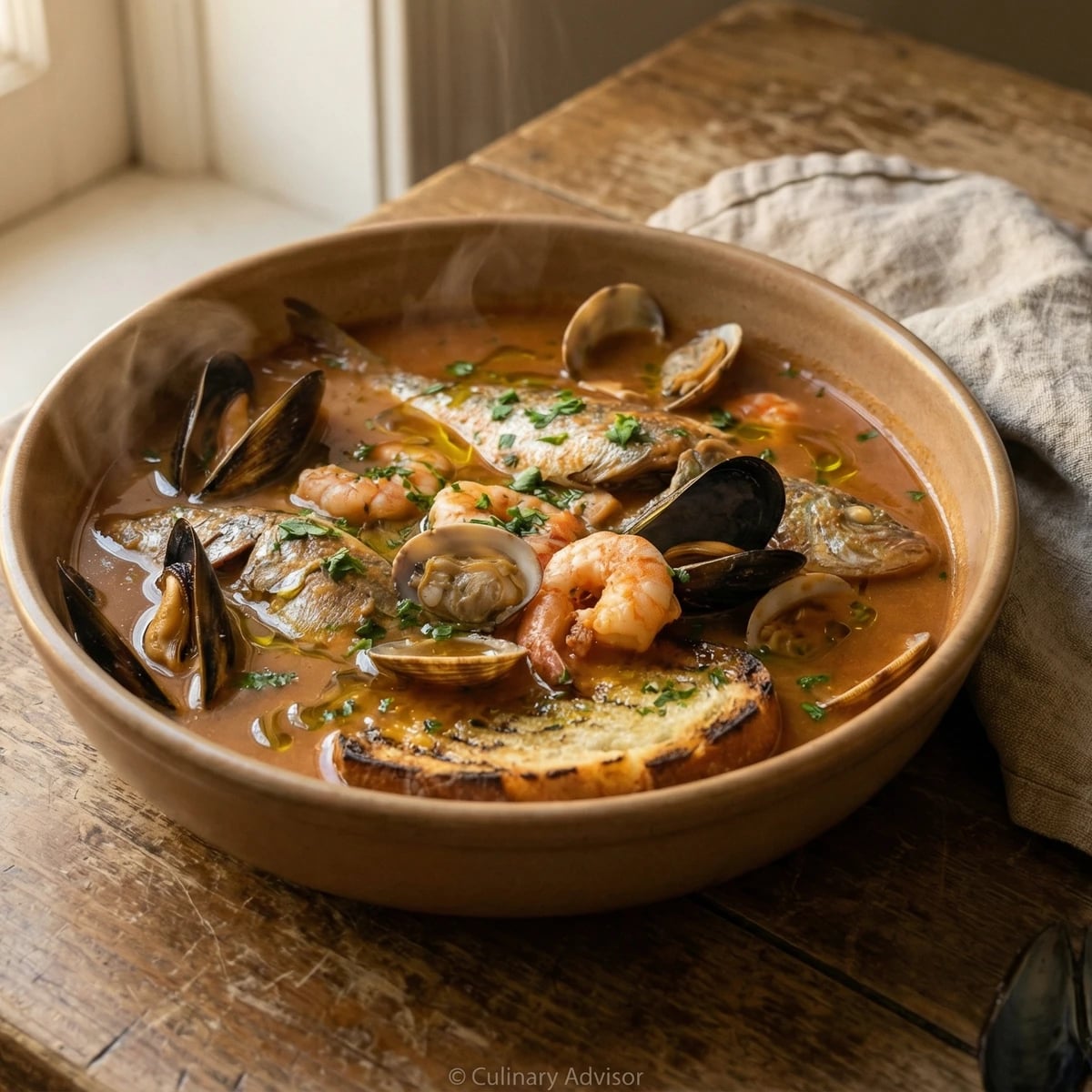
The fish stew of my home coast, where fishermen brought whatever the Adriatic offered and their wives made it into something that needed nothing more than good bread and an appetite.
Igrew up in Cesenatico, a fishing village on the Adriatic. The men went out before dawn and returned with whatever the sea gave them. Their wives did not have the luxury of shopping for specific fish. They cooked what was there. This is brodetto: a stew that changes with every catch, every season, every day.
What makes Romagnol brodetto different from the versions up and down the Italian coast is the vinegar. In Le Marche they use white wine only. In Livorno they make cacciucco with red wine. In Romagna, we add a splash of red wine vinegar that cuts through the richness and makes you want another spoonful and another after that. The vinegar is not an option. It is the identity of the dish.
You must use many types of fish, at least five if you can manage it. One type of fish is not brodetto; it is simply fish in tomato sauce. The variety creates complexity. The firmest fish go in first, the most delicate last. You must not stir or you will have nothing but fragments. And you must serve it over bread. Grilled bread, in the bowl, absorbing the broth. This is how my grandmother served it, and hers before her, and I suspect theirs before that.
Brodetto predates written recipes on the Italian coast, emerging wherever fishermen needed to cook their less marketable catch. The Romagnol version gained its defining vinegar accent centuries ago, though precisely when remains a matter of lively debate among the fishing villages from Cesenatico to Cattolica. Each town claims theirs is the original, the correct one. They are all wrong, and all correct.
Quantity
3 pounds
cleaned and cut into large pieces
Quantity
1 pound
scrubbed, shrimp in shell
Quantity
1/2 cup
Quantity
1 medium
sliced thin
Quantity
3
lightly crushed
Quantity
1/2 cup
Quantity
1/4 cup
Quantity
1 can (14 ounces)
crushed by hand
Quantity
2 cups
Quantity
1 small bunch
leaves chopped
Quantity
to taste
Quantity
to taste
freshly ground
Quantity
6 slices
grilled or toasted
| Ingredient | Quantity |
|---|---|
| mixed Adriatic fishcleaned and cut into large pieces | 3 pounds |
| mixed shellfishscrubbed, shrimp in shell | 1 pound |
| extra virgin olive oil | 1/2 cup |
| yellow onionsliced thin | 1 medium |
| garlic cloveslightly crushed | 3 |
| dry white wine | 1/2 cup |
| red wine vinegar | 1/4 cup |
| San Marzano tomatoescrushed by hand | 1 can (14 ounces) |
| fish broth or water | 2 cups |
| flat-leaf parsleyleaves chopped | 1 small bunch |
| kosher salt | to taste |
| black pepperfreshly ground | to taste |
| country breadgrilled or toasted | 6 slices |
Sort your fish by thickness and density. The firmest fish goes in first, the most delicate last. Monkfish needs more time than sole. This is not complicated, but it requires attention. Scrub mussels and clams, discarding any that do not close when tapped. Leave shrimp in their shells. The shells give flavor.
In a wide, shallow pan (a terra cotta tegame is traditional, a wide braiser works), warm the olive oil over medium heat. Add the sliced onion and cook slowly until soft and golden, about 12 minutes. Add the crushed garlic and cook one minute more until fragrant. The garlic must not brown. Remove and discard the garlic cloves.
Pour in the white wine and let it bubble until nearly evaporated, about 3 minutes. Add the red wine vinegar. This is what makes Romagnol brodetto distinctive. The vinegar cuts through the richness of the fish and gives the broth its characteristic brightness. Let it reduce by half.
Add the crushed tomatoes and fish broth. Bring to a gentle simmer. Season with salt and pepper. The tomato should color the broth but not dominate. This is a fish stew, not a tomato stew with fish. Let the broth simmer for 10 minutes to marry the flavors.
Add the firmest fish first: monkfish, squid if using. Let them cook 5 minutes. Add medium-firm fish: sea bass, mullet. Cook 4 minutes more. Add the shellfish and most delicate fish: sole, shrimp. Cover the pan and cook until mussels and clams have opened and shrimp are pink, about 5 minutes. Discard any shellfish that refuse to open.
Scatter the chopped parsley over the brodetto. Taste the broth and adjust salt if needed. Place a slice of grilled bread in each warm bowl. Ladle the stew over the bread, distributing the fish varieties among the portions. The bread soaks up the broth. This is the proper way. Serve immediately while the steam still rises.
1 serving (about 350g)
Culinary guides, cultural storytelling, and the editorial depth that makes cooking meaningful.
Discover Culinary Explorer
Chef Graziella
The humblest soup in Tuscany, born from the wild Maremma where shepherds and charcoal burners transformed water, onions, stale bread, and an egg into sustenance. Proof that poverty teaches better than plenty.

Chef Graziella
A whole piece of beef, surrendered to Barolo wine and patience, until the tannins transform into velvet and the meat falls apart at the suggestion of a fork. This is Piedmont on a plate.

Chef Graziella
The storied fish stew of Ancona, where up to thirteen varieties of Adriatic fish simmer gently in a broth sharpened with vinegar and gilded with saffron. Every port town claims theirs is authentic.

Chef Graziella
The patient work that makes everything else possible. Three meats, a handful of vegetables, cold water, and four hours of your time. This is where Italian cooking begins.