
Chef Graziella
Brodo di Carne
The patient work that makes everything else possible. Three meats, a handful of vegetables, cold water, and four hours of your time. This is where Italian cooking begins.
A cooking platform built around craft, culture, and the stories behind what we eat.

Created by
The storied fish stew of Ancona, where up to thirteen varieties of Adriatic fish simmer gently in a broth sharpened with vinegar and gilded with saffron. Every port town claims theirs is authentic.
Along the Adriatic coast, every fishing port has its brodetto, and every port believes its version is the only correct one. They argue about vinegar, saffron, tomatoes, the number of fish, the shape of the pot. The fishermen of Ancona will tell you their brodetto is the original, and they will tell you this with such conviction that you may believe them.
What distinguishes Ancona's version is the white wine vinegar, added early and cooked down until its sharpness becomes merely a bright note beneath the saffron and tomato. The Venetians would never dream of such a thing. The Romagnoli to the north add it only at the end, if at all. The cooks of Ancona add it boldly and defend their choice.
This is not a stew you stir. The fish are layered according to how long they take to cook, the firmest at the bottom, the most delicate on top. You may shake the pan. You may not insert a spoon. A spoon destroys the fish, and destroyed fish cannot be served to guests.
The number thirteen appears in old recipes, a reference to the supposed abundance of Adriatic catches and perhaps to certain superstitions. Today, you use what your fishmonger has, what is freshest, what swam in the sea that morning. Six varieties, chosen well, make a finer brodetto than thirteen chosen poorly.
Brodetto traces to the ancient Roman practice of cooking the unsalable catch in seawater with vinegar, a thrifty solution that became coastal tradition. By the medieval period, each Adriatic port had codified its own version, with Ancona's vinegar-forward style documented in regional texts from the 17th century. The disputes about ingredients between neighboring towns continue to this day, treated with the seriousness others reserve for politics or religion.
Quantity
3 pounds
scaled and cleaned
Quantity
1 pound
scrubbed and debearded
Quantity
1/2 pound
cleaned and cut into rings
Quantity
1/2 pound
cleaned and cut into strips
Quantity
1/2 cup
Quantity
2 medium
sliced thin
Quantity
4
crushed and peeled
Quantity
1/2 cup
Quantity
1 cup
Quantity
1 can (14 ounces)
passed through food mill
Quantity
1/4 teaspoon
steeped in 1/4 cup warm water
Quantity
2 cups
Quantity
to taste
Quantity
to taste
freshly ground
Quantity
for serving
chopped
Quantity
6 slices
toasted and rubbed with garlic
| Ingredient | Quantity |
|---|---|
| mixed whole fishscaled and cleaned | 3 pounds |
| mixed shellfishscrubbed and debearded | 1 pound |
| squidcleaned and cut into rings | 1/2 pound |
| cuttlefishcleaned and cut into strips | 1/2 pound |
| extra virgin olive oil | 1/2 cup |
| yellow onionssliced thin | 2 medium |
| garlic clovescrushed and peeled | 4 |
| white wine vinegar | 1/2 cup |
| dry white wine | 1 cup |
| San Marzano tomatoespassed through food mill | 1 can (14 ounces) |
| saffron threadssteeped in 1/4 cup warm water | 1/4 teaspoon |
| fish broth or water | 2 cups |
| kosher salt | to taste |
| black pepperfreshly ground | to taste |
| flat-leaf parsleychopped | for serving |
| crusty breadtoasted and rubbed with garlic | 6 slices |
Separate your fish by cooking time. Firm-fleshed fish like monkfish, John Dory, and scorpionfish take the longest. Medium fish like red mullet and gurnard cook faster. Delicate fish and shellfish go in last. If using whole small fish, leave them whole. Larger fish should be cut into thick steaks. The fish must be immaculately fresh. There is no sauce to hide imperfection here.
In a wide, shallow braising pan or terracotta pot, warm the olive oil over medium heat. Add the sliced onions and cook slowly, stirring occasionally, until they are completely soft and pale gold, about 15 minutes. Add the crushed garlic and cook two minutes more. The garlic flavors the oil, nothing more. Remove and discard the garlic cloves before proceeding.
Pour in the white wine vinegar. Let it bubble and reduce by half. This is the signature of Ancona's brodetto, the sharp note that distinguishes it from every other fish stew along the coast. The aroma will be strong. This is correct. The sharpness mellows as it cooks.
Add the passed tomatoes, the saffron with its steeping water, and the fish broth. Stir gently to combine. Season with salt and pepper. Bring to a simmer. The liquid should be about one inch deep. Add more broth if necessary.
Lay the firm-fleshed fish and the cuttlefish in the simmering broth in a single layer. Do not pile them. They must cook evenly. Spoon some broth over the top. Cover partially and simmer gently for 10 minutes. You may shake the pan to prevent sticking, but never stir with a spoon. A spoon breaks the fish.
Nestle the medium fish and squid rings into the broth, pushing them between the pieces already cooking. Spoon broth over again. Cover partially and cook 8 minutes more. Shake the pan occasionally. Still no stirring.
Scatter the clams and mussels over the top. Cover the pan completely now and cook until the shells open wide, 5 to 7 minutes. Discard any that refuse to open. The fish should be just cooked through, the flesh opaque but still moist.
Place a slice of garlic-rubbed toast in each warm bowl. Ladle the brodetto over, dividing the fish varieties evenly among the bowls. Scatter with chopped parsley. Serve at once. Fish stew waits for no one. The fish is perfect for exactly five minutes after leaving the stove, and then it is overcooked.
1 serving (about 420g)
Culinary guides, cultural storytelling, and the editorial depth that makes cooking meaningful.
Discover Culinary ExplorerChef Graziella
The patient work that makes everything else possible. Three meats, a handful of vegetables, cold water, and four hours of your time. This is where Italian cooking begins.
Chef Graziella
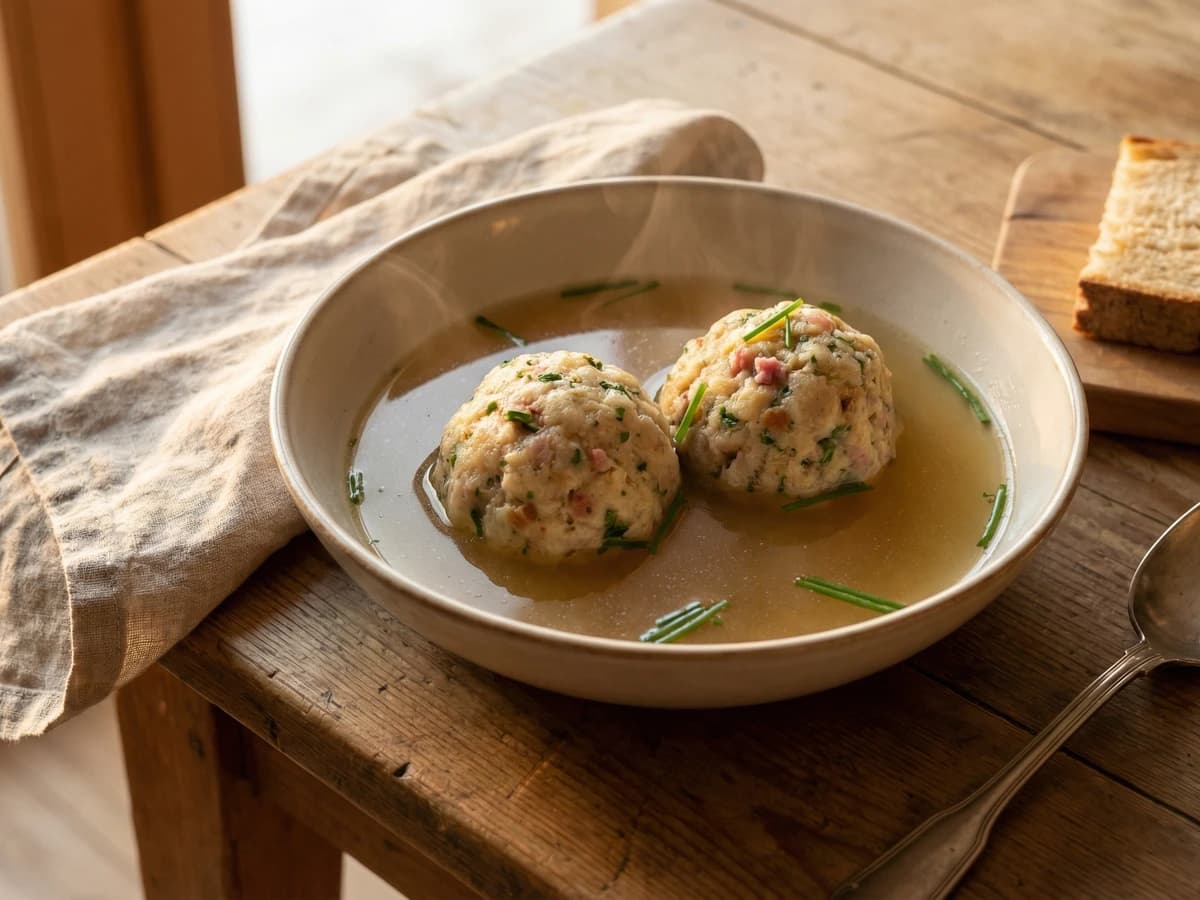
Bread dumplings from the Italian Alps, where Austrian tradition meets Italian restraint. Stale bread, smoked speck, and mountain herbs, poached in clear beef broth.
Chef Graziella
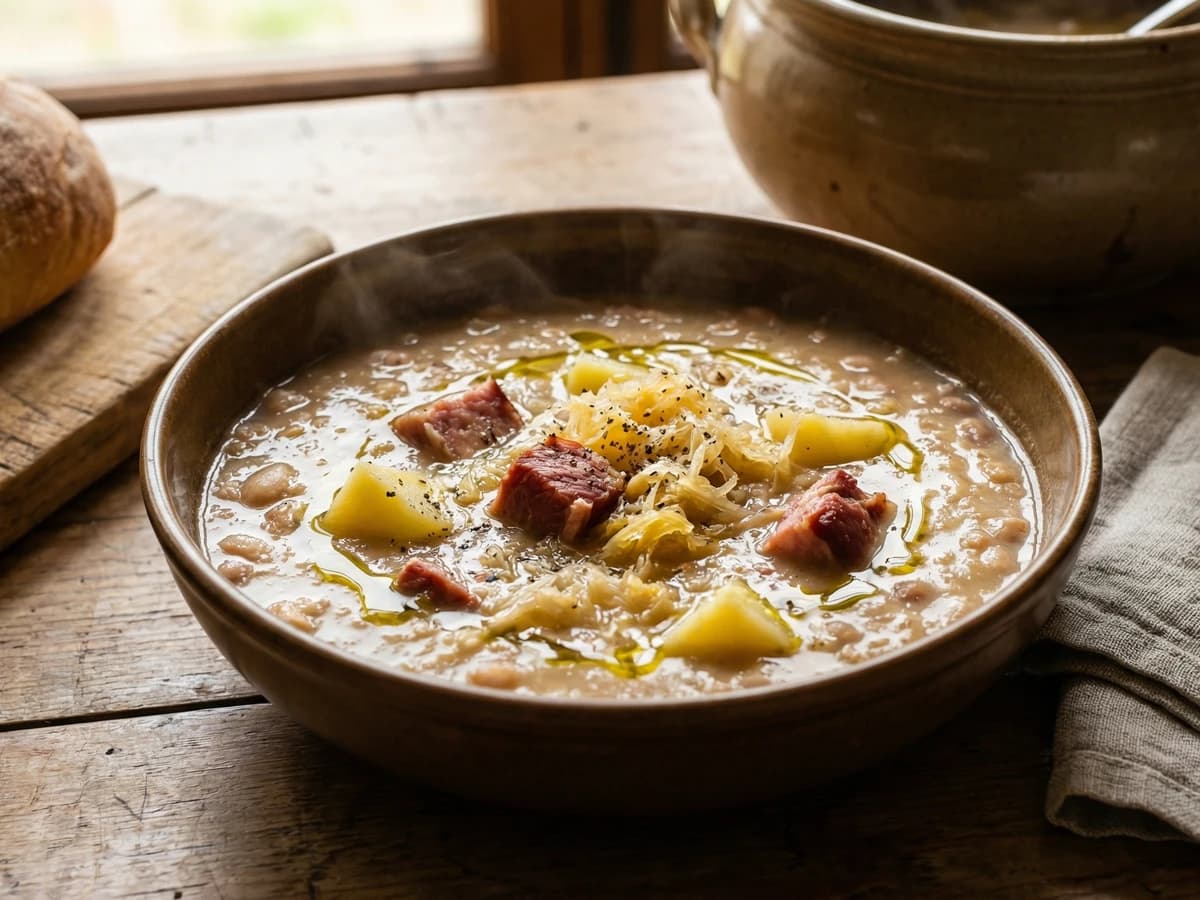
The great soup of Trieste, where Austro-Hungarian sauerkraut meets Italian beans and the smoke of cured pork. A dish that proves Italian cooking has always absorbed its neighbors.
Chef Graziella
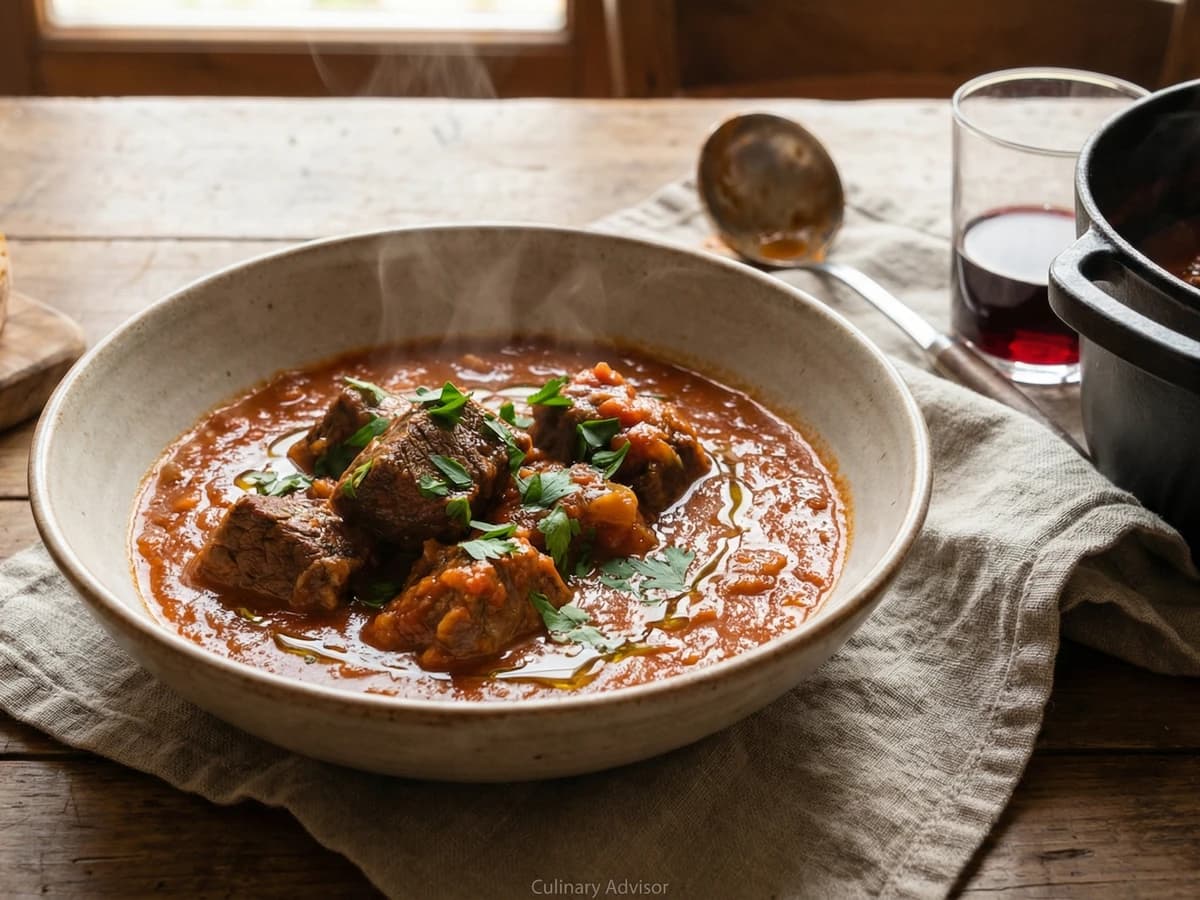
The Italian grandmother's answer to beef stew: chunks of chuck braised with patient soffritto, good wine, and San Marzano tomatoes until the meat surrenders and the sauce becomes something worth sopping bread in.