
Chef Graziella
Acquacotta Maremmana
The humblest soup in Tuscany, born from the wild Maremma where shepherds and charcoal burners transformed water, onions, stale bread, and an egg into sustenance. Proof that poverty teaches better than plenty.
A cooking platform built around craft, culture, and the stories behind what we eat.
Created by
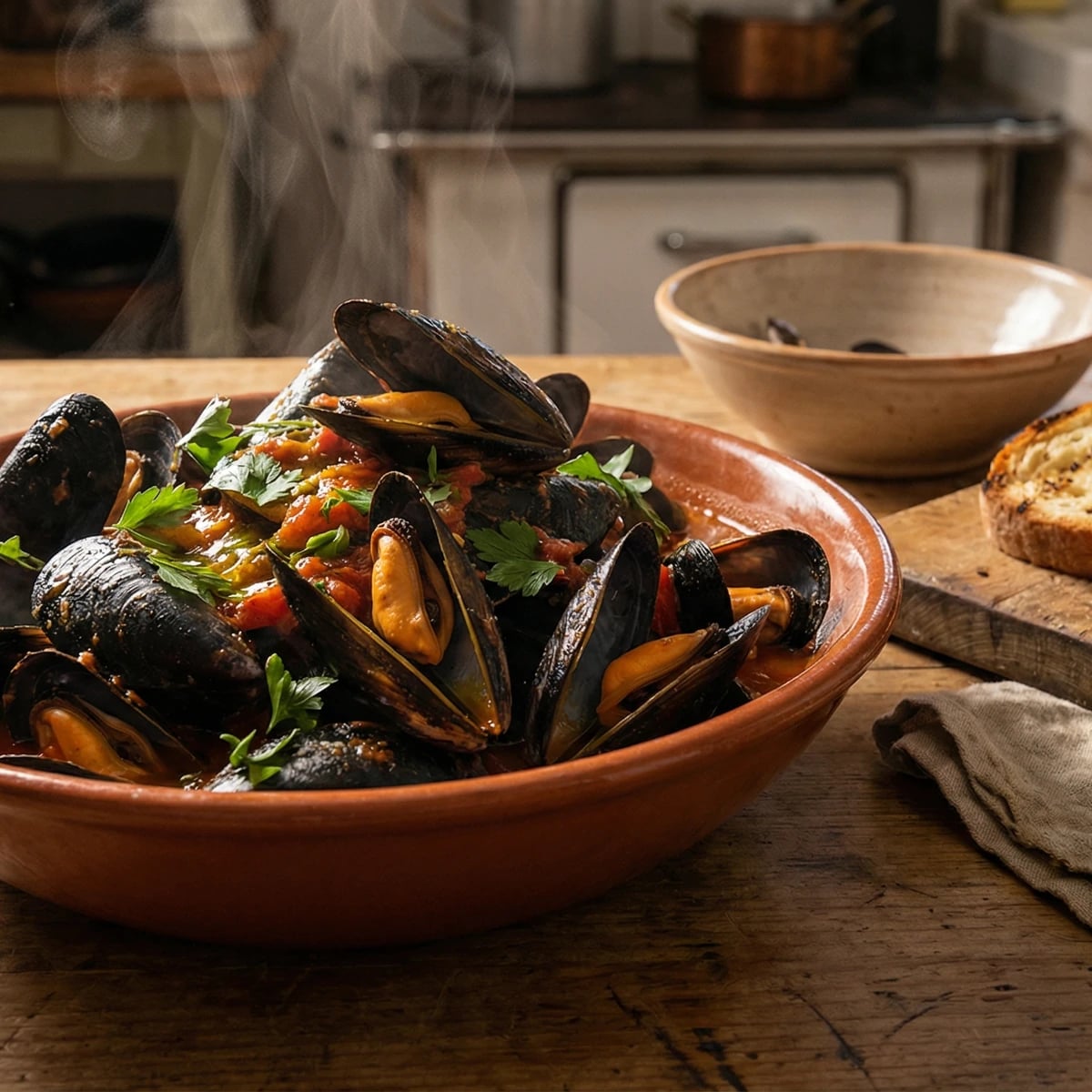
The fishermen's supper from Taranto, where mussels steam open in garlicky tomato broth and the crusty bread exists to rescue every precious drop of liquor from the bowl.
Taranto sits on Italy's heel, cradled between two seas: the Mar Grande facing open water and the Mar Piccolo, a calm inland lagoon where mussels have been cultivated since the Greeks founded the city. The mussels from this protected water are fat, sweet, and deeply flavored by the particular salinity and currents that flow through the narrow channel. Fishermen have eaten them this way for centuries, steamed open in whatever the kitchen provided: wine, tomatoes, a crack of dried chili.
This is not a complicated dish. It cannot be. When your mussels are pulled from the water that morning, you do not obscure them with complexity. The garlic here is used correctly: whole cloves, crushed to release their perfume, cooked gently in oil until they give up their harshness, then left to soften in the broth. This is the difference between garlic that enhances and garlic that overwhelms.
What matters is the bread. Without it, you are wasting half the dish. The broth that collects at the bottom of the bowl, stained red from tomato, enriched by mussel liquor, fragrant with wine and parsley, is meant to be soaked up and eaten. I have watched people in Taranto fight politely over who gets to wipe the last of it from the communal pot. They know what is valuable.
Taranto's mussel cultivation dates to ancient Greek colonization in the 8th century BC, making it one of the oldest continuously farmed shellfish beds in the Mediterranean. The Mar Piccolo's unique ecosystem, fed by freshwater springs mixing with seawater, produces mussels prized across Italy. This simple preparation, steaming bivalves in wine and tomato, became codified as 'alla Tarantina' to distinguish it from the cream-based preparations of the north.
Quantity
4 pounds
scrubbed and debearded
Quantity
1/3 cup, plus more for drizzling
Quantity
4
peeled and lightly crushed
Quantity
1/4 teaspoon
Quantity
1 cup
Quantity
1 can (14 ounces)
crushed by hand
Quantity
1/2 cup
Quantity
1/4 cup
chopped
Quantity
to taste
Quantity
8 slices
grilled or toasted
| Ingredient | Quantity |
|---|---|
| fresh musselsscrubbed and debearded | 4 pounds |
| extra virgin olive oil | 1/3 cup, plus more for drizzling |
| garlic clovespeeled and lightly crushed | 4 |
| dried peperoncino flakes | 1/4 teaspoon |
| dry white wine | 1 cup |
| San Marzano tomatoescrushed by hand | 1 can (14 ounces) |
| fish broth or water | 1/2 cup |
| fresh flat-leaf parsleychopped | 1/4 cup |
| kosher salt | to taste |
| crusty Italian breadgrilled or toasted | 8 slices |
Scrub the mussels under cold running water. Pull off any beards, the fibrous threads that cling to the shell. Discard any mussels that are cracked, broken, or refuse to close when tapped sharply. An open mussel that will not close is a dead mussel, and a dead mussel will make you ill. This is not negotiable.
In a pot large enough to hold all the mussels with room to spare, warm the olive oil over medium heat. Add the crushed garlic cloves and the peperoncino. Let them sizzle gently until the garlic turns pale gold at the edges, about 2 minutes. The garlic must not brown. The moment it threatens to darken, remove the pot from the heat briefly.
Pour in the white wine. Let it bubble vigorously for one minute to cook off the raw alcohol. Add the crushed tomatoes and the fish broth. Stir well and bring to a simmer. Let this cook for 5 minutes to marry the flavors. The broth should taste balanced, with the tomato bright but not dominant. Season cautiously with salt. The mussels will release their own brine.
Raise the heat to high and add all the mussels at once. Cover the pot tightly. Cook for 4 to 5 minutes, shaking the pot once or twice by its handles. The mussels are done when they have opened. Remove the lid and check. Any mussel that remains stubbornly closed after 6 minutes should be discarded. It was dead before it reached your pot.
Remove the pot from heat. Scatter the chopped parsley over the mussels and stir gently to distribute it through the broth. The parsley should remain bright and fresh. You may remove the garlic cloves now if you wish, though they have become soft enough to spread on bread.
Ladle the mussels and their broth into warm, deep bowls, dividing them evenly. Drizzle each portion with a thread of your best olive oil. Place two slices of grilled bread alongside each bowl. The bread is not a suggestion. It is essential. The liquor at the bottom of the bowl, a mixture of tomato broth, wine, and mussel essence, is the soul of this dish. Every drop must be claimed.
1 serving (about 400g)
Culinary guides, cultural storytelling, and the editorial depth that makes cooking meaningful.
Discover Culinary Explorer
Chef Graziella
The humblest soup in Tuscany, born from the wild Maremma where shepherds and charcoal burners transformed water, onions, stale bread, and an egg into sustenance. Proof that poverty teaches better than plenty.

Chef Graziella
A whole piece of beef, surrendered to Barolo wine and patience, until the tannins transform into velvet and the meat falls apart at the suggestion of a fork. This is Piedmont on a plate.

Chef Graziella
The storied fish stew of Ancona, where up to thirteen varieties of Adriatic fish simmer gently in a broth sharpened with vinegar and gilded with saffron. Every port town claims theirs is authentic.

Chef Graziella
The fish stew of my home coast, where fishermen brought whatever the Adriatic offered and their wives made it into something that needed nothing more than good bread and an appetite.