Chef Lupita
Acúmara Tatemada al Comal
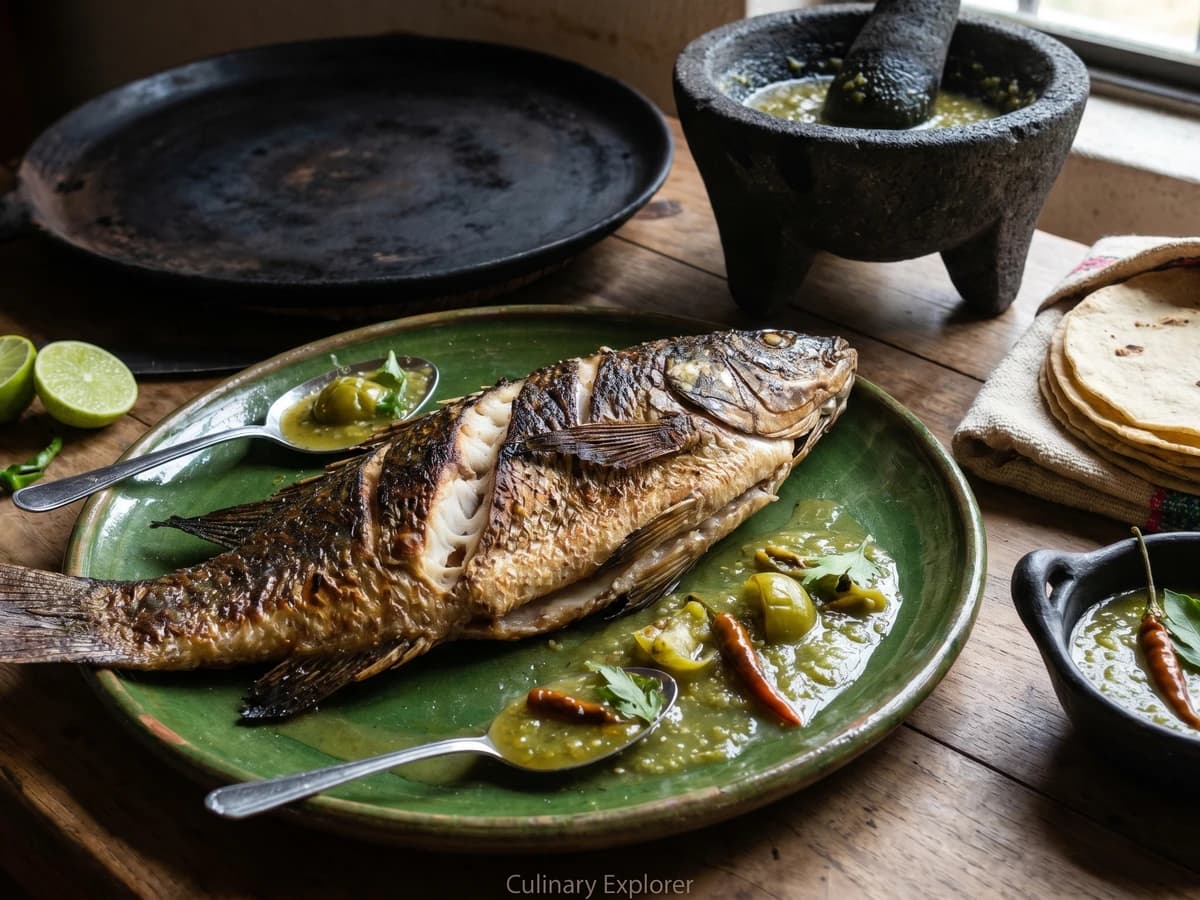
Michoacán's Lake Pátzcuaro acúmara, a whole kurucha from the lago tatemada on a comal de leña and served with chile perón atápakua, corn tortillas, and P'urhépecha discipline.
A cooking platform built around craft, culture, and the stories behind what we eat.

Created by
Chiapas' Zoque patashete, simmered until tender and folded into toasted pumpkin seed sauce with chile simojovel, epazote, and hoja santa, is a budget plate built from milpa logic, not restaurant fashion.
Chiapas, in the Zoque belt around Tuxtla Gutiérrez, Ocozocoautla, Copainalá, and Tecpatán, is where this dish lives. Not the coast, not the highlands, not a generic Mexican table. This is the cooking of a people who know corn, beans, squash seed, chile, and herbs from the milpa because those ingredients kept families fed long before anyone called plant-based eating modern.
The bean is patashete, an endemic Chiapas legume with a skin and body stronger than a common black bean. You soak it, simmer it with epazote, and give it time. Then comes the pepita: pumpkin seed toasted on a comal until it jumps, ground with chile simojovel, chile guajillo, garlic, onion, and the bean broth itself. The sauce is not decoration. It is the protein, the fat, and the flavor.
A Zoque señora outside Ocozocoautla taught me to watch the pepita, not the clock. She listened for the first little pops on the comal and told me, 'Ya está despertando,' now it is waking up. My mother did not cook patashete in Colonia Roma. She was Jalisciense. But she would have understood the discipline: cook what your region gives you, waste nothing, and don't pretend all Mexican food comes from the same pot. This is a 32-state cuisine.
The Zoque are one of Chiapas's oldest Indigenous peoples, with communities documented in the region before Spanish rule and concentrated today in the central and northwestern parts of the state. Ground pumpkin seed sauces, called pipianes in much of Mexico, come from pre-Columbian milpa cooking, where squash, corn, beans, and chiles were cultivated together and cooked as a complete food system. After the 1982 eruption of El Chichón displaced many Zoque families in northern Chiapas, seed saving and household cooking helped keep regional foods like patashete visible in markets and family kitchens.
Quantity
2 cups
picked over and rinsed
Quantity
as needed
for soaking
Quantity
10 cups, plus more as needed
Quantity
1 medium
divided
Quantity
4
divided
Quantity
2 large sprigs
Quantity
1 1/2 teaspoons, plus more to taste
Quantity
1 1/2 cups
Quantity
2
stemmed
Quantity
1
stemmed and seeded
Quantity
2 tablespoons
Quantity
1 large
center rib removed and leaf torn
Quantity
for serving
warmed
| Ingredient | Quantity |
|---|---|
| dried patashete beanspicked over and rinsed | 2 cups |
| waterfor soaking | as needed |
| fresh water | 10 cups, plus more as needed |
| white oniondivided | 1 medium |
| garlic clovesdivided | 4 |
| fresh epazote | 2 large sprigs |
| kosher salt | 1 1/2 teaspoons, plus more to taste |
| raw hulled pumpkin seeds (pepitas) | 1 1/2 cups |
| dried chile simojovelstemmed | 2 |
| dried chile guajillostemmed and seeded | 1 |
| corn oil | 2 tablespoons |
| hoja santa (momo) leaf (optional)center rib removed and leaf torn | 1 large |
| hand-pressed corn tortillas (optional)warmed | for serving |
Put the patashete beans in a large bowl and cover with plenty of cool water. Let them soak for 12 hours. Drain and rinse them well. Throw away the soaking water. Patashete is a sturdy Chiapas bean, not a soft canned bean from a supermarket shelf. The soaking softens the skin, helps the bean cook evenly, and removes bitterness. No me vengas con atajos.
Place the drained patashete in a heavy pot with 10 cups fresh water, half the onion, 2 garlic cloves, and the epazote. Bring to a boil, then lower to a steady simmer. Cook partially covered for 1 hour, then add the salt. Continue cooking 45 minutes to 1 1/2 hours more, until the beans are tender all the way through but still hold their shape. Add hot water if the level drops below the beans. Save at least 4 cups of the cooking broth.
Heat a dry comal or heavy skillet over medium-low. Add the pepitas and toast, stirring constantly, for 5 to 7 minutes. They will puff, jump a little, and turn from flat green to a deeper gold-green. The smell should be nutty, never scorched. Reserve 2 tablespoons for serving and put the rest in a blender.
On the same comal, toast the chile simojovel for 10 to 15 seconds per side and the chile guajillo for about 20 seconds per side. They should darken slightly and smell alive, not blacken. Put them in a bowl and cover with hot water for 10 minutes, then drain. Toast the remaining half onion and 2 garlic cloves on the comal until they have dark spots.
Add the softened chiles, toasted onion, toasted garlic, and 2 cups of bean cooking broth to the blender with the toasted pepitas. Blend until the sauce is very smooth and thick enough to coat a spoon. If the blender struggles, add more bean broth, a few tablespoons at a time. A gritty pepita sauce means you stopped too early. Así se hace y punto.
Heat the corn oil in a wide clay cazuela or heavy pot over medium. Pour in the pepita sauce. It will thicken fast, so stir with a wooden spoon and scrape the bottom. Cook 8 to 10 minutes, until the raw seed smell disappears and the sauce looks glossy from the pepita oil. This dish does not need manteca de cerdo. The fat is already in the seed. Cada estado, su propia cocina.
Add the cooked patashete beans and 1 1/2 to 2 cups of their broth to the cazuela. Stir gently so you do not break the beans. Add the torn hoja santa if using. Simmer 15 to 20 minutes, until the sauce hugs the beans and pools thickly at the edge of the spoon. Taste for salt. The flavor should be earthy, nutty, and rounded by chile, not sharp.
Turn off the heat and let the patashete rest for 10 minutes. Pepita sauce thickens as it sits. Spoon it into a clay bowl or serve it straight from the cazuela with the reserved toasted pepitas scattered over the top. Put warm hand-pressed corn tortillas on the table. No cheese, no crema, no lettuce pile. This is a Zoque plate. Saber cocinar es saber vivir.
1 serving (about 450g)
Culinary guides, cultural storytelling, and the editorial depth that makes cooking meaningful.
Discover Culinary ExplorerChef Lupita
Michoacán's Lake Pátzcuaro acúmara, a whole kurucha from the lago tatemada on a comal de leña and served with chile perón atápakua, corn tortillas, and P'urhépecha discipline.

Chef Lupita
Puebla's weekday adobo of pork shoulder braised in a thick guajillo and ancho sauce sharpened with vinegar, cumin, and clove. The deep red of a market spice stall, the dish a poblana cooks without thinking.

Chef Lupita
Loreto's pit-roasted clams, planted hinge-up in beach sand and tatemadas under a fast fire of dried romerillo brush, the resinous Baja desert shrub that gives this dish its smoke.

Chef Lupita
Oaxaca's eighth mole, the silky, almond-and-cinnamon almendrado, served over poached chicken. Mild, sweet, restrained, and a quiet rebuttal to anyone who thinks Mexican food has to be hot to be Mexican.