Chef Lupita
Acúmara Tatemada al Comal
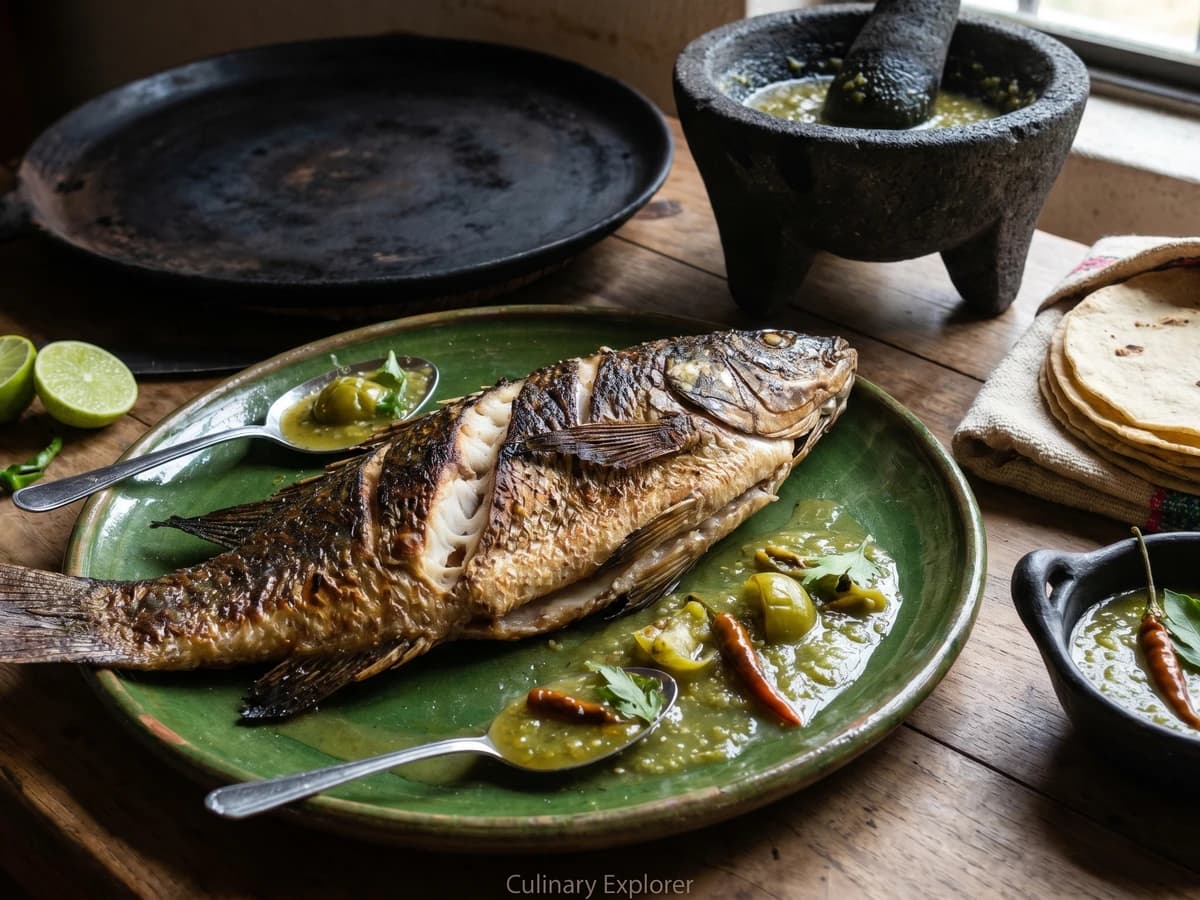
Michoacán's Lake Pátzcuaro acúmara, a whole kurucha from the lago tatemada on a comal de leña and served with chile perón atápakua, corn tortillas, and P'urhépecha discipline.
A cooking platform built around craft, culture, and the stories behind what we eat.
Created by
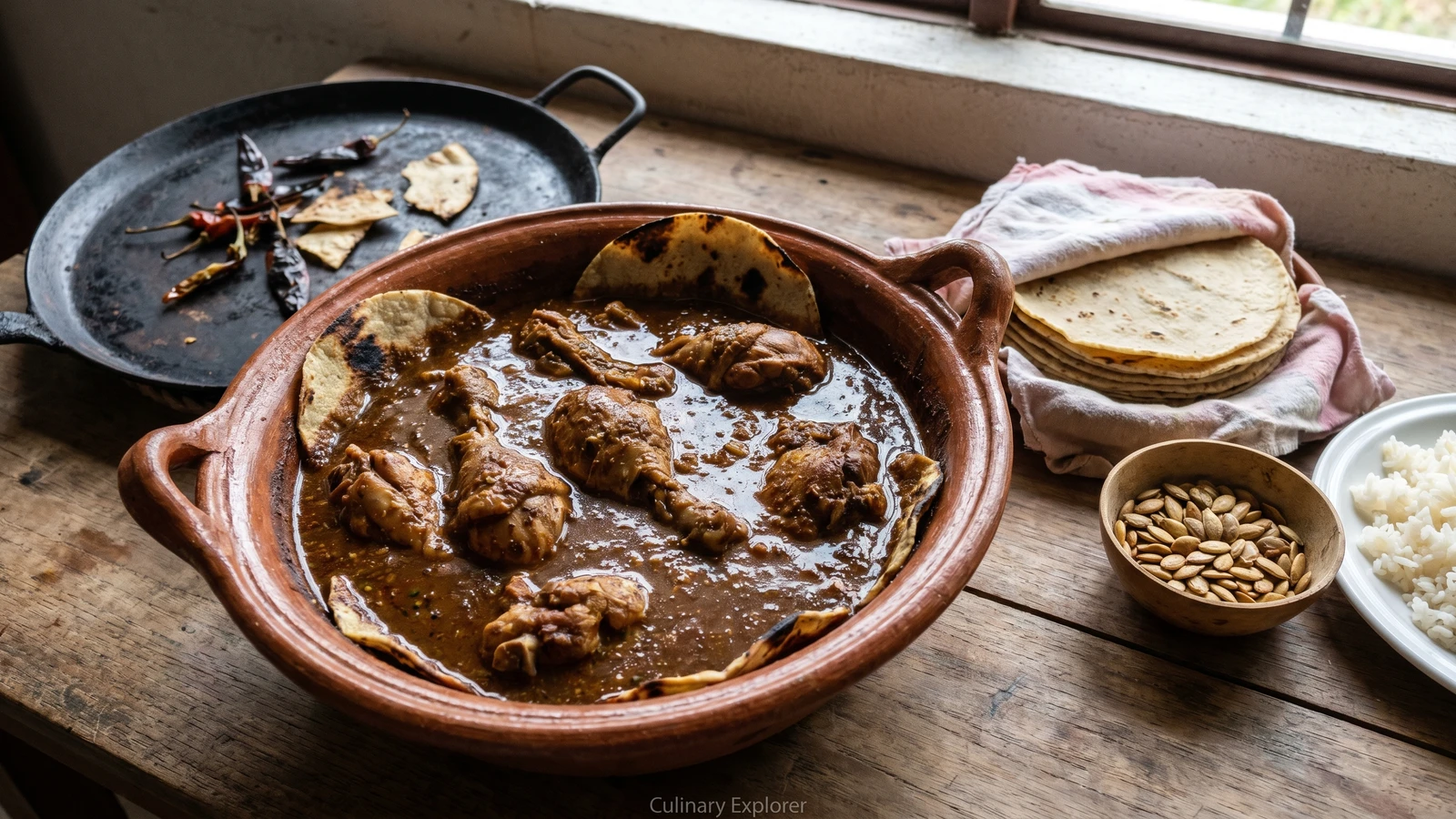
Tabasco's Chontal Maya hen stew, built from burned tortilla, chile amashito, ancho, roasted pumpkin seeds, and a slow broth that turns an older bird into a dark, serious family pot.
Tabasco, the Chontal lowlands around Nacajuca, Jalpa de Méndez, and Centla, is where this chirmole de gallina belongs. This is wetland cooking, cacao country, achiote country, maize country, a kitchen shaped by rivers and mercados where the women know which chile bites clean and which one only burns your tongue.
The sauce is dark because the tortilla is burned on purpose, then ground with chile ancho, chile guajillo, chile amashito, roasted tomato, achiote, and toasted pumpkin seed. The chile amashito is the Tabasco signature here, small and sharp, the kind of chile a vendor measures with respect. The pepita thickens the sauce without making it heavy. The burned tortilla gives depth. This is not mole poblano and it is not chocolate sauce. Learn the difference.
Use gallina de rancho if you can find it. An older hen takes time, but it gives you the broth that young chicken cannot give. I learned this version from a señora near Nacajuca who watched me burn the first tortilla too far and said, without smiling, 'Eso ya no sirve.' She was right. There is a line between char and ash, and the cook has to know it.
My mother did not cook Tabasco food. She was from Jalisco, and Jalisco has its own voice. But her notebook taught me to listen before I wrote anything down. In Tabasco, chirmol is not decoration on the plate. It is the old grammar of the lowland kitchen. Saber cocinar es saber vivir.
Chirmol is related to the older word chilmolli, from Nahuatl roots for chile and sauce, but in southeastern Mexico the method took on local Chontal Maya forms through maize, achiote, pumpkin seed, and wild chile. In Tabasco, Chontal Maya communities, also called Yokot'anob, preserved lowland sauces thickened with ground seeds and tortillas long before wheat flour or northern-style tortillas entered the regional table. The blackened tortilla technique connects Tabasco's chirmol to the broader southeastern family of dark recados and chilmoles, though this version is lighter than Yucatán's relleno negro and depends on hen broth rather than a spice-heavy paste.
Quantity
1 (4 to 5 pounds)
cut into 10 pieces
Quantity
2 1/2 teaspoons, divided, plus more to taste
Quantity
1 large
half left whole and half quartered
Quantity
1
halved crosswise
Quantity
2
Quantity
8 cups, plus more as needed
Quantity
3
stemmed and seeded
Quantity
2
stemmed and seeded
Quantity
8
stemmed, or use 12 fresh chile amashito
Quantity
2
Quantity
4
roasted until blistered
Quantity
1/2 cup
Quantity
4
Quantity
1/2 teaspoon
Quantity
2 teaspoons
Quantity
3 tablespoons
Quantity
2 sprigs
Quantity
1 large
Quantity
for serving
warmed
Quantity
for serving
Quantity
for serving
| Ingredient | Quantity |
|---|---|
| whole hen (gallina de rancho)cut into 10 pieces | 1 (4 to 5 pounds) |
| kosher salt | 2 1/2 teaspoons, divided, plus more to taste |
| white onionhalf left whole and half quartered | 1 large |
| head of garlichalved crosswise | 1 |
| bay leaves | 2 |
| water | 8 cups, plus more as needed |
| dried chile anchostemmed and seeded | 3 |
| dried chile guajillostemmed and seeded | 2 |
| dried chile amashitostemmed, or use 12 fresh chile amashito | 8 |
| stale corn tortillas | 2 |
| Roma tomatoesroasted until blistered | 4 |
| raw hulled pumpkin seeds (pepitas) | 1/2 cup |
| allspice berries (pimienta gorda) | 4 |
| cumin seeds | 1/2 teaspoon |
| achiote paste | 2 teaspoons |
| pork lard (manteca de cerdo) | 3 tablespoons |
| fresh epazote | 2 sprigs |
| hoja santa (momo) leaf | 1 large |
| hand-pressed corn tortillas (optional)warmed | for serving |
| white rice (optional) | for serving |
| chile amashito in vinegar (optional) | for serving |
Season the hen pieces with 1 1/2 teaspoons salt and let them sit while you prepare the pot. Gallina de rancho is not tender little supermarket chicken. It has worked its muscles, and that is why the broth tastes like something. Give the salt time to enter the meat.
Put the hen in a heavy pot with the whole half onion, halved garlic head, bay leaves, and 8 cups water. Bring to a gentle simmer over medium heat and skim the foam during the first 15 minutes. Lower the heat, cover partially, and cook 1 1/2 to 2 hours, until the joints loosen and the meat is fully cooked but not falling apart. Strain and reserve the broth. Keep the hen pieces whole.
Heat a dry comal over medium. Toast the chile ancho and chile guajillo separately, about 20 to 30 seconds per side, just until the skins puff and the smell turns deep and raisiny. Toast the chile amashito for only a few seconds, because it is small and mean and burns fast. Put all the toasted chiles in a bowl and cover with hot water for 20 minutes. Hot water, not boiling. Boiling makes the skins harsh.
On the same comal, char the stale tortillas until they are black in patches and brittle at the edges. This is not a mistake. The burned tortilla gives chirmol its low, dark backbone. But listen carefully: blackened is useful, gray ash is garbage. If the tortilla turns to ash, throw it out and start again. Así se hace y punto.
Roast the tomatoes and the quartered half onion on the comal until the tomato skins blister and collapse and the onion edges brown. Peel the garlic cloves from the broth and save them for the sauce. Tabasco cooks know this economy. The broth has already paid for that garlic once. Use it.
Add the pumpkin seeds to the dry comal and toast, shaking often, until they puff, turn golden in spots, and smell nutty. Toast the allspice berries and cumin seeds for 20 seconds, just until fragrant. The pepita is the body of the sauce. Do not replace it with peanut butter. No me vengas con atajos.
Drain the soaked chiles. In a blender, combine the chiles, burned tortillas torn into pieces, roasted tomatoes, roasted onion, cooked garlic cloves, toasted pepitas, allspice, cumin, achiote paste, and 2 cups reserved hen broth. Blend until very smooth. If your blender struggles, add more broth a little at a time. The sauce should be dark brown, thick, and pourable, with no hard pieces of chile skin.
Melt the manteca de cerdo in a wide clay cazuela or heavy Dutch oven over medium heat. Pour in the chirmol carefully. It will sputter. Cook 10 to 12 minutes, stirring from the bottom, until the sauce darkens, thickens, and a reddish-brown shine of fat begins to gather around the edges. La manteca es el sabor. The frying wakes up the chile and fixes the sauce to the fat.
Add the hen pieces to the cazuela and turn them to coat with chirmol. Add 2 to 3 cups reserved broth, enough to make a loose sauce that still clings to the meat. Add the epazote and hoja santa. Simmer uncovered for 25 to 35 minutes, turning the pieces once, until the sauce tastes integrated and the hen has taken on the dark color. Taste for salt. It should be savory, earthy, and only as hot as the chile amashito allows.
Turn off the heat and let the cazuela rest for 20 minutes. Chirmol needs that pause. The pepita settles, the chile rounds out, and the hen absorbs the sauce instead of wearing it like paint. Remove the epazote stems and hoja santa before serving. Bring the cazuela to the table with white rice, warm corn tortillas, and chile amashito in vinegar. Cada estado, su propia cocina.
1 serving (about 480g)
Culinary guides, cultural storytelling, and the editorial depth that makes cooking meaningful.
Discover Culinary ExplorerChef Lupita
Michoacán's Lake Pátzcuaro acúmara, a whole kurucha from the lago tatemada on a comal de leña and served with chile perón atápakua, corn tortillas, and P'urhépecha discipline.

Chef Lupita
Puebla's weekday adobo of pork shoulder braised in a thick guajillo and ancho sauce sharpened with vinegar, cumin, and clove. The deep red of a market spice stall, the dish a poblana cooks without thinking.

Chef Lupita
Loreto's pit-roasted clams, planted hinge-up in beach sand and tatemadas under a fast fire of dried romerillo brush, the resinous Baja desert shrub that gives this dish its smoke.

Chef Lupita
Oaxaca's eighth mole, the silky, almond-and-cinnamon almendrado, served over poached chicken. Mild, sweet, restrained, and a quiet rebuttal to anyone who thinks Mexican food has to be hot to be Mexican.