Chef Lupita
Acúmara Tatemada al Comal
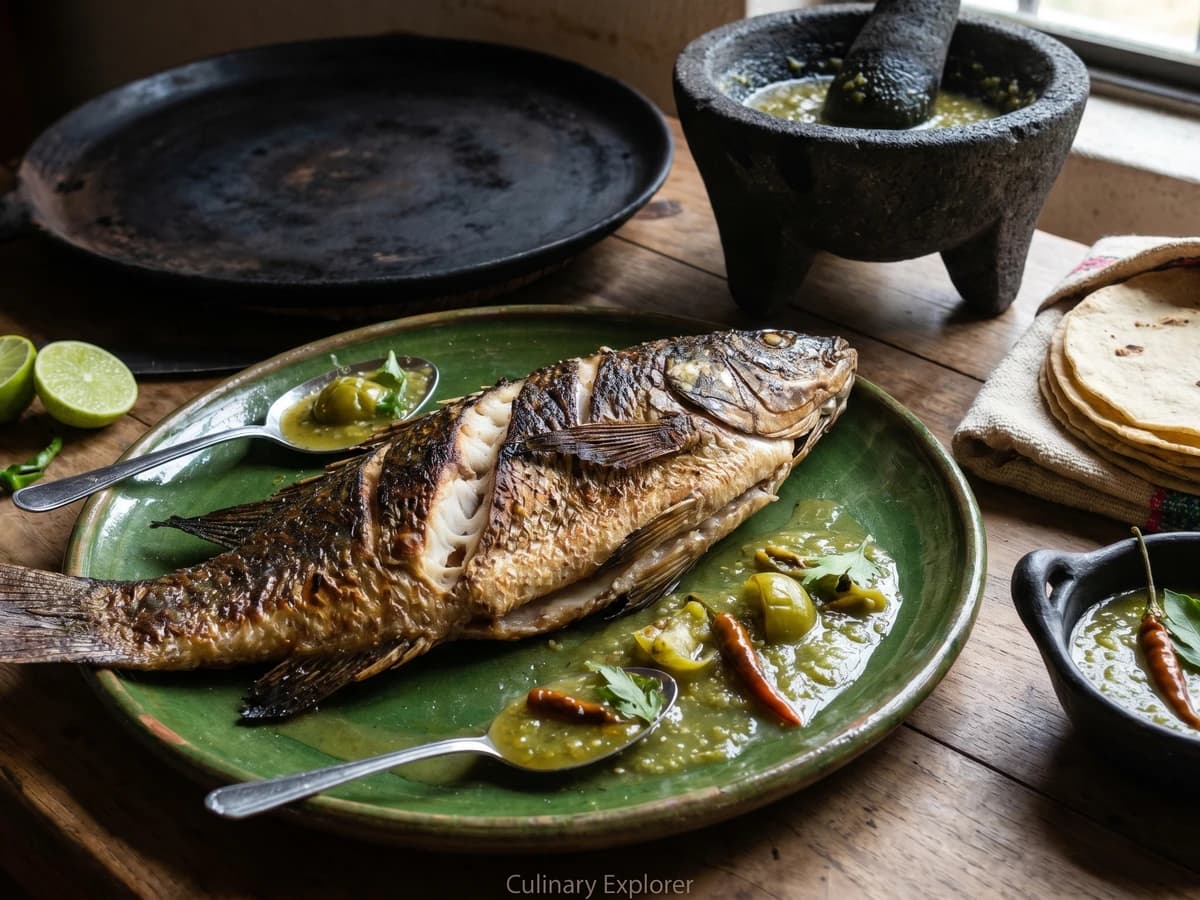
Michoacán's Lake Pátzcuaro acúmara, a whole kurucha from the lago tatemada on a comal de leña and served with chile perón atápakua, corn tortillas, and P'urhépecha discipline.
A cooking platform built around craft, culture, and the stories behind what we eat.
Created by
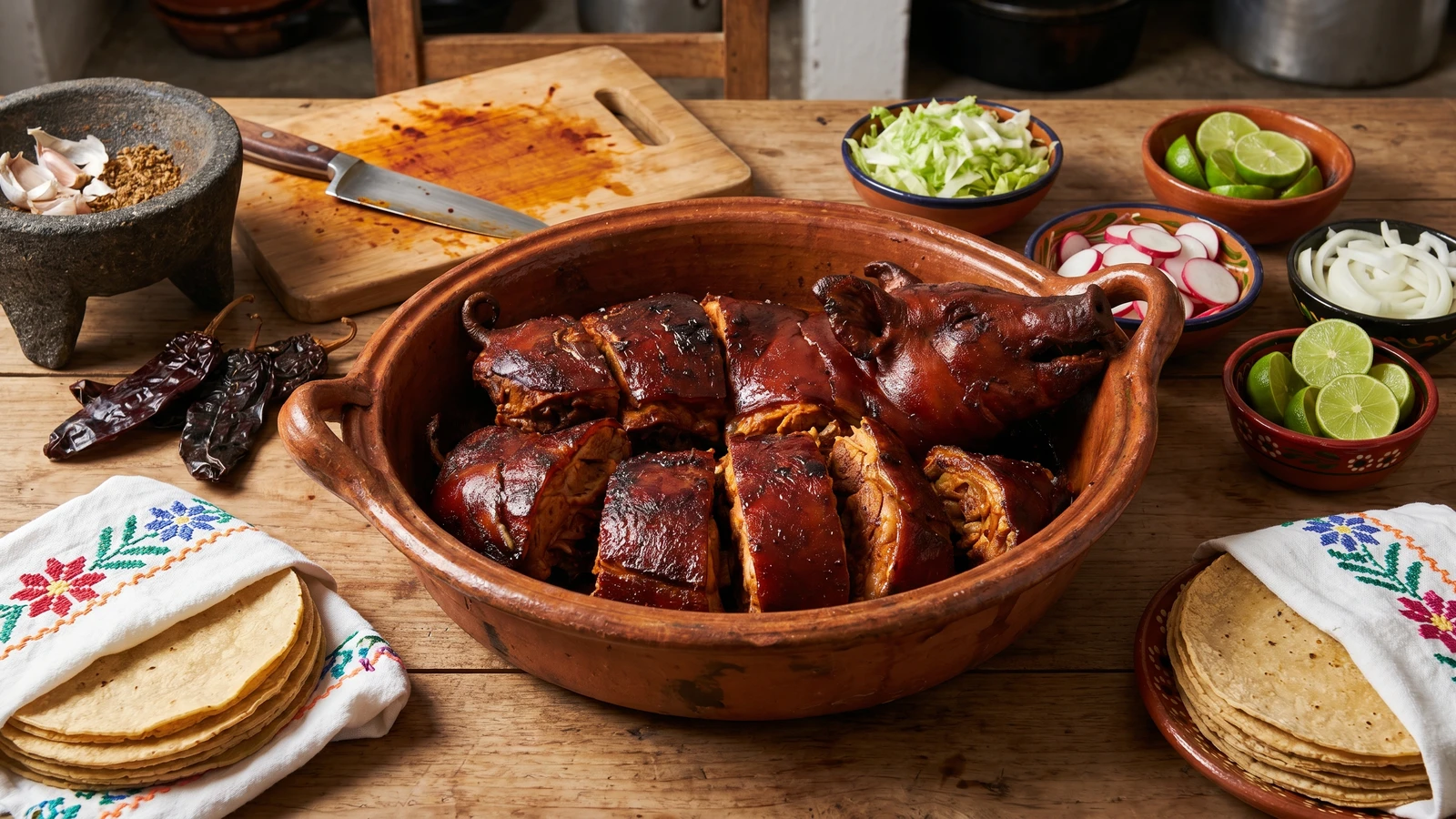
Chiapas' celebration pork from Chiapa de Corzo, a suckling pig stained with chile ancho, achiote, vinegar, and warm spices, roasted slowly until the skin turns mahogany and the adobo clings to every cut.
Chiapas, in the Central Depression, gives Chiapa de Corzo its cochito horneado. This is the pork of Fiesta Grande, the January celebration when the Parachicos fill the streets and the houses have to feed people properly. A small pig, chile ancho, achiote, vinegar, spices, a wood oven if the house still has one. That is the map before you touch the knife.
The defining chile here is chile ancho. Not chipotle, not chile de arbol for punishment, not a generic red powder from a jar. Ancho gives dark fruit and body. Achiote gives the red stain that holds to the skin and the cutting board. Vinegar sharpens the fat. Pimienta gorda, clove, cinnamon, oregano, thyme, and marjoram make the adobo smell like the old kitchens of Chiapa de Corzo, the ones where women learned to judge the oven by the color of the pork, not by a timer.
I learned this dish from women who roasted for celebrations, not from restaurants. They knew how to rub the adobo into the shoulders, how to leave the skin clean enough to crisp, and how to serve the meat in clay with lettuce, radish, onion, and tortillas on the table. The home oven version is honest if you respect the two things that matter: overnight adobo and slow roasting. Rush either one and the dish will tell on you.
My mother was from Jalisco, so this was not her daily food, but she would have understood the principle. A recipe begins at the market. If your ancho chiles are dusty and dead, the pork will taste dusty and dead. Preguntale a las señoras del mercado. Saber cocinar es saber vivir.
Cochito horneado is closely tied to Chiapa de Corzo's Fiesta Grande, held each January in honor of the Lord of Esquipulas, Saint Anthony Abbot, and Saint Sebastian; the Parachicos tradition from this celebration was inscribed by UNESCO in 2010. The dish developed after pigs introduced by the Spanish in the 16th century entered local kitchens and were joined with Mesoamerican adobo techniques based on chile, achiote, and stone-ground seasonings. Unlike Yucatecan cochinita pibil, which is defined by pit cooking and sour orange, Chiapa de Corzo's cochito is an oven-roasted celebration pork with chile ancho and vinegar at its center.
Quantity
1 (10 to 12 pounds)
cleaned, split through the backbone, and flattened
Quantity
8 pounds
kept in large pieces if substituting for suckling pig
Quantity
2 1/2 tablespoons
divided
Quantity
14
stemmed and seeded
Quantity
4
charred on a comal
Quantity
1 medium
quartered
Quantity
12
unpeeled for roasting
Quantity
2 ounces
Quantity
1 cup
Quantity
2 1/2 cups
divided
Quantity
1/2 cup
melted and divided
Quantity
1 tablespoon
Quantity
1 teaspoon
Quantity
1/2 teaspoon
Quantity
8
Quantity
10
Quantity
6
Quantity
1 (2-inch piece)
Quantity
4
Quantity
1 small head
thinly sliced
Quantity
8
thinly sliced
Quantity
1 small
thinly sliced and rinsed
Quantity
for serving
Quantity
for serving
warmed
Quantity
for serving
| Ingredient | Quantity |
|---|---|
| small suckling pigcleaned, split through the backbone, and flattened | 1 (10 to 12 pounds) |
| skin-on pork shoulder or fresh ham (optional)kept in large pieces if substituting for suckling pig | 8 pounds |
| kosher saltdivided | 2 1/2 tablespoons |
| dried chile anchostemmed and seeded | 14 |
| ripe Roma tomatoescharred on a comal | 4 |
| white onionquartered | 1 medium |
| garlic clovesunpeeled for roasting | 12 |
| achiote paste | 2 ounces |
| cane vinegar or pineapple vinegar | 1 cup |
| pork stock or waterdivided | 2 1/2 cups |
| manteca de cerdomelted and divided | 1/2 cup |
| dried Mexican oregano | 1 tablespoon |
| dried thyme | 1 teaspoon |
| dried marjoram | 1/2 teaspoon |
| whole allspice berries (pimienta gorda) | 8 |
| whole black peppercorns | 10 |
| whole cloves | 6 |
| Mexican cinnamon stick | 1 (2-inch piece) |
| bay leaves | 4 |
| romaine or lechuga orejona (optional)thinly sliced | 1 small head |
| radishes (optional)thinly sliced | 8 |
| white onion for serving (optional)thinly sliced and rinsed | 1 small |
| fresh lime halves (optional) | for serving |
| hand-pressed corn tortillas (optional)warmed | for serving |
| frijoles negros de olla (optional) | for serving |
Pat the suckling pig completely dry. Score the skin lightly in a crosshatch, cutting through the skin but not deep into the meat. Rub the pig all over with 1 1/2 tablespoons of the salt, especially inside the shoulders and legs where thick meat hides. Set it on a rack in a roasting pan and refrigerate while you make the adobo. If using pork shoulder or fresh ham, score the skin the same way and keep the pieces large. Small cubes dry out before the adobo has done its work.
Heat a dry comal over medium. Toast the chile ancho one or two at a time, about 20 seconds per side, pressing them flat with tongs until they soften, darken slightly, and smell raisiny. Do not blacken them. Burned ancho turns the whole adobo bitter, and no amount of achiote will save it. Put the toasted chiles in a bowl and cover with hot water for 20 minutes.
On the same comal, char the tomatoes, onion quarters, and unpeeled garlic until the tomato skins blister, the onion edges brown, and the garlic softens inside its peel. Toast the allspice, black peppercorns, cloves, and cinnamon stick for 30 to 45 seconds, just until fragrant. Keep them moving. Spices should wake up, not burn.
Drain the softened chiles. Peel the roasted garlic. In a blender, combine the chiles, tomatoes, onion, garlic, achiote paste, vinegar, 1/2 cup pork stock, oregano, thyme, marjoram, toasted spices, bay leaves, and the remaining 1 tablespoon salt. Blend until completely smooth. If the blender struggles, add another splash of stock. Strain through a fine-mesh sieve, pressing hard on the solids. The adobo should be brick-red, thick, and clean on the tongue.
Melt 1/4 cup of the manteca de cerdo in a wide cazuela or heavy skillet over medium heat. Add the strained adobo carefully. It will sputter. Cook 8 to 10 minutes, stirring often, until the color deepens and the lard begins to shine around the edges. Raw adobo tastes like wet chile. Fried adobo tastes like a kitchen that knows what it is doing. La manteca es el sabor.
Let the adobo cool to room temperature. Reserve 1 cup in a clean container for basting and sauce. Rub the rest over the pork, pushing it into the scored skin, the cavity, the shoulders, and the legs. Cover and refrigerate for at least 12 hours, preferably overnight. No me vengas con atajos. The vinegar, achiote, chile ancho, and spices need time to enter the meat.
Take the pork out of the refrigerator 1 hour before roasting. Heat the oven to 325F. Set the pig skin side up on a rack in a large roasting pan. Pour 2 cups pork stock into the pan, not over the skin. Brush the skin with half of the remaining melted lard. Cover loosely with parchment and foil, leaving a little room so the cover does not stick to the adobo. Roast for 3 hours, rotating the pan once. The meat should begin to pull back from the joints and the pan juices should be red with chile and fat.
Uncover the pork and raise the oven to 425F. Brush the skin with the remaining lard. Brush the exposed meat and edges with some of the reserved adobo, but do not paint the skin too heavily now or the chile can scorch. Roast 35 to 45 minutes more, until the skin is dark mahogany, crisp under a knife tip, and glossy with rendered fat. The thickest shoulder meat should read at least 185F for tenderness, and the leg should be at least 165F. If one area darkens too quickly, shield only that spot with foil.
Transfer the pork to a large board and rest 25 minutes. Pour the pan juices into a saucepan and skim off only the excess fat, leaving enough for shine and flavor. Whisk in the remaining reserved adobo and simmer 10 minutes, until the sauce coats a spoon. Taste for salt and vinegar. It should be deep, tangy, and chile-rich, not sweet and not sharp.
Cut the pork into generous pieces, keeping crisp skin attached to the meat. Pile it in a wide clay cazuela and spoon the hot adobo sauce over the cut sides, leaving some skin exposed so it stays crisp. Serve with thin lettuce, radishes, rinsed white onion, lime halves, warm corn tortillas, and frijoles negros if you made them. This is not cochinita pibil and it is not barbecue. This is Chiapa de Corzo. Cada estado, su propia cocina.
1 serving (about 360g)
Culinary guides, cultural storytelling, and the editorial depth that makes cooking meaningful.
Discover Culinary ExplorerChef Lupita
Michoacán's Lake Pátzcuaro acúmara, a whole kurucha from the lago tatemada on a comal de leña and served with chile perón atápakua, corn tortillas, and P'urhépecha discipline.

Chef Lupita
Puebla's weekday adobo of pork shoulder braised in a thick guajillo and ancho sauce sharpened with vinegar, cumin, and clove. The deep red of a market spice stall, the dish a poblana cooks without thinking.

Chef Lupita
Loreto's pit-roasted clams, planted hinge-up in beach sand and tatemadas under a fast fire of dried romerillo brush, the resinous Baja desert shrub that gives this dish its smoke.

Chef Lupita
Oaxaca's eighth mole, the silky, almond-and-cinnamon almendrado, served over poached chicken. Mild, sweet, restrained, and a quiet rebuttal to anyone who thinks Mexican food has to be hot to be Mexican.