Chef Lupita
Acúmara Tatemada al Comal
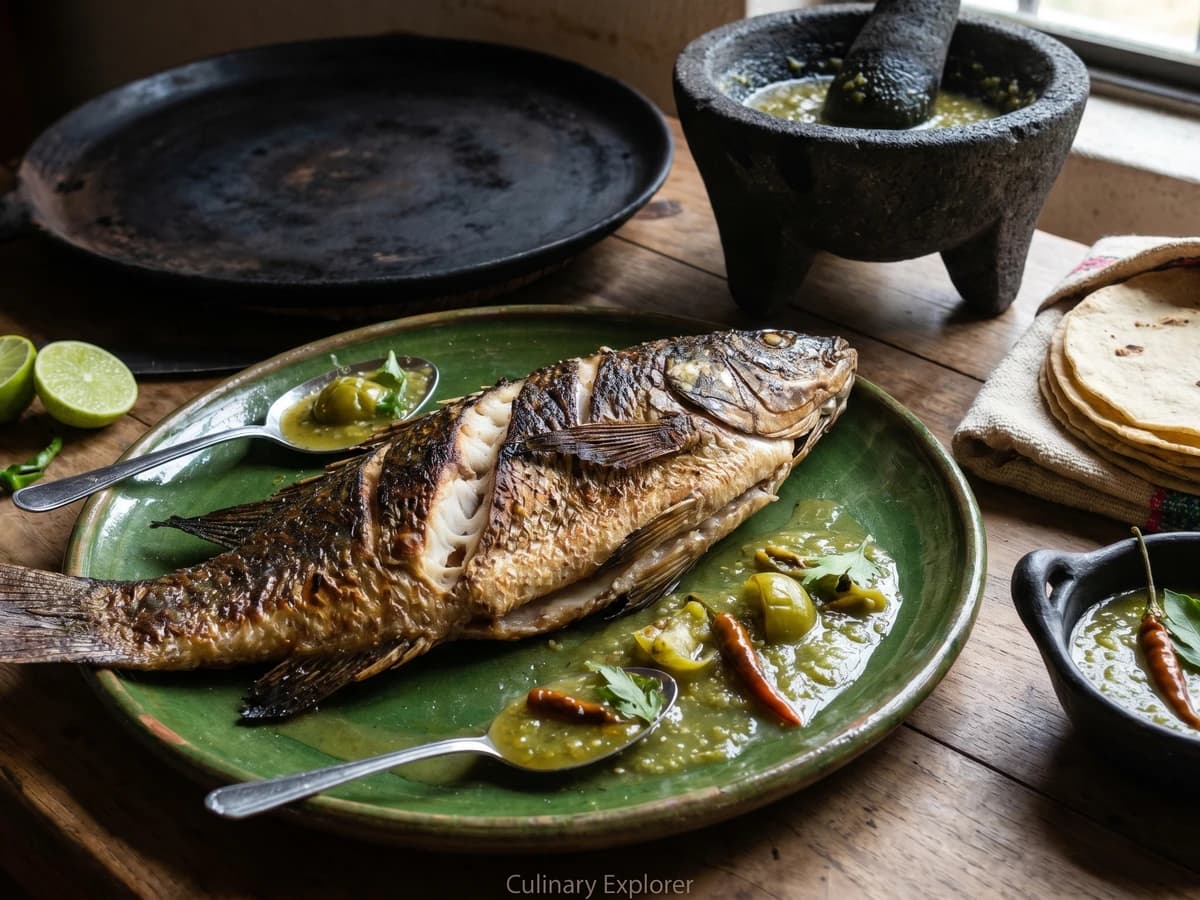
Michoacán's Lake Pátzcuaro acúmara, a whole kurucha from the lago tatemada on a comal de leña and served with chile perón atápakua, corn tortillas, and P'urhépecha discipline.
A cooking platform built around craft, culture, and the stories behind what we eat.
Created by
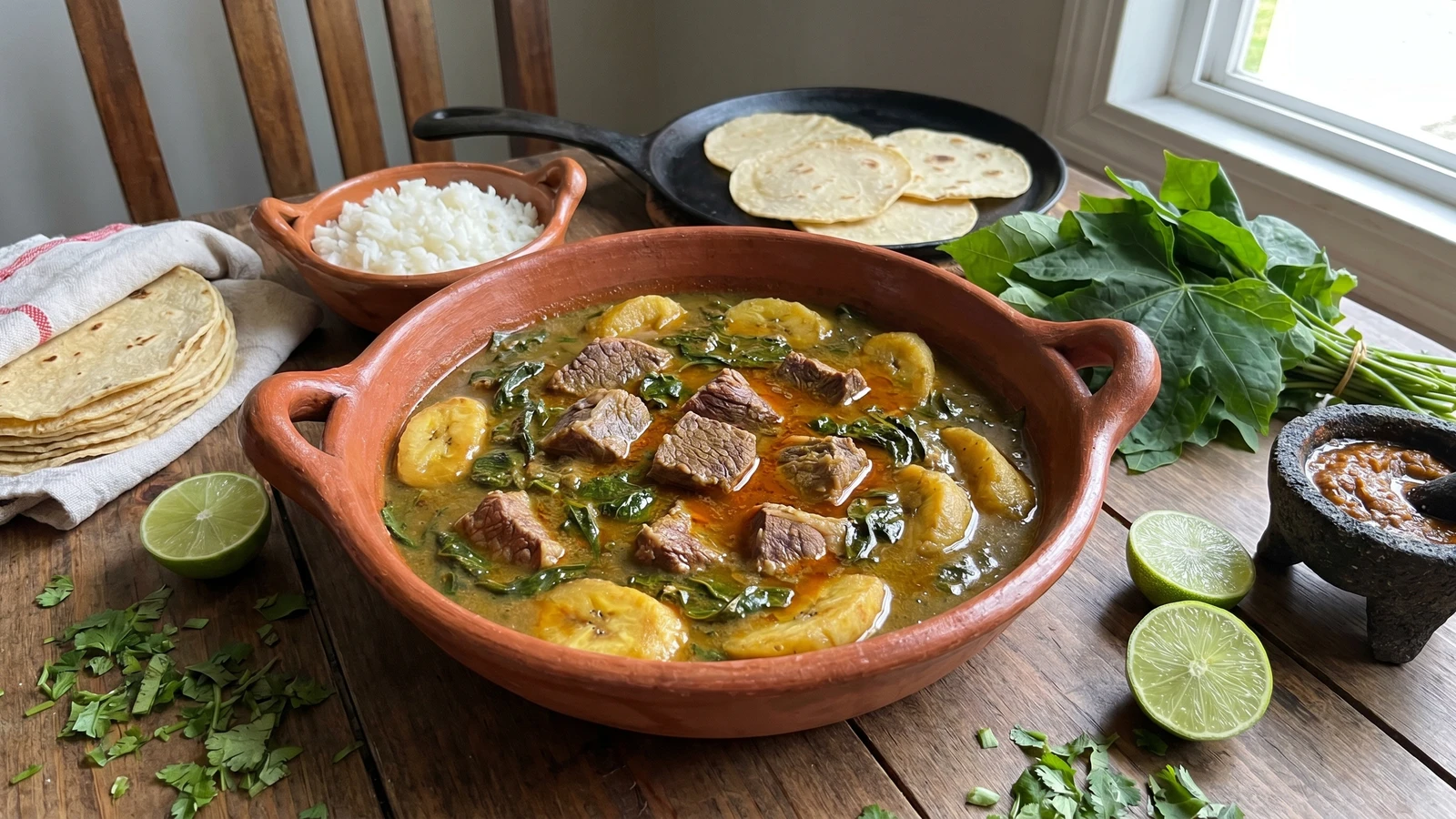
Tabasco's salt-cured beef braised with chaya, ripe plantain, chile dulce, and epazote, a humid lowland dish built for the pot, the patio garden, and a stack of warm corn tortillas.
Tabasco, the lowland state of rivers, cacao, plantain, and patio herbs, owns this dish. Carne salada con chaya belongs to the home kitchens around Villahermosa, Nacajuca, Jalpa de Mendez, and the Chontal communities where a backyard chaya bush is not decoration. It is food security.
The beef is salted first, then rinsed and simmered until it softens. That salting is not a trick. In a hot, wet state where the rivers decide the rhythm of life, preservation mattered. The chaya comes in later, cooked thoroughly, because raw chaya is not for eating. The ripe plantain gives sweetness against the salt. The chile here is chile dulce or a little amashito at the table, not a fire show. Not all Mexican food is built to burn your mouth. This one is green, savory, soft, and deep.
I learned a version of this from a señora near Nacajuca who cooked it in a clay cazuela and served it with white rice and tortillas so fresh they still smelled of the comal. She told me, 'La chaya se respeta.' She was right. You don't throw it in like spinach and hope. You blanch it, chop it, and let it finish in the stew where the beef, tomato, epazote, and plantain can do their work. Cada estado, su propia cocina.
Chaya, Cnidoscolus aconitifolius, is a domesticated leafy shrub associated with Maya household gardens across the Yucatan Peninsula, Tabasco, and parts of Chiapas, valued because it grows aggressively in heat and humidity where more delicate greens fail. Salt-curing beef became especially practical in the Gulf lowlands during the colonial and postcolonial periods, when cattle raising expanded and preservation had to answer a wet tropical climate before refrigeration. In Tabasco, the pairing of salted beef with chaya and plantain reflects the state's riverine pantry: cattle from the savannas, greens from the patio, and fruit from the humid lowlands.
Quantity
2 pounds
cut into 2-inch chunks
Quantity
3 tablespoons
for curing the beef
Quantity
10 cups, divided, plus more for soaking
Quantity
1 pound
stems removed
Quantity
2 tablespoons
Quantity
1 medium
finely chopped
Quantity
3
finely chopped
Quantity
3 ripe
chopped
Quantity
2
seeded and chopped
Quantity
1
lightly crushed
Quantity
1 teaspoon
Quantity
1 large
peeled and cut into thick half-moons
Quantity
1 large sprig
Quantity
1 teaspoon, plus more to taste
Quantity
1/2 teaspoon
Quantity
2 tablespoons
chopped
Quantity
for serving
Quantity
for serving
Quantity
for serving
Quantity
for serving
| Ingredient | Quantity |
|---|---|
| beef chuck or brisketcut into 2-inch chunks | 2 pounds |
| coarse sea saltfor curing the beef | 3 tablespoons |
| water | 10 cups, divided, plus more for soaking |
| fresh chaya leavesstems removed | 1 pound |
| manteca de cerdo | 2 tablespoons |
| white onionfinely chopped | 1 medium |
| garlic clovesfinely chopped | 3 |
| Roma tomatoeschopped | 3 ripe |
| fresh chile dulceseeded and chopped | 2 |
| fresh chile amashito (optional)lightly crushed | 1 |
| achiote paste | 1 teaspoon |
| ripe plantainpeeled and cut into thick half-moons | 1 large |
| epazote | 1 large sprig |
| kosher salt | 1 teaspoon, plus more to taste |
| freshly ground black pepper | 1/2 teaspoon |
| fresh cilantrochopped | 2 tablespoons |
| cooked white rice (optional) | for serving |
| warm hand-pressed corn tortillas (optional) | for serving |
| lime halves (optional) | for serving |
| chile amashito salsa (optional) | for serving |
Rub the beef chunks all over with the coarse sea salt and place them in a nonreactive bowl. Cover and refrigerate for at least 8 hours, or overnight if you planned like a cook instead of rushing like a tourist. The salt firms the meat, seasons it through, and gives the dish its name. Carne salada means salted beef. Así se hace y punto.
Rinse the salted beef under cool water, then place it in a bowl and cover with fresh water. Soak 30 minutes. Drain and rinse again. You are not removing all the salt. You are bringing it under control so the chaya and plantain can be tasted.
Put the beef in a heavy pot with 8 cups water. Bring to a gentle simmer, skim the gray foam, then lower the heat and cook partially covered for 1 hour 30 minutes, until the beef is tender but not falling apart. Keep 3 cups of the cooking broth and drain the rest. That broth is salty, beefy, and useful. Do not throw away your flavor and then complain the stew tastes thin.
While the beef simmers, bring 2 cups water to a boil in a separate pot. Add the chaya leaves and cook 15 minutes, until the leaves turn deep green and soften. Drain well, let cool enough to handle, and chop roughly. Chaya must be cooked thoroughly. Raw chaya is not salad. Preguntale a las señoras del mercado and they will tell you the same thing.
Melt the manteca de cerdo in a wide clay cazuela or heavy Dutch oven over medium heat. Add the onion and cook until soft and glossy, about 5 minutes. Add the garlic and cook 1 minute more. Stir in the tomatoes, chile dulce, optional crushed chile amashito, and achiote paste. Cook 8 to 10 minutes, until the tomatoes collapse and the fat stains orange-red. La manteca es el sabor, and here it carries the achiote and tomato into the beef.
Add the simmered beef to the sofrito and turn the pieces so they pick up the color. Pour in 2 cups of the reserved beef broth, add the chopped chaya, epazote, black pepper, and 1/2 teaspoon salt. Bring to a low simmer. Cook uncovered for 20 minutes, stirring now and then, until the broth thickens slightly and the chaya tastes like it belongs to the pot, not like it was added at the end.
Nestle the ripe plantain half-moons into the cazuela and add another splash of reserved broth if the pot looks dry. Simmer 15 to 20 minutes more, until the plantain is tender but still holding its shape. The sweetness is not decoration. It balances the salted beef and the green mineral taste of the chaya.
Remove the epazote sprig. Taste the broth before adding more salt because the beef has already spoken. Stir in the chopped cilantro. Serve family-style in the cazuela with white rice, warm corn tortillas, lime halves, and chile amashito salsa on the side. This is Tabasco food: humid, green, salty, a little sweet, and not interested in pretending to be from somewhere else.
1 serving (about 500g)
Culinary guides, cultural storytelling, and the editorial depth that makes cooking meaningful.
Discover Culinary ExplorerChef Lupita
Michoacán's Lake Pátzcuaro acúmara, a whole kurucha from the lago tatemada on a comal de leña and served with chile perón atápakua, corn tortillas, and P'urhépecha discipline.

Chef Lupita
Puebla's weekday adobo of pork shoulder braised in a thick guajillo and ancho sauce sharpened with vinegar, cumin, and clove. The deep red of a market spice stall, the dish a poblana cooks without thinking.

Chef Lupita
Loreto's pit-roasted clams, planted hinge-up in beach sand and tatemadas under a fast fire of dried romerillo brush, the resinous Baja desert shrub that gives this dish its smoke.

Chef Lupita
Oaxaca's eighth mole, the silky, almond-and-cinnamon almendrado, served over poached chicken. Mild, sweet, restrained, and a quiet rebuttal to anyone who thinks Mexican food has to be hot to be Mexican.