Chef Lupita
Acúmara Tatemada al Comal
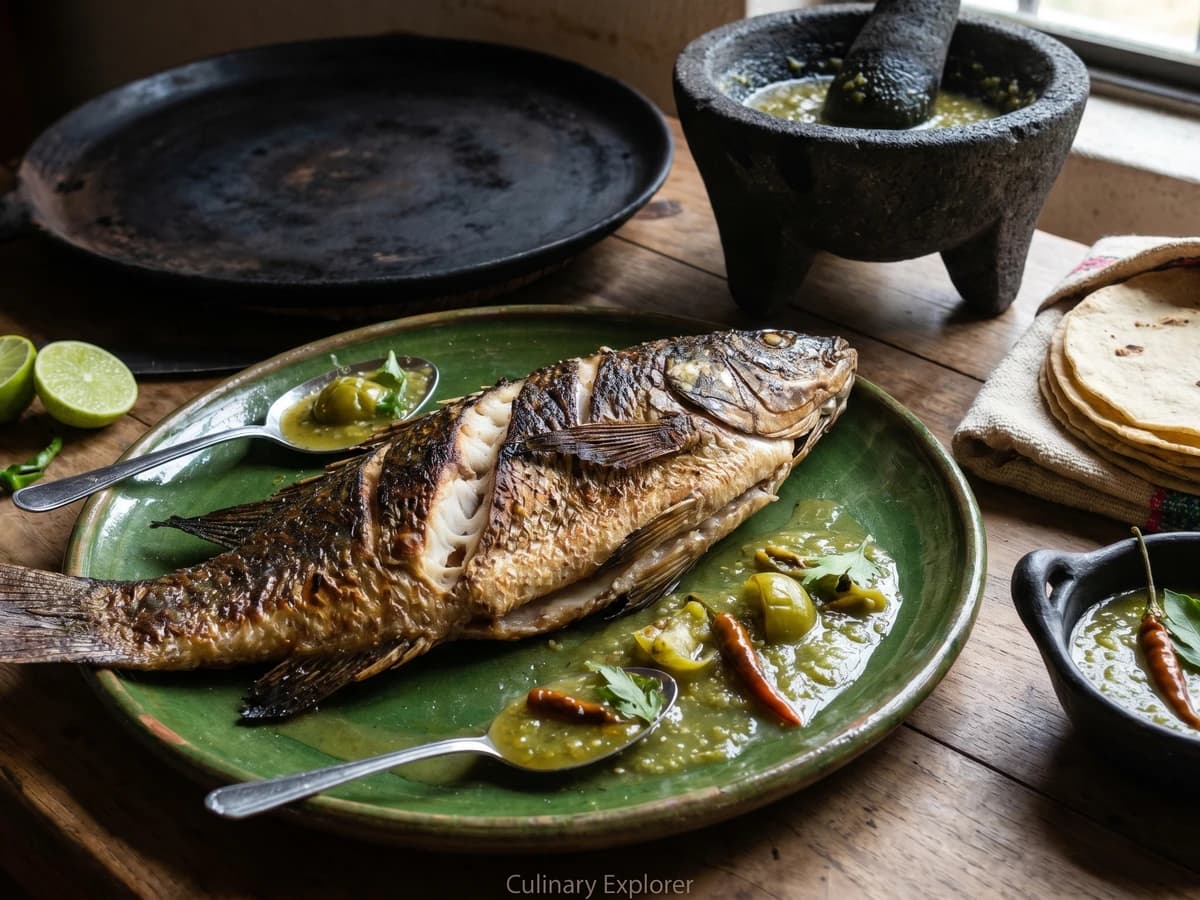
Michoacán's Lake Pátzcuaro acúmara, a whole kurucha from the lago tatemada on a comal de leña and served with chile perón atápakua, corn tortillas, and P'urhépecha discipline.
A cooking platform built around craft, culture, and the stories behind what we eat.
Created by
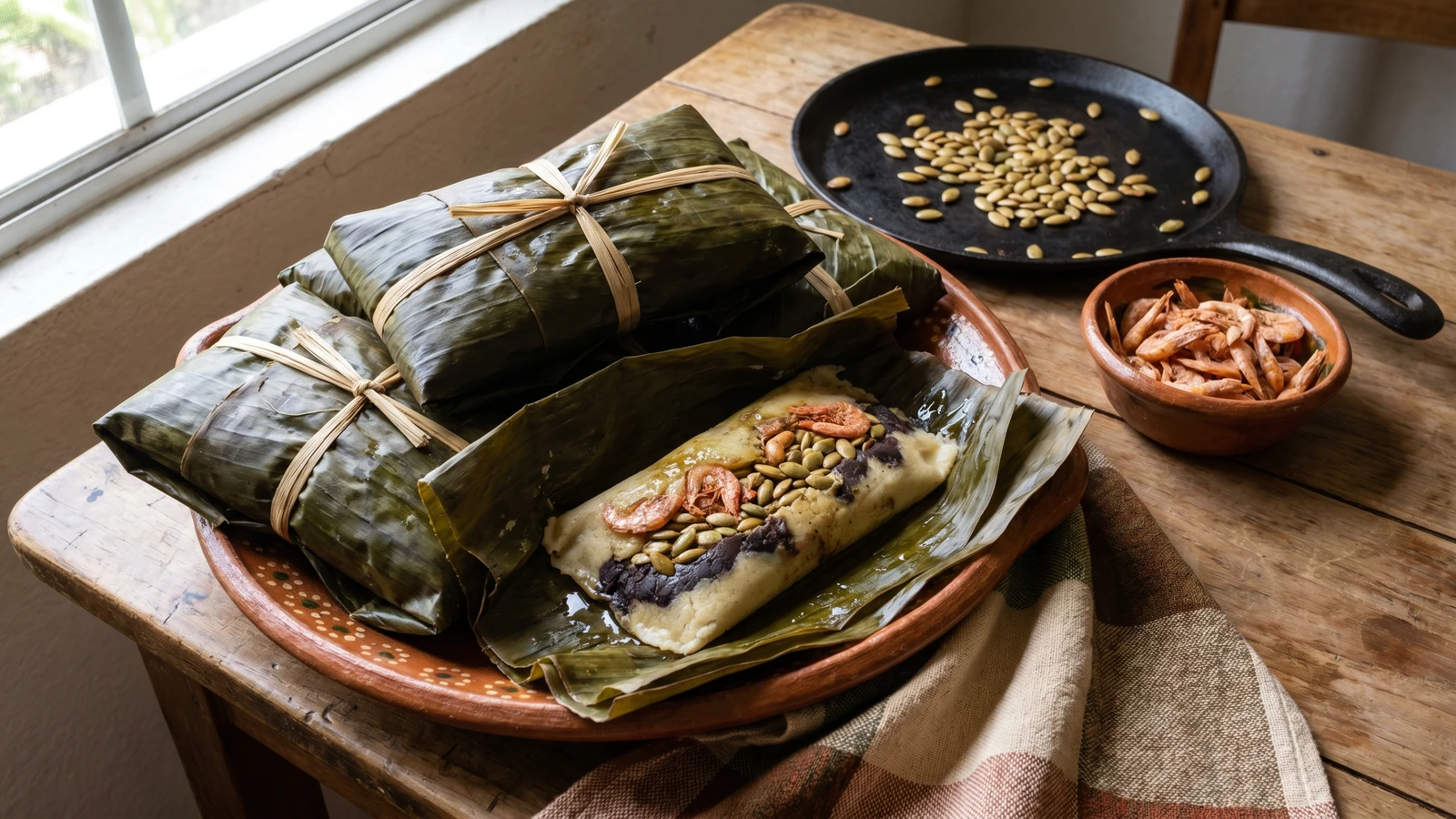
Chiapas' Zoque jacuane is a ceremonial tamal of masa, frijol, dried Pacific shrimp, and pumpkin seed wrapped in hoja santa, built for feast days, not shortcuts.
Chiapas, the Zoque region around Copainala, Tecpatan, and Ocozocoautla, is where this tamal lives. Jacuane is not a little corn-husk tamal for breakfast. It is a ceremonial packet, wide and serious, layered with masa, frijol, dried shrimp, and pepita, then wrapped in hoja santa, the leaf the Zoque cooks call momo.
The leaf defines it. Hoja santa gives the tamal its perfume: anise, pepper, green earth. The dried shrimp brings the coast into the mountain kitchen, the way ingredients have always moved through Chiapas by trade, family, and feast day obligation. The pumpkin seed gives body and oil. No me vengas con atajos. If you leave out the hoja santa, you made another tamal.
I learned this style from women who did not measure with spoons. They measured by the feel of the masa under the palm and by the smell of the leaf when it touched heat. That is not mystery. That is practice. The masa should spread without cracking, the bean layer should be thick but not wet, and the shrimp should season the whole tamal without turning it harsh. Cada estado, su propia cocina.
Jacuane belongs to the Zoque ceremonial kitchen of central and northwestern Chiapas, where tamales wrapped in local leaves are tied to Catholic feast days layered over older Indigenous ritual foodways. The use of maize, beans, pumpkin seed, and hoja santa reflects pre-Columbian Mesoamerican ingredients, while dried shrimp entered the preparation through regional trade between the Pacific coast and inland Zoque communities. In many Chiapas households, jacuane is especially associated with Lent and Holy Week, when seafood and seed-based fillings replace meat without making the food feel poor.
Quantity
30
rinsed and patted dry
Quantity
2 pounds
Quantity
1/2 cup
softened
Quantity
1 1/2 teaspoons, plus more to taste
Quantity
1/2 to 3/4 cup
Quantity
2 cups
drained, with 1/2 cup cooking liquid reserved
Quantity
1/2 small
finely chopped
Quantity
2 tablespoons
Quantity
1 sprig
Quantity
1 cup
Quantity
1 cup
heads and hard shells removed if large
Quantity
1
toasted and crumbled
Quantity
1 large leaf
cut into 10 squares and passed over a flame to soften
Quantity
as needed
for tying
| Ingredient | Quantity |
|---|---|
| large hoja santa leavesrinsed and patted dry | 30 |
| fresh nixtamal masa for tamales | 2 pounds |
| manteca de cerdosoftened | 1/2 cup |
| fine sea salt | 1 1/2 teaspoons, plus more to taste |
| warm bean cooking liquid or warm water | 1/2 to 3/4 cup |
| cooked black beans from Chiapasdrained, with 1/2 cup cooking liquid reserved | 2 cups |
| white onionfinely chopped | 1/2 small |
| manteca de cerdo, for the beans | 2 tablespoons |
| epazote | 1 sprig |
| raw hulled pumpkin seeds (pepita verde) | 1 cup |
| dried shrimpheads and hard shells removed if large | 1 cup |
| dried chile simojovel or chile de arbol (optional)toasted and crumbled | 1 |
| banana leaf (optional)cut into 10 squares and passed over a flame to soften | 1 large leaf |
| kitchen twine or thin strips of banana leaffor tying | as needed |
Rinse the hoja santa leaves and dry them well. Choose the largest, whole leaves for wrapping and save torn ones for patching. If the leaves feel stiff, pass each one quickly over a warm comal for a few seconds per side, just until flexible and fragrant. Do not scorch them. The leaf should smell green and peppery, not burned.
Heat a dry comal over medium. Toast the pumpkin seeds, stirring constantly, until they puff slightly, turn spotty gold, and smell nutty. This takes 4 to 6 minutes. Tip them onto a plate so they stop cooking. Grind them in a molino, spice grinder, or blender until sandy and fine. Pepita gives the tamal body and richness. Leave it coarse and the filling feels gritty.
Put the dried shrimp on the same dry comal for 1 to 2 minutes, turning them once, until their smell deepens and the surface looks dry and slightly darker. Grind half of the shrimp to a rough powder and chop the rest. This seasons the whole tamal and still leaves little bites of shrimp. That is better than one salty clump in the center.
Melt 2 tablespoons manteca de cerdo in a skillet over medium heat. Add the white onion and cook until soft, not browned. Add the cooked black beans, epazote, and 1/4 cup of the bean cooking liquid. Mash until thick and spreadable. Taste before adding salt because the shrimp will bring salt later. The beans should hold their shape on a spoon. Wet beans make a heavy tamal.
Beat the softened manteca de cerdo with the salt until creamy. Work it into the fresh masa with your hand, adding warm bean liquid or warm water a little at a time. The masa should be soft enough to spread but firm enough to stay where you put it. Press a little between your fingers. If the edges crack, add liquid. If it slumps like batter, you went too far.
Lay 2 or 3 hoja santa leaves on the work surface, overlapping them so there are no open gaps. Spread about 1/3 cup masa into a rectangle in the center. Add a thin layer of mashed black beans, then a spoonful of ground pepita, then chopped and ground dried shrimp. Add a few crumbs of toasted chile simojovel if you are using it. This tamal is savory and herbal, not a chile contest.
Fold the hoja santa over the filling from both sides, then fold the ends under to make a firm rectangular packet. If a leaf tears, patch it with another leaf. For a stronger ceremonial-style packet, wrap the hoja santa packet inside a softened banana leaf square and tie it with twine or banana leaf strips. The packet should feel snug, not strangled. Masa expands when it cooks.
Set up a deep steamer with water below the rack. Line the rack with extra hoja santa or banana leaf scraps. Stand or stack the tamales with space for the heat to move around them. Cover with more leaves, then the lid. Steam over steady medium heat for 1 hour 30 minutes, adding hot water to the pot if needed. Do not let the pot run dry. A dry steamer ruins work you cannot get back.
Turn off the heat and let the tamales rest in the covered steamer for 15 minutes. Open one. The masa should pull away from the leaf cleanly and hold its layers. Serve warm in the leaf on a clay platter, with a spoonful of chile simojovel salsa only if your household serves it that way. The leaf is not decoration. It is the perfume of the dish. Así se hace y punto.
1 serving (about 190g)
Culinary guides, cultural storytelling, and the editorial depth that makes cooking meaningful.
Discover Culinary ExplorerChef Lupita
Michoacán's Lake Pátzcuaro acúmara, a whole kurucha from the lago tatemada on a comal de leña and served with chile perón atápakua, corn tortillas, and P'urhépecha discipline.

Chef Lupita
Puebla's weekday adobo of pork shoulder braised in a thick guajillo and ancho sauce sharpened with vinegar, cumin, and clove. The deep red of a market spice stall, the dish a poblana cooks without thinking.

Chef Lupita
Loreto's pit-roasted clams, planted hinge-up in beach sand and tatemadas under a fast fire of dried romerillo brush, the resinous Baja desert shrub that gives this dish its smoke.

Chef Lupita
Oaxaca's eighth mole, the silky, almond-and-cinnamon almendrado, served over poached chicken. Mild, sweet, restrained, and a quiet rebuttal to anyone who thinks Mexican food has to be hot to be Mexican.