
Chef Lesia
Buzhenyna (буженина, garlic-studded roast pork)
A whole pork neck takes garlic into little knife pockets, roasts until the crust goes dark and fragrant, then rests overnight so every cold slice tastes better than shop ham.
A cooking platform built around craft, culture, and the stories behind what we eat.
Created by
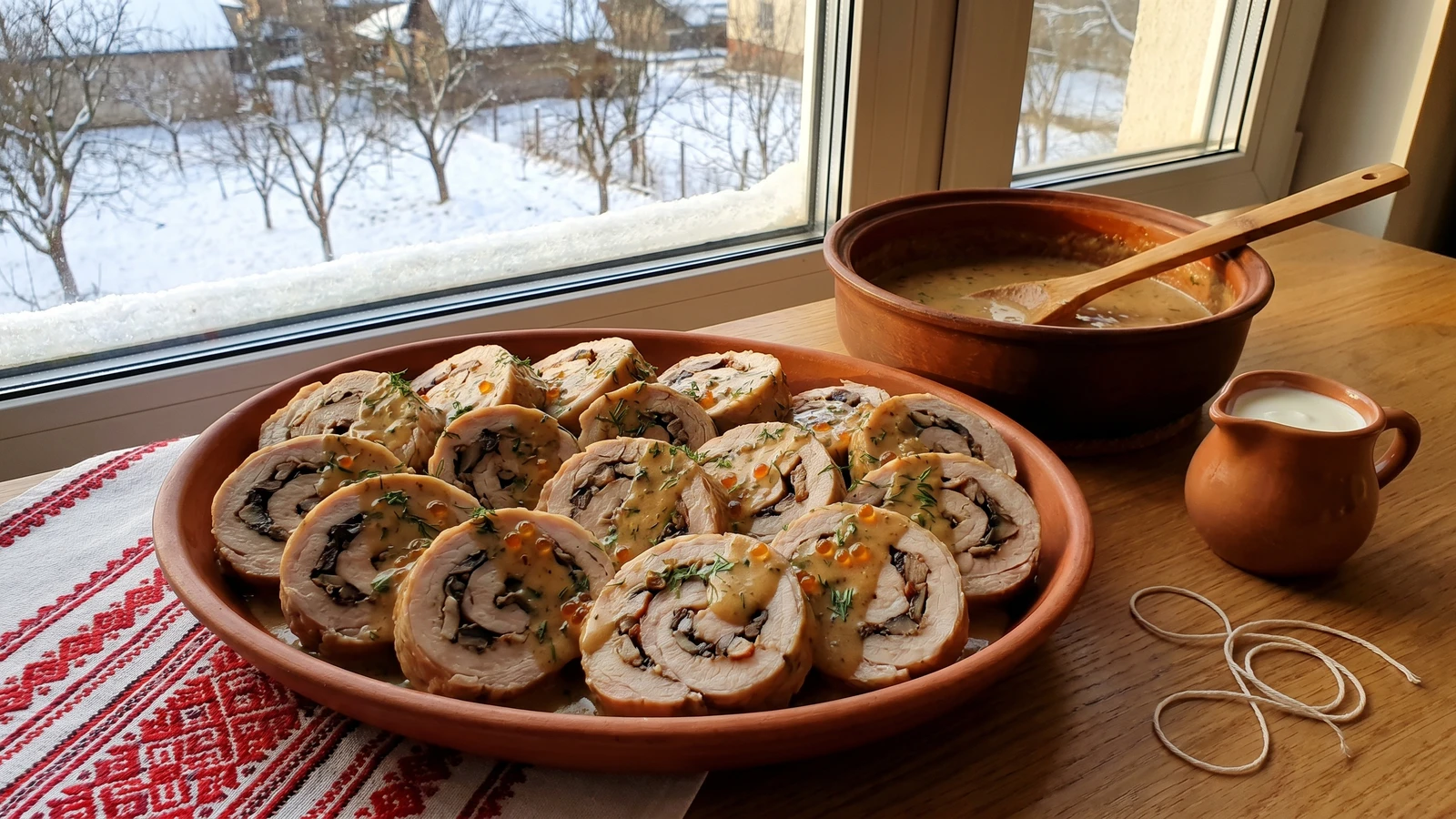
The cut slice tells the truth: tender veal coiled around dark mushrooms, smoked salo, and onion, then slow-braised until the sauce turns glossy enough to drag bread through.
The cut face is the confession. Outside, a zavyvanets looks like a tidy brown roll in gravy; inside it opens into a spiral of veal, dark mushroom, onion, and little melted seams of smoked salo. That is why I get cross when people mince everything and call it the same. Stuffed is not minced. The roll is the point.
This is Zakarpattia's table, west of the mountains, where mushroom baskets come home damp, smetana thickens sauces, and sweet paprika can sit beside dill without any drama. I come from the southern steppe, so I cook this as a grateful visitor to another Ukrainian kitchen, not as if Ukraine were one flat plate. Make it for a birthday, a nameday, or a Sunday that has grown ambitious; it likes being made ahead and it feeds enough for eight guests or one hungry Ukrainian.
The one thing that decides it is tightness. Pound the meat thin enough to bend without tearing, cool the filling so it doesn't sweat, tie the roll so it holds its breath, then brown it until the smell changes from raw meat to toasted nuts. The zasmazhka waits until the end: slow-sweated onion and carrot keep their sweetness bright in the sauce instead of dissolving into something vague. My hands remember a dumpling fold, not this mountain roll, but the lesson is the same, close it well and the filling will behave.
Zavyvantsi takes its name from the Ukrainian verb zavyvaty, to wind or curl, and in Zakarpattia it sits near kruchenyky but is larger: a celebration roll of whole sliced meat rather than minced meat shaped into a log. The region west of the Carpathian ridge has long cooked at a crossing of Ukrainian, Rusyn, Hungarian, Slovak, Romanian, and Jewish kitchens, so mushrooms, paprika, smetana, and sour notes turn up naturally at the same table. Soviet recipe books often filed local rolls under plain meat rolls, but village cooks kept the fillings specific: forest mushrooms after rain, smoked salo when there was a slaughter, and sauce enough for potatoes or kasha.
Quantity
1.4 kg
cut across the grain into 8 large thin slices
Quantity
2 teaspoons, plus more to taste
Quantity
1 teaspoon
Quantity
25g
Quantity
300ml
Quantity
300g
finely chopped
Quantity
2
1 finely diced and 1 thinly sliced
Quantity
80g
finely diced, or use 2 tablespoons butter
Quantity
2 cloves
grated
Quantity
1 small bunch
finely chopped, plus more to serve
Quantity
3 tablespoons
Quantity
1
beaten
Quantity
4 tablespoons
divided
Quantity
3 tablespoons, plus 1 tablespoon
for dusting and sauce
Quantity
1 large
coarsely grated
Quantity
1 teaspoon
Quantity
1 tablespoon
Quantity
400ml
Quantity
2
Quantity
4
Quantity
200g
| Ingredient | Quantity |
|---|---|
| veal top round or beef topsidecut across the grain into 8 large thin slices | 1.4 kg |
| fine sea salt | 2 teaspoons, plus more to taste |
| black pepper | 1 teaspoon |
| dried porcini mushrooms | 25g |
| just-boiled water | 300ml |
| fresh field mushrooms or brown mushroomsfinely chopped | 300g |
| onions1 finely diced and 1 thinly sliced | 2 |
| smoked salo or smoked baconfinely diced, or use 2 tablespoons butter | 80g |
| garlicgrated | 2 cloves |
| dillfinely chopped, plus more to serve | 1 small bunch |
| fresh breadcrumbs | 3 tablespoons |
| eggbeaten | 1 |
| sunflower oildivided | 4 tablespoons |
| plain flourfor dusting and sauce | 3 tablespoons, plus 1 tablespoon |
| carrotcoarsely grated | 1 large |
| sweet paprika | 1 teaspoon |
| tomato paste | 1 tablespoon |
| beef or veal stock | 400ml |
| bay leaves | 2 |
| allspice berries | 4 |
| smetana or full-fat sour cream | 200g |
Pour the just-boiled water over the dried porcini and leave them until softened and the water smells dark and woodsy. Lift the mushrooms out, chop them finely, and strain the soaking liquor through a fine sieve or cloth. Do not pour the last gritty spoonful into the sauce; sand has no business in a celebration roll.
Warm 1 tablespoon of sunflower oil in a wide pan, then add the smoked salo or bacon and let it soften until the edges look translucent. Add the finely diced onion, fresh mushrooms, chopped porcini, a pinch of salt, and black pepper. Cook until the pan changes from a wet hiss to a soft fry and the mushrooms smell deep and browned. Stir in the garlic, half the dill, and the breadcrumbs, then cool completely before mixing in the beaten egg.
Lay each slice of veal or beef between parchment or a split freezer bag and pound from the centre outward until it is thin enough to bend easily, about the thickness of a coin. Season both sides with salt and pepper. If a piece tears, patch it with a small scrap of meat and keep moving. Nobody at the table will see your repair work under the sauce.
Put a generous spoonful of cooled filling near one short end of each piece of meat, leaving a clean edge around it. Fold in the sides, roll tightly, and tie with kitchen string in two or three places. If the filling pushes out, take a spoonful back. A slightly slimmer roll behaves better than a proud one that bursts in the pot.
Dust the rolls lightly with flour and shake off the excess. Heat 2 tablespoons of sunflower oil in a heavy Dutch oven or deep braising pan and brown the rolls in batches, turning them until every side has a proper chestnut color. Aunt Nadia would have written, cook until it sounds right, and here she would be correct: the pan should move from a raw wet slap to a steady soft fry. Lift the browned rolls to a plate.
Return the rolls to the pot with the strained mushroom liquor, stock, bay leaves, and allspice. Scrape the browned bits from the bottom, then cover and keep the liquid at a gentle tremble, never a hard boil. Turn the rolls once or twice as they cook. They are ready when a skewer slides in without argument and the meat relaxes when pressed; veal may get there sooner, beef will ask for more time.
While the rolls finish, warm the last tablespoon of oil in a wide pan and add the thinly sliced onion and grated carrot. Cook slowly until the onion turns soft and glassy, the carrot collapses, and the oil glows orange. Stir in the sweet paprika and tomato paste for the last minute, just until the smell changes from raw tomato to sweet and roasted. Add this zasmazhka to the braising pot for the final stretch so its sweetness sits brightly in the sauce instead of disappearing into the stock.
Lift the rolls out to a warm plate and remove the strings. Whisk the smetana with 1 tablespoon flour and a ladle of hot sauce until smooth, then stir it back into the pot over a low flame. Keep it below a boil until the sauce turns glossy and coats the spoon. Taste for salt and pepper, return the rolls to the sauce, and let them rest for 10 minutes before serving with the remaining dill scattered over the top.
1 serving (about 310g)
Culinary guides, cultural storytelling, and the editorial depth that makes cooking meaningful.
Discover Culinary ExplorerChef Lesia
A whole pork neck takes garlic into little knife pockets, roasts until the crust goes dark and fragrant, then rests overnight so every cold slice tastes better than shop ham.
Chef Lesia
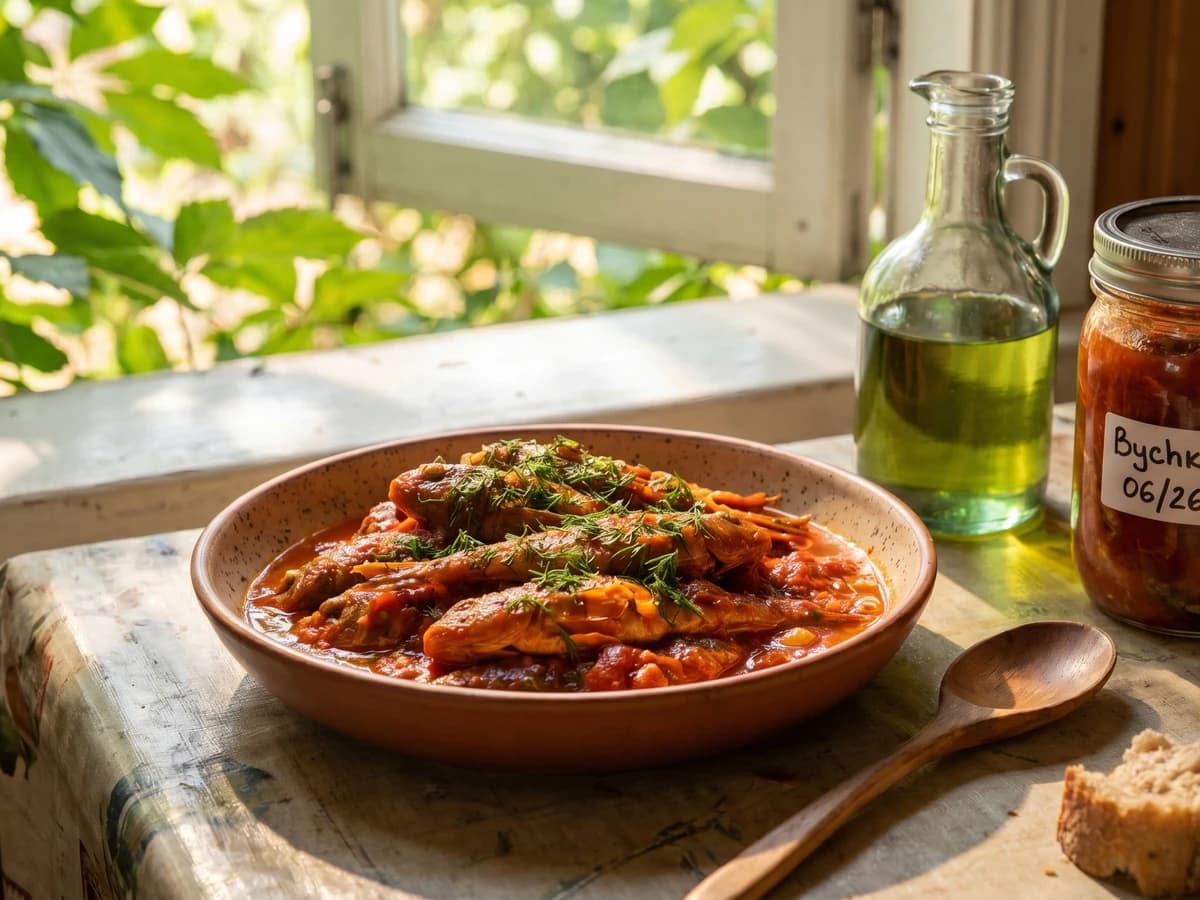
Small Azov gobies go into tomato bright as market cloth and come out soft enough that the bones give up. This is Mariupol food: cheap, red, generous, and better tomorrow.

Chef Lesia
The first sound is the meat against the board: flat, sharp, changing as the fibres loosen. Fry the cutlets fast, then let onion gravy do the soft finishing.

Chef Lesia
A heap of tiny silver fish becomes supper by the oldest Odesa trick: clean them, press them together, fry until the edges crackle, and let lemon and dill do the talking.