
Chef Lesia
Bytky Ukrainski (битки українські, pounded cutlets)
The first sound is the meat against the board: flat, sharp, changing as the fibres loosen. Fry the cutlets fast, then let onion gravy do the soft finishing.
A cooking platform built around craft, culture, and the stories behind what we eat.
Created by
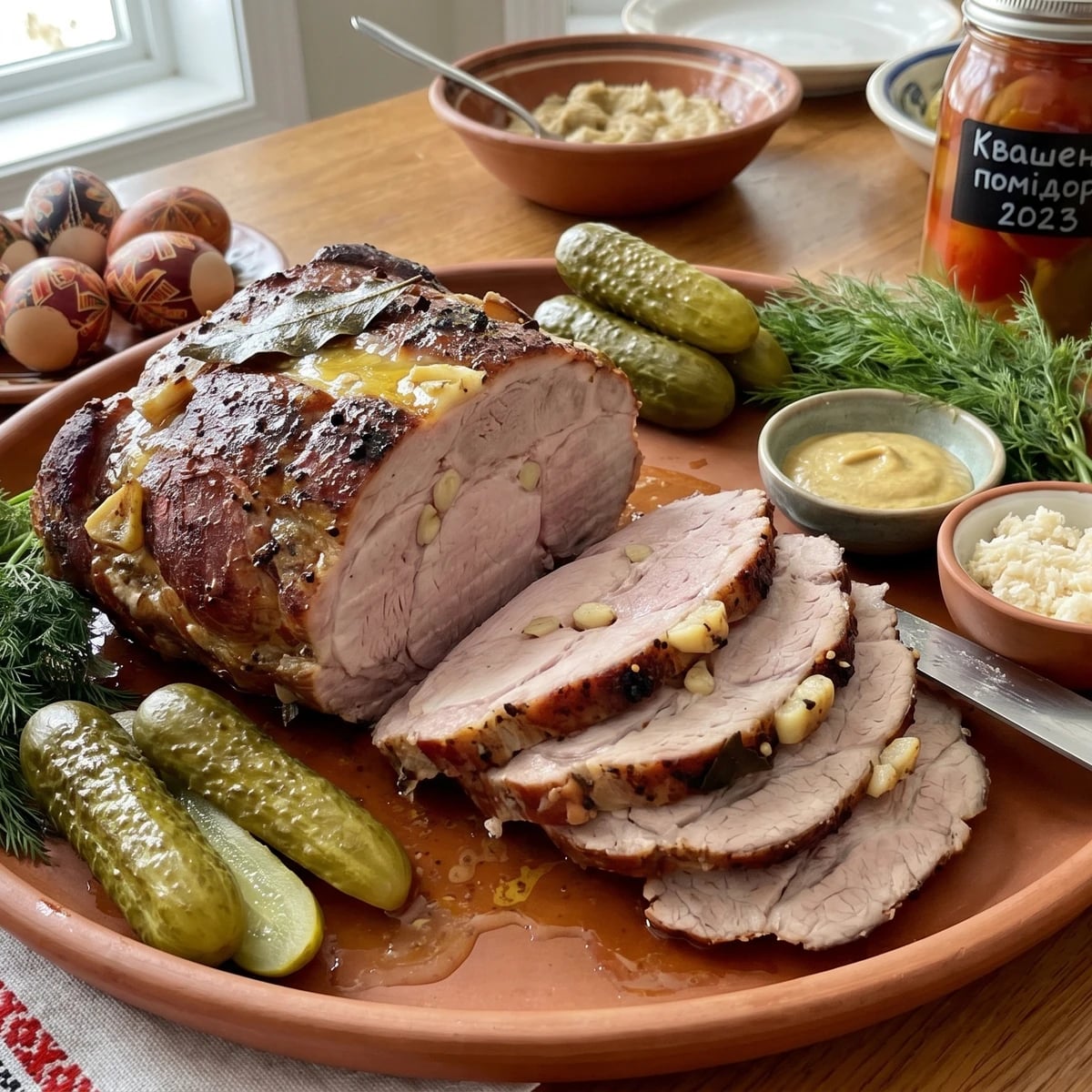
A whole pork neck takes garlic into little knife pockets, roasts until the crust goes dark and fragrant, then rests overnight so every cold slice tastes better than shop ham.
The best slice of buzhenyna is cold, not hot. That surprises people. The roast comes out of the oven smelling like garlic, pepper, bay leaf and browned pork fat, and everyone wants to cut it immediately, but the dish becomes itself later, after the juices settle and the garlic has crept through the meat overnight.
This is holiday pork for a table that expects people to keep arriving. Easter, Christmas, a name day, any day when the plates are too many and the fridge is already crowded. You roast one generous neck, tuck it away, and the next morning there it is: thin slices for the first guests, thicker ones for the hungry cousin, a little sharp horseradish beside it, black bread if you have sense.
The one thing that decides it is the resting. Salt and garlic need time to travel inward, and after roasting the meat needs to cool before the knife goes in. Aunt Nadia wrote only, "let it sleep under paper," which is typical of her, as if paper were a unit of measurement. She was right. Wrap it, chill it, then slice against the grain and watch the meat hold its juice instead of spilling it all over the board.
Don't chase perfection. Pork neck is forgiving, pork shoulder works, even a leaner loin can be made to behave with extra care and more fat on top. But don't skip the garlic pockets. They are the memory of the dish.
Buzhenyna is a festive Ukrainian cold roast, common on Easter and Christmas tables beside paska, krashanky, kovbasa, horseradish, and pickles. Ukrainian household cookbooks from the late nineteenth and early twentieth centuries describe it as a whole piece of pork, usually ham, shoulder, or neck, rubbed with garlic, pepper, bay leaf, and salt, then baked and cooled for slicing. Its survival is very domestic: less a restaurant dish than a holiday answer to how one roast can feed a full table for several days.
Quantity
2 kg
in one piece
Quantity
10
6 cut into slivers and 4 crushed
Quantity
2 tablespoons
Quantity
1 tablespoon
freshly ground
Quantity
2 teaspoons
Quantity
1 teaspoon
Quantity
1 teaspoon
lightly crushed
Quantity
2
crumbled
Quantity
2 tablespoons
Quantity
2 tablespoons
Quantity
1 tablespoon
for a darker crust
Quantity
2
thickly sliced
Quantity
120ml
Quantity
to serve
Quantity
to serve
| Ingredient | Quantity |
|---|---|
| pork neck or boneless shoulderin one piece | 2 kg |
| garlic cloves6 cut into slivers and 4 crushed | 10 |
| fine sea salt | 2 tablespoons |
| black pepperfreshly ground | 1 tablespoon |
| sweet paprika | 2 teaspoons |
| ground coriander | 1 teaspoon |
| caraway seedslightly crushed | 1 teaspoon |
| bay leavescrumbled | 2 |
| Ukrainian mustard or Dijon mustard | 2 tablespoons |
| unrefined sunflower oil | 2 tablespoons |
| honey (optional)for a darker crust | 1 tablespoon |
| onionsthickly sliced | 2 |
| water, apple cider, or light beer | 120ml |
| fresh horseradish or mustard (optional) | to serve |
| dill pickles or kvasheni pomidory (optional) | to serve |
Pat the pork dry. With a small sharp knife, make deep narrow cuts all over the meat, following the grain when you can, then push a garlic sliver into each pocket. Don't make grand holes. You want little hidden seams of garlic, not tunnels where the juices run away.
Mix the crushed garlic, salt, pepper, paprika, coriander, caraway, bay leaves, mustard, sunflower oil, and honey if using. Rub it into every side of the pork, getting it into the folds. Cover and refrigerate at least 8 hours, better overnight, until the meat smells seasoned all the way through rather than only salty on the surface.
Take the pork out of the fridge about an hour before roasting so the chill comes off. Heat the oven to 220C. Lay the onion slices in a roasting tin, pour in the water, cider, or beer, and set the pork on top, fat side up if there is a clear fat side.
Roast hot for 20 minutes, until the outside darkens in spots and the mustard rub smells nutty instead of raw. You should hear a lively sizzle from the tin. If the onions are catching too fast, add another splash of liquid around them, not over the pork.
Lower the oven to 160C and roast until the pork feels firm but still springy when pressed with tongs, about 1 hour 30 minutes to 1 hour 50 minutes more for this size. If you use a thermometer, look for 68 to 72C in the centre; if you cook by hand, slide in a skewer and press near the hole, the juices should run clear with a blush of gold, not red.
Lift the pork onto a board and tent it loosely with baking paper or foil for at least 40 minutes. For hot slices, cut thick and spoon the oniony pan juices over. For proper buzhenyna, cool it completely, wrap it tightly, and refrigerate overnight.
The next day, slice thinly across the grain with a sharp knife. The crust should crackle a little under the blade, the inside should be rosy-beige and juicy, and the garlic pockets should show as pale little sparks. Serve with horseradish, mustard, dill pickles, or fermented tomatoes.
1 serving (about 170g)
Culinary guides, cultural storytelling, and the editorial depth that makes cooking meaningful.
Discover Culinary Explorer
Chef Lesia
The first sound is the meat against the board: flat, sharp, changing as the fibres loosen. Fry the cutlets fast, then let onion gravy do the soft finishing.

Chef Lesia
The lid is the recipe: pork, onion, carrot, and a little liquid shut inside clay until the meat gives in and the whole room smells like Sunday.

Chef Lesia
Buckwheat is not filler here. It is half the meat, soaking up pork fat, onion sweetness, and tomato gravy until each browned edge tastes nutty, dark, and properly fed.

Chef Lesia
The buckwheat is not a side dish here. It sits under the goose, catches every drop of rich roasting fat, and comes out darker, louder, and more wanted than anyone expected.