
Chef Lesia
Buzhenyna (буженина, garlic-studded roast pork)
A whole pork neck takes garlic into little knife pockets, roasts until the crust goes dark and fragrant, then rests overnight so every cold slice tastes better than shop ham.
A cooking platform built around craft, culture, and the stories behind what we eat.
Created by
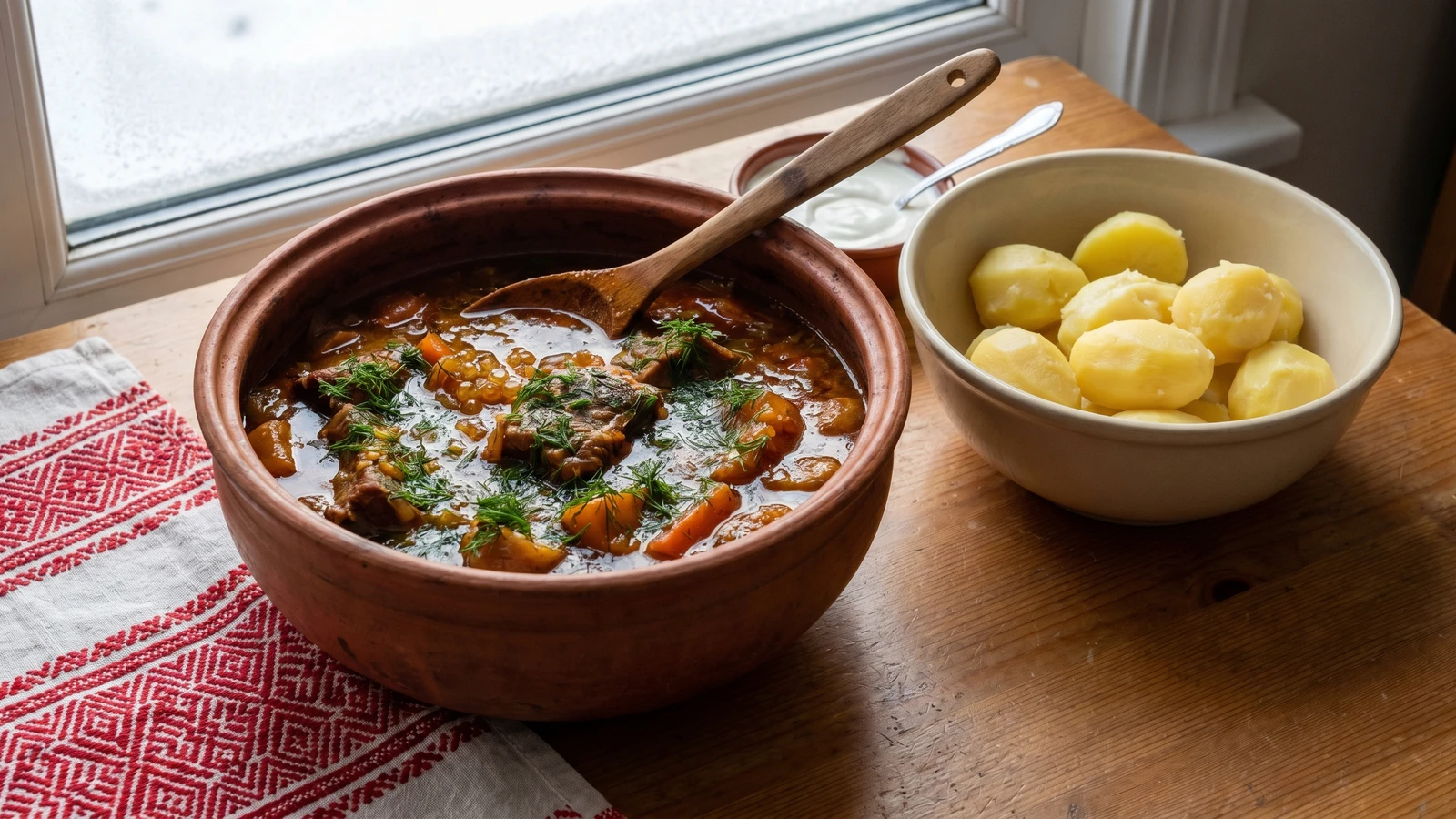
The lid is the recipe: pork, onion, carrot, and a little liquid shut inside clay until the meat gives in and the whole room smells like Sunday.
The old pots make a different silence. You seal the pork inside, tuck onion and carrot around it, press on the lid, and then there is nothing to poke, nothing to stir, nothing clever to perform. The pot does the work. It traps the meat's own juices until they turn dark and glossy, and when you finally open it the smell comes out first, rich with bay, black pepper, sweet onion, and patience.
Dushenyna comes from dushyty, to stew or smother, which sounds severe until you taste it. This is celebration food from a home kitchen, not because it is fancy, but because someone planned ahead and gave the meat time. My Aunt Nadia wrote only, "put it in the clay and leave it until it sounds right," which is both useless and exactly correct. Listen near the end: the liquid stops splashing and starts murmuring thickly against the sides.
The one thing that decides the dish is the seal. Clay holds a gentle, even heat, and a tight lid keeps the pork from roasting dry. If you haven't got a clay pot, use a heavy casserole with a sheet of parchment under the lid. A bit more modern, yes. Still a generous pot for the table, enough for eight guests or one hungry Ukrainian.
Dushenyna belongs to the older Ukrainian family of pich dishes, food cooked slowly in the retained heat of a masonry oven after bread came out. Nineteenth-century household writing records versions made with pork, beef, or poultry, often with onions, roots, pepper, bay, and sometimes a little kvas or sour cream depending on the region and the purse. The clay pot mattered because it turned tough cuts and festive fat into one sealed meal, long before ovens had thermostats or anyone trusted a timer more than their nose.
Quantity
1.8 kg
cut into large 5cm chunks
Quantity
2 teaspoons, plus more to taste
Quantity
1 teaspoon
Quantity
3 tablespoons
Quantity
3 large
sliced thickly
Quantity
2 large
cut into chunky rounds
Quantity
1 small
cut into chunks
Quantity
4 cloves
smashed
Quantity
2
Quantity
1 teaspoon
Quantity
1 teaspoon
Quantity
150 ml
Quantity
1 tablespoon
for a thicker sauce
Quantity
2 tablespoons
to finish
Quantity
small bunch
chopped, to serve
| Ingredient | Quantity |
|---|---|
| pork shoulder or neckcut into large 5cm chunks | 1.8 kg |
| sea salt | 2 teaspoons, plus more to taste |
| freshly ground black pepper | 1 teaspoon |
| unrefined sunflower oil or pork fat | 3 tablespoons |
| onionssliced thickly | 3 large |
| carrotscut into chunky rounds | 2 large |
| parsley root or parsnipcut into chunks | 1 small |
| garlicsmashed | 4 cloves |
| bay leaves | 2 |
| black peppercorns | 1 teaspoon |
| sweet paprika | 1 teaspoon |
| light meat stock, water, or dry kvas | 150 ml |
| flour (optional)for a thicker sauce | 1 tablespoon |
| smetana (sour cream) (optional)to finish | 2 tablespoons |
| dillchopped, to serve | small bunch |
Salt and pepper the pork generously, then leave it while you cut the vegetables and warm the oven to 160C. The salt should have time to cling and disappear into the surface. If the meat is fridge-cold, let it lose that chill first, or it will tighten before it relaxes.
Heat the sunflower oil or pork fat in a wide pan and brown the pork in batches, only until the edges take good color. Don't crowd the pan. You want browned corners and sticky bits underneath, not boiled grey meat.
In the same pan, add the onions, carrots, and parsley root or parsnip. Cook them until the onion bends and goes glossy, scraping up the browned pork bits as they loosen. Stir in the garlic, bay, peppercorns, and paprika for the last minute, just until the smell changes.
Spoon half the vegetables into a large clay pot or heavy casserole, add the pork, then cover with the rest of the vegetables. Pour in the stock, water, or dry kvas. It will look like too little liquid. Good. Dushenyna stews in its own juices, not in a bath.
Cover the pot tightly. If the lid is loose, lay parchment over the pot before the lid goes on, or make a quick flour-and-water paste and press it around the rim. Bake until the pork gives under a fork and the sound inside has changed from thin bubbling to a low sticky murmur, usually about three hours. Trust the fork and the smell before the clock.
Open the pot carefully and look at the juices. If you want them thicker, mash the optional flour with a few spoonfuls of hot liquid, stir it back in, and return the pot uncovered for ten to fifteen minutes until glossy. For a softer holiday finish, stir in smetana off the heat so it warms through without splitting.
Let the pot rest for at least fifteen minutes before serving. The meat will settle, the fat will bead at the edges, and the sauce will cling instead of running away. Scatter with dill and bring the whole pot to the table with boiled potatoes, buckwheat, or dark bread for dragging through the juices.
1 serving (about 260g)
Culinary guides, cultural storytelling, and the editorial depth that makes cooking meaningful.
Discover Culinary ExplorerChef Lesia
A whole pork neck takes garlic into little knife pockets, roasts until the crust goes dark and fragrant, then rests overnight so every cold slice tastes better than shop ham.
Chef Lesia
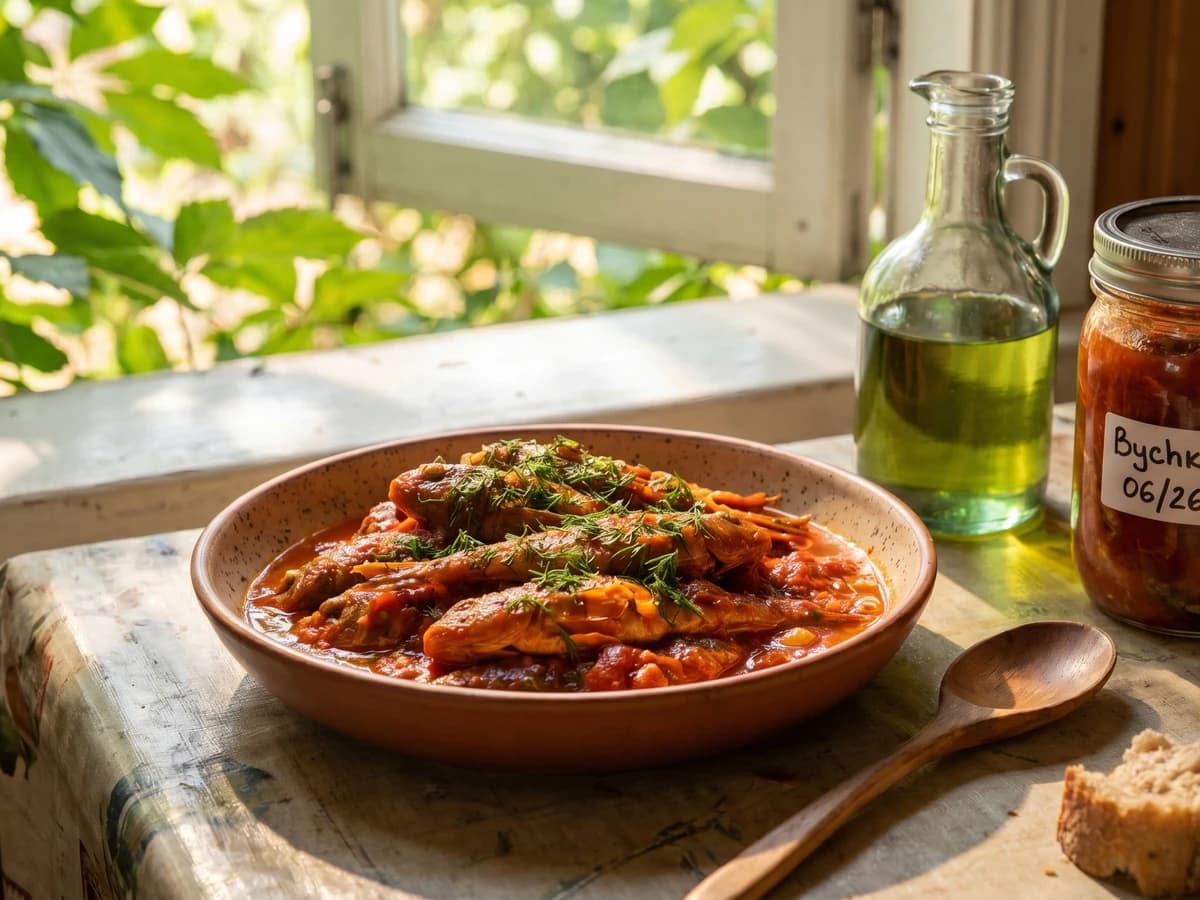
Small Azov gobies go into tomato bright as market cloth and come out soft enough that the bones give up. This is Mariupol food: cheap, red, generous, and better tomorrow.

Chef Lesia
The first sound is the meat against the board: flat, sharp, changing as the fibres loosen. Fry the cutlets fast, then let onion gravy do the soft finishing.

Chef Lesia
A heap of tiny silver fish becomes supper by the oldest Odesa trick: clean them, press them together, fry until the edges crackle, and let lemon and dill do the talking.