
Chef Lupita
Arroz a la Oaxaqueña
Oaxaca's red rice, stained with tomato and fried in lard, steamed with carrots, ejotes, black beans, and epazote. The side that anchors a Oaxacan family meal and earns its place beside the main.
A cooking platform built around craft, culture, and the stories behind what we eat.
Created by
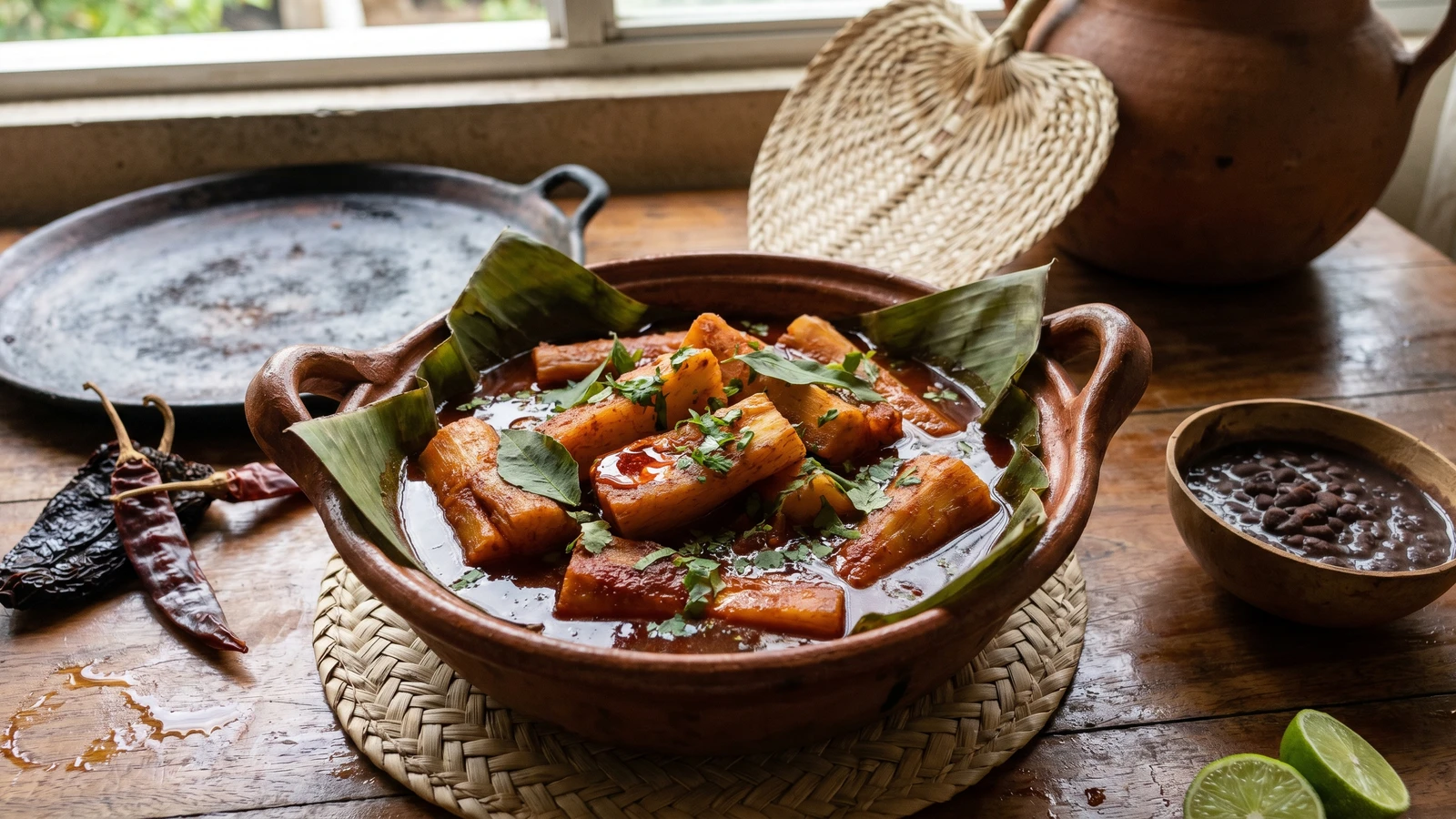
Veracruz's Los Tuxtlas yuca, boiled until tender and finished in a brothy chilpachole of chile ancho, jitomate, epazote, and lard from the Afromestiza Sotavento table.
Veracruz, south of the port and into Los Tuxtlas, is where this dish belongs. The land turns tropical there: volcanic soil, humid air, plantain, malanga, yuca, chile, epazote. This is not the potato kitchen of the highlands. This is Sotavento, where the African line, the Indigenous line, and the Gulf coast all sit in the same cazuela.
The yuca is boiled first because it has to surrender on its own terms. Then the chile broth is built with chile ancho, jitomate, garlic, white onion, and epazote. You fry that blended base in manteca de cerdo before the broth goes in. Do not skip it. Raw chile puree tastes thin. Fried chile puree tastes like Veracruz knows what it is doing.
I learned a version like this from a señora near Catemaco who served it in a clay cazuela, with black beans on the side and a woven palm fan hanging over the stove. She told me, "la yuca no perdona prisa," cassava does not forgive hurry. She was right. Cook it until the center is creamy, remove the woody vein, then let it drink the chilpachole. Cada estado, su propia cocina.
Chilpachole is a Veracruz broth tradition most famously tied to jaiba, crab, but inland and home kitchens also use the same chile, jitomate, and epazote base for vegetables and tropical roots. The word is commonly linked to Nahuatl roots around chile and stew, and the dish reflects the Gulf coast habit of thick, aromatic broths rather than dry sauces. In Los Tuxtlas and the Sotavento, yuca and plantain carry the Afromestiza vocabulary of the region, distinct from the Huasteca north and from the central Veracruz highlands.
Quantity
2 pounds
peeled, split lengthwise, woody core removed, cut into 2-inch pieces
Quantity
2 teaspoons, divided, plus more to taste
Quantity
3
stemmed and seeded
Quantity
2
stemmed and seeded
Quantity
3 medium
roasted on a comal
Quantity
1/2 medium
roasted on a comal
Quantity
3
unpeeled and roasted on a comal, then peeled
Quantity
1/2 teaspoon
Quantity
2
Quantity
1 tablespoon
for a lightly thicker broth
Quantity
2 tablespoons
Quantity
4 cups
Quantity
2 sprigs
Quantity
1 small
Quantity
1 tablespoon, plus lime halves for serving
Quantity
for serving
Quantity
for serving
| Ingredient | Quantity |
|---|---|
| fresh yucapeeled, split lengthwise, woody core removed, cut into 2-inch pieces | 2 pounds |
| kosher salt | 2 teaspoons, divided, plus more to taste |
| dried chile anchostemmed and seeded | 3 |
| dried chile guajillostemmed and seeded | 2 |
| ripe jitomatesroasted on a comal | 3 medium |
| white onionroasted on a comal | 1/2 medium |
| garlic clovesunpeeled and roasted on a comal, then peeled | 3 |
| black peppercorns | 1/2 teaspoon |
| whole cloves | 2 |
| masa harina (optional)for a lightly thicker broth | 1 tablespoon |
| manteca de cerdo | 2 tablespoons |
| light vegetable broth or yuca cooking water | 4 cups |
| fresh epazote | 2 sprigs |
| hoja santa leaf (optional) | 1 small |
| fresh lime juice | 1 tablespoon, plus lime halves for serving |
| chopped fresh cilantro (optional) | for serving |
| warm corn tortillas | for serving |
Put the peeled yuca in a heavy pot and cover with cold water by two inches. Add 1 teaspoon salt. Bring to a steady simmer and cook 20 to 30 minutes, until a knife slides into the center without fighting you. Drain, saving 4 cups of the cooking water if you are not using broth. If any woody vein remains, pull it out now. Yuca with the vein left in is careless cooking.
Heat a dry comal over medium. Toast the chile ancho and chile guajillo separately, about 20 to 30 seconds per side, just until they darken slightly and smell deep, sweet, and earthy. Do not blacken them. Burned chile turns bitter and no amount of jitomate will hide it.
Place the toasted chiles in a bowl and cover with hot water for 15 minutes. While they soften, roast the jitomates, onion, and unpeeled garlic on the comal, turning until the skins blister and the onion edges char in spots. Peel the garlic. The roasted vegetables give the chilpachole its roundness.
Drain the chiles and put them in a blender with the roasted jitomates, roasted onion, peeled garlic, black peppercorns, cloves, masa harina if using, and 1 cup of broth or yuca cooking water. Blend until completely smooth. Strain through a fine-mesh sieve into a bowl, pressing hard on the solids. Chilpachole should be brothy, not full of chile skins.
Melt the manteca de cerdo in a wide clay cazuela or heavy pot over medium heat. Pour in the strained chile base. It will sputter, so stir with control. Cook 6 to 8 minutes, scraping the bottom, until the color deepens and small beads of red fat appear at the edges. La manteca es el sabor. Vegetable oil will cook it, but it will not taste like the Veracruz pot I was taught.
Add the remaining 3 cups broth or yuca cooking water, the epazote, hoja santa if using, and the remaining 1 teaspoon salt. Simmer 10 minutes so the herbs perfume the broth. Taste. The broth should be savory, lightly smoky from the chile, and herbal from the epazote. If it tastes flat, it needs salt, not another chile.
Add the boiled yuca to the cazuela and simmer 10 to 12 minutes, turning the pieces gently so they drink the chilpachole without breaking apart. The edges should look stained red and the center should stay creamy. Stir in the lime juice at the end. Remove the epazote stems and hoja santa before serving.
Serve the yuca family-style in the same cazuela, with plenty of chile broth spooned over it. Add cilantro only if you use it at home, and put lime halves on the table. Warm corn tortillas belong beside it. Black beans do too. Pinto beans do not rule this state. Pregúntale a las señoras del mercado.
1 serving (about 390g)
Culinary guides, cultural storytelling, and the editorial depth that makes cooking meaningful.
Discover Culinary ExplorerChef Lupita
Oaxaca's red rice, stained with tomato and fried in lard, steamed with carrots, ejotes, black beans, and epazote. The side that anchors a Oaxacan family meal and earns its place beside the main.
Chef Lupita
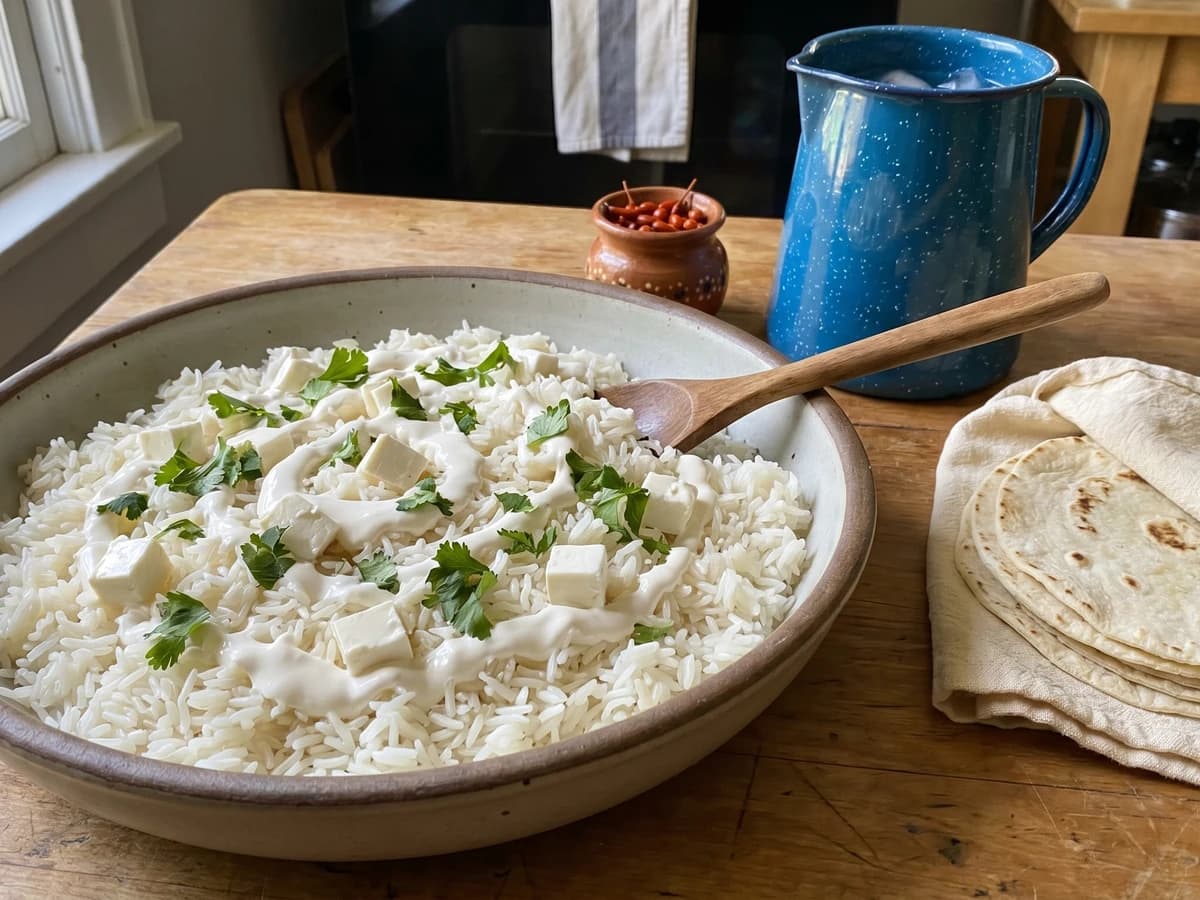
Sinaloa's home-cook white rice topped with cold cubes of cream cheese that soften into the warm grain, finished with crema and a sprinkle of chiltepin at the table. The trick that makes a side dish feel like a small luxury.
Chef Lupita
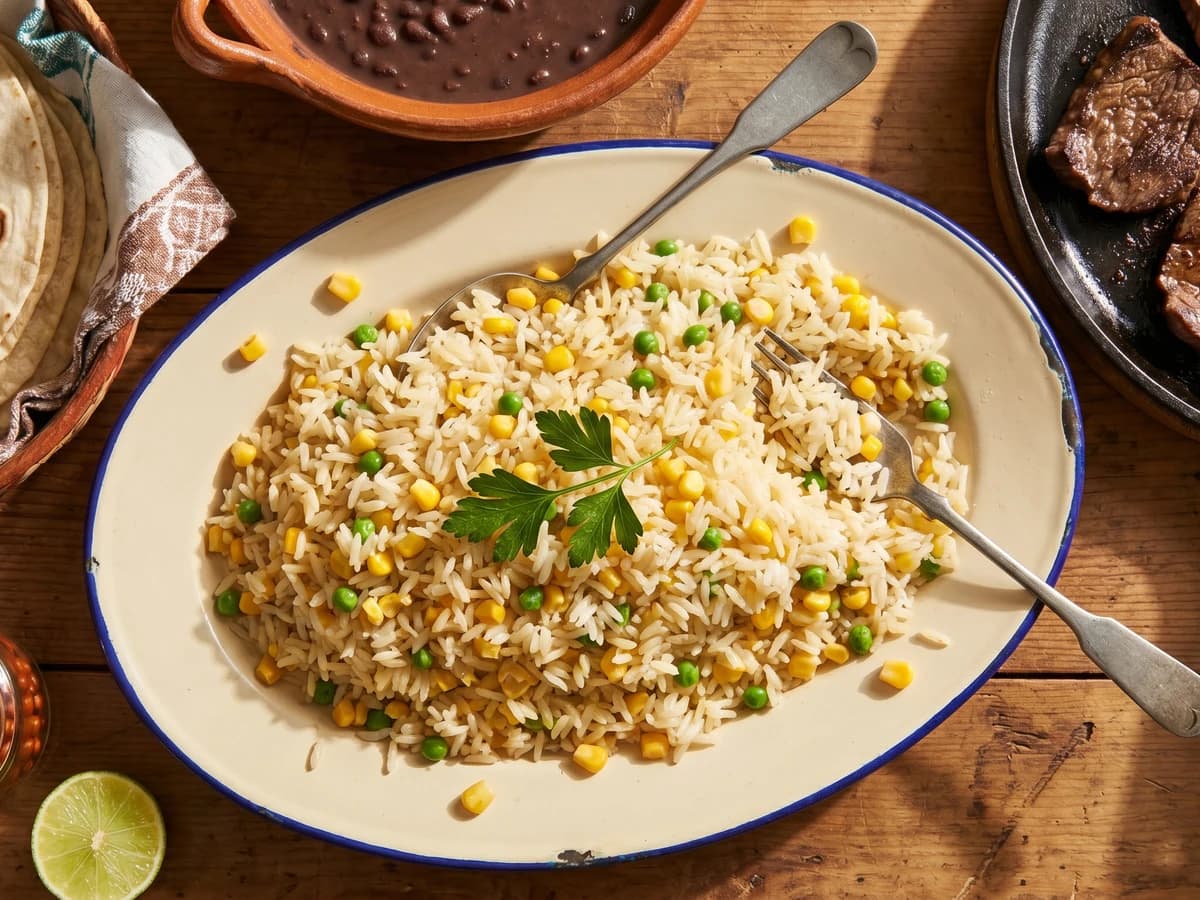
Sonora's white rice, toasted in butter and steamed with sweet corn and tender peas. The clean, quiet partner to a plate of carne asada, not the red rice of central Mexico.

Chef Lupita
Yucatán's white rice with sweet corn kernels, toasted in lard with garlic and onion. The quiet base that holds up against the peninsula's bold achiote-stained stews.