
Chef Lupita
Arroz a la Oaxaqueña
Oaxaca's red rice, stained with tomato and fried in lard, steamed with carrots, ejotes, black beans, and epazote. The side that anchors a Oaxacan family meal and earns its place beside the main.
A cooking platform built around craft, culture, and the stories behind what we eat.

Created by
Veracruz's Totonacapan dry-season guiso of cleaned flor de izote, tomato, chile jalapeño, epazote, and pork lard, bittersweet enough to remind you this plant came from the monte before the market.
Veracruz, the Totonacapan around Papantla, is where this guiso lives. Not the port, not the highlands, not the postcard Veracruz of red snapper and olives. This is the dry-season kitchen of the monte, where flor de izote comes to the market in tight ivory clusters and some cooks call the tender buds palmitos.
The flower is bitter if you are careless and beautiful if you respect it. You pull each blossom apart, remove the green center, blanch it in salted water, then stew it in manteca de cerdo with jitomate, chile jalapeño, white onion, garlic, and epazote. The bitterness should stay, but cleaned up. A little edge is the point.
I learned this in Papantla from women who treated the flower like work, not garnish. Their hands moved fast because they had cleaned thousands of them before breakfast, and they still checked every blossom. No me vengas con atajos. If you don't clean and blanch it, the pot will punish you.
Serve it in a clay cazuela with frijoles negros and corn tortillas. Flour tortillas are a northern tradition. Veracruz's lowland table knows yuca, malanga, plátano, black beans, and flowers from the monte. Cada estado, su propia cocina. Saber cocinar es saber vivir.
Totonacapan, the northern Veracruz region centered on Papantla and El Tajín, was a Totonac cultural center long before Mexica pressure and Spanish rule; its cooking still keeps seasonal plant foods from the monte, including flor de izote, palmito, calabaza, and quelites. Flor de izote guisada shows the colonial layering of the Veracruz table: native chile, tomato, and epazote cooked with pork lard, onion, and garlic introduced after the 16th century. In Papantla, palmitos can refer to the tender izote flower cluster, not heart of palm, a local vocabulary often missed when Veracruz is reduced to seafood and vanilla.
Quantity
2 pounds
flowers pulled from stalks, green centers removed, rinsed, about 8 cups cleaned blossoms and tender buds
Quantity
4 quarts
for blanching
Quantity
1 tablespoon, plus more to taste
for blanching and seasoning
Quantity
4 ripe, about 1 1/4 pounds
charred and chopped with their juices
Quantity
2
charred, stemmed, and sliced into rajas
Quantity
3 tablespoons
Quantity
1 medium
thinly sliced
Quantity
3
finely chopped
Quantity
1/2 cup
for the guiso
Quantity
3 sprigs
leaves and tender stems
Quantity
for serving
warmed
Quantity
for serving
| Ingredient | Quantity |
|---|---|
| fresh flor de izote clusters (yucca flower)flowers pulled from stalks, green centers removed, rinsed, about 8 cups cleaned blossoms and tender buds | 2 pounds |
| waterfor blanching | 4 quarts |
| kosher saltfor blanching and seasoning | 1 tablespoon, plus more to taste |
| jitomates guaje (Roma tomatoes)charred and chopped with their juices | 4 ripe, about 1 1/4 pounds |
| fresh chiles jalapeñoscharred, stemmed, and sliced into rajas | 2 |
| manteca de cerdo (pork lard) | 3 tablespoons |
| white onionthinly sliced | 1 medium |
| garlic clovesfinely chopped | 3 |
| waterfor the guiso | 1/2 cup |
| fresh epazoteleaves and tender stems | 3 sprigs |
| hand-pressed corn tortillas (optional)warmed | for serving |
| frijoles negros refritos in manteca de cerdo (optional) | for serving |
Lay the flor de izote clusters on the table and pull off the white blossoms and tight pale-green buds. Discard the thick central stalk. Split any open blossom with your fingers and pinch out the hard green pistil and the heavy stamen cluster. Keep the tender petals and buds. Rinse in a bowl of cool water, lifting the flowers out so grit stays at the bottom. This cleaning is the work of the dish.
Bring 4 quarts of water and 1 tablespoon kosher salt to a boil in a large pot. Add the cleaned flowers, reduce to a steady simmer, and cook 8 to 10 minutes, until the petals bend instead of snapping. Drain and rinse under cool water. Press gently with your hands to remove excess water. Discard the blanching water. It did its job and took the harsh bitterness with it.
Heat a dry comal over medium-high heat. Roast the jitomates and chiles jalapeños, turning them with tongs, until the tomato skins blister and the chiles show dark spots. The tomatoes should soften and give up their juice. Chop the tomatoes, saving every drop of juice. Stem the chiles and slice them into rajas. Leave some char. That is flavor, not decoration.
Set a wide clay cazuela or heavy skillet over medium heat and melt the manteca de cerdo. Add the sliced white onion and cook 5 to 6 minutes, stirring often, until it softens and turns gold at the edges. Add the garlic and cook 30 seconds. If the lard looks generous, good. The flower needs fat to carry its bitterness into something round. La manteca es el sabor.
Add the chopped charred jitomates, their juices, the jalapeño rajas, and a good pinch of salt. Cook 8 to 10 minutes, stirring with a wooden spoon, until the tomato loses its raw smell and thickens into a loose sauce. Watch the edges of the cazuela: small orange beads of fat should appear. If the sauce is watery, keep cooking. A guiso has to fry before it stews.
Add the blanched flor de izote and 1/2 cup water. Fold gently so the petals are coated in the tomato and chile. Tuck in the epazote. Cover partially and cook 12 to 15 minutes, stirring once or twice, until the flowers are tender but still have shape and the sauce clings to them. Taste for salt. The bitterness should still be there, cleaned up and disciplined.
Turn off the heat and let the guiso rest 10 minutes in the cazuela. Remove any woody epazote stems. Serve warm from the clay with hand-pressed corn tortillas and frijoles negros refritos in manteca. No crema. No cheese. The flower is the point. Recetas probadas y garantizadas.
1 serving (about 260g)
Culinary guides, cultural storytelling, and the editorial depth that makes cooking meaningful.
Discover Culinary ExplorerChef Lupita
Oaxaca's red rice, stained with tomato and fried in lard, steamed with carrots, ejotes, black beans, and epazote. The side that anchors a Oaxacan family meal and earns its place beside the main.
Chef Lupita
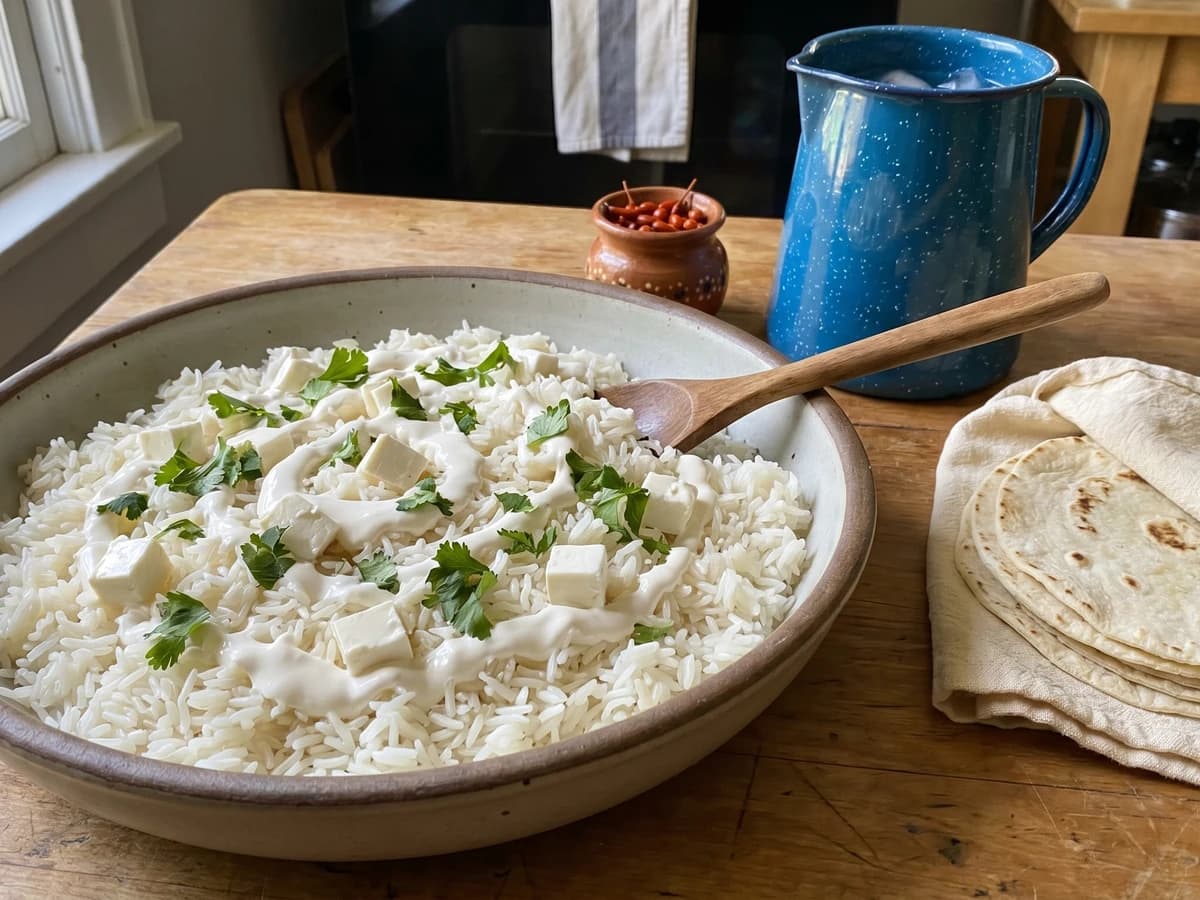
Sinaloa's home-cook white rice topped with cold cubes of cream cheese that soften into the warm grain, finished with crema and a sprinkle of chiltepin at the table. The trick that makes a side dish feel like a small luxury.
Chef Lupita
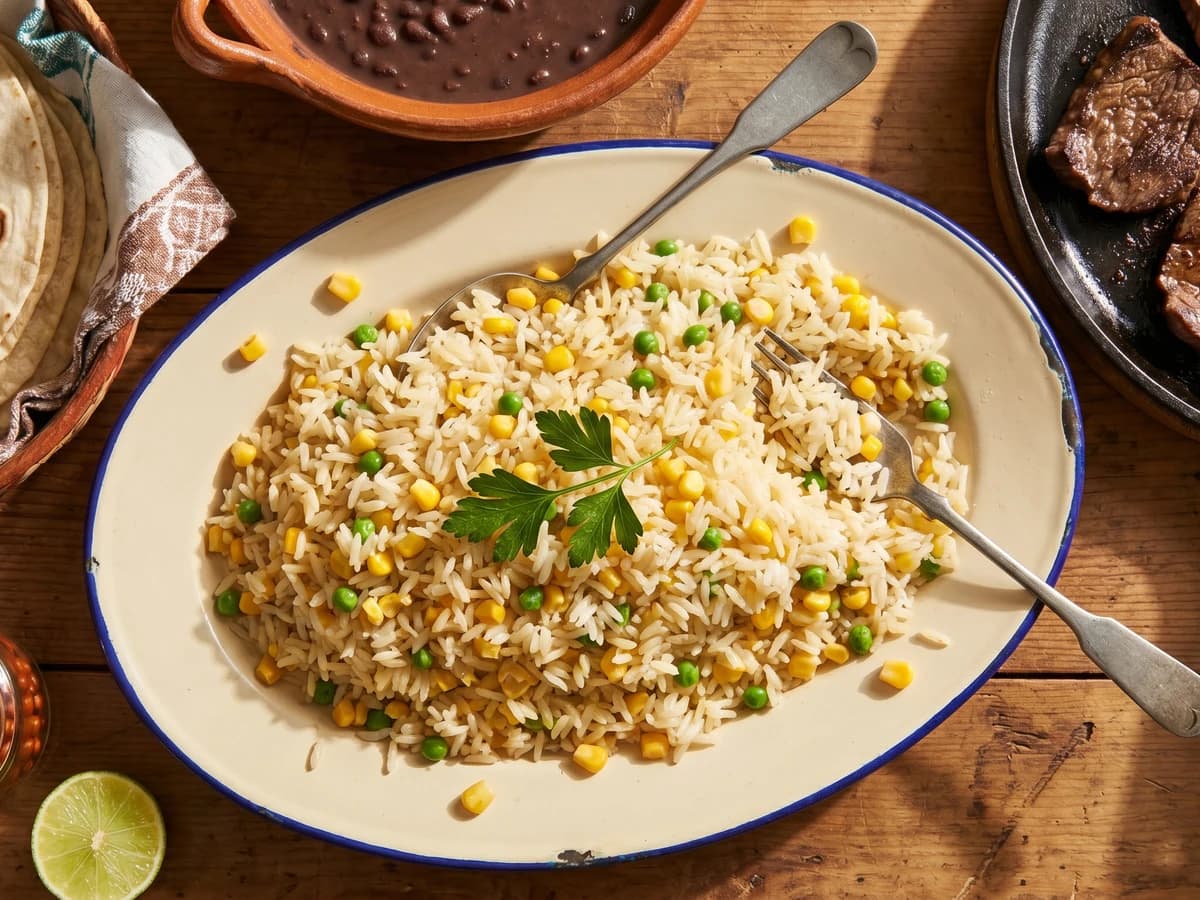
Sonora's white rice, toasted in butter and steamed with sweet corn and tender peas. The clean, quiet partner to a plate of carne asada, not the red rice of central Mexico.

Chef Lupita
Yucatán's white rice with sweet corn kernels, toasted in lard with garlic and onion. The quiet base that holds up against the peninsula's bold achiote-stained stews.