Culinary Explorer

A cooking platform built around craft, culture, and the stories behind what we eat.
Discover Culinary Explorer
Yaiechnia (яєчня, fried eggs with salo)

Yaiechnia (яєчня, fried eggs with salo)

Created by

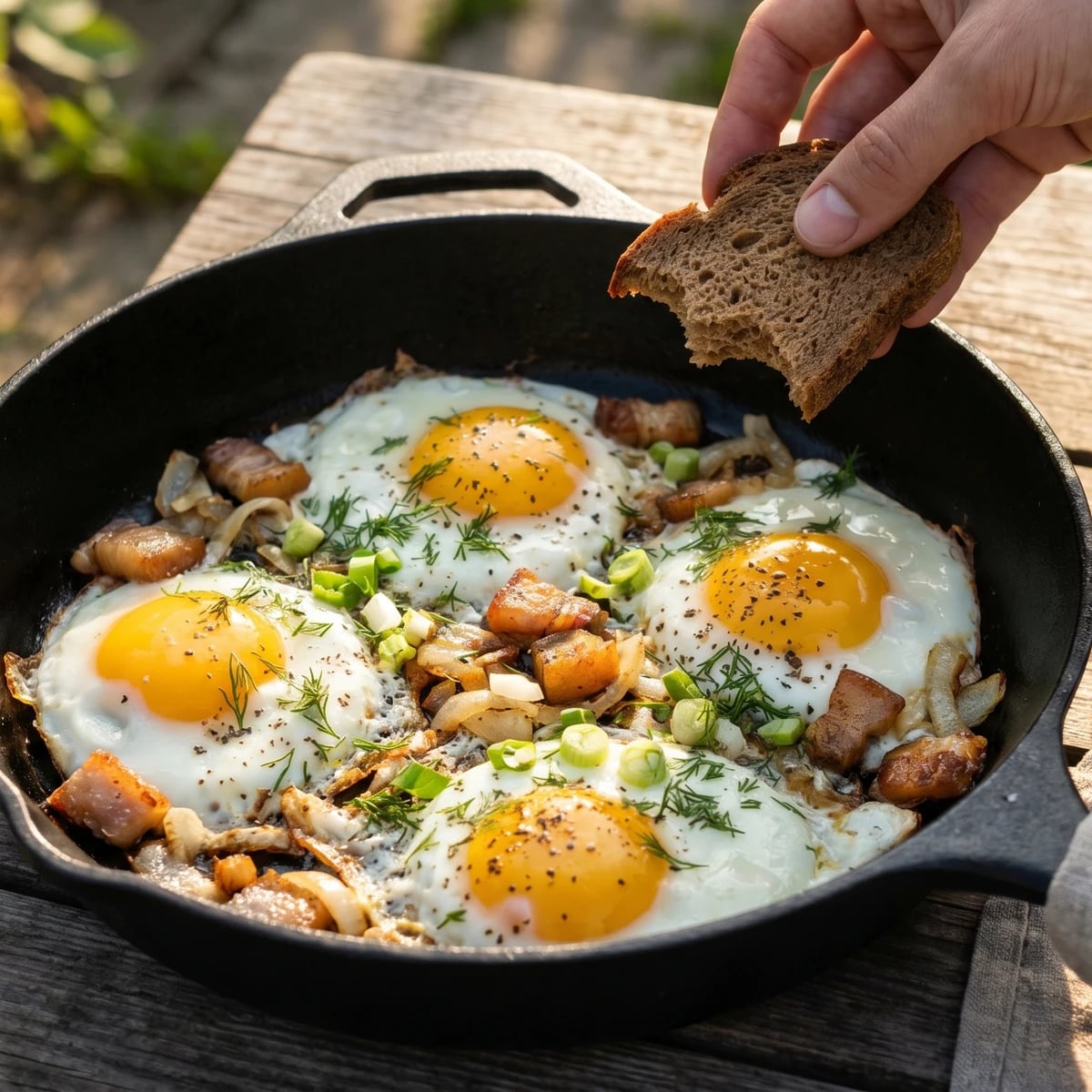
The sound comes first: salo ticking and spitting in the pan, onion turning sweet in its fat, then eggs sliding in so the whites set hard at the edges and the yolks stay loose.

Breakfast & Brunch
Ukrainian
Comfort Food
Quick Meal
Weeknight
10 min
Active Time
12 min cook22 min total
Yield2 generous servings

The sound comes first. Salo hits the pan and begins its little argument with the heat, ticking, spitting, giving up clear pork fat while the edges turn amber and crisp. Then the onion goes in and the kitchen changes from cold morning to breakfast. You know before you see it.

Yaiechnia is not a delicate egg dish. It is village food in the best sense: fast, salty, generous, cooked in one pan and carried straight to the table with bread beside it. The yolks stay loose because the bread has a job to do. My Aunt Nadia once wrote only, "let it sing, then add the eggs," which is exactly useless until you've heard salo render properly. Then it makes perfect sense.

The one why is this: start with the salo in a cool pan, not a hot one. If you throw it into fierce heat it scorches before the fat has time to melt; start gently and it gives you the cooking fat, the crisp bits, and the whole character of the dish. After that, don't fuss. Crack the eggs, salt carefully, scatter dill, and feed someone before the yolks tighten.

Salo, dry-salted pork back fat, has been one of Ukraine's practical preservation foods for centuries, especially in village households where winter pig slaughter supplied fat for months of cooking. Yaiechnia belongs to that everyday kitchen rather than the festive table: a quick breakfast or late supper across central and southern Ukraine, often with onion, sometimes with summer tomatoes, always with bread to catch the fat and yolk.

The technique, the tradition, and the story behind every dish.

Discover Culinary Explorer

Ingredients

salo

Quantity

120g

rind removed if tough, cut into small lardons or thin matchsticks

onion

Quantity

1 medium

thinly sliced

eggs

Quantity

4 large

unrefined sunflower oil (optional)

Quantity

1 tablespoon

fresh dill

Quantity

small handful

chopped

spring onions

Quantity

2

finely sliced

black pepper

Quantity

to taste

sea salt (optional)

Quantity

only if needed

rye bread

Quantity

to serve

fermented cucumber or fermented tomato (optional)

Quantity

to serve

Equipment Needed

  • A heavy 24 to 26 cm frying pan, cast iron or steel
  • A thin spatula
  • A board for slicing salo

Instructions

  1. 1

    Render the salo

    Put the salo into a cold heavy frying pan and set it over medium-low heat. Let it warm slowly until the fat runs clear, the pieces shrink a little, and the edges turn amber. Listen for the change: first a dull sizzle, then a sharper tick as the crisp bits begin to form.

    Starting cold matters. Hot-pan salo scorches before it gives you enough fat, and this dish is built on that fat.
  2. 2

    Soften the onion

    Add the onion to the rendered fat and stir it through the salo. If your salo is dry and the pan looks mean, add the spoon of sunflower oil. Cook until the onion has gone soft, glossy, and sweet-smelling, with a little gold at the edges but no hard brown bitterness.

  3. 3

    Crack in eggs

    Make four small spaces in the onion and crack in the eggs. Keep the heat steady, not fierce. The whites should set from the bottom and frill at the edges while the yolks stay bright and loose. Spoon a little hot fat over any stubborn clear patches of white if you like.

    Salt only after tasting the salo. Some salo is gentle, some has enough salt in it to season the whole pan.
  4. 4

    Finish the pan

    Grind over black pepper, add a careful pinch of salt only if the eggs need it, then scatter with dill and spring onion. Take the pan off the heat while the yolks still tremble when you shake it. They will keep cooking in the hot fat.

  5. 5

    Serve with bread

    Bring the whole pan to the table with rye bread and something sour: a fermented cucumber, a fermented tomato, even a spoon of brine on the side if breakfast needs waking up. Break the yolks with bread, not a fork. That's the whole pleasure.

Chef Tips

  • Buy proper Ukrainian or Polish-style salo if you can: dry-cured back fat, firm and white, not smoked bacon. Bacon makes a good breakfast, but it makes a different dish.
  • If your salo has garlic, paprika, or black pepper on it, keep those seasonings and reduce the extra pepper. The pan already knows what it is doing.
  • In August, add a chopped ripe tomato after the onion softens and cook it until the juices thicken around the salo. In January, serve fermented tomatoes beside the eggs instead. That's not a substitute, that's the actual tradition.
  • The forgiving part is the onion. Pale and sweet is fine, a little golden is fine. The yolks are the part to watch, because bread deserves something to mop.

Advance Preparation

  • Slice the salo and onion the night before if mornings are not your finest hour.
  • This is best eaten straight from the pan. Leftovers can be folded into fried potatoes later, but the loose-yolk moment belongs to now.

Frequently Asked Questions

Nutrition Information

1 serving (about 280g)

Calories
755 calories
Total Fat
64 g
Saturated Fat
22 g
Trans Fat
0 g
Unsaturated Fat
41 g
Cholesterol
430 mg
Sodium
1500 mg
Total Carbohydrates
25 g
Dietary Fiber
4 g
Sugars
5 g
Protein
19 g

Note: Chef personas and recipes are created with AI assistance. Cook with care: follow safe food-handling practices, check doneness with a thermometer when needed, and adapt for allergies and your kitchen.

Where cooking meets culture.

Culinary guides, cultural storytelling, and the editorial depth that makes cooking meaningful.

Discover Culinary Explorer

More from The Ukrainian Breakfast Table

Browse the full collection