
Chef Lesia
Banosh (банош, Carpathian cornmeal porridge)
Cornmeal and sour cream go over the flame pale and separate, then suddenly turn glossy, yellow, and almost stubborn. Stir one way only, the shepherds say, and listen.
A cooking platform built around craft, culture, and the stories behind what we eat.
Created by
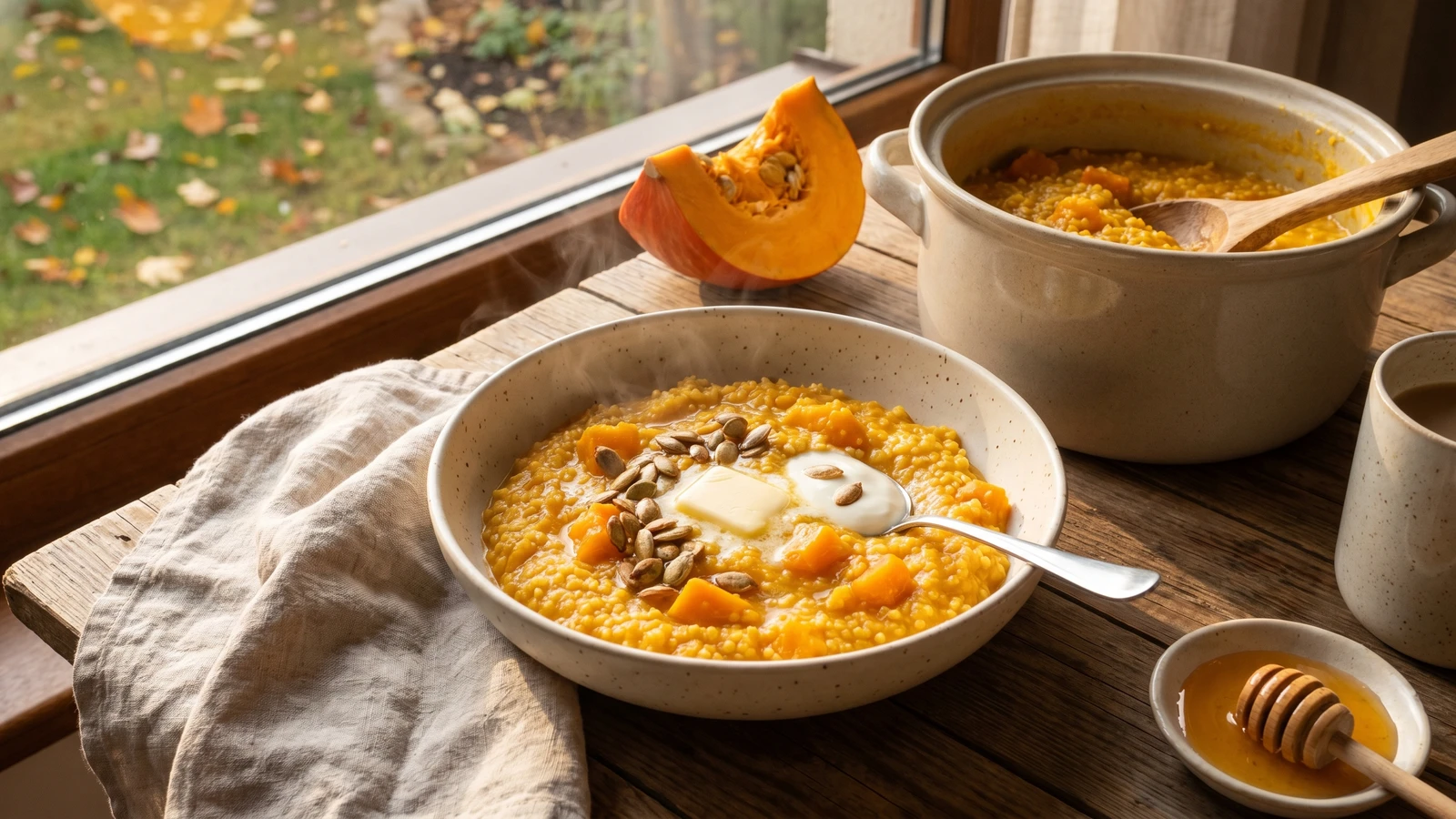
Pumpkin goes into the pot pale and stubborn, then gives itself up slowly to milk and millet until the whole breakfast turns deep orange, sweet, and spoon-thick.
The color is the first thing. Not beige breakfast, not polite porridge, but deep orange from pumpkin cooked down until it stops being cubes and becomes the body of the dish. Add millet and milk, and the pot turns soft, sweet, and sunny enough to argue with November.
This is southern-steppe food in the most practical sense: the garden's heaviest fruit stretched with pshono, millet, into enough breakfast for a family. My Aunt Nadia's letter only said, "cook until it sounds right," which was comedy the first time I tried it, because porridge does have a sound. At the start it splutters thinly; later it sighs and folds over itself, slow and thick, and the spoon leaves a path.
The one thing that decides the dish is the millet. Rinse it well, then toast it briefly in butter before the milk goes in, because millet can taste dusty if you treat it like an afterthought. Toast it and it turns nutty, holds its shape, and makes the pumpkin taste more like itself. The spoon must stand up straight. For breakfast, for supper, for one cold person at the table who needs feeding properly.
Harbuz, pumpkin, became part of Ukrainian garden cooking after New World squashes spread through Europe, while pshono, millet, was already an old grain of the steppe and forest-steppe. Harbuzova kasha is especially at home in central and southern Ukraine, where autumn pumpkins store well through winter and turn milk porridge into a cheap, generous meal. The dish also carries a sly cultural echo: in Ukrainian courtship folklore, giving a man a pumpkin meant refusal, but in the kitchen the same pumpkin fed everyone.
Quantity
1.2 kg
peeled, seeded, and cut into 3 cm chunks
Quantity
200g
Quantity
30g, plus more to serve
Quantity
500ml
Quantity
500ml
Quantity
1/2 teaspoon
Quantity
2 tablespoons, plus more to taste
Quantity
1 teaspoon vanilla sugar or 1/2 teaspoon extract
Quantity
to serve
Quantity
to serve
| Ingredient | Quantity |
|---|---|
| pumpkin or winter squashpeeled, seeded, and cut into 3 cm chunks | 1.2 kg |
| millet | 200g |
| butter | 30g, plus more to serve |
| whole milk | 500ml |
| water | 500ml |
| sea salt | 1/2 teaspoon |
| honey or sugar | 2 tablespoons, plus more to taste |
| vanilla sugar or vanilla extract (optional) | 1 teaspoon vanilla sugar or 1/2 teaspoon extract |
| smetana or thick yogurt (optional) | to serve |
| toasted pumpkin seeds (optional) | to serve |
Put the millet in a sieve and rinse under cold water until the water runs clearer, rubbing it lightly between your fingers. Pour boiling water over it once, then drain well. This takes away the dusty bitterness millet can carry, and the porridge will taste clean, not flat.
Put the pumpkin chunks in a wide heavy pot with the water and salt. Cover and simmer gently until the pumpkin collapses when pressed with a spoon. Mash it roughly in the pot, leaving a few soft pieces if you like texture. You want a thick orange base, not a smooth baby puree.
Melt the butter in a small pan and add the drained millet. Stir over a medium flame until it smells warm and nutty, and the grains look a little brighter. Don't brown it hard. You're waking it up so it can hold its own against the sweet pumpkin.
Stir the toasted millet into the pumpkin, then add the milk. Keep the heat low and stir often, scraping the bottom where milk likes to catch. At first it will sound loose and splashy; later it will thicken, sigh, and fold over the spoon. Cook until the millet is tender and the porridge stands in soft mounds.
Stir in the honey or sugar and the vanilla if using, then taste. Pumpkin sweetness changes from fruit to fruit, so your spoon decides. Pull the pot off the heat, cover it, and let it sit until the grains finish swelling and the smell changes from raw milk to warm butter and squash.
Spoon the kasha into deep bowls and finish with a small knob of butter. Add smetana for tang, or toasted pumpkin seeds if you want a bit of bite. Serve it warm, thick, and orange, enough for eight guests or one hungry Ukrainian.
1 serving (about 280g)
Culinary guides, cultural storytelling, and the editorial depth that makes cooking meaningful.
Discover Culinary ExplorerChef Lesia
Cornmeal and sour cream go over the flame pale and separate, then suddenly turn glossy, yellow, and almost stubborn. Stir one way only, the shepherds say, and listen.

Chef Lesia
A benderyk is a crepe taught to hold its corners: soft pancake, peppery meat, egg-dipped edges fried crisp, and the same triangular confidence my hands learned at the varenyky table.

Chef Lesia
Raw potato turns sly the moment you grate it: wet, starchy, already darkening. Deruny reward speed, hot oil, and the courage to leave the edges alone until they crisp.
Chef Lesia
Buckwheat tells you when it is ready before the water goes in: the dry triangles darken, tick against the pot, and suddenly smell like nuts in a warm paper bag.