
Chef Lesia
Benderyky (бендерики, meat-stuffed crepes)
A benderyk is a crepe taught to hold its corners: soft pancake, peppery meat, egg-dipped edges fried crisp, and the same triangular confidence my hands learned at the varenyky table.
A cooking platform built around craft, culture, and the stories behind what we eat.
Created by
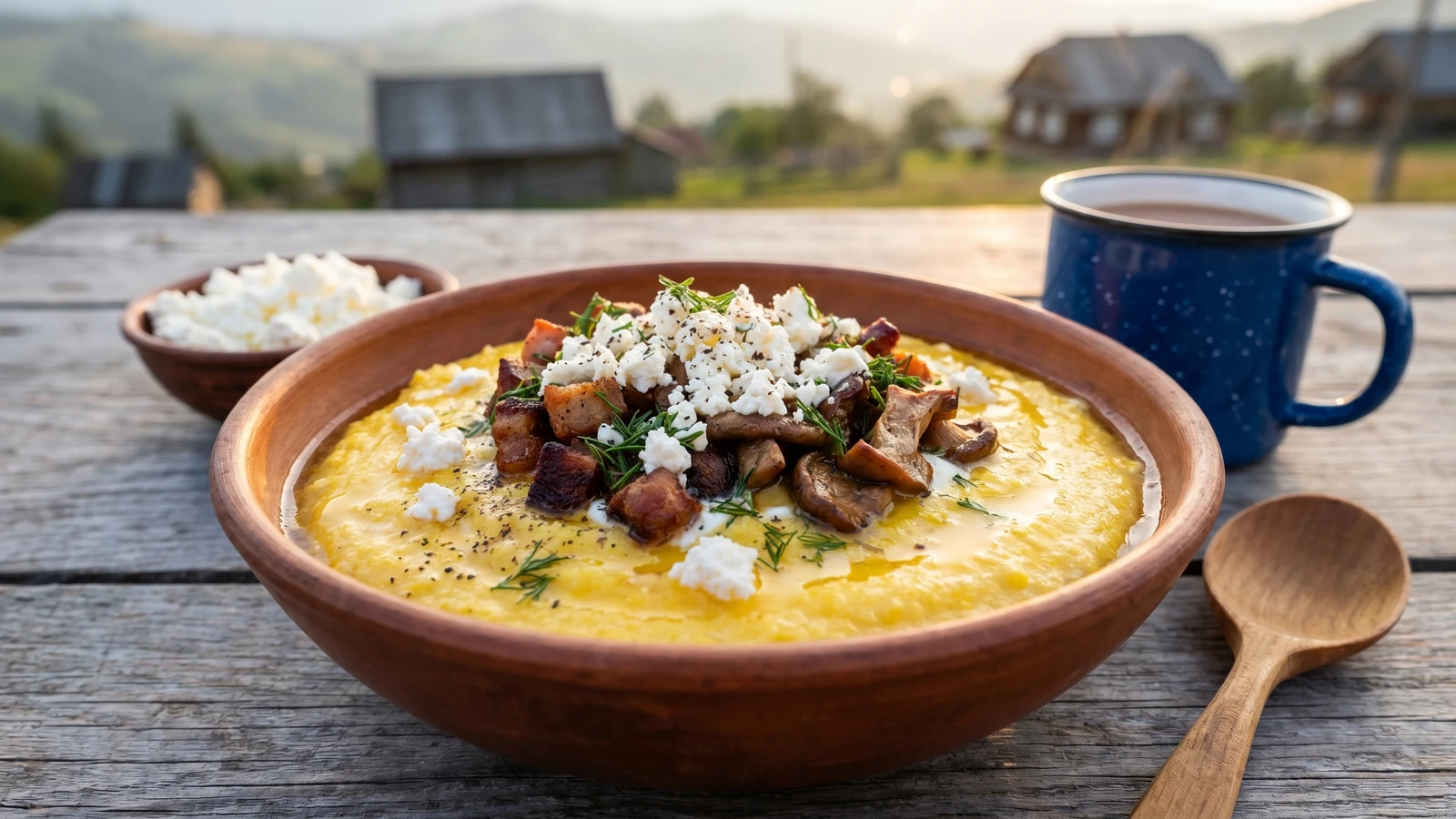
Cornmeal and sour cream go over the flame pale and separate, then suddenly turn glossy, yellow, and almost stubborn. Stir one way only, the shepherds say, and listen.
The rule is simple and a little bossy: stir one way only. Banosh begins as cornmeal sinking into sour cream, pale and grainy, then the pot changes its mind. The surface turns sunflower-yellow, the spoon starts dragging in slow circles, and the fat rises in a glossy rim around the edge. That is the moment. Stop fussing and feed people.
This is Carpathian food, Hutsul food, mountain food, not my southern steppe kitchen pretending to own it. It belongs to fire, sheep pastures, salty brynza, and a pot set low enough that the porridge thickens without catching. The one why that decides the dish is gentleness: sour cream splits if you bully it with high heat, but if you warm it slowly and rain in the cornmeal, it becomes rich instead of broken.
At the table it is generous and immediate, a deep bowl crowned with crumbled brynza and shkvarky, the crisp pork cracklings that make everyone suddenly very alert. Mushrooms are welcome, especially in autumn. Dill is welcome because dill knows how to behave. Make enough for eight guests or one hungry Ukrainian, and don't leave the pot lonely.
Banosh is strongly associated with the Hutsuls of the Ukrainian Carpathians, especially Ivano-Frankivsk, Zakarpattia, and Bukovyna, where maize became a staple after it spread through the region in the seventeenth and eighteenth centuries. The dish is tied to shepherding culture: fresh cream or smetana, cornmeal, sheep's milk brynza, and cracklings made a rich meal from mountain dairy and pantry grain. Village cooks still argue over whether true banosh must be cooked by a man over an open fire, but modern Ukrainian kitchens keep it alive in heavy pots on ordinary stoves too.
Quantity
250g
Quantity
700ml
Quantity
300ml, plus more if needed
Quantity
1 teaspoon, plus more to taste
Quantity
150g
diced small
Quantity
250g
sliced
Quantity
1 tablespoon
Quantity
200g
crumbled
Quantity
small bunch
chopped
Quantity
to taste
| Ingredient | Quantity |
|---|---|
| fine or medium yellow cornmeal | 250g |
| full-fat sour cream or smetana | 700ml |
| whole milk or water | 300ml, plus more if needed |
| fine sea salt | 1 teaspoon, plus more to taste |
| smoked pork belly or bacondiced small | 150g |
| mushroomssliced | 250g |
| unrefined sunflower oil or pork fat | 1 tablespoon |
| brynza or feta-style sheep cheesecrumbled | 200g |
| dillchopped | small bunch |
| black pepper | to taste |
Put the diced pork belly or bacon into a heavy pan over medium-low heat and let it render slowly, stirring now and then, until the fat runs clear and the pieces turn crisp at the edges. Don't rush it. You want shkvarky, cracklings with bite, not burnt little stones.
Lift the cracklings out with a slotted spoon and leave the fat in the pan. Add the mushrooms with a pinch of salt and cook until their water disappears, their edges darken, and the smell changes from damp forest floor to toasted and savoury. Set them aside with the cracklings.
In a heavy pot, combine the sour cream, milk or water, and salt. Warm it gently until it loosens and trembles at the edge, but don't let it boil hard. Sour cream needs manners. High heat makes it split before the cornmeal can do its work.
With one hand stirring steadily in one direction, rain the cornmeal into the warm dairy with the other hand. Keep the stream thin so it doesn't clump. The mixture will look loose first, then grainy, then suddenly heavier, and the spoon will begin to leave a clear path through the yellow porridge.
Lower the heat and keep stirring in that same direction until the banosh thickens, gleams, and pulls softly from the side of the pot. Listen for it: the wet splash quiets into a thick, soft thud. If it gets too stiff before the grains soften, add a splash of hot milk or water and keep going.
Taste the banosh before you add more salt; brynza will bring plenty. Spoon it into deep bowls while it is soft and shining, then crown each bowl with crumbled brynza, mushrooms, cracklings, black pepper, and dill. Serve at once, while the edges still hold that buttery gloss.
1 serving (about 280g)
Culinary guides, cultural storytelling, and the editorial depth that makes cooking meaningful.
Discover Culinary ExplorerChef Lesia
A benderyk is a crepe taught to hold its corners: soft pancake, peppery meat, egg-dipped edges fried crisp, and the same triangular confidence my hands learned at the varenyky table.

Chef Lesia
Raw potato turns sly the moment you grate it: wet, starchy, already darkening. Deruny reward speed, hot oil, and the courage to leave the edges alone until they crisp.

Chef Lesia
Pumpkin goes into the pot pale and stubborn, then gives itself up slowly to milk and millet until the whole breakfast turns deep orange, sweet, and spoon-thick.
Chef Lesia
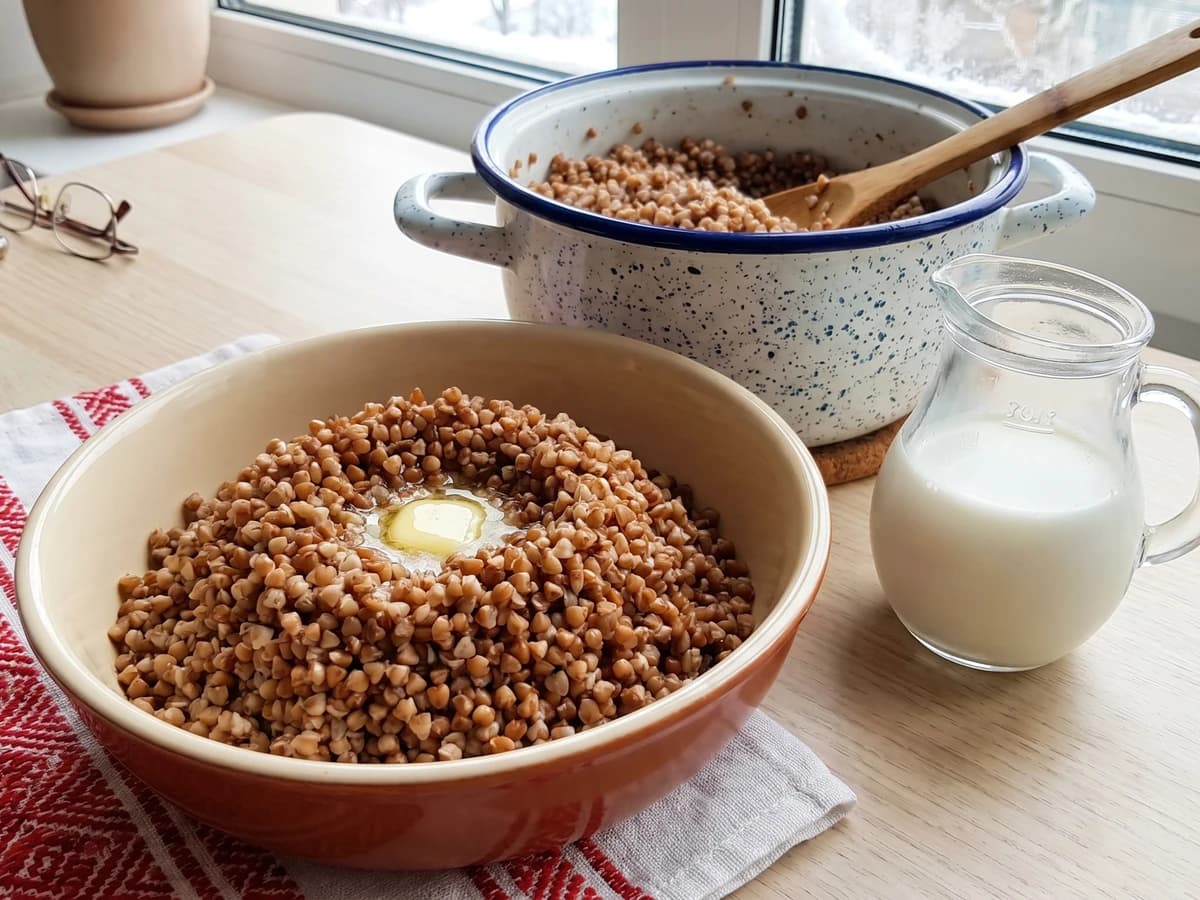
Buckwheat tells you when it is ready before the water goes in: the dry triangles darken, tick against the pot, and suddenly smell like nuts in a warm paper bag.