
Chef Lesia
Banosh (банош, Carpathian cornmeal porridge)
Cornmeal and sour cream go over the flame pale and separate, then suddenly turn glossy, yellow, and almost stubborn. Stir one way only, the shepherds say, and listen.
A cooking platform built around craft, culture, and the stories behind what we eat.
Created by
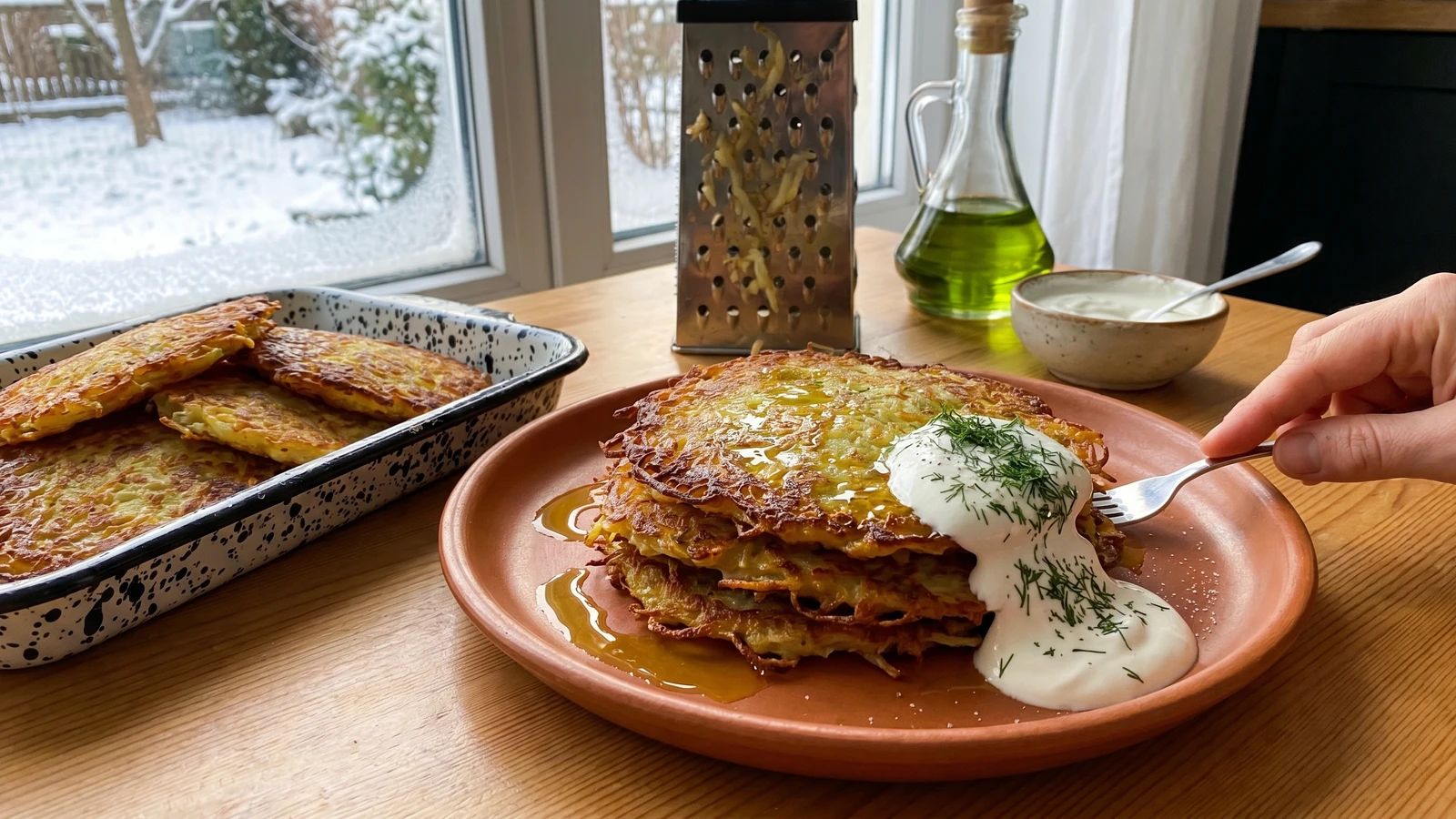
Raw potato turns sly the moment you grate it: wet, starchy, already darkening. Deruny reward speed, hot oil, and the courage to leave the edges alone until they crisp.
Raw potato turns sly the moment you grate it. One minute it is pale and clean, the next it is weeping starch into the bowl and threatening to go grey on you. Deruny are built in that narrow little window: squeeze, season, fry at once, while the potatoes still smell fresh and the oil is ready to answer back.
The one why is simple. Dry potato browns; wet potato steams in the pan and sulks. So you grate the onion straight into the potato to keep it pale and sweet, then squeeze the mixture until your hands complain a little. Aunt Nadia wrote only, "not too wet, not too proud," which took me two attempts and one tragic soft batch to understand.
Serve them as they come from the pan, lacy at the edges, tender in the middle, with cold smetana and dill. Enough for eight guests or one hungry Ukrainian, if nobody is watching.
Deruny take their name from the Ukrainian verb deraty, to tear or grate, and the dish became especially rooted in Polissia and the northern forest regions after potatoes settled into Ukrainian kitchens in the nineteenth century. Korosten in Zhytomyr Oblast even holds a deruny festival, which tells you what a serious thing a cheap potato can become when a whole town argues about the best grater.
Quantity
1.2 kg
peeled
Quantity
1 medium
peeled
Quantity
2 large
Quantity
3 tablespoons, plus more only if needed
Quantity
1 teaspoon, plus more to finish
Quantity
1/2 teaspoon
Quantity
120ml
for frying
Quantity
to serve
Quantity
small handful
chopped, to serve
| Ingredient | Quantity |
|---|---|
| starchy potatoespeeled | 1.2 kg |
| yellow onionpeeled | 1 medium |
| eggs | 2 large |
| plain flour | 3 tablespoons, plus more only if needed |
| fine sea salt | 1 teaspoon, plus more to finish |
| freshly ground black pepper | 1/2 teaspoon |
| unrefined sunflower oilfor frying | 120ml |
| smetana (sour cream) (optional) | to serve |
| fresh dill (optional)chopped, to serve | small handful |
Set a box grater over a wide bowl and grate the onion first on the fine side. It should turn juicy and sharp-smelling. That onion juice keeps the potato from darkening too quickly and gives sweetness right through the batter.
Grate the potatoes into the onion, working quickly and turning the mixture through with your fingers as you go. If it starts to look grey, don't panic, just keep moving. The bowl should smell clean and raw, like a cut potato field after rain.
Tip the mixture into a clean tea towel or a fine sieve and squeeze hard over a second bowl until the stream slows to drops. Leave the liquid to stand for a minute, then pour off the brownish water and scrape the white potato starch from the bottom back into the potatoes. That's your crispness. Don't throw it away.
Stir in the eggs, flour, salt, and black pepper. The batter should hold together on a spoon but still look mostly like grated potato, not pancake batter from a packet. If it slumps into soup, add a spoon more flour. If it stands stiff, leave it alone.
Pour enough sunflower oil into a heavy frying pan to generously coat the base and set it over medium-high heat. Drop in one shred of potato: it should answer with a lively sizzle at once, not silence and not fury. That is when it sounds right.
Spoon in small mounds of potato and flatten them with the back of the spoon so the edges spread thin. Fry until the rims turn deep gold and the potato smell changes from raw cellar to nutty and sweet, then turn once. Don't fuss with them early; they release when they're ready.
Lift the deruny onto a rack or paper towel and salt them while the oil still shines on the surface. Keep frying in batches, adding more oil as the pan asks for it. Serve hot with cold smetana and a scatter of dill, the contrast doing half the work.
1 serving (about 250g)
Culinary guides, cultural storytelling, and the editorial depth that makes cooking meaningful.
Discover Culinary ExplorerChef Lesia
Cornmeal and sour cream go over the flame pale and separate, then suddenly turn glossy, yellow, and almost stubborn. Stir one way only, the shepherds say, and listen.

Chef Lesia
A benderyk is a crepe taught to hold its corners: soft pancake, peppery meat, egg-dipped edges fried crisp, and the same triangular confidence my hands learned at the varenyky table.

Chef Lesia
Pumpkin goes into the pot pale and stubborn, then gives itself up slowly to milk and millet until the whole breakfast turns deep orange, sweet, and spoon-thick.
Chef Lesia
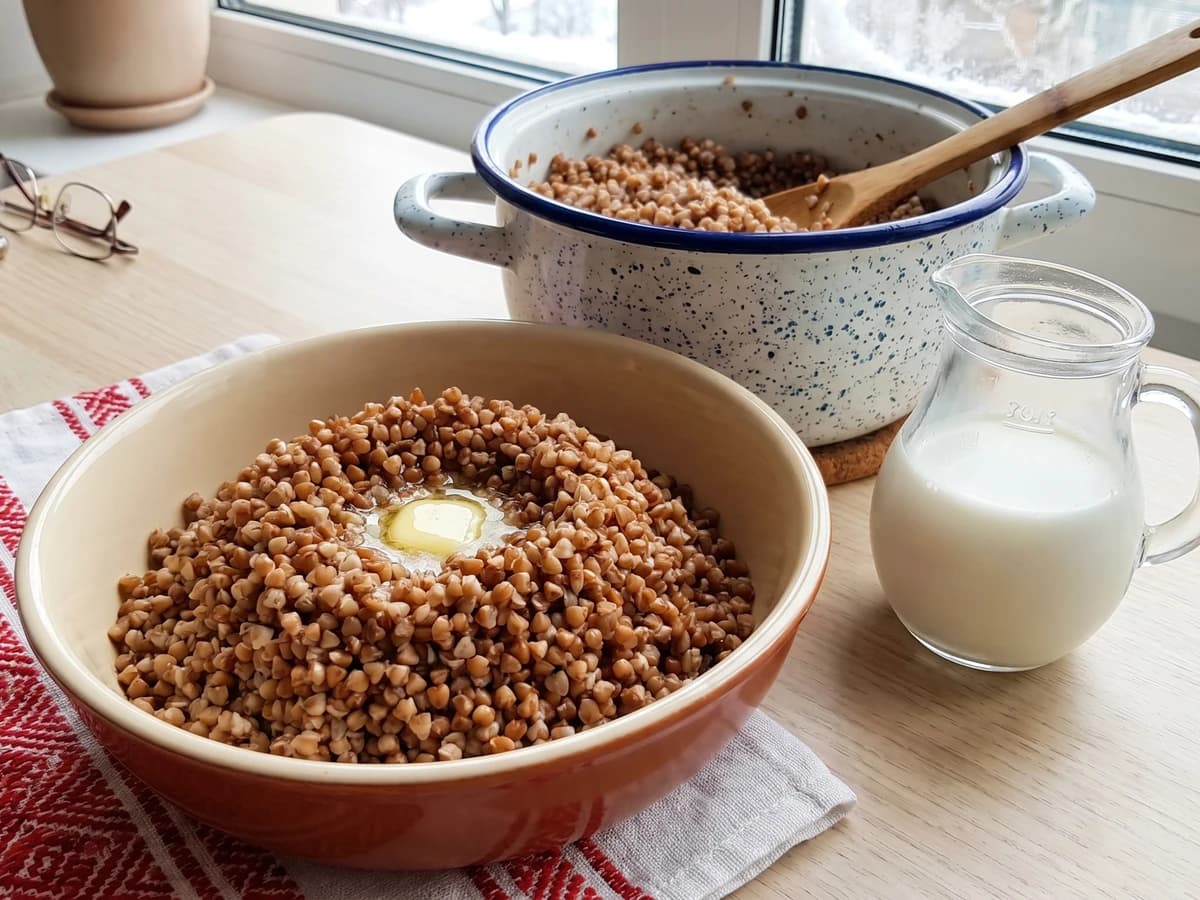
Buckwheat tells you when it is ready before the water goes in: the dry triangles darken, tick against the pot, and suddenly smell like nuts in a warm paper bag.