
Chef Lesia
Berezovyi Sik (березовий сік, birch sap drink)
Birch sap looks like water until you taste it: cold, faintly sweet, mineral, and gone almost as soon as spring admits it has arrived.
A cooking platform built around craft, culture, and the stories behind what we eat.
Created by
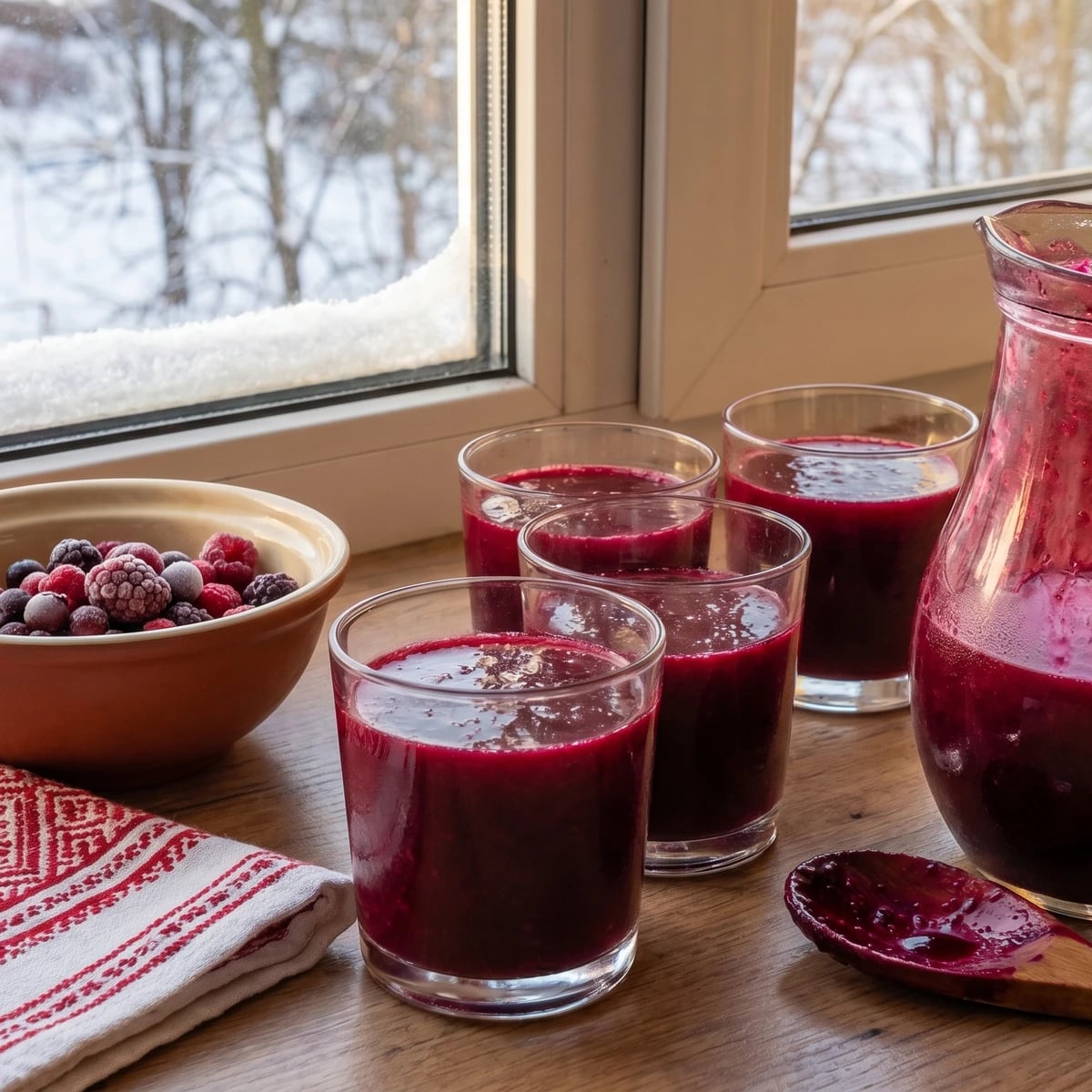
Poured warm, berry kysil moves like stained glass, then thickens as it cools until the spoon wears a purple coat. It is drink, dessert, and winter comfort in one pot.
The first thing berry kysil does is stain the light. Blackcurrants make it almost ink-purple, sour cherries pull it toward ruby, raspberries leave little seeds at the bottom like evidence, and when the potato starch catches, the whole pot goes glossy enough to show you your spoon. It is not quite a drink and not quite pudding. That is the pleasure of it.
At a Ukrainian table, kysil is what appears when money is tight, children are hungry, and there are berries in the freezer from a better month. In August we'd make it from whatever the garden gives too loudly; in January we tip in frozen cherries and blackcurrants and call that tradition, because it is. Aunt Nadia once wrote: pour it warm over the first clean snow and it sets before the children stop laughing, which tells you two things, how fast potato starch works, and how bored winter children become.
The only bit that won't forgive carelessness is the starch. Mix it with cold water, pour it in a thin stream, and stop when the cloudy liquid turns glassy and coats the spoon, because hard boiling breaks the body you just built. Everything else forgives you: the berry mix, the sugar, whether you strain it smooth or leave it with fruit. Make the big pot. Someone will want it warm now and cold tomorrow.
Kysil is older than the berry drink most people know: the name comes from kyslyi, sour, because early versions were fermented from oats or other grain, and the Tale of Bygone Years tells a 997 story from Bilhorod near Kyiv in which grain kysil helped outwit a siege. Berry kysil thickened with potato starch came later, after potatoes and starch production entered Ukrainian kitchens, and its regional colors follow the landscape: blackcurrant and cranberry in Polissia, sour cherry and mulberry in the southern steppe. The pale canteen glass many people remember is only one recent version; at home it can be bright enough to stain a wooden spoon.
Quantity
600g
fresh or frozen: sour cherries, blackcurrants, raspberries, strawberries, bilberries
Quantity
1.8 litres
Quantity
200ml
for the starch slurry
Quantity
120g, plus more to taste
Quantity
1 small pinch
Quantity
55g
Quantity
1 strip or 1 tablespoon
only if the berries taste flat
| Ingredient | Quantity |
|---|---|
| mixed berriesfresh or frozen: sour cherries, blackcurrants, raspberries, strawberries, bilberries | 600g |
| water | 1.8 litres |
| cold waterfor the starch slurry | 200ml |
| sugar | 120g, plus more to taste |
| fine sea salt | 1 small pinch |
| potato starch (kartoplianyi krokhmal) | 55g |
| lemon peel or lemon juice (optional)only if the berries taste flat | 1 strip or 1 tablespoon |
Pick over fresh berries for stems and leaves. If the berries are frozen, don't thaw them unless they are frozen into one angry brick. Reserve a small handful of whole berries if you want fruit in the finished kysil; leave them aside for later.
Put the berries, 1.8 litres water, sugar, salt, and lemon peel if using into a big pot. Bring it to a gentle simmer and crush the fruit against the side with a wooden spoon. Let it murmur until the berries collapse, the color deepens, and the smell changes from raw fruit to warm jam.
For a smooth drinking kysil, pour the berry base through a fine sieve and press the fruit hard to get every bit of color. For a kitchen-table version, strain half and leave half pulpy. Return the liquid to the pot and taste it while hot; it should be a little brighter and sweeter than you think, because starch softens the edges.
Whisk the potato starch with 200ml cold water in a small bowl until it looks milk-white and smooth. Stir it again just before using, because starch settles at the bottom like wet chalk and pretends it has disappeared.
Bring the berry base back to a lively simmer, then lower the heat and stir with one hand while pouring the starch slurry in a thin stream with the other. The pot will go cloudy first, then suddenly glassy and purple. Keep stirring until the spoon comes out wearing a shiny coat and the surface gives a few slow, thick bubbles, then take it off the heat.
Stir in the reserved whole berries if you kept some back. Ladle the kysil warm into bowls, or pour it into a pitcher and chill it for glasses later. If you don't like a skin on top, sprinkle the surface with a little sugar or press baking paper directly onto it. If you do like the skin, welcome to the family argument.
1 serving (about 260g)
Culinary guides, cultural storytelling, and the editorial depth that makes cooking meaningful.
Discover Culinary Explorer
Chef Lesia
Birch sap looks like water until you taste it: cold, faintly sweet, mineral, and gone almost as soon as spring admits it has arrived.

Chef Lesia
Raw beets turn water into something dark, sour, and alive: a crimson drink for the glass, and the old quiet souring for borshch when vinegar has no business there.

Chef Lesia
Dried chebrets looks like a handful of dusty twigs until hot water wakes it, and suddenly the cup smells of bees, sun-baked grass, and rain on the steppe.

Chef Lesia
Dried pears turn water the color of late honey, then the jar begins to whisper. Serve it cold and tart, with fine bubbles, orchard smoke, and August still in the glass.