
Chef Lesia
Berezovyi Sik (березовий сік, birch sap drink)
Birch sap looks like water until you taste it: cold, faintly sweet, mineral, and gone almost as soon as spring admits it has arrived.
A cooking platform built around craft, culture, and the stories behind what we eat.
Created by
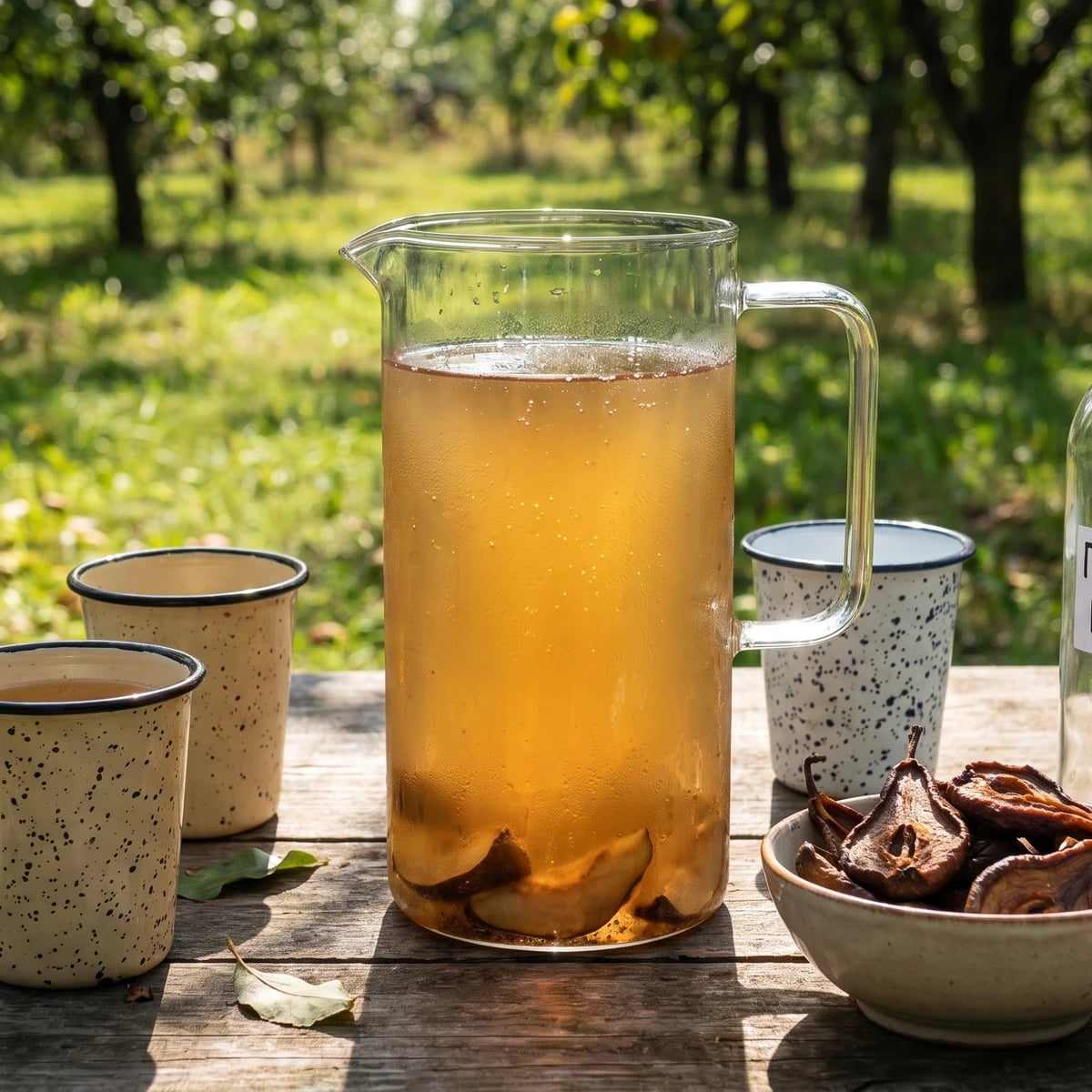
Dried pears turn water the color of late honey, then the jar begins to whisper. Serve it cold and tart, with fine bubbles, orchard smoke, and August still in the glass.
Dried pears are not shy. Drop them into a pot and they stain the water late honey, tea, a little smoke from the oven where they were dried, and suddenly the cheapest fruit in the pantry is making a drink with a backbone. This is not bread kvas with fruit floating for prettiness. It is an orchard drink from the Lisostep, the forest-steppe, where pears were dried hard for winter and then woken back up in summer.
The deciding moment is the cooling. Simmer the pears until the smell changes, from dry hay to cooked honey, then sweeten and wait until the liquid is no warmer than your wrist before adding the starter. Hot liquid kills what needs to wake; cool liquid gives yeast and sourdough a clean place to make fizz, tartness, and that faint bread-shop smell at the edge of the pear.
Aunt Nadia's letters use the same maddening instruction for drinks as for dough: "until it sounds right." Here that sound is tiny, bubbles ticking at the shoulder of the jar, not a wild foaming show. Make three litres at least. It costs almost nothing, it waits for you in the fridge, and one cold jug on a picnic table can feed a mood better than any grand dish.
Pear kvas belongs to the Ukrainian Lisostep, the forest-steppe belt across central Ukraine, especially Left-Bank orchard country around Poltava and the Middle Dnipro, where small pears were dried or lightly smoked after harvest. It sits between uzvar, the dried-fruit drink served at Christmas Eve suppers, and bread kvas: stored winter fruit simmered into sweetness, then fermented into a sour summer refresher. Soviet bottling made rye kvas the public version, but village fruit kvas kept an older orchard habit alive in cellars and litni kukhni, the summer kitchens.
Quantity
350g
rinsed; unsulphured if possible
Quantity
3 litres
Quantity
120g
or 100g mild honey
Quantity
2 tablespoons starter or 1/8 teaspoon yeast
Quantity
1 small strip
| Ingredient | Quantity |
|---|---|
| dried pearsrinsed; unsulphured if possible | 350g |
| cold water | 3 litres |
| sugaror 100g mild honey | 120g |
| active rye sourdough starter or active dry yeast | 2 tablespoons starter or 1/8 teaspoon yeast |
| lemon peel (optional) | 1 small strip |
Rinse the dried pears under cool water to remove dust, then put them in a big pot with the cold water. If they are whole and stubborn, press them down with your hand so they start to drink. They look like old leather now. Give them time.
Bring the pot slowly to a gentle simmer, then cook until the pears swell, bend when pressed with a spoon, and the liquid turns deep gold, closer to late honey than pale tea. Cook until the smell changes: first dry hay, then smoke if your pears were oven-dried, then cooked pear and warm sugar. Don't thrash it with a hard boil; you want extraction, not a tired compote.
Take the pot off the heat and stir in the sugar or honey while the liquid is hot. Add the lemon peel if your pears taste flat, then fish it out after a few minutes. The liquid should taste a little sweeter than you want the finished drink, because the ferment will eat some of that sweetness and give you tartness back.
Let the pear liquid cool until it is no warmer than your wrist, then strain it into a clean glass jar. Press the pears gently, just enough to give up their juice, not so hard that you force gritty pulp through the sieve. Save the spent pears for porridge or pancakes; they have done their main work.
Stir in the rye sourdough starter, or dissolve the tiny pinch of dry yeast in a ladle of the cooled pear liquid before adding it back to the jar. Hot liquid kills the life you need, so this cooling is the step that does not forgive rushing. Cover the jar with cloth or set the lid on loosely. Do not seal it tight at room temperature.
Leave the jar at room temperature, out of direct sun, until the surface shows fine bubbles and the smell moves from sweet pear syrup to something sharper, like young cider and rye bread. Aunt Nadia would have written only "until it sounds right," and here the sound is tiny: bubbles ticking at the shoulder of the jar when you lift it. Taste from the next day onward. When it is tart, lightly fizzy, and still pear-first, it is ready.
Strain again if the starter has left sediment, then funnel the kvas into pressure-safe bottles, leaving headspace at the top. Chill it for at least half a day before serving. If you want more sparkle, let the filled bottles sit at room temperature for a few hours first, then refrigerate and burp them daily. This is a short fermented drink, not a shelf-stable preserve.
Serve the kvas very cold, in glasses or enamel cups, with a soaked dried pear dropped into the jug if you like the look of it. It should be golden, tart, faintly smoky, and refreshing enough that three litres starts to seem modest. There is no tradition of a small one.
1 serving (about 300g)
Culinary guides, cultural storytelling, and the editorial depth that makes cooking meaningful.
Discover Culinary Explorer
Chef Lesia
Birch sap looks like water until you taste it: cold, faintly sweet, mineral, and gone almost as soon as spring admits it has arrived.

Chef Lesia
Raw beets turn water into something dark, sour, and alive: a crimson drink for the glass, and the old quiet souring for borshch when vinegar has no business there.

Chef Lesia
Dried chebrets looks like a handful of dusty twigs until hot water wakes it, and suddenly the cup smells of bees, sun-baked grass, and rain on the steppe.

Chef Lesia
The root turns clear horilka the color of old honey, then teaches it bitterness, forest-floor warmth, and a medicinal little grip at the back of the tongue.