
Chef Lesia
Berezovyi Sik (березовий сік, birch sap drink)
Birch sap looks like water until you taste it: cold, faintly sweet, mineral, and gone almost as soon as spring admits it has arrived.
A cooking platform built around craft, culture, and the stories behind what we eat.
Created by
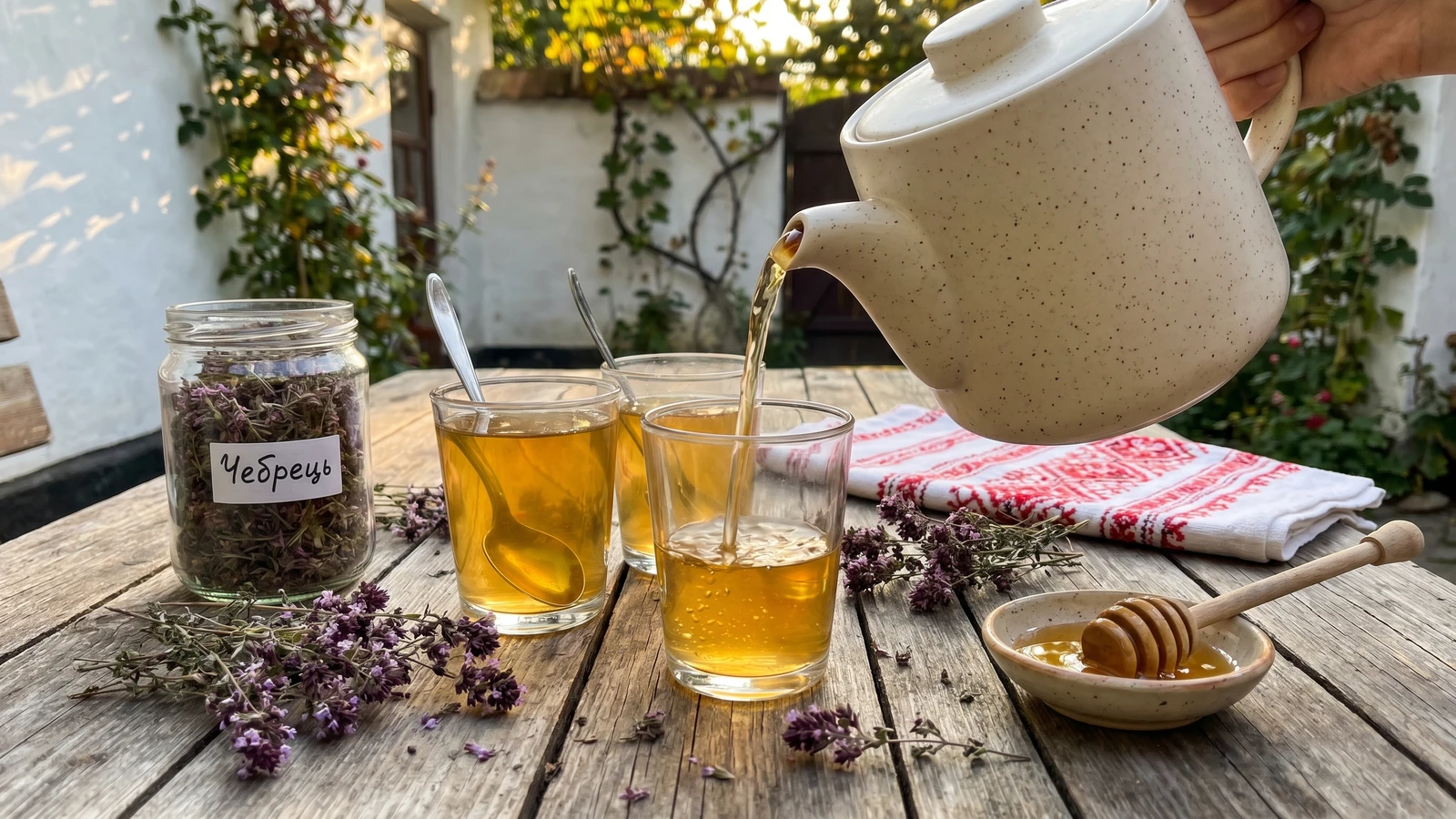
Dried chebrets looks like a handful of dusty twigs until hot water wakes it, and suddenly the cup smells of bees, sun-baked grass, and rain on the steppe.
Dried chebrets looks like a handful of dusty twigs until hot water wakes it. Then the whole pot opens: bees, sun-baked grass, a little bitterness at the edge, the smell of rain hitting hot steppe soil. The color is modest, amber-gold, but the smell walks into the room before the cup does.
This is the tea you make when someone has a cough, when the day has been too long, when there is no money for drama and plenty of sense in the cupboard. My Aunt Nadia wrote only, "cover it, don't let the strength escape," and she was right. Thyme's volatile oils are the point, so you don't boil the herb like punishment. You pour hot water over it, cover the pot, and let the smell change from dry hay to honeyed resin.
Honey goes in after the cup cools a little, so it keeps its own voice. Lemon is a bit more modern and welcome if your throat wants it. Make a pot, not a lonely mug. There is no tradition of a small one.
Chebrets, the Ukrainian name for wild thyme, grows low and stubborn across dry meadows, pine edges, and the southern steppe, gathered in flower in early summer and dried in shaded bunches for winter. Herbal infusions like this belonged to the home medicine shelf as much as the table, especially for coughs and cold evenings, long before factory tea became an everyday habit. In many Ukrainian kitchens the word chai can mean black tea or an herbal infusion, but chebrets keeps its own identity: field-gathered, fragrant, and practical.
Quantity
1 litre
Quantity
2 tablespoons
lightly crumbled
Quantity
2 to 4 teaspoons
to serve
Quantity
1 thin slice
Quantity
1 small spoon
| Ingredient | Quantity |
|---|---|
| fresh water | 1 litre |
| dried wild thyme (chebrets)lightly crumbled | 2 tablespoons |
| honeyto serve | 2 to 4 teaspoons |
| lemon (optional) | 1 thin slice |
| raspberry jam (optional) | 1 small spoon |
Rinse a teapot with hot water and tip it out. Add the dried chebrets and rub it once between your fingers as it falls in, just enough to wake the oils. It should smell grassy, peppery, and faintly sweet before the water touches it.
Bring the water just to a boil, then let it calm for a breath before pouring it over the thyme. Cover the pot at once with its lid or a small plate. Don't boil the herb in the pan. The fragrance is the medicine and the pleasure, and a covered pot keeps it in the cup.
Let it steep until the smell changes from dry hay to warm honey and pine, and the liquid turns clear amber. Taste it. If it feels thin, give it more time; if it turns too stern and bitter, dilute the cup with a splash of hot water. Chebrets has opinions, but it forgives you.
Strain into cups and wait until it is hot but no longer fierce before stirring in honey. Add lemon if you like brightness, or a spoon of raspberry jam if the throat is scratchy and the day needs kindness. Drink it warm, with both hands around the cup.
1 serving (about 260g)
Culinary guides, cultural storytelling, and the editorial depth that makes cooking meaningful.
Discover Culinary ExplorerChef Lesia
Birch sap looks like water until you taste it: cold, faintly sweet, mineral, and gone almost as soon as spring admits it has arrived.

Chef Lesia
Raw beets turn water into something dark, sour, and alive: a crimson drink for the glass, and the old quiet souring for borshch when vinegar has no business there.

Chef Lesia
Dried pears turn water the color of late honey, then the jar begins to whisper. Serve it cold and tart, with fine bubbles, orchard smoke, and August still in the glass.

Chef Lesia
The root turns clear horilka the color of old honey, then teaches it bitterness, forest-floor warmth, and a medicinal little grip at the back of the tongue.