
Chef Lesia
Buryakovyi Kvas (буряковий квас, beet kvas)
Raw beets turn water into something dark, sour, and alive: a crimson drink for the glass, and the old quiet souring for borshch when vinegar has no business there.
A cooking platform built around craft, culture, and the stories behind what we eat.
Created by
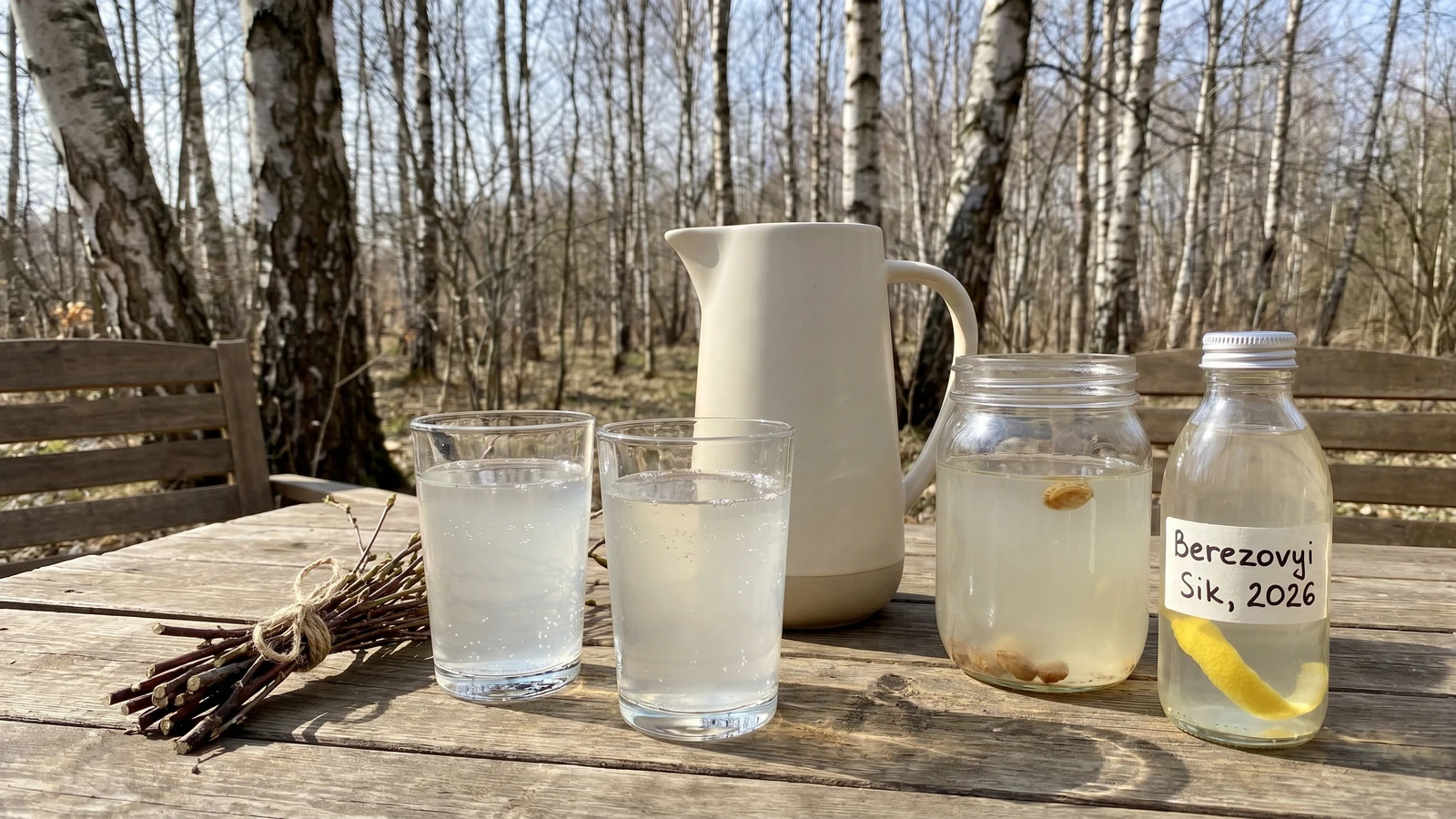
Birch sap looks like water until you taste it: cold, faintly sweet, mineral, and gone almost as soon as spring admits it has arrived.
The first surprise is that it looks like nothing. Clear as tap water, quiet in the glass, then you drink and there it is: a thin sweetness, a little mineral edge, the taste of thaw moving through a tree. Berezovyi sik is spring before the garden has earned it.
We drank it fresh when we could, cold from the shade, and then the practical people got involved because practical people save everything. A handful of raisins, sometimes a curl of lemon peel, wakes the sap into a light kvas. It should whisper when you open it, not explode across your ceiling. Aunt Nadia would have written, "until it sounds right," and for once she meant it almost literally.
The one thing that decides the drink is freshness. Birch sap spoils quickly because it is alive with sugar and minerals, so filter it, chill it, and either drink it within a day or let it ferment on purpose. Accident is not tradition. Intention is.
Berezovyi sik is tied to the short March and early April tapping season across Ukraine's forest and forest-steppe regions, especially Polissia and the north, where birches run before the leaves open. Soviet industry bottled birch sap on a large scale, which made it familiar in city shops, but the older practice is smaller and seasonal: tap carefully, plug the tree, drink fresh, or let raisins turn it into a gentle spring kvas.
Quantity
2 litres
filtered and chilled
Quantity
30g
Quantity
1 thin strip
yellow part only
Quantity
1 teaspoon
only if the sap tastes very flat
| Ingredient | Quantity |
|---|---|
| fresh birch sapfiltered and chilled | 2 litres |
| un-oiled raisins | 30g |
| lemon peelyellow part only | 1 thin strip |
| honey or sugar (optional)only if the sap tastes very flat | 1 teaspoon |
Smell the birch sap before you do anything clever. It should smell clean, cold, and barely sweet, with no sourness or must. If you tapped it yourself, filter it through clean muslin or a coffee filter to catch bark dust and small bits from the tree.
For fresh berezovyi sik, chill the filtered sap hard and pour it into small glasses. Don't dress it up. The flavor is delicate and if you add too much, you stop hearing the tree.
For a light raisin kvas, pour the sap into a clean wide-mouth jar and add the raisins and lemon peel. Taste first; only add the honey or sugar if the sap is so flat it gives you nothing back. Cover the jar with a lid set loosely, or with cloth and a band, and keep it at cool room temperature out of direct sun.
Begin tasting after a day. The raisins will swell, the sap will turn faintly cloudy, and small bubbles will gather at the edge of the glass. When it smells lightly fruity and gives a soft little sigh when stirred, strain it. This is the moment. Leave it too long and the gentleness walks away.
Pour the strained kvas into clean bottles and chill it at once. If you use swing-top glass, leave headroom and open it daily until you drink it, because pressure builds even in the fridge. Serve cold, in small glasses, while it still tastes like spring rather than beer.
1 serving (about 250g)
Culinary guides, cultural storytelling, and the editorial depth that makes cooking meaningful.
Discover Culinary ExplorerChef Lesia
Raw beets turn water into something dark, sour, and alive: a crimson drink for the glass, and the old quiet souring for borshch when vinegar has no business there.

Chef Lesia
Dried chebrets looks like a handful of dusty twigs until hot water wakes it, and suddenly the cup smells of bees, sun-baked grass, and rain on the steppe.

Chef Lesia
Dried pears turn water the color of late honey, then the jar begins to whisper. Serve it cold and tart, with fine bubbles, orchard smoke, and August still in the glass.

Chef Lesia
The root turns clear horilka the color of old honey, then teaches it bitterness, forest-floor warmth, and a medicinal little grip at the back of the tongue.