
Chef Klaus
Birnen, Bohnen und Speck
Schleswig-Holstein's sweet-salt bean pot, where small cooking pears go in whole beside Speck, smoked bacon, and the one rule is simple: keep the simmer low so the pears hold.
A cooking platform built around craft, culture, and the stories behind what we eat.
Created by
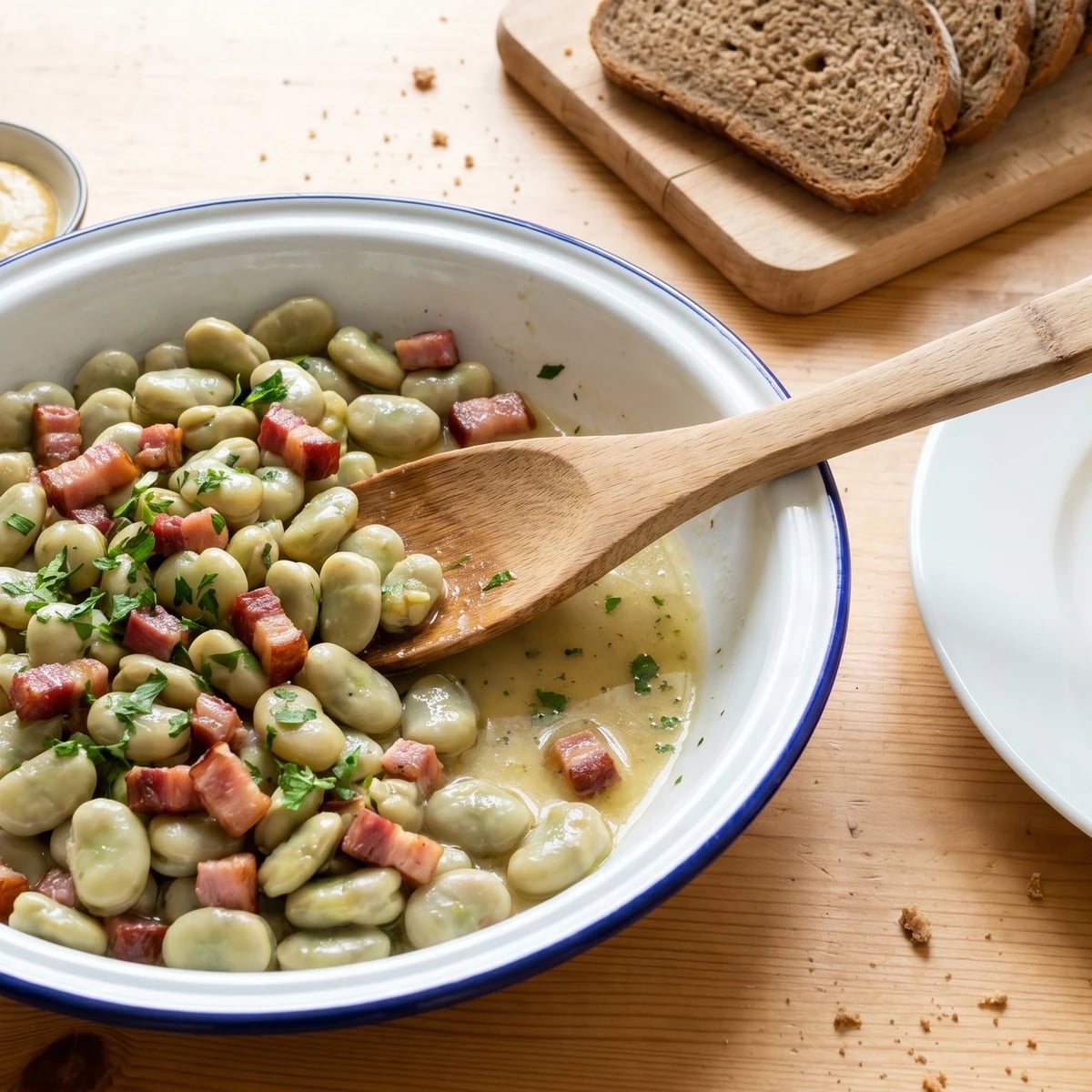
A Westphalian bean pot for broad-bean season, smoky with bacon and sharpened by Bohnenkraut, with the sauce bound only after the beans are tender.
Dicke Bohnen mit Speck belongs to Westphalia, especially the flat bean-and-bacon country around Münsterland, where a pot of broad beans can sit beside boiled potatoes on a weeknight and still look at home on Sunday. It is summer food when the fresh pods are full, but the larder is in it too: smoked bacon, rind, and a little flour to make the cooking liquor into sauce. Weggeworfen wird nichts.
The regions don't agree, of course. In Westphalia the beans often come with smoked Speck and Bohnenkraut, summer savory, the herb that makes the pot taste right. Further north you see cleaner bean dishes with less binding, and in the south the bean often moves toward vinegar, cream, or different herbs. Im Norden anders, im Süden anders. Das ist kein Bierzelt.
The deciding technique is this: cook the beans gently, then bind the liquor at the end. Flour in too early turns the pot heavy and makes the beans catch before they're tender; a hard boil bursts the skins and gives you grey mash. Let the bacon and rind season the water first, let the beans soften in that broth, then thicken only enough that the sauce coats a spoon. Nicht aus dem Glas. Beans, bacon, Bohnenkraut, patience.
Broad beans, Vicia faba, were grown in German-speaking regions long before the American common bean arrived in Europe after 1492, which is why older names such as Dicke Bohnen, Saubohnen, and Puffbohnen appear across regional cooking. In Westphalia, the dish fits a farm table built around preserved pork: smoked bacon and rind gave salt, fat, and depth to a seasonal vegetable without needing an expensive cut. The regional marker is Bohnenkraut, summer savory, an old bean herb used for its peppery taste and its reputation for making beans easier on the stomach.
Quantity
1.2kg
shelled, about 500g beans
Quantity
150g
diced
Quantity
1 piece
Quantity
1 medium
finely diced
Quantity
30g
Quantity
1 tablespoon
Quantity
500ml
Quantity
2 sprigs
or 1 teaspoon dried
Quantity
1
Quantity
to taste
Quantity
1 teaspoon
Quantity
2 tablespoons
chopped
| Ingredient | Quantity |
|---|---|
| fresh broad beans in podsshelled, about 500g beans | 1.2kg |
| smoked streaky bacon or Westphalian Speckdiced | 150g |
| bacon rind (optional) | 1 piece |
| onionfinely diced | 1 medium |
| butter or lard | 30g |
| plain flour | 1 tablespoon |
| water or light unsalted pork stock | 500ml |
| fresh Bohnenkraut (summer savory)or 1 teaspoon dried | 2 sprigs |
| bay leaf | 1 |
| salt and black pepper | to taste |
| mild vinegar (optional) | 1 teaspoon |
| flat-leaf parsley (optional)chopped | 2 tablespoons |
Shell the broad beans and keep only the plump green beans; the pods have done their work and are too fibrous for this pot. If the beans are large and late in the season, blanch them for 1 minute, rinse cold, and slip off the thick skins, because old skins stay tough while the inside goes soft. Young beans can go in as they are.
Put the diced Speck and the rind, if you have it, into a wide pot with the butter or lard and cook over medium heat until the fat runs clear and the edges of the bacon colour lightly. Don't scorch it. You want smoke and salt in the fat, not bitterness at the bottom of the pot.
Add the onion and cook until it turns glassy, about 5 minutes. Keep the heat steady, not fierce, because browned onion would drag the sauce toward roast gravy, and this is a green bean dish first. Stir in the flour and cook it for 1 minute so it loses the raw taste before the liquid goes in.
Pour in the water or light stock while stirring, scraping up the bacon fond from the pot because that is the seasoning you already paid for. Add the bay leaf and Bohnenkraut, then simmer 10 minutes so the rind and herb season the broth before the beans arrive.
Add the broad beans and keep the pot at a quiet simmer, 12 to 20 minutes depending on age. Runter mit der Temperatur. A hard boil splits the beans and clouds the sauce; a steady simmer lets them turn tender while they stay green enough to look like food, not army laundry.
Lift out the bay leaf, the Bohnenkraut stems, and the bacon rind. Taste before you salt, because smoked Speck can season the whole pot by itself. If the sauce is thin, simmer uncovered a few minutes until it coats the beans lightly; if it is too thick, loosen it with a splash of water. Finish with black pepper, parsley if using, and a teaspoon of mild vinegar only if the pot tastes flat. Würzen, Fett, Salz zum Schluss.
1 serving (about 275g)
Culinary guides, cultural storytelling, and the editorial depth that makes cooking meaningful.
Discover Culinary Explorer
Chef Klaus
Schleswig-Holstein's sweet-salt bean pot, where small cooking pears go in whole beside Speck, smoked bacon, and the one rule is simple: keep the simmer low so the pears hold.

Chef Klaus
The North Sea flour pudding that eats two ways at one table: first savoury with Kohlwurst and mustard, then sweet with cherry Grütze.

Chef Klaus
The northern Fastnacht pot of grey field peas and smoked bacon, soaked overnight and cooked slowly until the skins yield and the middle turns soft.

Chef Klaus
The northern winter pot that waits for frost: kale cooked dark and soft with smoked pork and Pinkel, until the greens take the fat and taste like the season.