Chef Klaus
Allgäuer Kaspressknödel
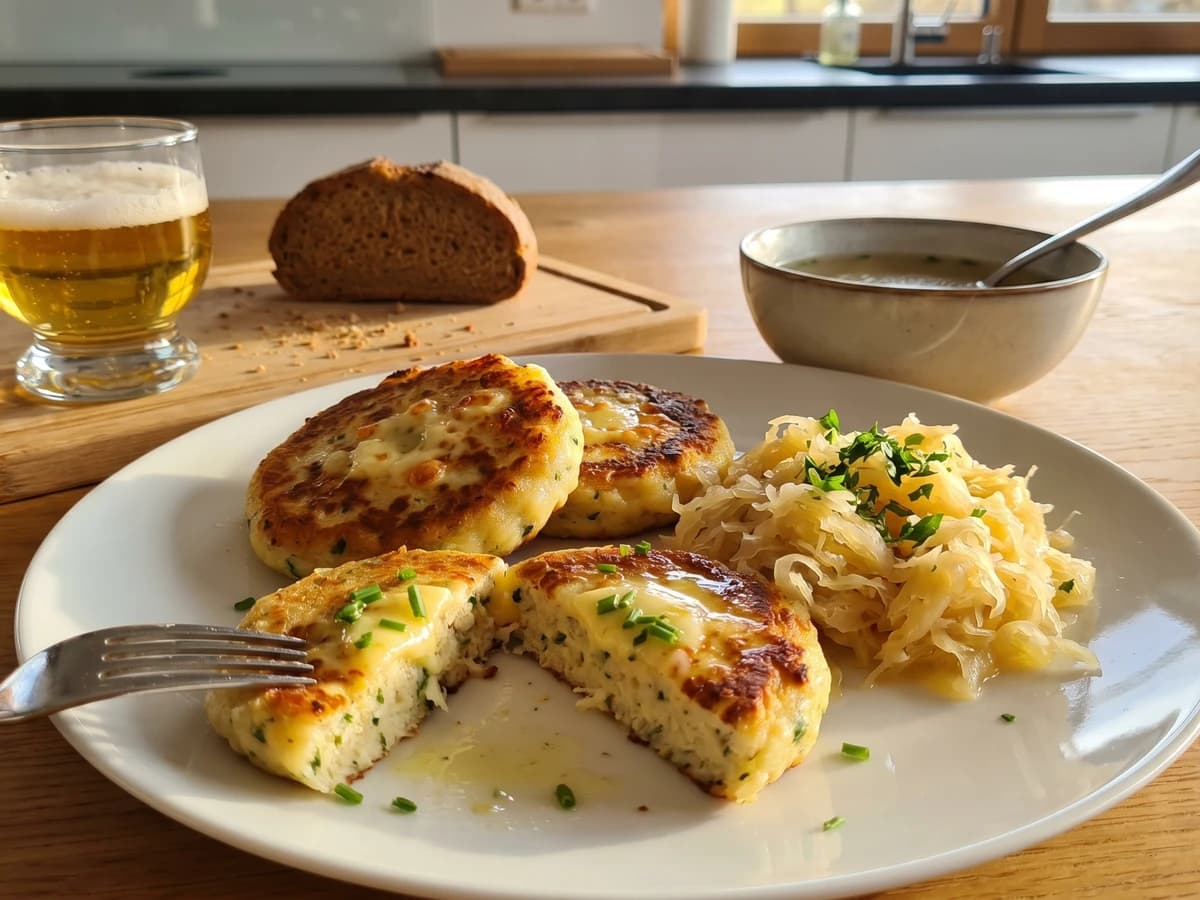
Pressed bread dumplings from the Alpine south, fried until the cheese catches at the edges and the middle stays soft enough for broth, kraut, or a weekday plate.
A cooking platform built around craft, culture, and the stories behind what we eat.
Created by
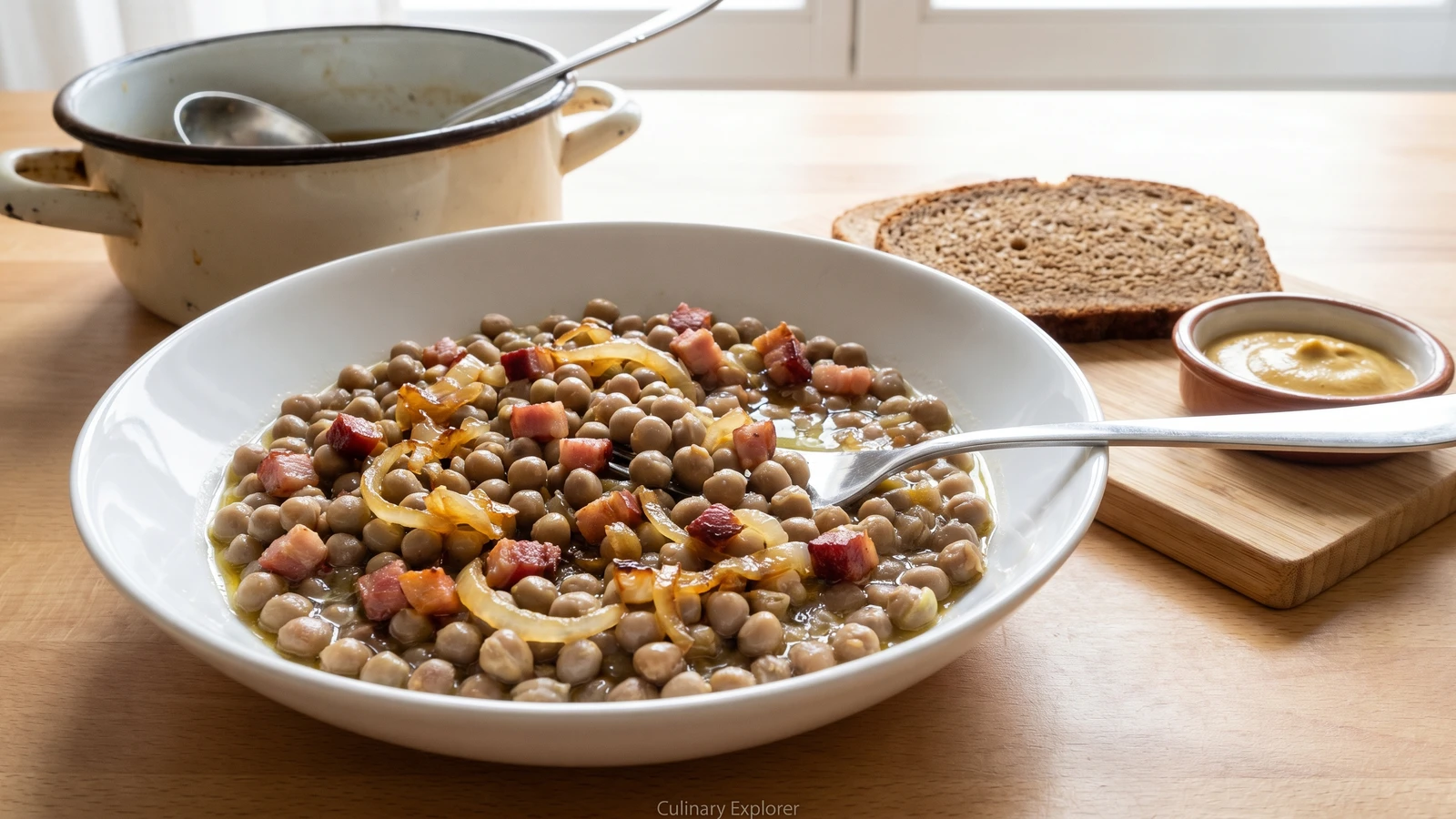
The northern Fastnacht pot of grey field peas and smoked bacon, soaked overnight and cooked slowly until the skins yield and the middle turns soft.
Graue Erbsen mit Speck belong to the north, strongest in Schleswig-Holstein and Ostfriesland, and they belong to Fastnacht, the last full table before Lent begins. This is not a pretty little vegetable side. It is dried field peas from the winter larder, smoked bacon from the curing hook, onion, vinegar, and patience. Das braucht seine Zeit.
The regions split over the finish. In Schleswig-Holstein the peas are often served with a sweet-sour Specksoße, bacon sauce, sometimes with a spoon of sugar and vinegar pulled sharp. In Ostfriesland the pot may stay plainer and saltier, with the bacon doing more of the talking. Im Norden anders, im Süden anders, and the south is not really in this argument.
The technique is the soak and the simmer. Grey field peas have thick skins, so if you boil them hard from dry, the outside bursts while the inside stays chalky. Soak them overnight, bring them up gently, and keep the water barely moving until the pea gives between finger and thumb. Vinegar waits until the end because acid tightens the skins. Put it in early and you've made work for your teeth.
I serve them with smoked streaky bacon, browned onion, and enough vinegar to wake the whole bowl. Weggeworfen wird nichts: the bacon fat is the sauce, the cooking liquor loosens the peas, and the rind, if you have it, goes into the pot for flavour.
Graue Erbsen mit Speck is tied to the Fastnacht and Shrovetide table in Schleswig-Holstein and Ostfriesland, where rich stored foods were used before the lean Lenten calendar began. The peas are dried field peas, often called Kapuzinererbsen, a hardy storage crop that suited the northern winter larder before fresh spring vegetables returned. The sweet-sour bacon finish marks a northern German taste that also appears in bean, cabbage, and fish dishes, where vinegar cut through smoked fat and made preserved food lively again.
Quantity
500g
Quantity
1.5 litres, plus more for soaking
Quantity
200g
diced
Quantity
1 piece
Quantity
2
finely chopped
Quantity
1
Quantity
1 teaspoon
Quantity
1 tablespoon
Quantity
2 tablespoons
Quantity
1 teaspoon
Quantity
1 teaspoon
Quantity
to taste
Quantity
small handful
chopped
| Ingredient | Quantity |
|---|---|
| dried grey field peas or Kapuzinererbsen | 500g |
| cold water | 1.5 litres, plus more for soaking |
| smoked streaky bacondiced | 200g |
| smoked bacon rind (optional) | 1 piece |
| onionsfinely chopped | 2 |
| bay leaf | 1 |
| dried marjoram | 1 teaspoon |
| lard or neutral oil (optional) | 1 tablespoon |
| cider vinegar or white wine vinegar | 2 tablespoons |
| sugar | 1 teaspoon |
| German mustard | 1 teaspoon |
| salt and black pepper | to taste |
| flat-leaf parsley (optional)chopped | small handful |
Rinse the grey peas, pick out any stones, and cover them with plenty of cold water overnight, 10 to 12 hours. The soak lets the thick skins take water slowly, so the peas cook through instead of splitting outside and staying hard in the middle.
Drain the peas and put them in a heavy pot with 1.5 litres fresh cold water, the bay leaf, marjoram, and the bacon rind if you have it. Bring them just to a boil, skim once, then lower the heat until the surface only trembles. Runter mit der Temperatur. A hard boil throws the skins around and turns the pot ragged before the centres are tender.
Simmer the peas uncovered for 60 to 90 minutes, stirring now and then and adding a splash of water if they rise above the liquid. They are ready when a pea crushes easily between finger and thumb but still holds its shape in the pot. Do not add vinegar yet; acid tightens legume skins, and early vinegar is how a simple pot becomes stubborn.
While the peas finish, cook the diced bacon in a skillet over medium heat until the fat runs and the edges brown. Add the onions and cook until soft and golden, using a spoon of lard only if the bacon is too lean. The onion needs the bacon fat, because that fat carries the smoked flavour through the peas.
Stir the vinegar, sugar, mustard, and a ladle of pea cooking liquor into the bacon and onions, scraping the pan clean. Let it bubble for a minute until glossy. Nicht aus dem Glas: this is the sauce, made from the pan, not poured from a bottle.
Remove the bay leaf and bacon rind, then fold the bacon sauce through the peas. Season with black pepper and only then taste for salt, because smoked bacon can do most of that work already. If the peas are too tight, loosen them with a little cooking liquor; if they are too wet, simmer them a few minutes more. Finish with parsley if you use it, and serve warm.
1 serving (about 335g)
Culinary guides, cultural storytelling, and the editorial depth that makes cooking meaningful.
Discover Culinary ExplorerChef Klaus
Pressed bread dumplings from the Alpine south, fried until the cheese catches at the edges and the middle stays soft enough for broth, kraut, or a weekday plate.

Chef Klaus
The Bavarian potato salad that works because warm waxy slices drink hot broth first, then oil last, until the bowl turns glossy without mayonnaise.

Chef Klaus
White cabbage shaved thin, wilted with hot caraway vinegar, and finished with crisp Speck fat: the Bavarian salad that belongs beside bread, sausages, and roast pork.

Chef Klaus
The south's sweet-sour white cabbage, cooked from fresh Kraut rather than sauerkraut, soft enough for roast pork and sharp enough to wake the plate.