
Chef Thomas
All-Butter Shortbread Fingers
The plainest biscuit in the tin and the hardest one to stop eating, three ingredients and a slow oven turning good butter into something quietly perfect with a cup of tea.
A cooking platform built around craft, culture, and the stories behind what we eat.
Created by Chef Thomas
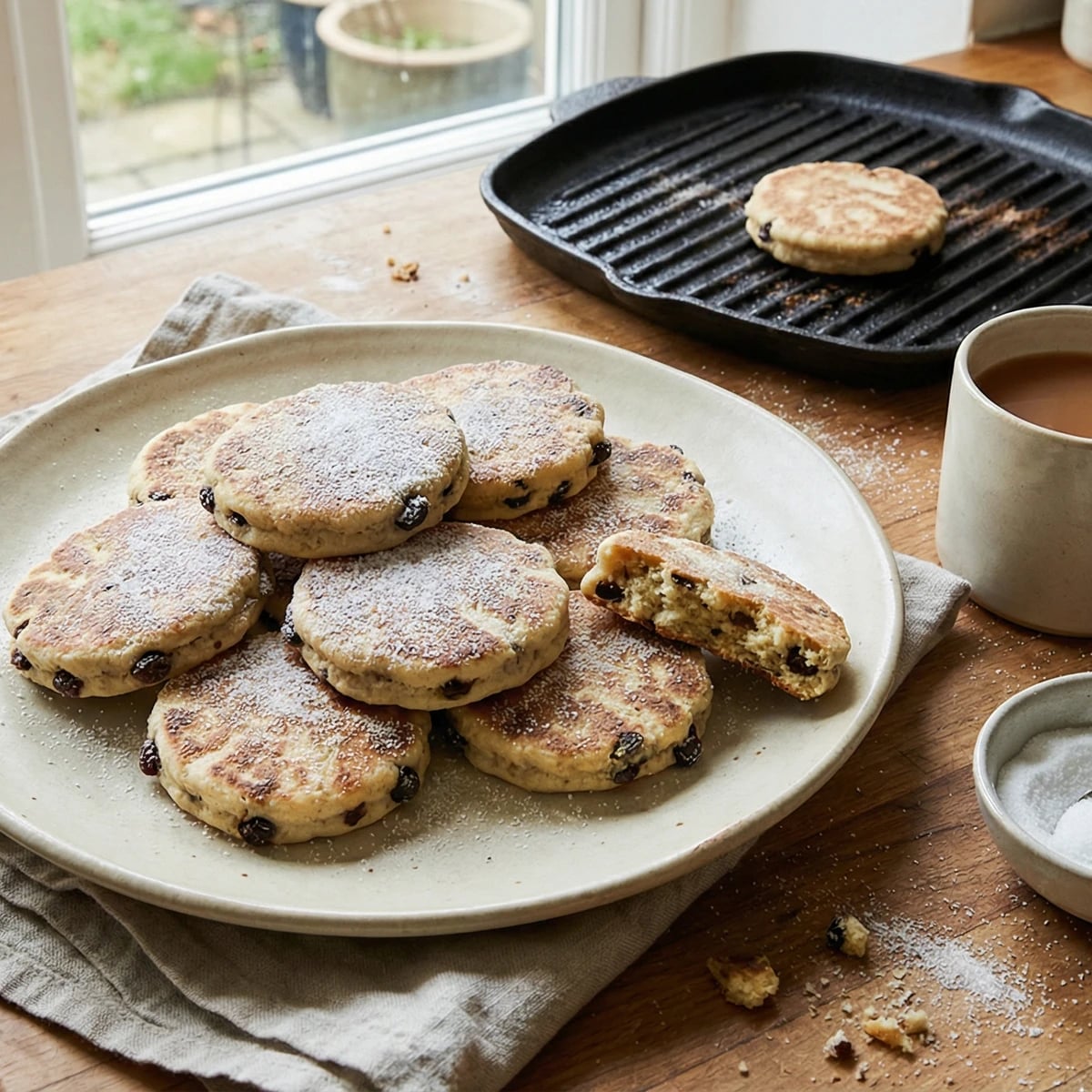
Spiced griddle cakes studded with currants, cooked slowly on a heavy pan until golden, dusted with sugar, eaten warm with tea on an afternoon that asks for nothing more.
It's the kind of afternoon that wants something on the pan, not in the oven. The light has gone thin and grey outside, the kettle is on for the second time, and you want something sweet that doesn't involve waiting an hour. This is what Welsh cakes are for.
They're not scones and they're not biscuits. They sit somewhere of their own, halfway between, cooked on a hot iron rather than baked in the heat of the oven. Pice ar y maen, cakes on the stone. The bakestone was once a flat slab of iron set over the fire, and a griddle or a heavy frying pan does the same job now. The cakes go on dry, more or less, and come off smelling of warm butter and currants and the sugar that's just starting to caramelise on the underside. There are few better smells in a kitchen.
The dough is barely a dough. Flour, butter, sugar, a handful of currants, a teaspoon of mixed spice, an egg to bring it all together. You rub the butter in like you would for pastry, gather it into something rollable, cut it into rounds, and cook them gently until they're golden on both sides. The whole thing takes half an hour and tastes of someone's grandmother's kitchen, even if it isn't yours.
I wrote it down in the notebook the first time I made them properly: "Welsh cakes. Saturday. Rain. Tea. Right food, right evening." That's still the whole recipe, really. The rest is just measurements.
Quantity
225g
Quantity
1 teaspoon
Quantity
pinch
Quantity
100g
cubed
Quantity
75g, plus extra for dusting
Quantity
75g
Quantity
1
beaten
Quantity
splash, if needed
Quantity
a little
| Ingredient | Quantity |
|---|---|
| self-raising flour | 225g |
| mixed spice | 1 teaspoon |
| fine sea salt | pinch |
| cold unsalted buttercubed | 100g |
| golden caster sugar | 75g, plus extra for dusting |
| currants | 75g |
| large eggbeaten | 1 |
| whole milk (optional) | splash, if needed |
| butter or lard for the pan | a little |
Tip the flour, mixed spice, and salt into a wide bowl. Add the cubed butter and rub it into the flour with your fingertips, lifting your hands as you go to keep things cool and airy. Stop when it looks like rough breadcrumbs with a few larger flecks of butter still visible. Those flecks are friends. They're what makes the cakes tender.
Stir in the sugar and the currants, mixing them through the flour with a knife or your hand until they're evenly scattered. It should smell faintly of spice and butter already. That's a good sign.
Pour in most of the beaten egg and bring the mixture together with a knife, then with your hand, into a soft but not sticky dough. If it feels dry and won't quite hold, add the rest of the egg, or a small splash of milk. You're after the texture of shortcrust pastry: firm enough to roll, soft enough to give under a thumb. Don't knead it. Just gather it.
Lightly flour the worktop. Roll the dough out to about a centimetre thick. Not thinner. They want a bit of body to them. Cut into rounds with a 6cm cutter, gather the trimmings, gently re-roll, and cut again until the dough is used up.
Set a heavy frying pan or a flat cast-iron griddle over a low to medium heat and let it warm up properly. This takes a few minutes. The pan needs to be hot enough to colour the cakes but not so hot that it scorches them before they cook through. Rub the surface with a little butter or lard, just enough to grease it, not enough to fry. If the pan smokes, it's too hot. Pull it off the heat for a minute and start again.
Lay the cakes onto the hot pan, leaving a little space between them. They take about three minutes on the first side, sometimes a bit longer. Trust your nose. When the kitchen starts to smell of warm butter and currants, lift one with a palette knife and check the underside. You want a deep, even gold, the colour of toast made properly. Flip them, and give the second side the same. Press a finger gently to the top: they should feel set, springy, just a little soft in the middle. Slightly underdone is better than over.
Lift the cooked cakes onto a wire rack and dust them generously with caster sugar while they're still warm. Eat one immediately, standing at the counter, with a cup of tea you'd already put on. This is the best one. The rest will be very good too, but the first one off the pan is its own kind of reward.
1 serving (about 30g)
Culinary guides, cultural storytelling, and the editorial depth that makes cooking meaningful.
Discover Culinary Explorer
Chef Thomas
The plainest biscuit in the tin and the hardest one to stop eating, three ingredients and a slow oven turning good butter into something quietly perfect with a cup of tea.

Chef Thomas
Lacy golden tubes of toffee and ginger, filled with cold brandy cream and served the moment they're ready. The biscuit that breaks under your teeth and tastes of December.

Chef Thomas
Tall, tender scones with a soft buttermilk crumb and a deep golden top, the kind of thing you can make from cold to plate in half an hour and feel quietly clever about all afternoon.

Chef Thomas
Sharp cheddar scones with a hum of mustard and cayenne, golden-topped and tall, made for a bowl of soup on a grey afternoon or a picnic basket on a hopeful one.