Chef Thomas
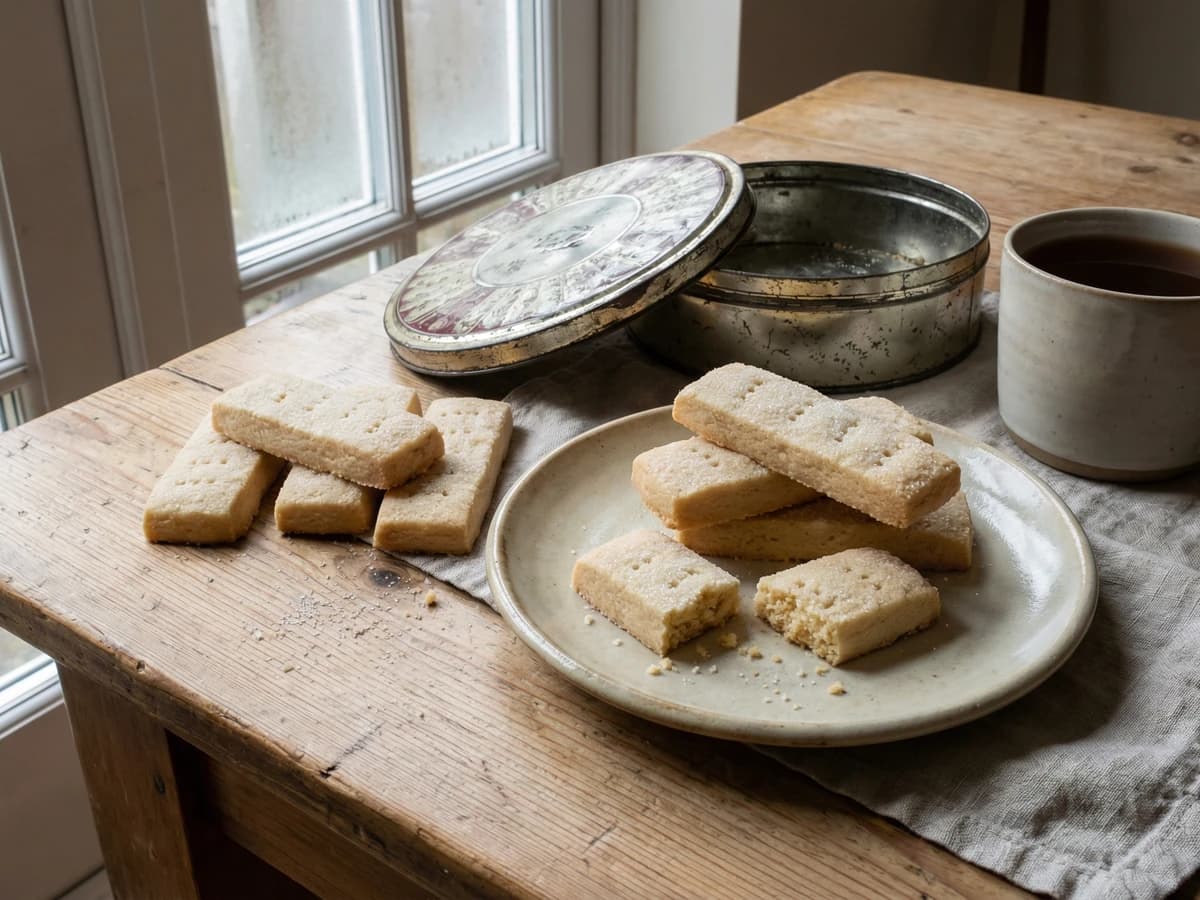
All-Butter Shortbread Fingers
The plainest biscuit in the tin and the hardest one to stop eating, three ingredients and a slow oven turning good butter into something quietly perfect with a cup of tea.
A cooking platform built around craft, culture, and the stories behind what we eat.
Created by Chef Thomas
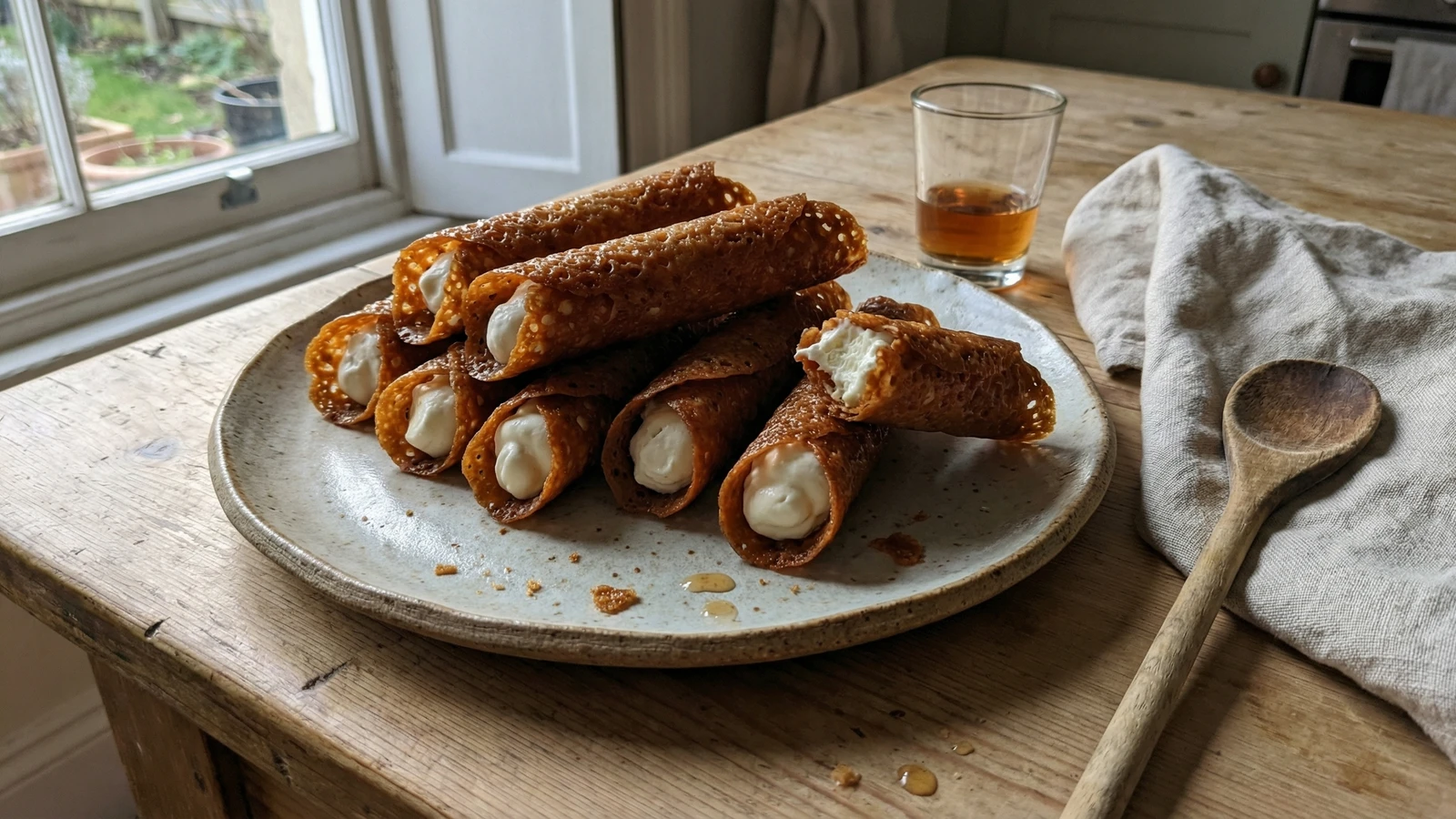
Lacy golden tubes of toffee and ginger, filled with cold brandy cream and served the moment they're ready. The biscuit that breaks under your teeth and tastes of December.
There's a smell that comes off the pan when butter and golden syrup melt together with ground ginger, and it's the smell of dark afternoons when the light goes at four and someone has put the lamps on early. Brandy snaps belong to that hour. They belong to Christmas, to the cold weeks either side of it, to the kind of evening when you want a pudding that feels like an occasion without anyone having to work for hours.
They have a reputation for being difficult, and they aren't. They look impossible, all that delicate lace and the tubes that seem like they belong in a patisserie window, but the actual making of them is four ingredients in a pan and a teaspoon dropped onto a tray. The only skill is timing: knowing when to lift the warm biscuits off the parchment and when to leave them be. Thirty seconds out of the oven, they're floppy and willing. A minute later, they've set rigid. You'll get the feel of it on the second one. The first one is a sacrifice to the cause.
They come from Yorkshire, by way of country fairs and travelling shows, and you used to buy them rolled and unfilled from a paper bag and crunch them on the walk home. Filling them with cream is a more recent indulgence, and a worthwhile one. A quiet pour of brandy into the cream pulls the whole thing together.
I wrote it down in the notebook the first year I made them properly. "Brandy snaps. December. Snow on the windowsill. Worth it." That's still the note. We're only making dinner, but some puddings deserve to be remembered.
Quantity
55g
Quantity
55g
Quantity
55g
Quantity
55g
sifted
Quantity
1 teaspoon
Quantity
1 teaspoon
Quantity
half a lemon
finely grated
Quantity
pinch
Quantity
300ml
Quantity
1 tablespoon
Quantity
1 tablespoon
for the cream
| Ingredient | Quantity |
|---|---|
| unsalted butter | 55g |
| golden caster sugar | 55g |
| golden syrup | 55g |
| plain floursifted | 55g |
| ground ginger | 1 teaspoon |
| brandy | 1 teaspoon |
| lemon zestfinely grated | half a lemon |
| fine sea salt | pinch |
| double cream | 300ml |
| icing sugar | 1 tablespoon |
| brandyfor the cream | 1 tablespoon |
Set the oven to 180C/160C fan and line two baking trays with parchment. Put the butter, sugar and golden syrup into a small heavy pan and set it over a low heat. Don't stir. Just let it melt at its own pace, swirling the pan now and then. When the butter has disappeared and the sugar has dissolved into a glossy amber pool that smells faintly of toffee, take it off the heat. The kitchen will smell like Christmas before it's even December.
Let the pan cool for two or three minutes, just so the flour doesn't seize when it goes in. Sift in the flour and ginger, add the lemon zest, the salt and the teaspoon of brandy. Stir until you have a smooth, slack, glossy batter the colour of dark honey. That's it. There's nothing else to do at this stage.
Drop teaspoons of batter onto the lined trays, leaving a generous distance between each one. They spread enormously. Four to a tray is plenty, six at the absolute most. Crowd them and they'll fuse into one large lacy disc, which is its own kind of pudding but not what we're after.
Bake for eight to ten minutes. They'll bubble furiously, then settle into thin, lace-edged discs the colour of dark amber. You're looking for an even, deep golden brown, with the tiny holes of the lace clearly visible right through the middle. Pale ones will be chewy. Dark ones will be bitter. Trust your nose: when the toffee smell deepens and just starts to sharpen, they're ready.
Take the tray out and let the biscuits sit for thirty seconds, no longer. You want them set enough to lift but still floppy and warm. Slide a palette knife under one and drape it over the greased handle of a wooden spoon, pressing the seam gently. It will stiffen in seconds. Slide it off and start the next. If the biscuits on the tray firm up before you get to them, slip the tray back in the oven for fifteen seconds to soften them again. The oven is your friend here.
Whip the double cream with the icing sugar and the tablespoon of brandy until it holds soft peaks. Not stiff. You want it to flop slightly off the spoon. Stiff cream piped into a brittle tube will crack the biscuit before anyone gets a chance to bite into it.
Fill the tubes only at the last minute, or as close to it as you can manage. Spoon the cream into a piping bag and pipe it generously into both ends of each brandy snap so the cream meets in the middle. Pile them onto a plate and bring them out before the biscuits have any chance to soften. The first bite should shatter, then give way to cold cream and the warm hum of brandy. There are few better things to put in front of someone at the end of a winter dinner.
1 serving (about 35g)
Culinary guides, cultural storytelling, and the editorial depth that makes cooking meaningful.
Discover Culinary ExplorerChef Thomas
The plainest biscuit in the tin and the hardest one to stop eating, three ingredients and a slow oven turning good butter into something quietly perfect with a cup of tea.
Chef Thomas
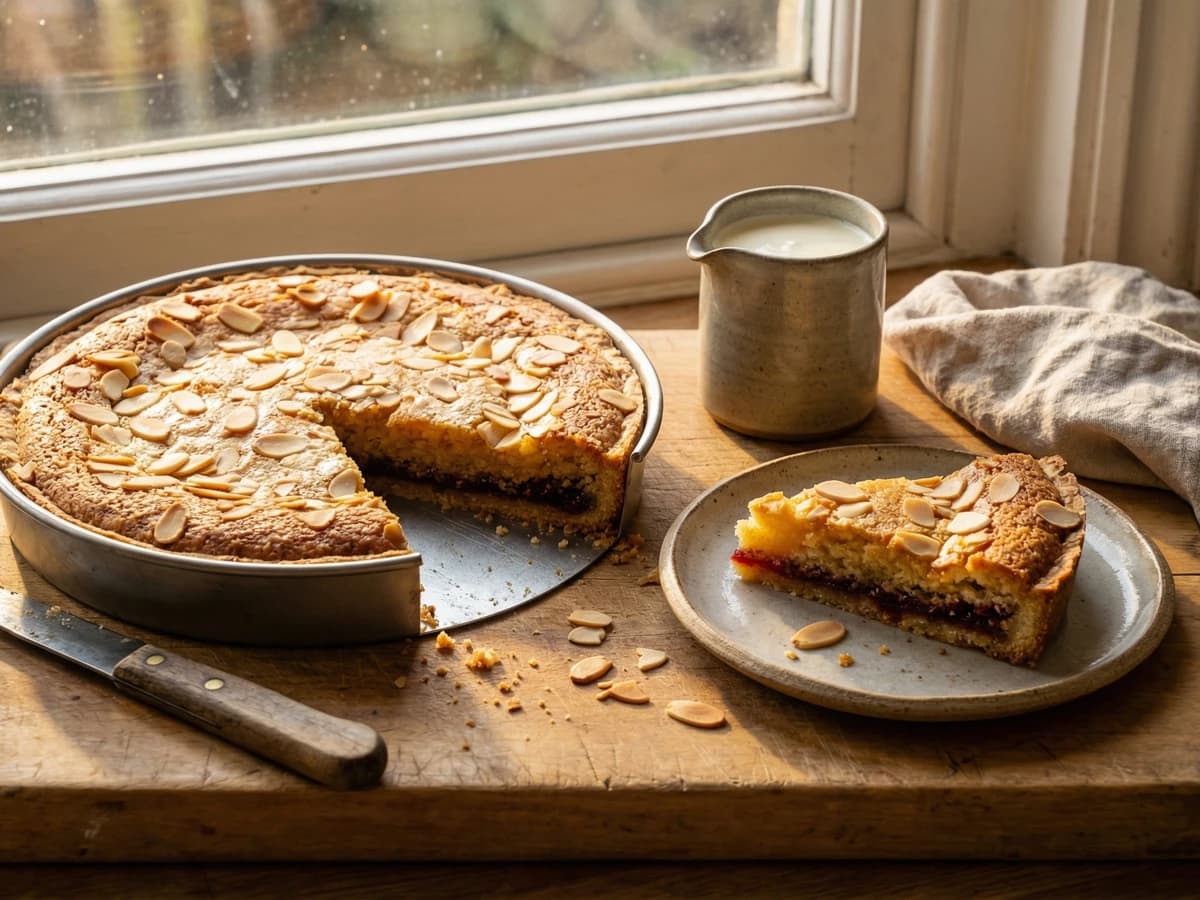
A proper Bakewell tart with buttery shortcrust, a thick layer of raspberry jam, and almond frangipane baked golden under a scattering of flaked almonds. No icing. No nonsense.
Chef Thomas
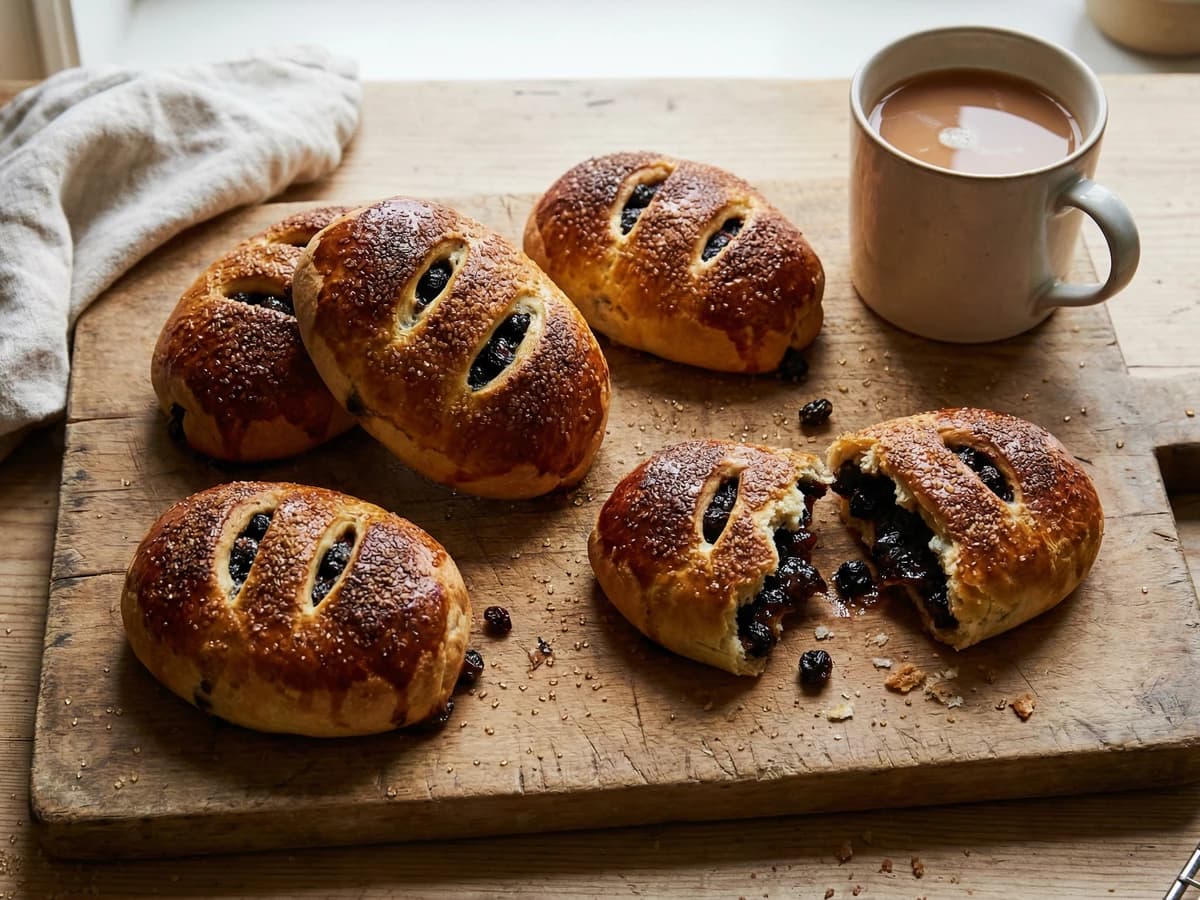
Oval pastries filled with rum-soaked currants and spice, baked until the tops crackle with sugar. The kind of thing to make on a wet Sunday afternoon when you want the kitchen to smell of something.
Chef Thomas
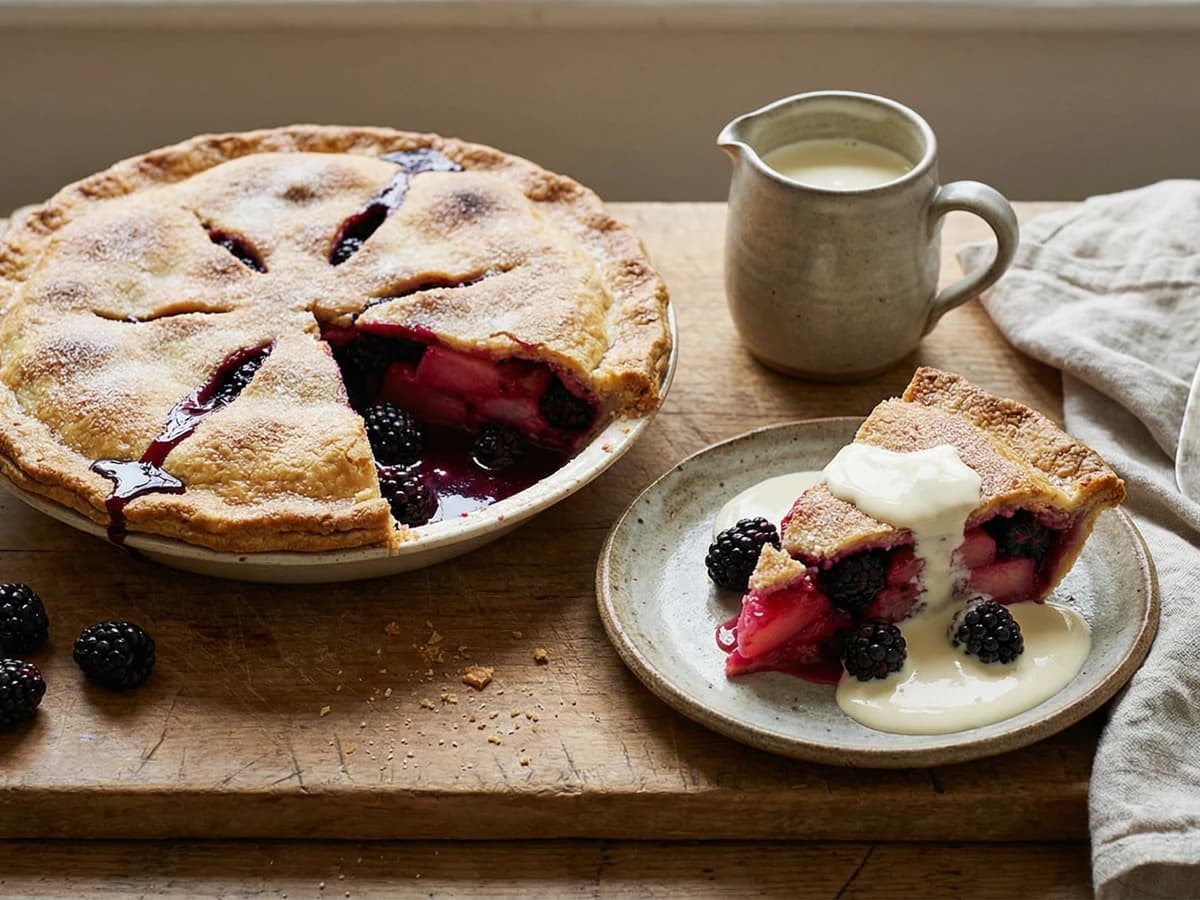
A proper hedgerow pie of Bramley apples and blackberries under a sugar-crusted pastry lid, the kind of pudding that turns a Sunday in September into something you'll remember.