
Chef Makoa
ʻAwa (Hawaiian Kava Root Drink)
Hawaiian ʻawa is kava root kneaded cool, strained into an ʻapu coconut cup, and shared with a quiet hand: earthy, peppery, calming, and far older than the tourist glass.
A cooking platform built around craft, culture, and the stories behind what we eat.
Created by
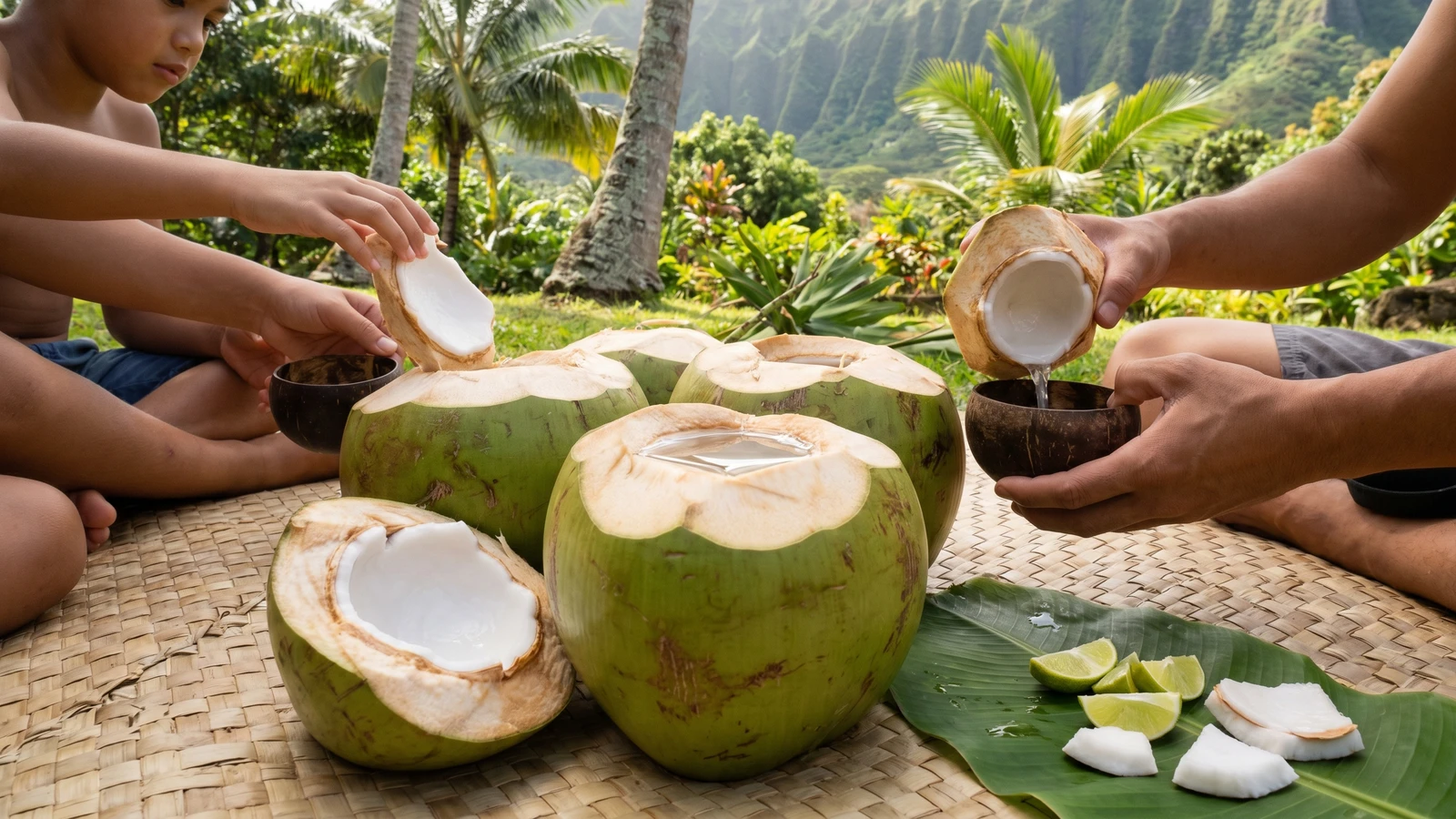
Cold sweet wai niu, Hawaiian young coconut water opened at the soft crown and drunk straight from the shell, a canoe-crop cup for the beach, the yard, and one more cousin at the table.
The canoe did not come empty. It carried kin: kalo, ʻulu, ʻuala, niu, the plants that let people become people in a new land. In Hawaiʻi this cup is wai niu, the water of the coconut, and when you drink it cold from the shell you can feel how little it asks. A tree. A knife. A thirsty table.
My kūpuna didn't treat niu like a novelty. The palm gave water, flesh, oil, fiber, leaf, shell, and shade, and the same crop has cousins all across the Triangle. Sāmoa and Tonga say niu too. The Cook Islands know niu. Tahiti keeps haʻari, the coconut, close to the table. On coral atolls like Tuvalu and Tokelau, coconut carries even more weight because the land is lean and the people learned to listen hard to what would grow.
So this Hawaiian drink stays simple. Open the young coconut, smell it, drink it cold, spoon the soft flesh after. If you pour it over ice on a hot day, no shame. If a lime wedge sneaks in because the kids like it bright, that's the everyday table talking. Eat what you have. Just remember whose cup this is, and don't turn it into tiki noise. Niu doesn't need dressing up.
Niu was a Polynesian canoe plant carried into Hawaiʻi before European contact, valued for water, flesh, oil, husk fiber, leaf, shell, and shade rather than as a single-use crop. One famous Hawaiian grove, Kapuāiwa Coconut Grove on Molokaʻi, is tied to Lot Kapuāiwa, King Kamehameha V, in the 1860s, showing how niu also belonged to chiefly landscapes. Across the Triangle the crop took different weight by place: high islands kept it beside kalo, ʻulu, and ʻuala, while low coral atolls such as Tuvalu and Tokelau leaned on coconut because the soil gave fewer choices.
Quantity
4
chilled, heavy for their size
Quantity
as needed
Quantity
4 small
Quantity
tiny pinch
| Ingredient | Quantity |
|---|---|
| young green coconuts (niu ʻōpio)chilled, heavy for their size | 4 |
| ice (optional) | as needed |
| lime wedges (optional) | 4 small |
| paʻakai, Hawaiian sea salt (optional) | tiny pinch |
Pick niu ʻōpio, young coconuts, that feel heavy and full, with no cracks, leaking spots, sour smell, or gray mold around the top. Shake one close to your ear. You want water moving inside, clean and alive, like the tree just handed it down.
Wash the outside, then set the coconuts in the fridge until cold. When you're ready, put one on a folded towel or steady board so it can't roll. No need make this a knife show. If the market will open it for you, let them do it and bring it home cold.
For a trimmed young coconut, shave the white cap until you find the hard shell beneath, then tap a clean coconut opener or the heel of a heavy knife through the soft top to make a drinking hole. Work slow and keep your other hand out of the path. The goal is a clean opening, not a story about how brave you were.
Smell first. Good wai niu, coconut water, smells clean, grassy, and faintly sweet, never sour or fermented. Drink straight from the shell, or pour it through a small strainer if bits of husk fell in. If it tastes a little flat, one grainy pinch of paʻakai wakes it up. If you like a modern bright edge, squeeze in just a little lime.
Serve right away, cold and close to drinking, still in the coconut if you can. When the water is gone, split the shell and spoon out the soft young flesh. We no waste good food. The cup feeds you twice.
1 serving (about 330g)
Culinary guides, cultural storytelling, and the editorial depth that makes cooking meaningful.
Discover Culinary ExplorerChef Makoa
Hawaiian ʻawa is kava root kneaded cool, strained into an ʻapu coconut cup, and shared with a quiet hand: earthy, peppery, calming, and far older than the tourist glass.

Chef Makoa
A quiet Hawaiian cup from native koʻokoʻolau leaves, steeped golden and clean, the kind of comfort the kūpuna kept close beside māmaki and shared without fuss.

Chef Makoa
Hawaiʻi's lilikoʻi, pressed from wrinkled passion fruit and chilled sweet-tart, is everyday local refreshment: bright enough straight, gentle enough to stir into POG.

Chef Makoa
Hawaiʻi's māmaki leaf steeped into a smooth, earthy, caffeine-free cup, old household lāʻau brought forward for a quiet modern kitchen.