
Chef Lesia
Berezovyi Sik (березовий сік, birch sap drink)
Birch sap looks like water until you taste it: cold, faintly sweet, mineral, and gone almost as soon as spring admits it has arrived.
A cooking platform built around craft, culture, and the stories behind what we eat.
Created by
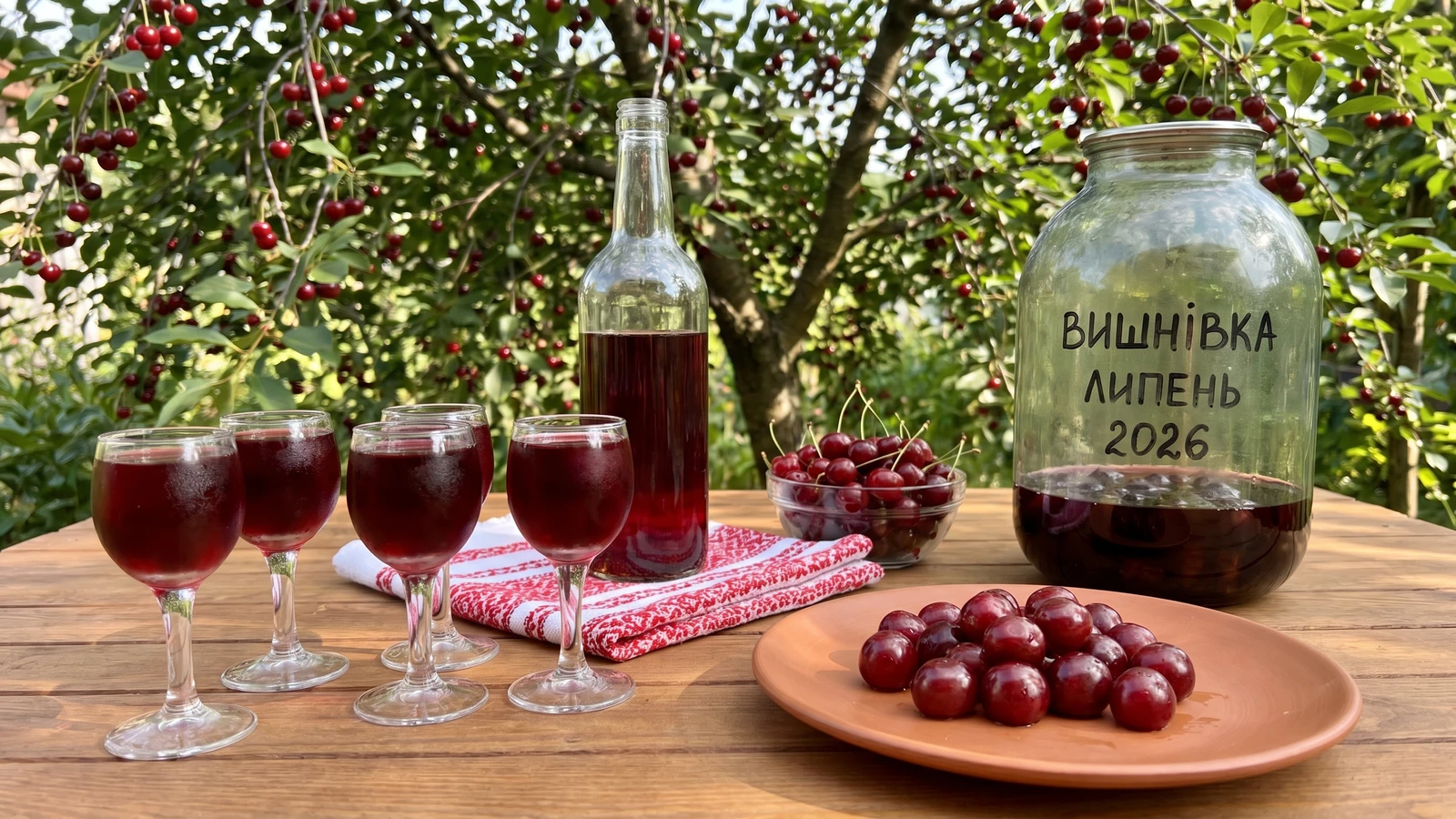
Sour cherries bleed into sugar before a drop of vodka touches them, turning a plain glass jar into something deep crimson, sharp-edged, and meant for the good glasses.
The first arresting thing is the color. Not red, not purple, something darker and more stubborn: sour July cherries surrendering their juice into sugar until the bottom of the jar looks like a garnet has melted there. You don't cook it. You wait for the fruit to give itself up.
Vyshnivka is one of those household nalyvky, fruit liqueurs, that every family folds a little differently. Some cover the cherries with horilka straight away, some let sugar pull the juice first, some leave all the stones in for that faint bitter-almond edge. I pit some and leave some whole, because the stones whisper nicely if you don't smash them. Aunt Nadia wrote only "to the window until it smells right," which is both completely useless and, annoyingly, correct.
The one why is this: sugar first draws out the cherry juice, so when the vodka goes in it meets fruit syrup, not dry skins. That gives you a rounder nalyvka, sour and sweet together, with the cherry still speaking clearly through the alcohol. Make more than one bottle. A celebration has a way of becoming eight guests or one hungry Ukrainian with a sweet tooth.
Nalyvka, from the Ukrainian verb nalyvaty, to pour or infuse, is a domestic fruit liqueur tradition found across Ukraine, with sour cherry versions especially tied to the summer orchard belt and home celebration tables. In older households the jar often sat on a sunny windowsill through cherry season, then the strained drink rested until Christmas or a wedding, proof that preservation in Ukraine was never only cabbage and brine.
Quantity
1.5 kg
stems removed and sorted
Quantity
500g
Quantity
700ml
Quantity
1 strip
yellow part only
Quantity
1 small piece
| Ingredient | Quantity |
|---|---|
| sour cherriesstems removed and sorted | 1.5 kg |
| granulated sugar | 500g |
| good 40 percent vodka or Ukrainian horilka | 700ml |
| lemon peel (optional)yellow part only | 1 strip |
| cinnamon stick (optional) | 1 small piece |
Rinse the cherries briefly, dry them well, and pull off the stems. Throw away any fruit that is bruised, split, or beginning to ferment on its own. Pit about two thirds of the cherries and leave the rest whole for a gentle almond note, but don't crack the stones.
Put the cherries into a clean 3-litre glass jar in layers with the sugar, finishing with sugar on top. Shake the jar gently, then cover it with a clean lid or cloth and set it somewhere bright but not hot. Within a day or two the cherries should slump and the sugar should turn into deep crimson syrup.
Pour in the vodka or horilka, enough to cover the fruit completely. Add the lemon peel or small cinnamon piece if you're using them, but keep a light hand; vyshnivka should taste of cherries first. Seal the jar and turn it slowly so the syrup and vodka meet.
Leave the jar in a cool dark cupboard for 4 to 6 weeks, turning it whenever you remember. The cherries will fade and wrinkle, and the liquid will grow darker, thicker, and fragrant enough that opening the lid smells like July hiding in a church coat pocket.
Strain through a fine sieve, then through muslin or a coffee filter if you want it clearer. Don't press the fruit hard unless you like a cloudy drink. Bottle the vyshnivka and let it rest at least 3 more weeks before serving; the sharp alcohol edge softens and the cherry comes forward.
Chill the bottle and pour small measures into little glasses. It should be glossy, sour-sweet, and strong enough to make people slow down. Serve the soaked cherries over ice cream, in a cake, or straight from the jar when nobody is looking.
1 serving (about 52g)
Culinary guides, cultural storytelling, and the editorial depth that makes cooking meaningful.
Discover Culinary ExplorerChef Lesia
Birch sap looks like water until you taste it: cold, faintly sweet, mineral, and gone almost as soon as spring admits it has arrived.

Chef Lesia
Raw beets turn water into something dark, sour, and alive: a crimson drink for the glass, and the old quiet souring for borshch when vinegar has no business there.

Chef Lesia
Dried chebrets looks like a handful of dusty twigs until hot water wakes it, and suddenly the cup smells of bees, sun-baked grass, and rain on the steppe.

Chef Lesia
Dried pears turn water the color of late honey, then the jar begins to whisper. Serve it cold and tart, with fine bubbles, orchard smoke, and August still in the glass.