Chef Klaus
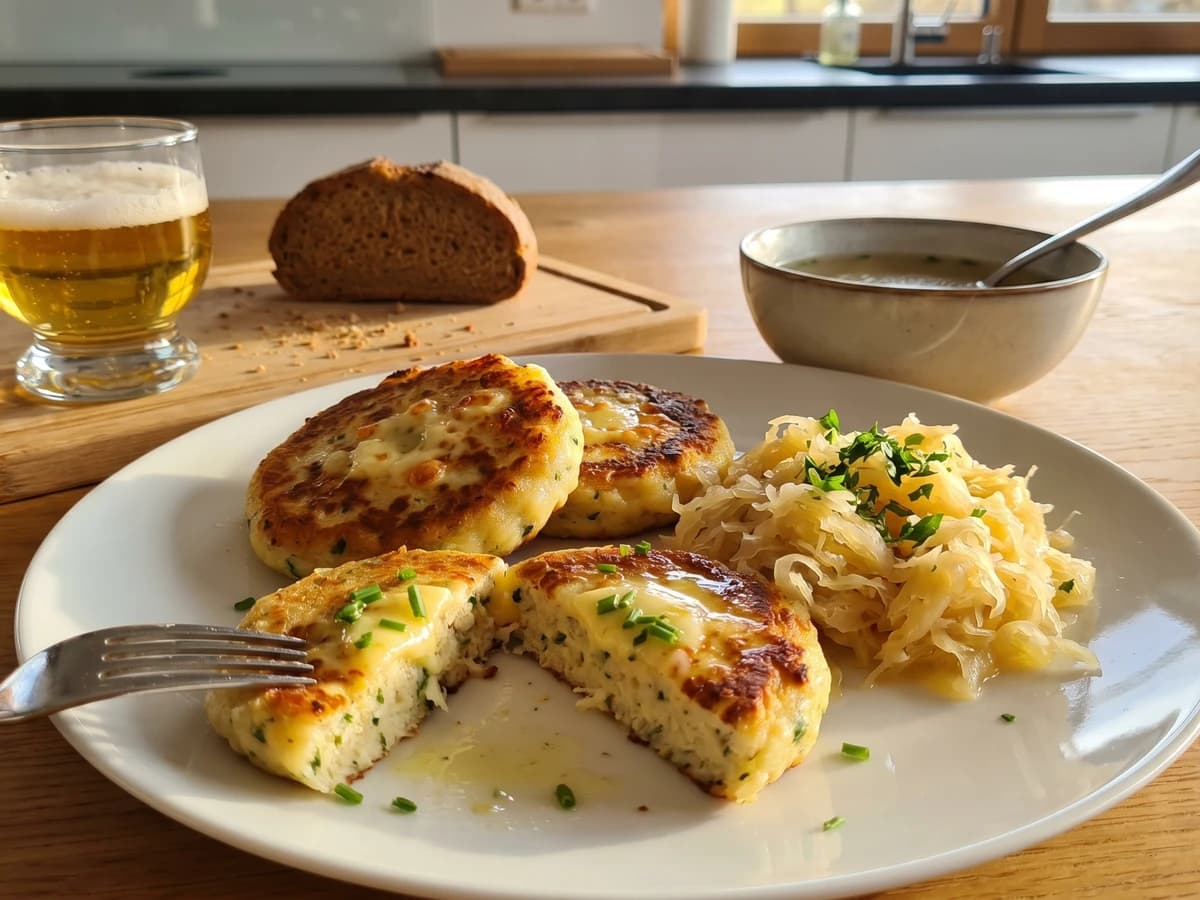
Allgäuer Kaspressknödel
Pressed bread dumplings from the Alpine south, fried until the cheese catches at the edges and the middle stays soft enough for broth, kraut, or a weekday plate.
A cooking platform built around craft, culture, and the stories behind what we eat.
Created by
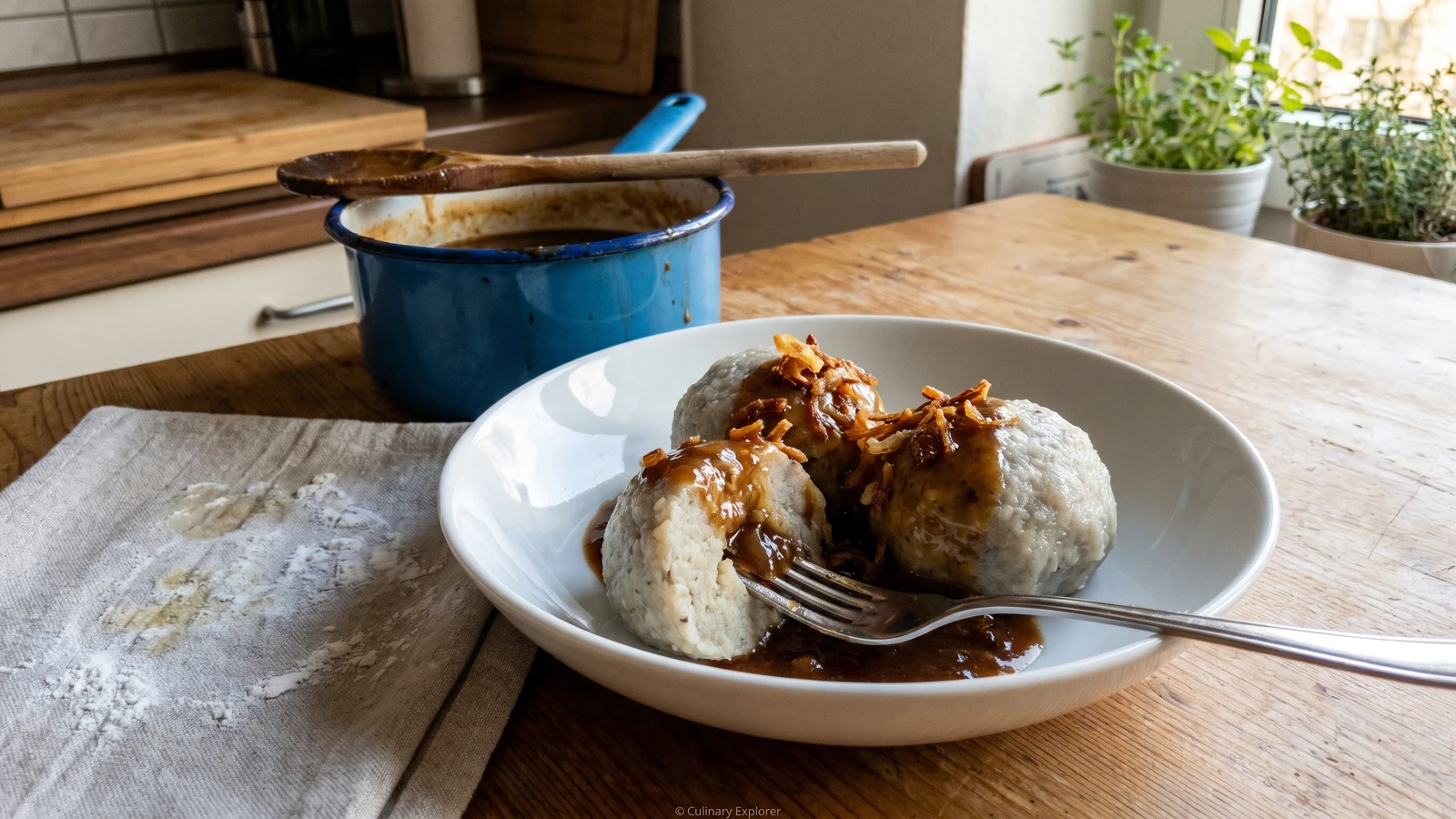
The Vogtland potato dumpling that doesn't try to be white or delicate: raw potato wrung hard, its starch saved, then scalded into a firm Kloß built for gravy.
Griegeniffte belong to the Vogtland, that working strip between Saxony, Thuringia, Bavaria, and Bohemia where the potato was never a garnish. These are Grüne Klöße, green dumplings, not because they taste of herbs, but because raw potato goes into the bowl. They sit beside roast pork, sauerbraten, goose, mushroom sauce, or a plain onion gravy, weeknight if the cook has patience, Sunday if there is a roast to carry.
The argument starts at the regional line. Thuringia makes its Klöße lighter with a portion of cooked potato and often hides fried bread cubes in the middle. The Vogtland keeps them rougher, greyer, and denser, with more raw potato doing the work. Im Norden anders, im Süden anders. Here the point is not elegance. The point is a dumpling that can take sauce without collapsing.
The whole dish turns on one act: grate the raw potatoes, wring them hard, and keep the starch that settles from the juice. That starch is the binder you already paid for. Weggeworfen wird nichts. Scald the dry potato with boiling water and its own starch, and the raw shreds swell and grip each other; skip that scald and you have wet potato meal that falls apart in the pot. Dumpling powder is not a shortcut. Nicht aus dem Glas, not from the packet either.
Watch the water. It should tremble, never boil hard, because a rolling boil knocks the surface open before the starch has set. Make one test dumpling. If it holds, cook the rest. If it frays, add a spoon of potato starch and stop arguing with the bowl. Erst verstehen, dann kochen.
The Vogtland spans parts of present-day Saxony, Thuringia, Bavaria, and the Czech borderland, and its potato cooking grew out of small farms where stored potatoes carried families through winter. After Frederick II of Prussia issued his potato orders in the 1740s and 1750s, the tuber spread more firmly through central German kitchens, where raw-potato dumplings became a way to turn a cellar crop into a filling Sunday side. Griegeniffte are one Vogtland answer to the wider Thuringian Kloß tradition: darker, denser, and more raw-potato driven than the better-known Thüringer Klöße.
Quantity
1.5kg
peeled
Quantity
250ml
plus more as needed
Quantity
2 teaspoons
plus more for the cooking water
Quantity
2 tablespoons
only if the settled starch is scant
Quantity
1 pinch
| Ingredient | Quantity |
|---|---|
| floury potatoespeeled | 1.5kg |
| boiling waterplus more as needed | 250ml |
| saltplus more for the cooking water | 2 teaspoons |
| potato starch (optional)only if the settled starch is scant | 2 tablespoons |
| freshly grated nutmeg (optional) | 1 pinch |
Grate the peeled potatoes as finely as you can into a bowl of cold water. The water keeps the raw potato from turning black before you've wrung it, and a fine grate gives the starch more surface to bind. Work quickly. Raw potato waits for nobody.
Tip the grated potato into a clean cloth and wring it over a bowl until the mass feels almost dry and crumbly. Let the squeezed liquid stand for 10 minutes so the starch sinks to the bottom, then pour off the brown water and keep the white starch. That sediment is the glue of the dumpling, and throwing it away is paying twice for the same potato.
Put the dry potato in a wide bowl with the settled starch, salt, and nutmeg if you're using it. Pour in the boiling water a little at a time while mixing hard with a wooden spoon, until the mass turns sticky, heavy, and shapeable. The boiling water swells the raw starch and takes the sandy edge off the potato; lukewarm water just wets it and leaves you with a dumpling that breaks.
Wet your hands and shape one firm dumpling, pressing out cracks because cracks become split seams in the pot. Lower it into a wide pan of salted water that is trembling, not boiling. If it holds for 5 minutes, the dough is right; if it sheds potato into the water, work in a spoon more potato starch before shaping the rest.
Shape the remaining dumplings and lower them into the trembling water with room between them. Keep the water below a boil for 20 to 25 minutes, until the dumplings feel set and lift cleanly with a slotted spoon. A hard boil batters the outside before the centre has tightened, so runter mit der Temperatur, down with the temperature.
Lift the Klöße out, let them drain for a minute, and serve them at once with roast gravy, mushroom sauce, or browned onions. They are denser than Thuringian dumplings and that is the point: split one open and let the sauce run in. Schön ist, was schmeckt.
1 serving (about 360g)
Culinary guides, cultural storytelling, and the editorial depth that makes cooking meaningful.
Discover Culinary ExplorerChef Klaus
Pressed bread dumplings from the Alpine south, fried until the cheese catches at the edges and the middle stays soft enough for broth, kraut, or a weekday plate.

Chef Klaus
The Bavarian potato salad that works because warm waxy slices drink hot broth first, then oil last, until the bowl turns glossy without mayonnaise.

Chef Klaus
White cabbage shaved thin, wilted with hot caraway vinegar, and finished with crisp Speck fat: the Bavarian salad that belongs beside bread, sausages, and roast pork.

Chef Klaus
The south's sweet-sour white cabbage, cooked from fresh Kraut rather than sauerkraut, soft enough for roast pork and sharp enough to wake the plate.