
Chef Klaus
Erzgebirgischer Buttermilchgetzen
The Erzgebirge potato bake that makes a meal from stored roots, sour buttermilk, bacon fat, and patience, with the crust doing the talking.
A cooking platform built around craft, culture, and the stories behind what we eat.
Created by
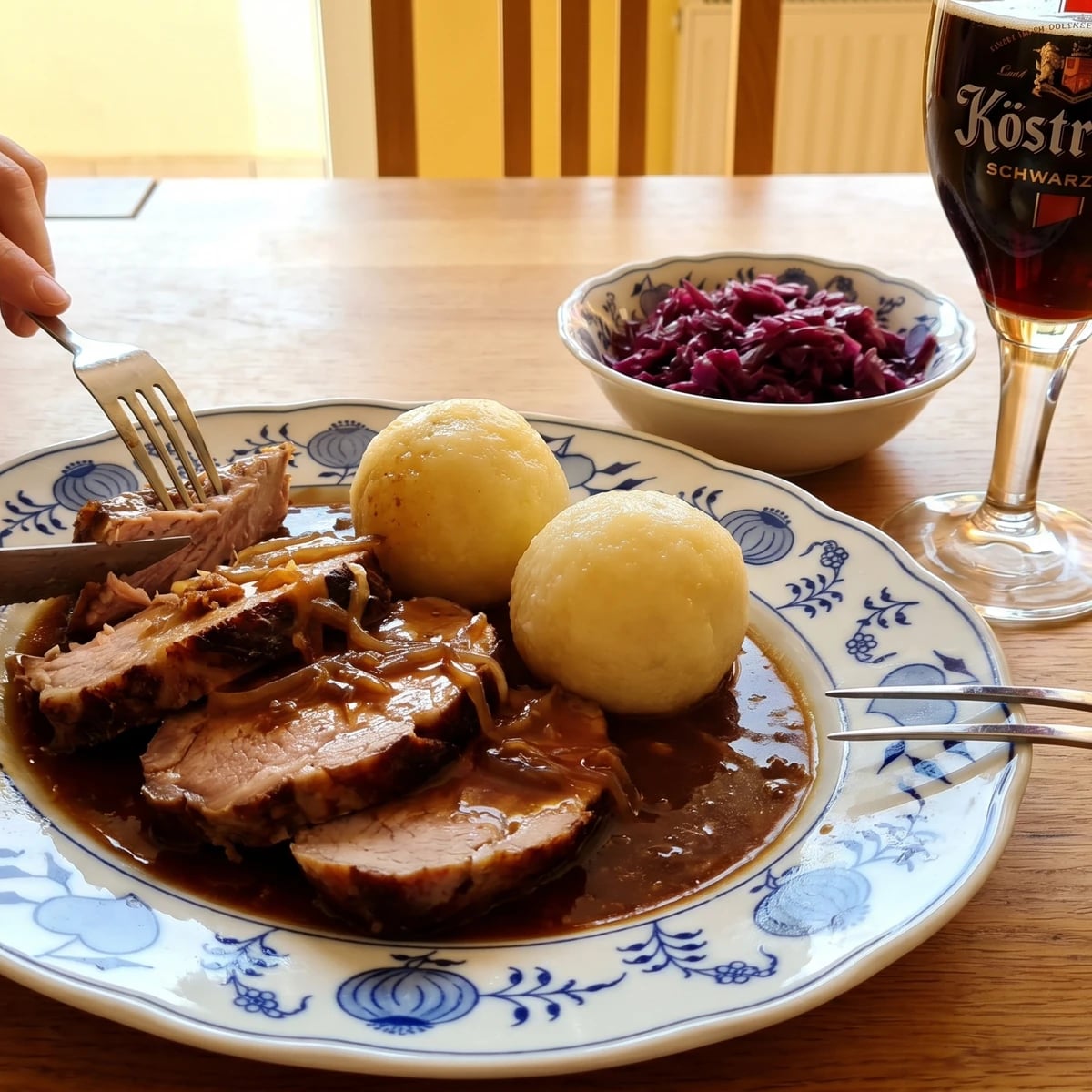
A Thuringian black-beer pork roast where the dark malt does the sauce work, the shoulder gets time, and the dumplings are there for one reason: catching gravy.
Köstritzer Schwarzbierbraten belongs to the eastern table, strongest in Thuringia and Saxony, where dark beer is not decoration but part of the larder. This is a Sunday roast, and a good make-ahead one, because pork shoulder tastes better after a night in its sauce. Im Norden anders, im Süden anders: the north would reach for sharper pickles or smoked pork, Bavaria might pour in a dark lager and caraway. Here the black beer gives the roast its bitter-sweet backbone.
I use shoulder or neck, not a dry loin. The fat and connective tissue are the whole reason the cut works. Two days in beer, onion, root vegetables, juniper, bay, and a little vinegar season the meat all the way through and give the sauce its floor before the pot ever warms.
The technique that decides it is temperature. Start the roast in a cool oven and let it climb slowly, because the fat renders before the outside tightens and the meat stays sliceable instead of turning stringy. Then runter mit der Temperatur, down with the temperature, and keep the braise at a quiet tremble. Boil black beer hard and you drive the malt bitter. Das braucht seine Zeit.
No jarred Bratensoße. Nicht aus dem Glas. The sauce is the strained braising liquor, the cooked vegetables pressed for body, and a small piece of rye bread or Lebkuchen to round the malt. Weggeworfen wird nichts, the pan juices and browned bits go back in.
Köstritzer Schwarzbier is tied to Bad Köstritz in Thuringia, where brewing records name the beer from 1543, making it one of the best-known surviving Schwarzbier traditions in Germany. Dark beer cookery fits the central and eastern German habit of using the local brewery as part of the kitchen larder, especially for pork roasts and sauces built on onion, root vegetables, and bread. The regional line matters: Thuringia and Saxony lean into black malt and a darker sauce, while southern beer roasts often use Dunkel or Bock and taste more strongly of caraway.
Quantity
1.6kg
in one piece, skin removed or scored if present
Quantity
750ml
divided
Quantity
2
sliced
Quantity
2
chopped
Quantity
150g
chopped
Quantity
2
crushed
Quantity
2 tablespoons
Quantity
2
Quantity
8
lightly crushed
Quantity
1 teaspoon
lightly crushed
Quantity
1 teaspoon
Quantity
1 tablespoon
Quantity
2 tablespoons
Quantity
250ml
Quantity
1 thick slice rye or 1 small Lebkuchen
crumbled
Quantity
1 teaspoon
Quantity
to taste
| Ingredient | Quantity |
|---|---|
| pork shoulder or pork neckin one piece, skin removed or scored if present | 1.6kg |
| Köstritzer Schwarzbierdivided | 750ml |
| onionssliced | 2 |
| carrotschopped | 2 |
| celeriacchopped | 150g |
| garlic clovescrushed | 2 |
| red wine vinegar | 2 tablespoons |
| bay leaves | 2 |
| juniper berrieslightly crushed | 8 |
| caraway seedslightly crushed | 1 teaspoon |
| dried marjoram | 1 teaspoon |
| sharp German mustard | 1 tablespoon |
| lard or neutral oil | 2 tablespoons |
| pork stock or beef stock | 250ml |
| dark rye bread or plain Lebkuchencrumbled | 1 thick slice rye or 1 small Lebkuchen |
| sugar beet syrup or dark honey (optional) | 1 teaspoon |
| salt and black pepper | to taste |
Salt the pork lightly, then put it in a glass or ceramic dish with 500ml of the Schwarzbier, the onions, carrots, celeriac, garlic, vinegar, bay, juniper, caraway, and marjoram. Cover and refrigerate it for two days, turning it morning and evening, because the beer and vinegar need contact with every side if the middle is to taste seasoned instead of merely painted dark.
Lift the pork from the marinade and pat it dry. Strain the marinade and keep both the liquid and vegetables. Brown the meat in lard in a heavy braiser, taking time on every side, because wet meat goes grey and a brown crust gives the sauce its roast taste before any beer goes back in.
Take the pork out, add the strained vegetables to the same pot, and cook them until the onion edges are brown. Stir in the mustard for the last minute, because mustard loses its raw bite in the fat and gives the sauce a clean sharpness instead of sitting on top.
Return the pork to the pot, pour in the strained marinade and the stock, and add only enough liquid to come halfway up the meat. Put the covered pot into a cool oven, set it to 150C, and let the heat climb with the roast; the fat renders gently before the meat tightens, so the shoulder stays sliceable. Braise for about 2 1/2 to 3 hours, turning once, until a fork slides in with little resistance.
Lift the pork to a board and cover it loosely for 20 minutes. Resting matters because the meat fibres relax and hold their juices; slice too soon and the board gets the gravy you wanted on the plate.
Strain the braising liquid into a saucepan and press the vegetables hard through the sieve, because their cooked sweetness gives body without a packet. Add the remaining 250ml Schwarzbier and simmer gently until the sauce tastes dark and rounded, not raw and beery. Whisk in the rye crumbs or Lebkuchen and cook until glossy. Taste with salt, pepper, and a spoon of sugar beet syrup if the beer has gone too bitter. Würzen, Fett, Salz zum Schluss.
Slice the pork thickly across the grain and spoon the black-beer sauce over it. Serve with Thüringer Klöße, potato dumplings, or Kartoffelklöße if that is what your kitchen knows, plus ruby red cabbage or pickled cucumber for the sharp edge. Schön ist, was schmeckt.
1 serving (about 330g)
Culinary guides, cultural storytelling, and the editorial depth that makes cooking meaningful.
Discover Culinary Explorer
Chef Klaus
The Erzgebirge potato bake that makes a meal from stored roots, sour buttermilk, bacon fat, and patience, with the crust doing the talking.

Chef Klaus
The red cabbage for goose, Sauerbraten, and Sunday roast: apple for sweetness, vinegar for colour, and enough slow time for the cabbage to turn glossy.

Chef Klaus
The Saxon sour roast earns its tenderness before the oven is lit, four days in a cold wine-vinegar marinade, then a dark sauce thickened with Lebkuchen, not flour.

Chef Klaus
Fist-sized pork neck from Schmölln, rubbed with marjoram and turned slowly over birch embers until the fat softens through the meat. Bread, sauerkraut, mustard. The smoke is the sauce.